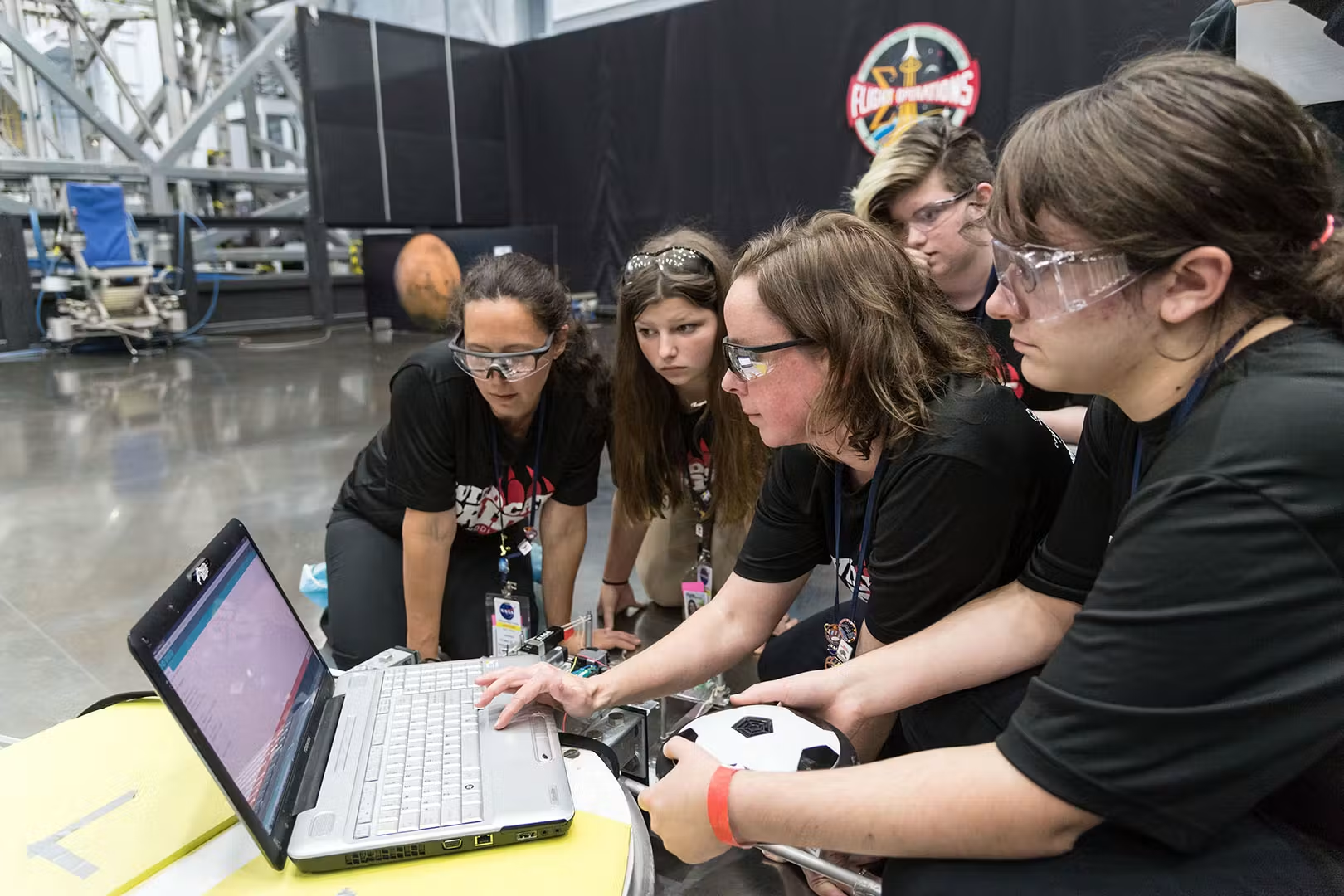
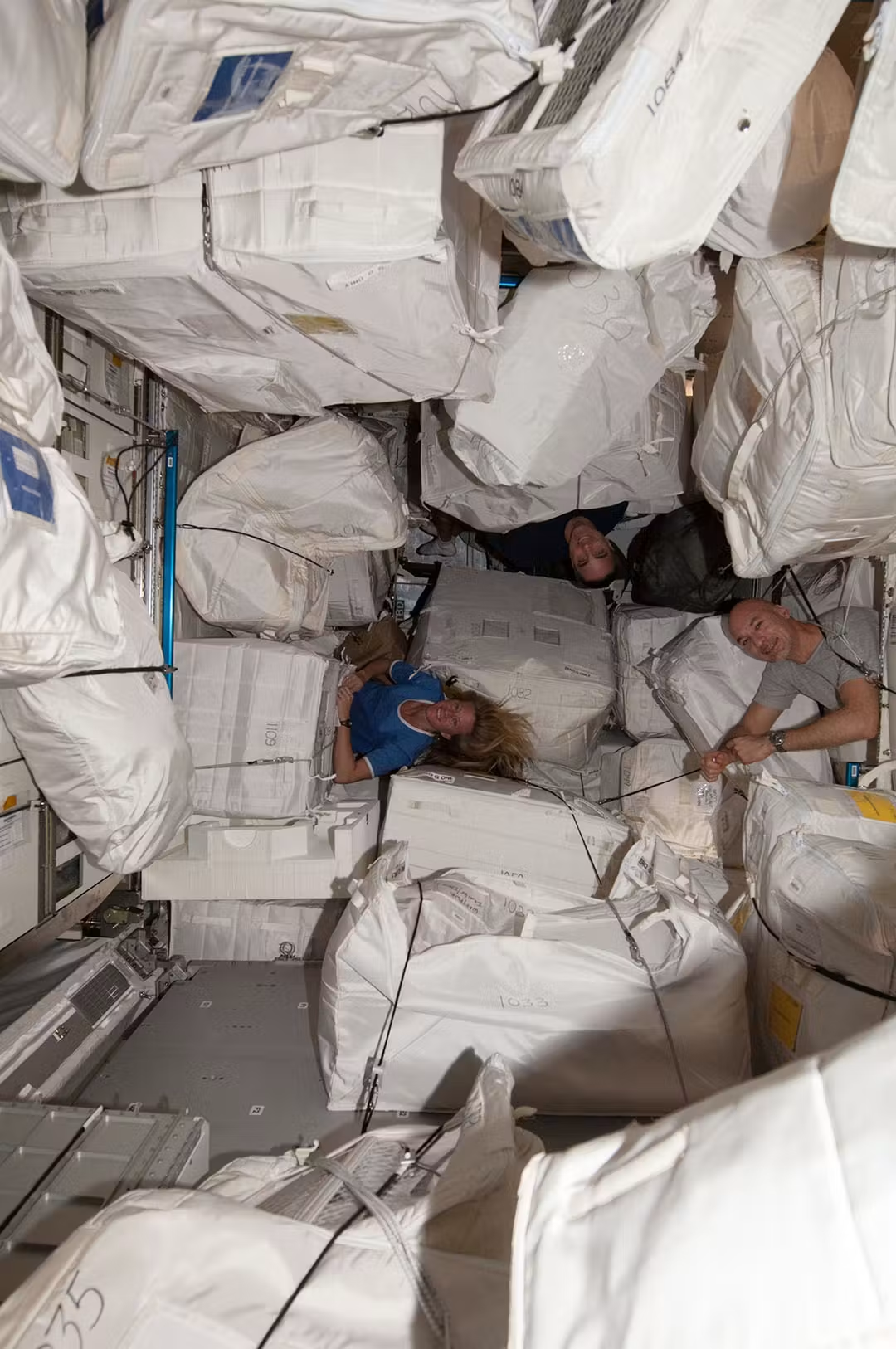
Jamie Semple and Mike McGlone, education specialist and coordinator, respectively, based at NASA’s Johnson Space Center, share how students and teachers get involved in the form of student programs and challenges that contribute to missions across the agency. HWHAP Episode 163.
Dr. Tom Williams, element scientist for human factors and behavioral performance in the Human Research Program at NASA’s Johnson Space Center, details a reminder called CONNECT and how it not only benefits astronauts in space but those on terra firma here on Earth. HWHAP Episode 162.
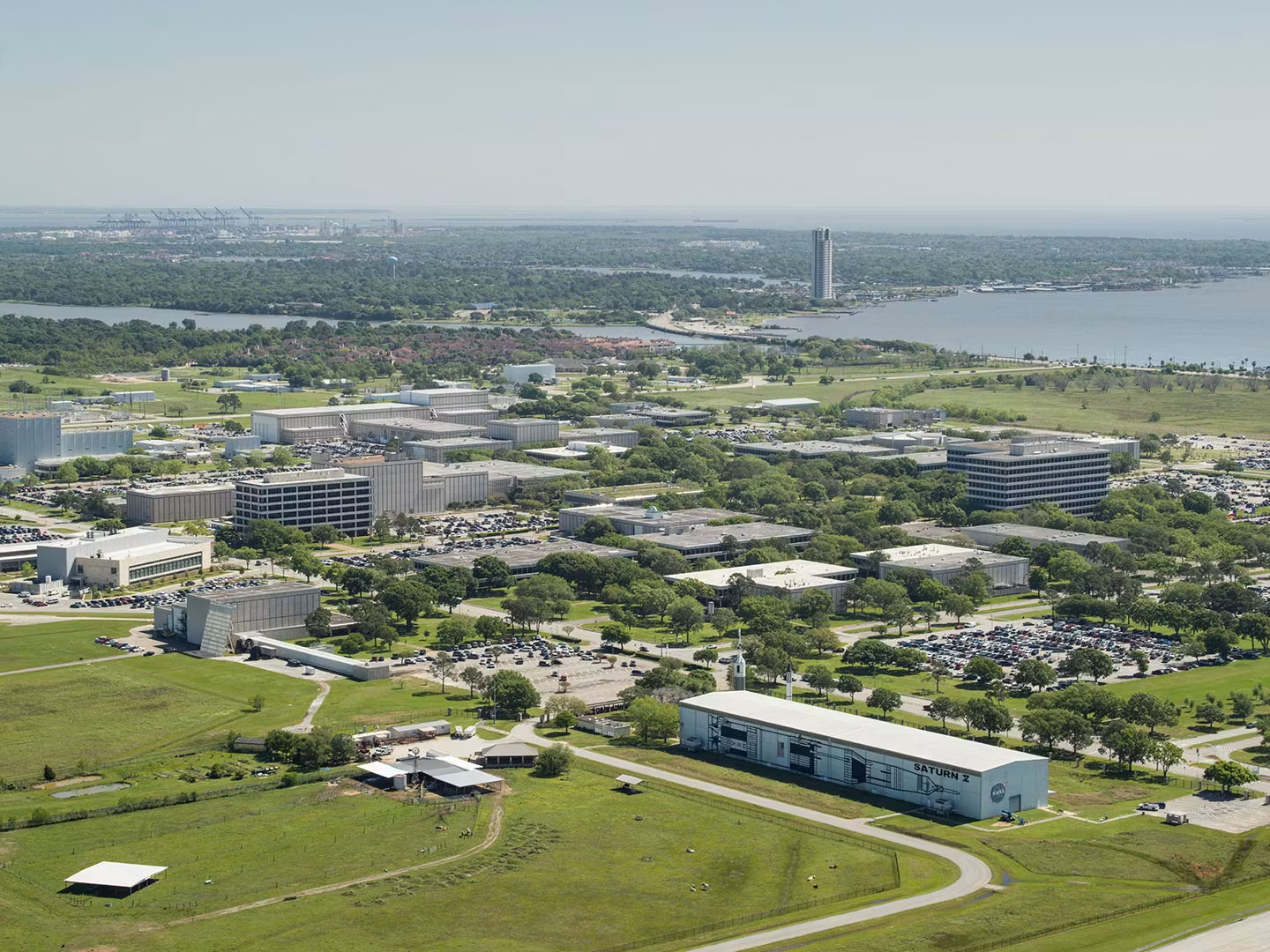
Joel Walker and Linda Spuler, NASA’s Johnson Space Center director of center operations and emergency manager, respectively, describe the daily tasks involved in running a space center and how we prepare for and respond to scenarios like hurricanes or pandemics. HWHAP Episode 161.
Acquired teams up with the My First Million podcast for a “best of both worlds” crossover episode. First we go deep, “Acquired style”, on the wild story of MFM host Shaan Puri’s bought, sold, and then bought-again OG social networking site Bebo, and then we turn the tables and brainstorm startup ideas and investing themes “MFM style”. This episode was frankly a blast to do. We hope you have as much fun listening as we did recording!
Sponsors:
More Acquired!
© Copyright 2015-2026 ACQ, LLC
Links:
Chel Stromgren, Chief Scientist of Binera, Inc. and part of NASA’s Mars Integration Group, lays out the complexities and the innovative strategies needed to pack for a human mission to Mars on this fifth episode of our Mars Monthly series. HWHAP Episode 160.
We go deep behind the “epic” story of a plucky game developer from Cary, North Carolina (by way of Potomac, Maryland) which, after bootstrapping for its first 22 years, has quietly morphed into an $18b juggernaut that may become the most important technology company for the next evolution of the internet. And oh yeah, its founder, CEO and controlling shareholder? He cares more about land conservation than he does about money, he’s beholden to no one and has the firepower of China’s biggest internet giant behind him, and he’s willing to stare down Apple, Google and anyone else who doesn’t support his vision of an open and equal-opportunity internet future in a fight to the death. You’ll want to buckle your seats for this one!!
Sponsors:
More Acquired!
© Copyright 2015-2026 ACQ, LLC
New! We’re codifying our own Playbook notes and takeaways from each episode and posting them on our website. Check it out: www.acquired.fm/episodes/epic-games
Links:
Carve Outs:
- Ben’s “3 part carve out”:
- David
Sources: (available on Journal at https://usejournal.com/app/space/journal:space:project/7efa6d43-a601-4784-8e36-1edda2b1b451 )
Bob Behnken and Doug Hurley recount their return to Earth at their welcome home ceremony and crew news conference in Houston. The NASA astronauts made history in August as the first to splash down in an American spacecraft in 45 years, thus completing NASA’s SpaceX Demo-2 mission. HWHAP Episode 159.
We’re joined by two very special guests, Eventbrite CEO Julia Hartz and her cofounder, spouse and Eventbrite Chairman Kevin Hartz, to tell their story of building Eventbrite together (along with their lives and family) from the PayPal diaspora to bootstrapped business, unicorn status, IPO and now starting all over again in the wake of COVID with both a tragedy and a huge new opportunity in front of them as public company.
Sponsors:
More Acquired!
© Copyright 2015-2026 ACQ, LLC
New! We’re codifying our own Playbook notes and takeaways from each episode, and posting them here in the show notes and on our website. You can read them below or at: www.acquired.fm/episodes/eventbrite
Playbook
- Seeing the next technology wave before others do is rare. It provides a roadmap for what to build and invest in if you’re willing to bet on that knowledge.
- Kevin worked at Silicon Graphics in the mid 90’s. This led him to realize that internet services like PayPal, YouTube, and many others would be possible long before others (similar to Don Valentine realizing computers would penetrate every industry from his time at Fairchild).
- PayPal and its subsequent “mafia” was successful in part because of rapid experimentation. They observed what got used by customers and then doubled down.
- PayPal’s “core” use case on eBay started as an experiment. International money transfer (Xoom) and event ticketing (Eventbrite) also initially started as experiments on the PayPal API before the eBay acquisition — and went on to become large companies.
- Julia, Kevin, and their cofounder Renaud had a prototype of Eventbrite running and serving customers even before starting the company — which gave them the confidence to do what seemed crazy on paper, but was actually “de-risked”: start a company as an engaged couple, have a remote technical cofounder, bootstrap for 2 years after being turned down by VCs, etc.
- When a company is experiencing explosive growth, they often need to leave other huge opportunities on the table. PayPal knew international remittances could be huge, but didn’t build it internally because of the need to focus on eBay merchants.
- The TAM for bringing an offline behavior offline is often WAY bigger than anything you can calculate beforehand. The range and size of what were previously niche or impossible use cases will often expand dramatically with easy-to-use online tools. This is especially true in long-tail use cases that can only be aggregated by self-serve internet-based software.
- One early encouraging sign for Eventbrite was its use to host speed dating events in New York. Before Eventbrite, it was nearly impossible to organize, promote, and charge for something like that. Now, organizers could suddenly become entrepreneurs and make real money hosting events like this. Most VCs ignored or were confused by this data (~”Call us when you attack Ticketmaster.”), but they missed that it unlocked a massive new market which previously operated only through word-of-mouth and cash transactions (if at all).
- All three major dislocations of the 21st century — the tech bubble bursting in 2001, the financial crisis in 2008, and now COVID in 2020 — have only accelerated offline behaviors to online. COVID is unlocking a new wave of online event entrepreneurs for Eventbrite in the same way the financial crisis unlocked a wave of in-person event entrepreneurs in 2008-10.
- Starting with just one niche can be incredibly powerful; often your customers will then lead you to more.
- Before the speed-dating in New York (which was fully inbound), Eventbrite was used to organize tech meetups in the then-smaller tech community in SF. It was even used for the first TechCrunch Disrupt!
- Too much capital (and too little accountability) can hurt a company much more than help it. Capital covers up problems, distracts focus from customers, and leads to poor resource allocation.
- Kevin: “The periods where we had raised the most money privately were the hardest and most difficult for me, because we were really fighting this gravity of overspending and creating inefficiency. And it took us away from our roots as a capital-efficient, highly-effective perpetual motion machine [that we’d had as a bootstrapped company].”
- Being a public company not only instills more capital allocation discipline, but can ALSO afford a degree of financial flexibility that just isn’t possible as a private company.
- Within weeks of COVID hitting, Eventbrite dramatically shrunk the size and scope of the company AND raised $375m in new capital from new and longterm shareholders. Both actions would have been difficult to impossible as a private company with a static valuation (and associated anti-dilution, ratchet terms, etc) that no longer reflected the reality of the current situation.
Chris Culbert and Camille Alleyne, project manager and deputy project manager, respectively, for the Commercial Lunar Payload Services initiative explain how NASA will use commercially built and operated landers from American companies to send payloads to the surface of the Moon. HWHAP Episode 158.
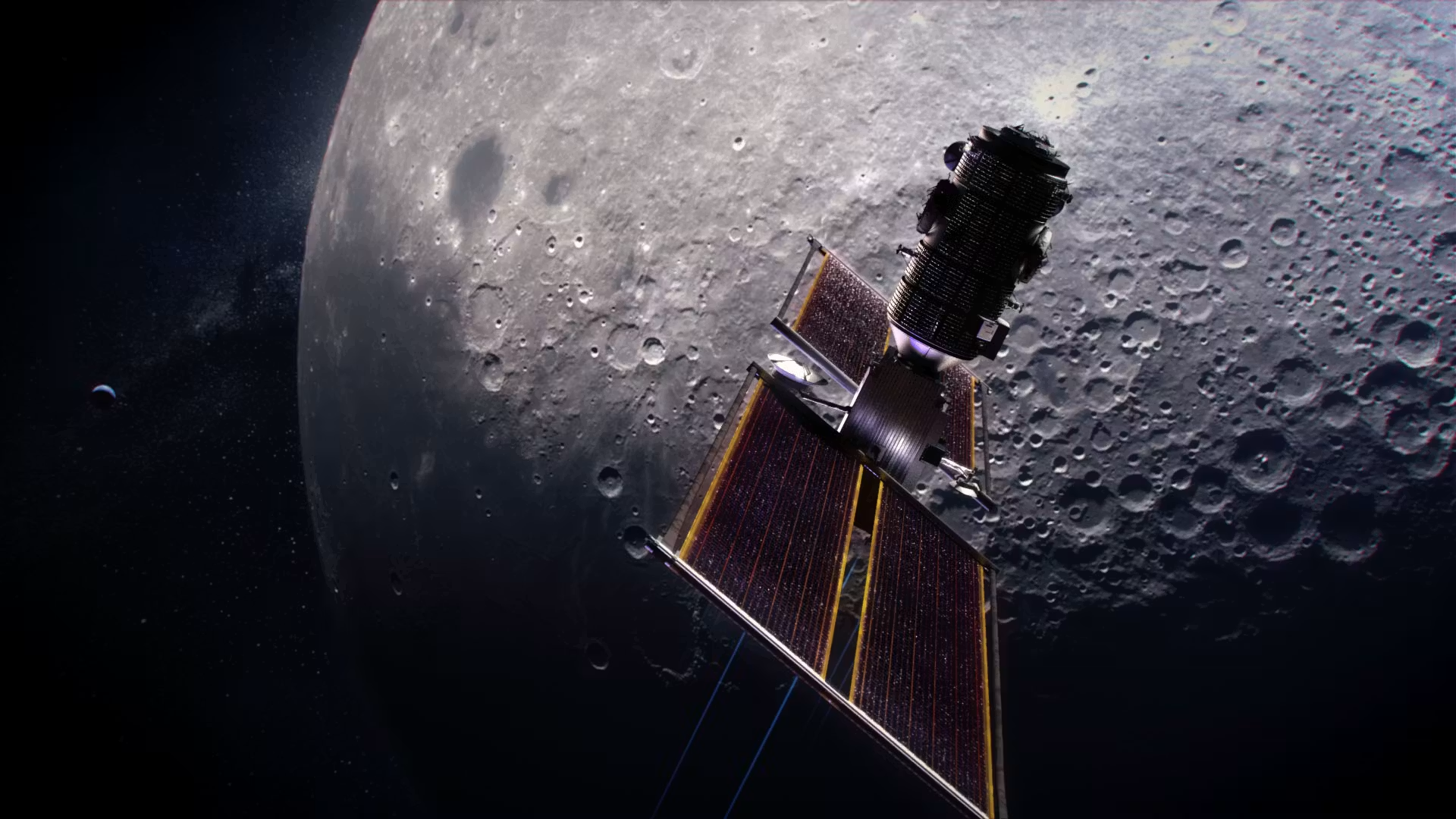
Dan Hartman and Lara Kearney, Gateway Program Manager and Deputy Program Manager, respectively, detail the plans for our orbiting lunar outpost and how Gateway will serve as a docking and service station for Artemis missions as we prepare for sustainable human presence on the Moon. HWHAP Episode 157.