Before his passing, conductor Robert Franz guided us through the first movement of Dvorák’s “New World Symphony” using his four essential tools for listening—rhythm, melody, texture and visuals. As the year comes to a close, Manoush Zomorodi shares one of her favorite TED Radio Hour+ episodes.
Robert Franz was also featured in episode, “How we experience time.”
To hear more bonus content like this and to support NPR and public radio, sign up for TED Radio Hour+ at plus.npr.org/ted
See pcm.adswizz.com for information about our collection and use of personal data for sponsorship and to manage your podcast sponsorship preferences.
NPR Privacy Policy
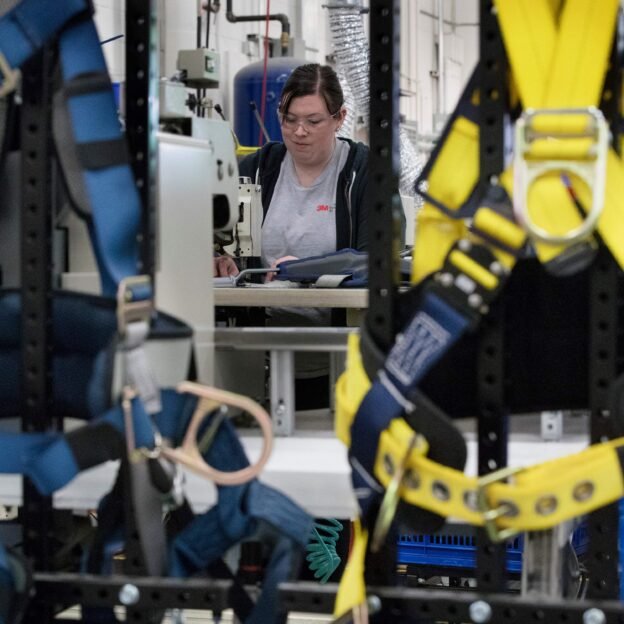
From nuclear fission to GPS to the internet, it’s common knowledge that many of the most resource intensive technologies of the last century got their start as military R&D projects in government-funded labs. But as Avery Trufelman explains in her fashion history podcast, Articles of Interest, the influence of the US military is, in many ways, even more intimate than that, shaping much of the clothing we all wear everyday.
On today’s show, a tale of Army surplus economics. How military designs trickled down from the soldiers on the front lines to the hippies on the war protest line to the yuppies in line at Banana Republic. And why some of your favorite outdoor brands may just be moonlighting as U.S. military suppliers, while keeping it as under the radar as they can.
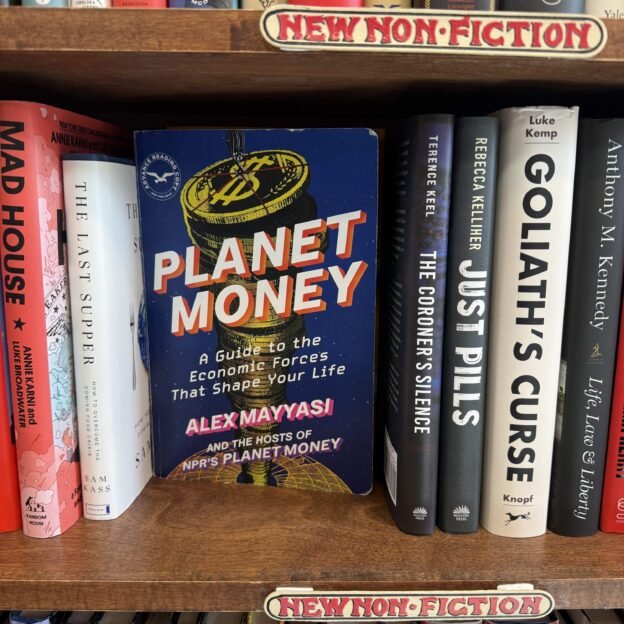
Pre-order the Planet Money book and get a free gift. / Subscribe to Planet Money+
Listen free: Apple Podcasts, Spotify, the NPR app or anywhere you get podcasts.
Facebook / Instagram / TikTok / Our weekly Newsletter.
This episode of Planet Money was produced by Luis Gallo, edited by Jess Jiang, fact checked by Yasmine Alsayyad, and engineered by Robert Rodriguez. Alex Goldmark is Planet Money’s executive producer.
Articles of Interest is produced by Avery Trufelman, edited by Alison Beringer, fact checked by Yasmine Alsayyad, and engineered by Jocelyn Gonzalez.
See pcm.adswizz.com for information about our collection and use of personal data for sponsorship and to manage your podcast sponsorship preferences.
NPR Privacy Policy
A few years ago, the Jamaican government started making an unusual financial bet. It went to investors around the world asking if they’d like to wager on the chances a major hurricane would hit the island in the next couple of years.
In finance terms, these kinds of wagers are called “catastrophe bonds.” They’re a way to get investors to share the risk of a major disaster, whether that’s a Japanese earthquake, a California wildfire, or a Jamaican hurricane.
This market for catastrophe has gotten really hot lately. And it’s changing the way that insurance works for all of us.
Pre-order the Planet Money book and get a free gift. / Subscribe to Planet Money+
Listen free: Apple Podcasts, Spotify, the NPR app or anywhere you get podcasts.
Facebook / Instagram / TikTok / Our weekly Newsletter.
This episode was produced by Willa Rubin and edited by Marianne McCune. It was engineered by Jimmy Keeley and Kwesi Lee. Fact-checking by Sierra Juarez and Vito Emanuel. Alex Goldmark is our executive producer.
Music: Universal Music Production – “Lagos to London,” “Sleazy Does It,” “The Sundown Set.”
See pcm.adswizz.com for information about our collection and use of personal data for sponsorship and to manage your podcast sponsorship preferences.
NPR Privacy Policy
The CHAPEA Mission 2 crew discusses their backgrounds and preparations for their upcoming yearlong analog Mars mission inside the Mars Dune Alpha habitat at NASA’s Johnson Space Center. HWHAP 404.
It’s been a long, complicated year. This hour, TED speakers share ideas to help you get grounded, back on track, and even edge toward something like bliss.
TED Radio Hour+ subscribers now get access to bonus episodes, with more ideas from TED speakers and a behind the scenes look with our producers. A Plus subscription also lets you listen to regular episodes (like this one!) without sponsors. Sign-up at plus.npr.org/ted.
See pcm.adswizz.com for information about our collection and use of personal data for sponsorship and to manage your podcast sponsorship preferences.
NPR Privacy Policy
Vote for us in NPR’s People’s Choice Awards: npr.org/peopleschoice
AI is already reshaping how people find work. Fewer entry-level jobs, robot recruiters, and ever-changing new skill requirements all add up to a new, daunting landscape for humans trying to find dignified work.
Today on the show: two stories from the edges of a changing labor market. First we’ll assess claims that AI is causing a white collar job apocalypse. What does the data actually say? We meet an economist who has found one small but fascinating way to measure the impact of AI on workers.
Then, we go face-to-face, or at least voice-to-voice, with AI. We meet a robot recruiter for a job interview and find cause to ask, ‘When might that actually be preferable to a human recruiter?’
Pre-order the Planet Money book and get a free gift. / Subscribe to Planet Money+
Listen free: Apple Podcasts, Spotify, the NPR app or anywhere you get podcasts.
Facebook / Instagram / TikTok / Our weekly Newsletter.
The original Indicator episodes were hosted by Wailin Wong, Darian Woods, and Adrian Ma. They were produced by Cooper Katz McKim and engineered by Robert Rodriguez and Debbie Daughtry. They were fact checked by Sierra Juarez. They were edited by Paddy Hirsch and Kate Concannon.
See pcm.adswizz.com for information about our collection and use of personal data for sponsorship and to manage your podcast sponsorship preferences.
NPR Privacy Policy
Taylor Swift reaches new heights with her latest album, which is both divisive and record-breaking. And it’s fueled by an elaborate series of business choices that propel profits but also chart numbers. Today’s episode comes from our friends at Today Explained, Vox’s lively, smart daily news podcast.
Pre-order the Planet Money book and get a free gift. / Support our show. Subscribe to Planet Money+
Listen to Planet Money free: Apple Podcasts, Spotify, the NPR app or anywhere you get podcasts.
Facebook / Instagram / TikTok / Our weekly Newsletter.
This episode was hosted by Noel King. It was produced by Ariana Aspuru, edited by Amina Al-Sadi, fact-checked by Laura Bullard, and engineered by Adriene Lilly.
See pcm.adswizz.com for information about our collection and use of personal data for sponsorship and to manage your podcast sponsorship preferences.
NPR Privacy Policy
We can’t protect what we don’t understand. From decoding wolf howls to making sense of millions of citizen-science sightings, we explore the tools helping researchers understand the wild in new ways.
TED Radio Hour+ subscribers now get access to bonus episodes, with more ideas from TED speakers and a behind the scenes look with our producers. A Plus subscription also lets you listen to regular episodes (like this one!) without sponsors. Sign-up at plus.npr.org/ted.
See pcm.adswizz.com for information about our collection and use of personal data for sponsorship and to manage your podcast sponsorship preferences.
NPR Privacy Policy
Givewell is a nonprofit organization that gives money to “save or improve the most lives per dollar.” Part of their whole thing is a rigorous research process with copious and specific datapoints. So, in the chaotic wake of USAID’s gutting, they scrambled to figure out if they could fund the kind of projects USAID used to.
Today on the show: GiveWell let us in on their decision-making process, as they try to reconcile the urgency of the moment with their normal diligence. We get to watch as they decide if they can back one project, to support health facilities in Cameroon.
Pre-order the Planet Money book and get a free gift. / Subscribe to Planet Money+
Listen free: Apple Podcasts, Spotify, the NPR app or anywhere you get podcasts.
Facebook / Instagram / TikTok / Our weekly Newsletter.
This episode was hosted by Mary Childs. It was produced by Sam Yellowhorse Kesler. It was edited by Marianne McCune, fact-checked by Vito Emanuel, and engineered by Jimmy Keeley with help from Robert Rodriguez. Planet Money’s executive producer is Alex Goldmark.
See pcm.adswizz.com for information about our collection and use of personal data for sponsorship and to manage your podcast sponsorship preferences.
NPR Privacy Policy
Coca-Cola is… sugar water. And somehow it’s also America, Christmas, summertime, friendship and happiness. Today we tell the story of how The Coca-Cola Company amazingly transmogrified a beverage into emotion in all of our collective psyches, and ALSO built one of the most incredible scale economy businesses of all-time. And oh yeah, there’s also cocaine, WW2, Mad Men, Warren Buffett, James Dean, Bill Cosby, Michael Jackson, Michael Ovitz, Steve Jobs, Bill Gates, McDonald’s and Monsanto. So cozy up to the fire with your favorite images of Santa Claus and Polar Bears and enjoy an ice-cold episode of Acquired — always delicious, always refreshing.
Sponsors:
Links:
Carve Outs:
More Acquired!
© Copyright 2015-2026 ACQ, LLC
- (00:00) – Start
- (00:41) – Intro
- (05:52) – Patent Medicines & the Birth of an Industry
- (12:13) – Dr. John Pemberton & the “Miracle Drug” Cocaine
- (16:40) – Creating the Secret Formula (1886)
- (22:14) – Frank Robinson’s Genius & the First Coupon
- (33:01) – Asa Candler & Building a National Brand (1890s)
- (42:11) – The $1 Bottling Deal: A Fortuitous Mistake
- (54:43) – Protecting the “Real Thing”: Lawsuits & the Contour Bottle
- (01:07:34) – Robert Woodruff: The Boss Takes Over (1923)
- (01:16:16) – Creating Lifestyle Advertising & Santa Claus
- (01:28:08) – Standardization, Gas Stations & Early Global Growth
- (01:36:49) – Pepsi: The First Real Competitor Emerges
- (01:44:51) – World War II: The Greatest Sampling Program in History
- (01:55:23) – The Cola Wars Begin & the McDonald’s Partnership (1950s)
- (02:22:08) – The Pepsi Challenge (1975)
- (02:40:08) – New Coke: The Worst Marketing Blunder Ever (1985)
- (03:07:11) – Buffett’s Investment & the “Total Beverage Company”
- (03:36:01) – Analysis: Why Did Coca-Cola Work?
- (03:41:29) – 7 Powers
- (03:48:20) – Quintessence
- (03:56:26) – Carve-Outs + Outro
Note: Acquired hosts and guests may hold assets discussed in this episode. This podcast is not investment advice, and is intended for informational and entertainment purposes only. You should do your own research and make your own independent decisions when considering any financial transactions.