Forgetting a name, a poorly executed hug, the 7th grade — awkwardness is part of our lives whether we like it or not. But what if we put the embarrassment aside and embraced our awkward selves? Guests include social scientist Ty Tashiro, cartoonist Liana Finck, journalist Melissa Dahl and sex and relationship counselor Erin Chen.
Original broadcast date: April 19, 2024.
Support public media with NPR+ and enjoy perks for over 25 podcasts like this one. This show’s perks include sponsor-free listening. Learn more at plus.npr.org.
See pcm.adswizz.com for information about our collection and use of personal data for sponsorship and to manage your podcast sponsorship preferences.
NPR Privacy Policy
(Note: A version of this episode originally ran in 2024.)
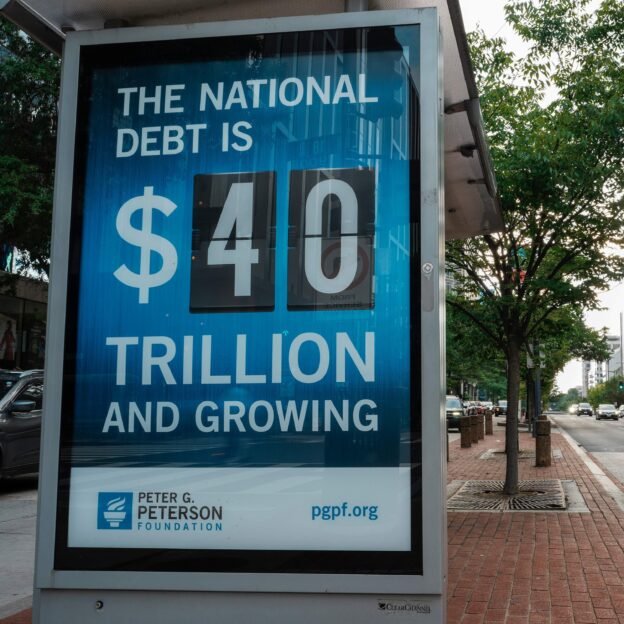
$40,000,000,000,000. Four commas. Thirteen zeroes. It’s an eye-popping, almost infinite-sounding pile of money. And every time the debt passes a big round number, almost everyone asks the same question: How much debt is too much?
It’s maybe the most important question in macroeconomics. It’s also surprisingly hard to answer. When two economists tried to answer it back in 2010, it ignited a research slugfest that lasted a decade.
We did a show on this question in 2024, outlining everything we know and don’t know about when the national debt becomes a problem. But a lot has changed. Interest rates have risen and stayed high. Spending has steamrolled ahead. Doves have become hawks.
So on today’s show, we update our 2024 episode to revisit the age-old question: Is our debt finally too much?
Read Planet Money:
Follow:
Support public media with NPR+ and enjoy perks for over 25 podcasts like this one. This show’s perks include bonus episodes and sponsor-free listening. Learn more at plus.npr.org.
Our original episode was produced by Willa Rubin and edited by Molly Messick. This update was reported and produced by Vito Emanuel. It was fact checked by Sierra Juarez. It was engineered by Kwesi Lee. And it was edited by Alex Goldmark, Planet Money’s executive producer.
See pcm.adswizz.com for information about our collection and use of personal data for sponsorship and to manage your podcast sponsorship preferences.
NPR Privacy Policy
People braving the true final frontier — the gap between people born at slightly different times.
Visit thisamericanlife.org/lifepartners to sign up for our premium subscription.
(00:00:00) Prologue: Last fall, some NPR podcasts started getting mysterious comments on Spotify. They made no sense to the staff reading them – until someone from a younger generation cracked the code. (11 minutes)
(00:12:02) Act One: When Courtney Maum was eighteen, her mother married a guy she despised. At their wedding, Courtney read a poem she wrote – a pretty dark poem! – which made her mother furious. More than 30 years later, they finally talk about it. (27 minutes)
(00:41:59) Act Two: When Ike Sriskandarajah was a teenager in Madison, Wisconsin, he thought he had the greatest job. He worked at the movie theater, wore a cummerbund, and snuck friends in through the back door! It was magical. That was more than 20 years ago. Is it still as great as he remembers? Ike goes back to find out. (8 minutes)
(00:51:35) Act Three: Every morning, Myra Flynn finds herself in a standoff with her daughter over her hair. Recently, to understand why these hair sessions are so fraught, Myra started recording them. What she heard sent her on a quest to get answers from her own mother. (11 minutes)
Transcripts are available at thisamericanlife.org / This American Life privacy policy. / Learn more about sponsor message choices.
Did a pizza restaurant’s humble status page change how we wait forever?
When you order a Lyft or Uber, you get texts every few minutes about your car approaching and arriving. When you have a package coming, you get a notification when it’s shipped, when it’s en route, and when it’s out for delivery. Why do so many companies send these constant updates?
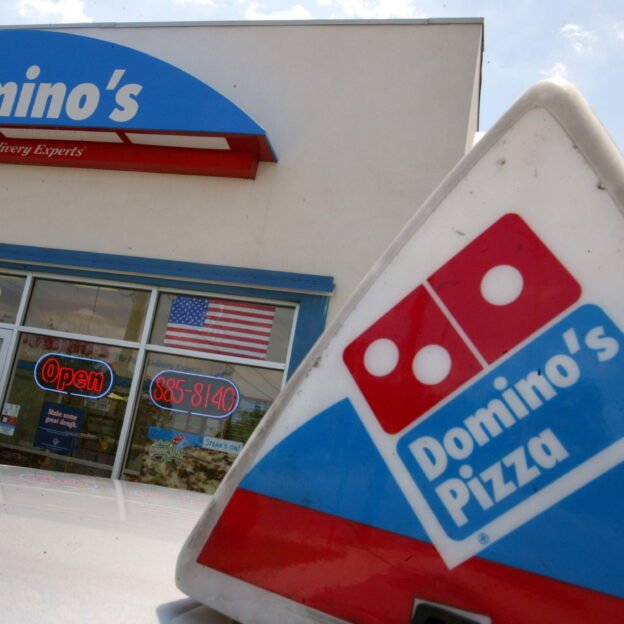
We have a theory: It’s because of Domino’s. In 2008, Domino’s launched the Pizza Tracker, a novel tool that delighted customers by allowing them to obsessively monitor their pizza’s progress from order to oven to delivery. The Pizza Tracker became a canonical model for other companies trying to improve their customers’ experiences of waiting for all kinds of products and services. And now? Pizza Trackers are everywhere.
On today’s show: how the Domino’s Pizza Tracker shaped the internet, and how trackers went from transparently sharing information with consumers to — in some cases — actively deceiving us.
Support:
— Planet Money+
Read:
— Our book: Planet Money: A Guide to the Economic Forces That Shape Your Life
— Our weekly longform Planet Money newsletter
— Our weekly Indicator round-up newsletter
Follow:
— Instagram
— TikTok
— YouTube
— Facebook
This episode was hosted by Nick Fountain and Alex Mayyasi. It was produced by Sam Yellowhorse Kesler, edited by Liza Yeager, fact-checked by Sierra Juarez and engineered by Cena Loffredo and Jimmy Keeley. Alex Goldmark is Planet Money’s executive producer.
Support public media with NPR+ and enjoy perks for over 25 podcasts like this one. This show’s perks include bonus episodes and sponsor-free listening. Learn more at plus.npr.org.
See pcm.adswizz.com for information about our collection and use of personal data for sponsorship and to manage your podcast sponsorship preferences.
NPR Privacy Policy
NASA astronaut Chris Williams and astrophysicist Neil deGrasse Tyson explore human spaceflight, astrophysics, and the wonder of the universe. Episode 437
Our senses help us navigate everyday life. But can they also reveal what lies beyond our perception? This hour, TED speakers explore the hidden world through the senses. Guests include astronomer Mark Whittle, chemosensory researcher Paule Joseph and artist Yiyun Kang.
Support public media with NPR+ and enjoy perks for over 25 podcasts like this one. This show’s perks include sponsor-free listening. Learn more at plus.npr.org.
See pcm.adswizz.com for information about our collection and use of personal data for sponsorship and to manage your podcast sponsorship preferences.
NPR Privacy Policy
Margin borrowing and sports gambling “investments” are both on the rise! Today on the show, two stories from Planet Money’s daily podcast The Indicator about the ways investing is changing, and getting riskier.
According to one study, more than half of Gen Zers are using investment dollars for sports gambling. On average, this is not a smart strategy for the long term. It might be that sports betting today is like day trading was for a previous generation of young investors: something a lot of young people, typically men, do, lose money at for a while, then quit. We review the early research on this trend and meet a state legislator proposing ways to stem problem gambling.
More, generally younger people are also investing with borrowed money. Trading on margin is at an all time high of over $1.5 trillion. In the past, high levels of margin investing have led to crashes. We hear those stories and find out what the Fed might do to reign in the risk.
Related Indicator episodes
— How AI might mess with financial markets
— Prediction markets are threatening national security. Who’s gonna fix it?
Connect with Planet Money & The Indicator
— Sign up for The Indicator’s weekly link round up newsletter!
— Sign up for Planet Money’s weekly longform newsletter!
— Buy the Planet Money book
— Find our socials, YouTube and more!
— For sponsor-free episodes, subscribe to NPR+
Support public media with NPR+ and enjoy perks for over 25 podcasts like this one. This show’s perks include bonus episodes and sponsor-free listening. Learn more at plus.npr.org.
These episodes of The Indicator from Planet Money were produced by Corey Bridges and Cooper Katz-McKim. They were engineered by Travis Hagan and Cena Loffredo, and fact-checked by Sierra Juarez. They were edited by Julia Ritchey and Kate Concannon.
Support public media with NPR+ and enjoy perks for over 25 podcasts like this one. This show’s perks include bonus episodes and sponsor-free listening. Learn more at plus.npr.org.
See pcm.adswizz.com for information about our collection and use of personal data for sponsorship and to manage your podcast sponsorship preferences.
NPR Privacy Policy
Cryptic messages on a cell phone and a teeter-totter at a construction site: these are clues people found, trying to make sense of a death.
Visit thisamericanlife.org/lifepartners to sign up for our premium subscription.
(00:00:00) Prologue: Host Ira Glass talks to a guy about a crazy experiment he devised when he was a kid. It almost killed him. (5 minutes)
(00:06:45) Act One: We begin with a woman whose sister has died. She has questions. Her name is Nadia Bowers, and she wrote this to someone she thinks might be of help. (17 minutes)
(00:29:53) Act Two: There’s a problem with having a Facebook account after you’re dead that you’ve never, ever, ever thought about. Producer Stephanie Foo tells this story, about Dave Maher. (14 minutes)
(00:45:49) Act Three: A guy goes to a funeral for someone he doesn’t know at all, and has to piece together everything about him. Producer Dana Chivvis reports. (16 minutes)
Transcripts are available at thisamericanlife.org / This American Life privacy policy. / Learn more about sponsor message choices.
There is a new type of loan that is sweeping through the country right now. It’s advertised as a super quick and super easy way to get a mortgage to buy a home. In recent years, Wall Street has been funneling billions of dollars into these loans.
But these loans are also raising questions. Are they a financial innovation that’s helping the housing market? Or … a sign that Wall Street might be forgetting the mistakes that led to the Global Financial Crisis?
On today’s show, we head to Baltimore, where abandoned rowhomes have become a familiar sight. Reporters Hallie Miller, Jack Bologna and Sahana Jayaraman from The Baltimore Banner have been following this new loan as it’s been bringing millions of dollars into some of Baltimore’s most distressed neighborhoods.
But, a few years ago, two local landlords quickly and quietly amassed what might be one of the largest private real estate portfolios in Baltimore: Over 700 homes and $100 million dollars in borrowed cash. Using this hot new loan. And then they tried to disappear. We talk with the Banner reporters about what they found at the heart of this mystery, and why it might have implications for the rest of the country.
Read the Banner’s reporting:
The housing hustle igniting a foreclosure crisis in Baltimore
Before mass foreclosures, DSCR loans looked good for Baltimore
Could a few ‘bad actors’ upend Baltimore’s housing hopes?
Baltimore will investigate New York investor group for housing discrimination
Baltimore is striking fear into private lenders across the country
From $3.7M to $9.9M: Federal probe focuses on 42 Baltimore homes sold again and again
The FBI is investigating the New York investors behind Baltimore’s foreclosure wave
Fake deeds, real money: New York investors accused of another Baltimore scam
How do you build a huge portfolio of Baltimore rentals? It helps to know a guy.
The loans behind Baltimore’s foreclosure crisis are surging in cities across the nation
Baltimore ballroom ‘icon’ survives a life of grit with glamour
Read:
Our book: Planet Money: A Guide to the Economic Forces That Shape Your Life
Our weekly longform Planet Money newsletter
Our weekly Indicator round-up newsletter
Follow:
Instagram
TikTok
YouTube
Facebook
Support public media with NPR+ and enjoy perks for over 25 podcasts like this one. This show’s perks include bonus episodes and sponsor-free listening. Learn more at plus.npr.org.
This episode was hosted by Jeff Guo. It was produced by Sam Yellowhorse Kesler and edited by Jess Jiang. It was fact-checked by Sierra Juarez and engineered by Travis Hagen. Alex Goldmark is Planet Money’s executive producer.
Music: Universal Production Music – “Slick Groove,” “Seven Secrets,” and “Jazz Move”
See pcm.adswizz.com for information about our collection and use of personal data for sponsorship and to manage your podcast sponsorship preferences.
NPR Privacy Policy
NASA’s Moon Base program manager Carlos García-Galán discusses how NASA is building humanity’s first Moon Base and establishing a long-term human presence on the lunar surface. Episode 436