The First Air Force Detachment 3 discusses their long-standing partnership with NASA supporting astronaut rescue and recovery operations from Mercury to Artemis. HWHAP 415.

The First Air Force Detachment 3 discusses their long-standing partnership with NASA supporting astronaut rescue and recovery operations from Mercury to Artemis. HWHAP 415.

Can otters be city dwellers? Are aliens real? Do we have to experience misery to understand happiness? On this episode, we investigate how strange bedfellows can lead to radical realizations. Guests include evolutionary biologist Philip Johns, astrophysicist Avi Loeb and author Laurel Braitman.
Original air date: March 21, 2025
TED Radio Hour+ subscribers now get access to bonus episodes, with more ideas from TED speakers and a behind the scenes look with our producers. A Plus subscription also lets you listen to regular episodes (like this one!) without sponsors. Sign-up at plus.npr.org/ted.
See pcm.adswizz.com for information about our collection and use of personal data for sponsorship and to manage your podcast sponsorship preferences.
Live event info and tickets here.
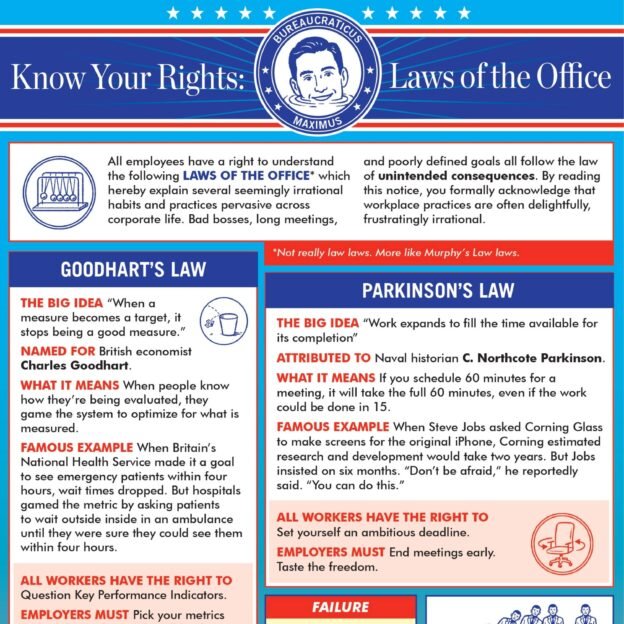
If something is going wrong in your workplace, there’s probably a law that explains why. Meetings always seem long, and never end early? There’s Parkinson’s Law, which says work expands to the time allotted, or, restated: meetings will always take up all the time blocked on Outlook calendars. Is your boss bad at managing? Check the Peter Principle, which says people are promoted to their level of incompetence. A good worker does not a good manager make. And yet … here we are. Once you hear these laws, and a few others, you start to spot them everywhere.
Today on the show, we picked a few of the most famous and powerful ‘laws of the office’ and tested them out on each other.
Pre-order the Planet Money book and get a free gift. / Subscribe to Planet Money+
Listen free: Apple Podcasts, Spotify, the NPR app or anywhere you get podcasts.
Facebook / Instagram / TikTok / Our weekly Newsletter.
This episode was hosted by Kenny Malone, Sarah Gonzalez, and Alexi Horowitz-Ghazi. It was produced by Alexi Horowitz-Ghazi. Bryant Urstadt edited this show. Planet Money’s executive producer is Alex Goldmark.
See pcm.adswizz.com for information about our collection and use of personal data for sponsorship and to manage your podcast sponsorship preferences.
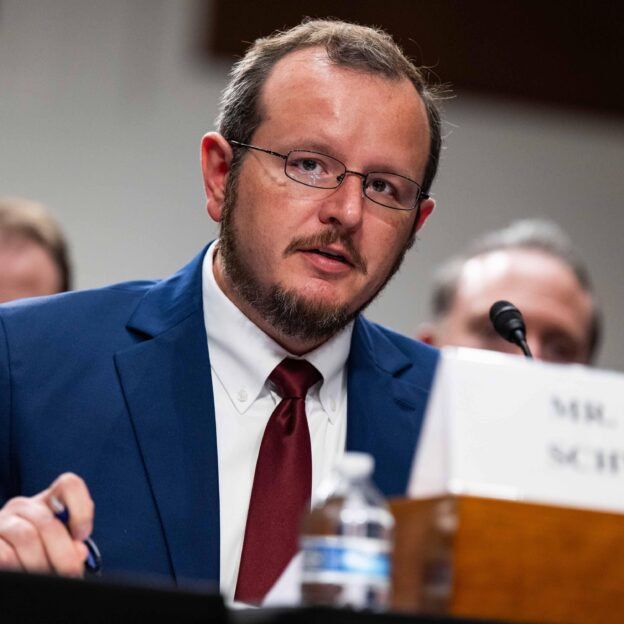
Two lawyers who work for ICE step forward and lift the curtain on what is really happening inside our immigration system right now.
Visit thisamericanlife.org/lifepartners to sign up for our premium subscription.
Transcripts are available at thisamericanlife.org
This American Life privacy policy.
Learn more about sponsor message choices.

What do we want from sports? The very best athletes competing as hard as they know how, putting all their effort and training and natural ability to the test against their opponents. But this time of year, that’s not the product the NBA is putting on the court. Instead, teams at the bottom of the league are competing … to lose, because it could help them get a top pick in next year’s draft. It’s called tanking — it’s bad for fans, and it’s bad for the league.
Tanking has gotten especially egregious this year. Even NBA Adam Silver has called out teams for tanking. He recently announced that league bigwigs are considering “every possible remedy” to “align incentives.”
Today on the show — Planet Money fixes the NBA’s tanking problem by … fixing the NBA draft. We get solutions from Hockey Hall of Famer Jayna Hefford, World Cup Champion Sam Mewis, and long-time NBA analyst Zach Lowe.
Handles for the NBA fans in the episode: thevoiceofevan, fullcourtblitz, ashleynevel, igotnxtpodcast, finesse.wes, basketballsavant, and mikedaddino__.
Live event info and tickets here / Pre-order the Planet Money book and get a free gift. / Subscribe to Planet Money+
Listen free: Apple Podcasts, Spotify, or the NPR app
Facebook / Instagram / TikTok / Our weekly Newsletter
This episode was hosted by Keith Romer and Erika Beras. It was produced by James Sneed with an assist from Sam Yellowhorse Kesler. It was edited by Jess Jiang and fact-checked by Sierra Juarez. Alex Goldmark is our executive producer.
See pcm.adswizz.com for information about our collection and use of personal data for sponsorship and to manage your podcast sponsorship preferences.

Dr. Lisa Carnell, division director for NASA’s Biological and Physical Sciences, breaks down how research in microgravity, the Moon, and Mars can transform what we know about biology and physics. HWHAP 414.

Negotiations are a part of life, but too often they end up in an ugly confrontation or stalemate. This hour, TED speakers share ideas on navigating conflicts with more clarity and less fear. Guests include mediator and law professor Alex Carter and linguist Magdalena Hoeller.
TED Radio Hour+ subscribers now get access to bonus episodes, with more ideas from TED speakers and a behind the scenes look with our producers. A Plus subscription also lets you listen to regular episodes (like this one!) without sponsors. Sign-up at plus.npr.org/ted.
See pcm.adswizz.com for information about our collection and use of personal data for sponsorship and to manage your podcast sponsorship preferences.

Heated Rivalry, the steamy hockey romance show, was made for about $2 million per episode. That is remarkably cheap for an hour-long drama.
Today on the show, a conversation with Heated Rivalry creators Jacob Tierney and Brendan Brady about their television miracle on ice.
It’s not just that the show was made efficiently and cleverly. Heated Rivalry comes from a Canadian economic system of making TV and movies that is completely different from how we do things in the US.
In this episode of Planet Money, in partnership with the Pivot podcast co-hosted by Kara Swisher, we hear about a Canadian production model for making TV and movies and how it’s different from the U.S. model. And we learn what the experience of making Heated Rivalry teaches us about the current state of both industries.
Live event info and tickets here.
Pre-order the Planet Money book and get a free gift. / Subscribe to Planet Money+
Listen free: Apple Podcasts, Spotify, the NPR app or anywhere you get podcasts.
Facebook / Instagram / TikTok / Our weekly Newsletter.
The original Pivot episode from New York Magazine and The Vox Media Podcast Network was hosted by Kara Swisher, produced by Lara Naman, Zoë Marcus and Taylor Griffin and engineered by Brandon McFarland. Nishat Kurwa is Vox Media’s Executive Producer of podcasts. This episode of Planet Money was hosted by Kenny Malone, produced by James Sneed, edited by Jess Jiang and fact-checked by Lara Naman. Alex Goldmark is our executive producer.
See pcm.adswizz.com for information about our collection and use of personal data for sponsorship and to manage your podcast sponsorship preferences.
Formula 1 is three competitions in one: a 200mph battle of the world’s best race car drivers, the world cup of engineering where thousand-person teams spend hundreds of millions designing cars from scratch, and — as one of our listeners perfectly put it — the “Real Housewives of the Garage”, a soap opera of billionaire egos, team politics, and paddock drama that makes for incredible reality television. It’s also the world’s most popular annual sporting series with over 827 million fans globally — a fact that would shock most Americans, who until a recent viral Netflix series had barely heard of it.
Today we tell the story of how a chaotic, deadly, and gloriously dysfunctional European racing series became one of the greatest business stories in sports. For decades, brilliant engineers and daredevil drivers dedicated their lives (and too often lost them) to a league controlled for 45 years by a single man: a former London car dealer named Bernie Ecclestone, who centralized power and extracted billions, while also undeniably single-handedly making the sport successful. Then, in a move no one saw coming, the American company Liberty Media bought the whole thing in 2017, installed a team of Fox Sports and ESPN veterans, and did what Bernie never would — professionalized it. All of a sudden famously money-losing F1 teams turned into real businesses, with the average team valuation today clocking in at an astounding $3.6 billion. Buckle up for one of our most-requested episodes: the wild story of Formula 1.
Sponsors:
Many thanks to our fantastic Spring ’26 Season partners:
Links:
Carve Outs:
More Acquired:
00:00:00 Start
00:00:37 Intro
00:05:52 Origins of F1: Britain, Italy, and Monaco
00:30:43 Bernie’s Entrance
00:37:42 Bernie Consolidates Power
00:50:33 F1 as a Global TV Sport (Except America)
01:08:08 F1’s Incredible Engineering Achievements
01:19:34 Senna’s Crash and a New Era for Safety
01:33:18 The Many Owners of F1, and Bernie’s Liquidity Drama
01:57:48 FOTA: The attempted breakaway series
02:05:07 RedBull, Mercedes, and Reinventing the Sport
02:42:33 Liberty Media buys F1 and Brings it to the Modern Era
03:05:03 Drive to Survive
03:26:45 Apple, TV Rights, and Success in America
03:41:52 F1: The Business Today
03:56:23 Analysis: Why Did F1 Work… and Was Bernie Necessary?
04:05:40 7 Powers
04:08:23 Bear vs. Bull Cases
04:16:32 Quintessence
04:20:08 Carve-Outs + Outro
Note: Acquired hosts and guests may hold assets discussed in this episode. This podcast is not investment advice, and is intended for informational and entertainment purposes only. You should do your own research and make your own independent decisions when considering any financial transactions.
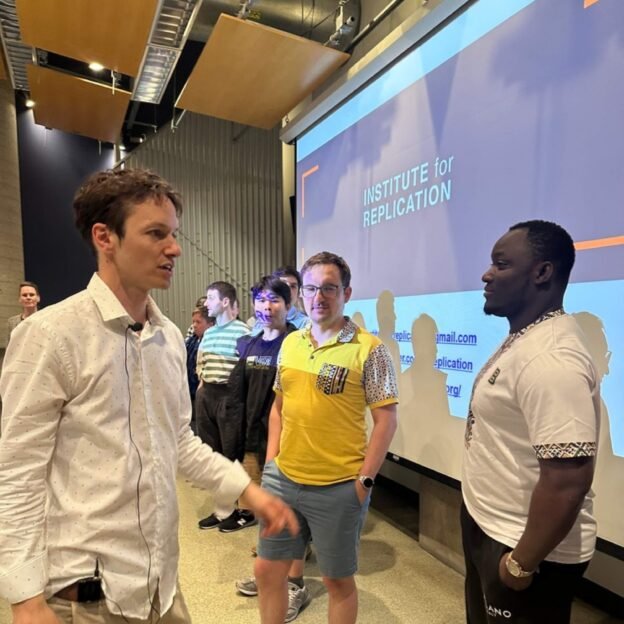
The world of science has been stuck in an existential crisis over whether we actually know the things we thought we knew. Re-running an old study today doesn’t always yield the same result. Same with re-enacting old experiments. Collectively, this is known as the “replication crisis.”
Economist Abel Brodeur has come up with one way to help fix this crisis: he’s invented an internationally crowdsourced surveillance system, designed to keep social scientists honest. He calls it the “Replication Games.”
Further Listening:
This episode was hosted by Mary Childs and Alexi Horowitz-Ghazi. It was produced by James Sneed and Emma Peaslee, with help from Willa Rubin. It was edited by Jess Jiang, fact-checked by Sam Yellowhorse Kesler, and engineered by Ko Takasugi-Czernowin. Alex Goldmark is Planet Money’s executive producer.
Find more Planet Money: Facebook / Instagram / TikTok / Our weekly Newsletter.
Listen free at these links: Apple Podcasts, Spotify, the NPR app or anywhere you get podcasts.
Help support Planet Money and hear our bonus episodes by subscribing to Planet Money+ in Apple Podcasts or at plus.npr.org/planetmoney.
See pcm.adswizz.com for information about our collection and use of personal data for sponsorship and to manage your podcast sponsorship preferences.