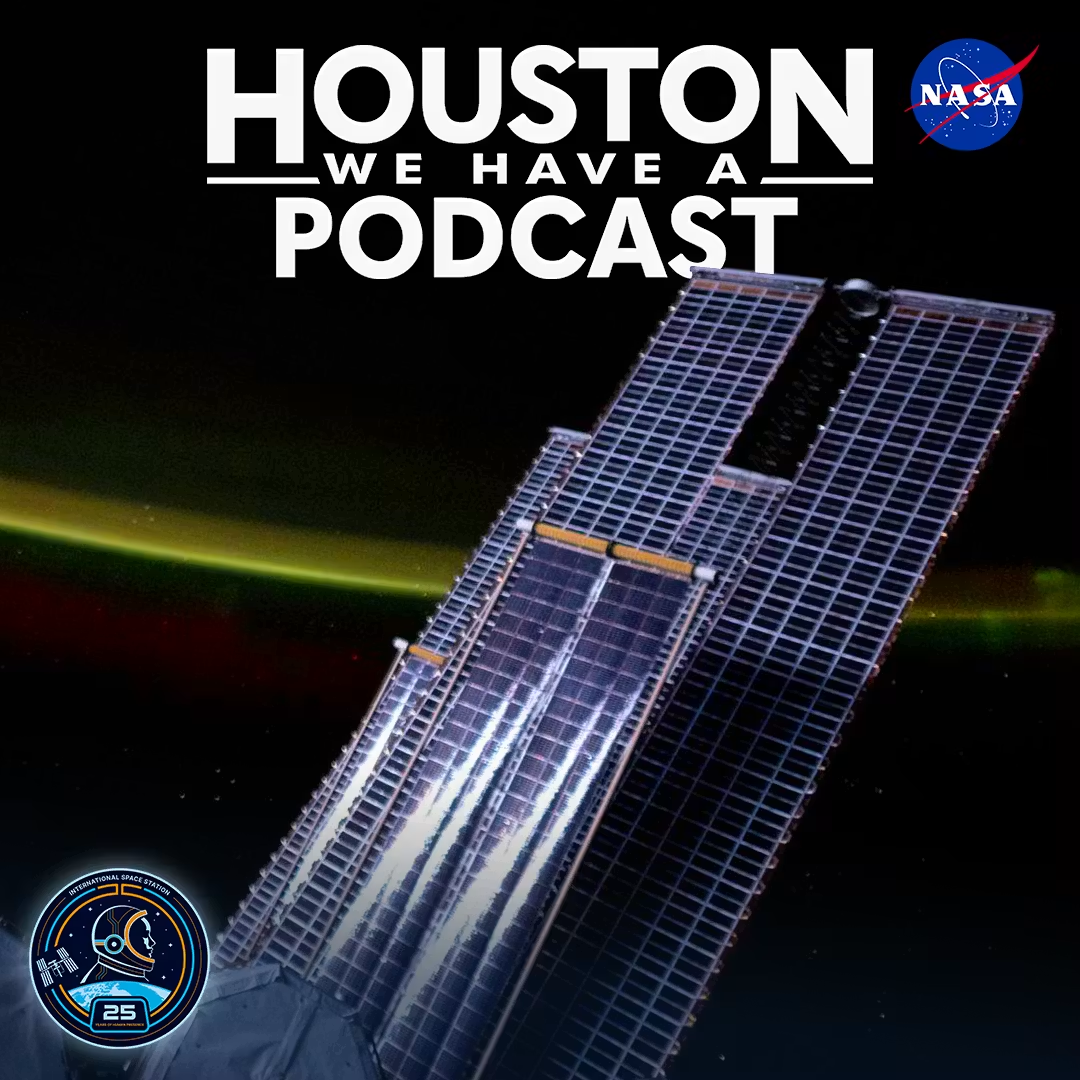
NASA leaders Dana Weigel and Robyn Gatens reflect on more than 25 years of continuous human presence aboard the International Space Station and discuss how the orbiting laboratory is paving the way for Artemis, the Moon, and eventually Mars. HWHAP 413.
MLK Jr., Malcolm X and James Baldwin are household names, but what about their mothers? This hour, author Anna Malaika Tubbs explores how these three women shaped American history. Original air date: February 27, 2026.
TED Radio Hour+ subscribers now get access to bonus episodes, with more ideas from TED speakers and a behind the scenes look with our producers. A Plus subscription also lets you listen to regular episodes (like this one!) without sponsors. Sign-up at plus.npr.org/ted.
See pcm.adswizz.com for information about our collection and use of personal data for sponsorship and to manage your podcast sponsorship preferences.
NPR Privacy Policy
Live event info and tickets here.
ICE is scaling up, with rapid new hiring. So we ask, has training new officers changed? At what cost?
Also, the Trump administration has plans to pour billions of dollars into warehouses for mass immigrant detention centers, which can totally change the economy of some areas. We hear from a rural town in Georgia that wants an ICE facility in its own backyard.
These episodes were originally published on Planet Money’s sister daily podcast The Indicator.
Pre-order the Planet Money book and get a free gift. / Subscribe to Planet Money+
Listen free: Apple Podcasts, Spotify, the NPR app or anywhere you get podcasts.
Listen to the Indicator from Planet Money
Facebook / Instagram / TikTok / Our weekly Newsletter.
The episodes of The Indicator were produced by Julia Ritchey, with engineering by Jimmy Keeley. They were fact-checked by Sierra Juarez. Kate Concannon is our show’s editor.
This episode of Planet Money was produced by Luis Gallo, with help from James Sneed. It was edited by Planet Money’s Executive Producer, Alex Goldmark.
See pcm.adswizz.com for information about our collection and use of personal data for sponsorship and to manage your podcast sponsorship preferences.
NPR Privacy Policy
Live event info and tickets here.
The Supreme Court has spoken. Those big, sweeping tariffs that President Trump imposed early last year? They’re illegal.
On today’s show: Why were those tariffs struck down? Will anyone get refunds? And …what about this new 10 percent tariff the President just announced today?
Plus — a growing market for tariff refunds.
Further Listening:
– Worst. Tariffs. Ever.
– Tariffs: What are they good for?
– What “Made in China” actually means
– The 145% tariff already did its damage
– Are Trump’s tariffs legal?
– Days of our Tariffs
– Trump’s backup options for tariffs
– What would it mean to actually refund the tariffs?
Pre-order the Planet Money book and get a free gift. / Subscribe to Planet Money+
Listen free: Apple Podcasts, Spotify, the NPR app or anywhere you get podcasts.
Facebook / Instagram / TikTok / Our weekly Newsletter.
This episode was hosted by Jeff Guo, Mary Childs, and Sarah Gonzalez. It was produced by Sam Yellowhorse Kesler and Willa Rubin. It was edited by Marianne McCune. It was fact-checked by Sierra Juarez. Alex Goldmark is Planet Money’s executive producer.
See pcm.adswizz.com for information about our collection and use of personal data for sponsorship and to manage your podcast sponsorship preferences.
NPR Privacy Policy
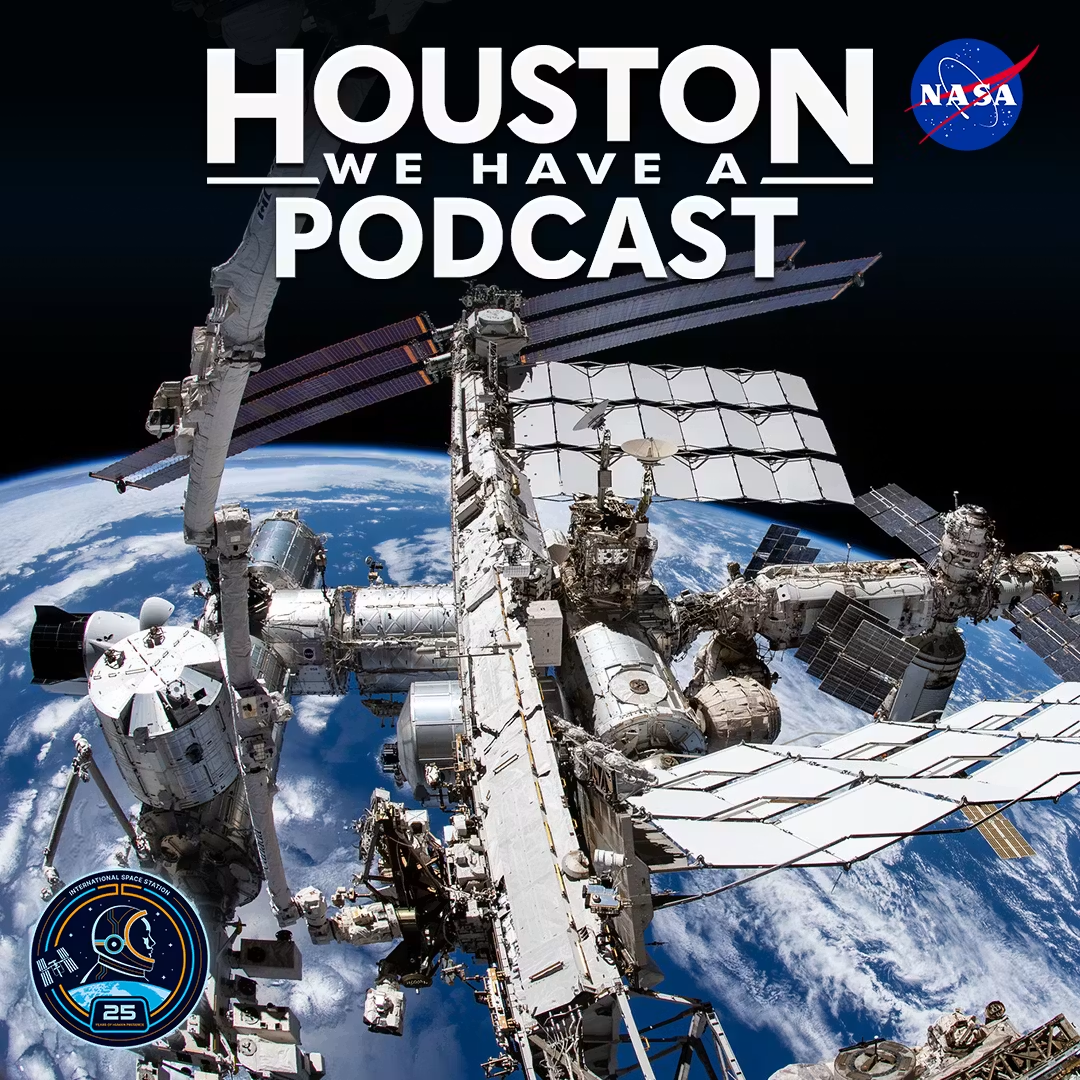
NASA leaders Joel Montalbano and Ryan Landon reflect on 25 years of continuous human presence aboard the International Space Station and the international cooperation that made it possible. HWHAP 412.
Is tech rewiring childhood or exposing what’s already broken? Jonathan Haidt, Catherine Price, and a Gen Z advocate debate social media bans, attention and what “fun” looks like off-screen. Guests include social psychologist Jonathan Haidt, youth online safety activist Maximilian Milovidov and author Catherine Price.
TED Radio Hour+ subscribers now get access to bonus episodes, with more ideas from TED speakers and a behind the scenes look with our producers. A Plus subscription also lets you listen to regular episodes (like this one!) without sponsors. Sign-up at plus.npr.org/ted.
See pcm.adswizz.com for information about our collection and use of personal data for sponsorship and to manage your podcast sponsorship preferences.
NPR Privacy Policy
Book tour and ticket info here.
Greenland has said it is not for sale. Denmark has said it can’t even legally sell Greenland. And at a security conference in Munich over the weekend, U.S. lawmakers spent a lot of time trying to walk back some of President Trump’s recent threats to try to buy, or even take over, the territory.
But whether Trump can or will or should try to control or purchase a territory that doesn’t want to be sold is not the interesting question. What is interesting is how we got to this moment. And, how we might gracefully get out of it.
Greenland is valuable for its minerals and because of its physical location in the world. (It’s easy to keep an eye on other countries from Greenland).
Our latest: How the U.S. dropped the ball on the rare earths race. And one way the U.S. gets strategic locations without threatening to buy or take over an entire territory.
Further listening:
– Is Greenland really an untapped land of riches?
– Add to cart: Greenland
Pre-order the Planet Money book and get a free gift. / Subscribe to Planet Money+
Listen free: Apple Podcasts, Spotify, the NPR app or anywhere you get podcasts.
Facebook / Instagram / TikTok / Our weekly Newsletter.
This episode was produced by Willa Rubin with help from Sam Yellowhorse Kesler. It was edited by Marianne McCune. Fact-checking help from Sierra Juarez. It was engineered by Kwesi Lee and Robert Rodriguez. Alex Goldmark is our executive producer.
Music: Universal Music Production – “The Attraction,” “Carnivore,” and “Walls Come Out.”
See pcm.adswizz.com for information about our collection and use of personal data for sponsorship and to manage your podcast sponsorship preferences.
NPR Privacy Policy
Book tour event details and ticket info here.
An iconic cartoon character liberated from copyright, journalism from the world of competitive spreadsheeting, a controversial piece of US currency. Each year the Planet Money team dedicates an episode to the things we simply love and think you, our audience, will also love.
In this year’s Valentine’s Day episode:
Download THE OFFICIAL Planet Money valentine here.
Pre-order the Planet Money book and get a free gift. / Subscribe to Planet Money+
Listen free: Apple Podcasts, Spotify, the NPR app or anywhere you get podcasts.
Facebook / Instagram / TikTok / Our weekly Newsletter.
This episode of Planet Money was hosted by Kenny Malone. It was produced by James Sneed with help from Sam Yellowhorse Kesler, fact-checked by Sierra Juarez, engineered by Cena Loffredo & Kwesi Lee, and edited by our executive producer Alex Goldmark.
See pcm.adswizz.com for information about our collection and use of personal data for sponsorship and to manage your podcast sponsorship preferences.
NPR Privacy Policy
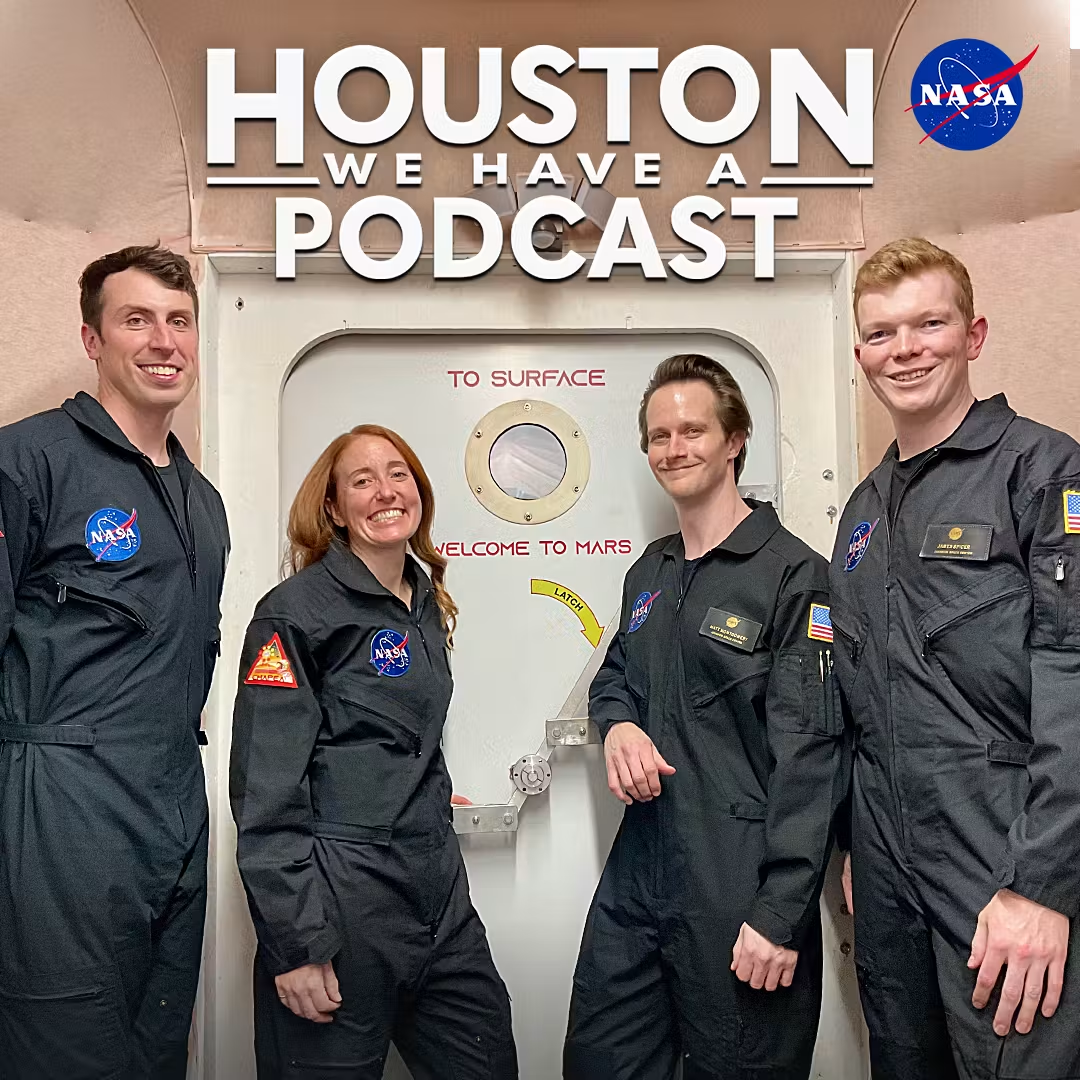
The CHAPEA Mission 2 crew members share their first audio log from inside the Mars analog habitat, with additional insight from CHAPEA co-investigator Dr. Suzanne Bell. HWHAP 411.
What’s the image you present to the world? And do you see yourself the same way? This hour, TED speakers add new dimensions to the idea of self perception. Guests include portrait photographer David Suh, social psychologist Dolly Chugh, journalist Elise Hu and science writer Anil Ananthaswamy.
Original air date: April 4, 2025
TED Radio Hour+ subscribers now get access to bonus episodes, with more ideas from TED speakers and a behind the scenes look with our producers. A Plus subscription also lets you listen to regular episodes (like this one!) without sponsors. Sign-up at plus.npr.org/ted.
See pcm.adswizz.com for information about our collection and use of personal data for sponsorship and to manage your podcast sponsorship preferences.
NPR Privacy Policy