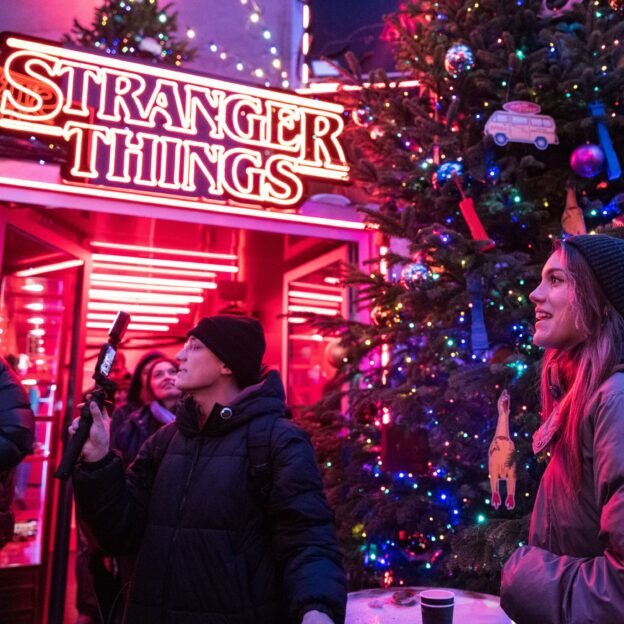
On the eve of Netflix shoveling a fourish-hour chunk of Stranger Things onto Christmas Day, we visit the past, present, and future of binge-dropped television shows.
The strategy of releasing an entire season at the same time has been key to taking Netflix from a little startup that used to lend us DVDs in the mail … to a company so big and powerful, it is maybe going to buy Warner Brothers and own Bugs Bunny and Tony Soprano and the Harry Potter movies.
But even Netflix may be flirting with some slightly less binge-y models of content release. Are we entering … the end of the binge drop?
On our latest: what data tells us about binge watching. Was it the greatest business decision, and who does binge watching really benefit?
Here’s some of the research.
Pre-order the Planet Money book and get a free gift. / Subscribe to Planet Money+
Listen free: Apple Podcasts, Spotify, the NPR app or anywhere you get podcasts.
Facebook / Instagram / TikTok / Our weekly Newsletter.
This episode was produced by Willa Rubin and edited by Meg Cramer. It was fact-checked by Dania Suleman and engineered by Maggie Luthar. Alex Goldmark is our executive producer.
See pcm.adswizz.com for information about our collection and use of personal data for sponsorship and to manage your podcast sponsorship preferences.
NPR Privacy Policy
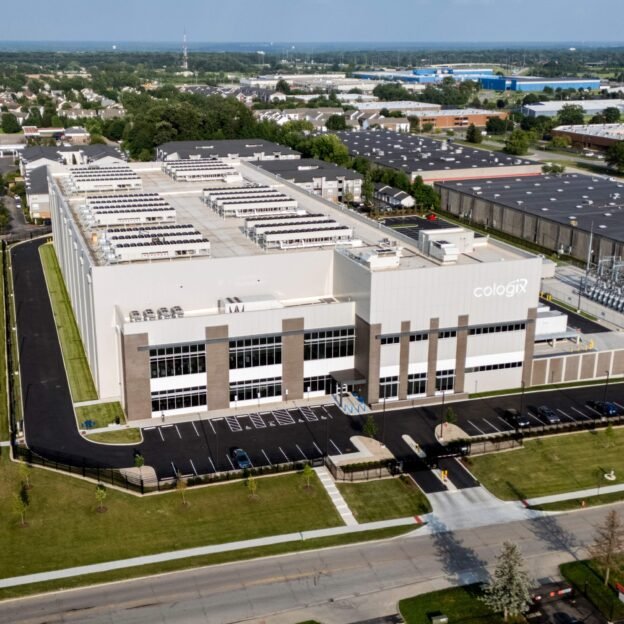
As a country, we are spending more to get data centers up and running than we spent to build the entire interstate highway system. (Yes, that’s inflation-adjusted.) With tech companies spending hundreds of billions of dollars on AI, data centers have kind of become the thing in the US economy.
But along with that growth have come a lot of questions. Like where is all the electricity to run these data centers supposed to come from? And how much are residential customers’ electric bills increasing as a result?
On today’s episode, we go to Ohio to trace one electric bill back to its source, to see what exactly is causing the big price increases people are seeing. We take a tour of a data center hot spot, and get to the bottom of how prices are set from inside the power company.
Related episodes:
– Asking for a friend … which jobs are safe from AI?
– No AI data centers in my backyard!
– What $10 billion in data centers actually gets you
– Is AI overrated or underrated?
– Green energy gridlock
Pre-order the Planet Money book and get a free gift. / Subscribe to Planet Money+
Listen free: Apple Podcasts, Spotify, the NPR app or anywhere you get podcasts.
Facebook / Instagram / TikTok / Our weekly Newsletter.
Today’s show was hosted by Keith Romer and Jeff Guo. It was produced by Sam Yellowhorse Kesler. It was edited by Jess Jiang and fact checked by Sierra Juarez and Vito Emanuel. It was engineered by Cena Loffredo. Alex Goldmark is Planet Money‘s executive producer.
See pcm.adswizz.com for information about our collection and use of personal data for sponsorship and to manage your podcast sponsorship preferences.
NPR Privacy Policy
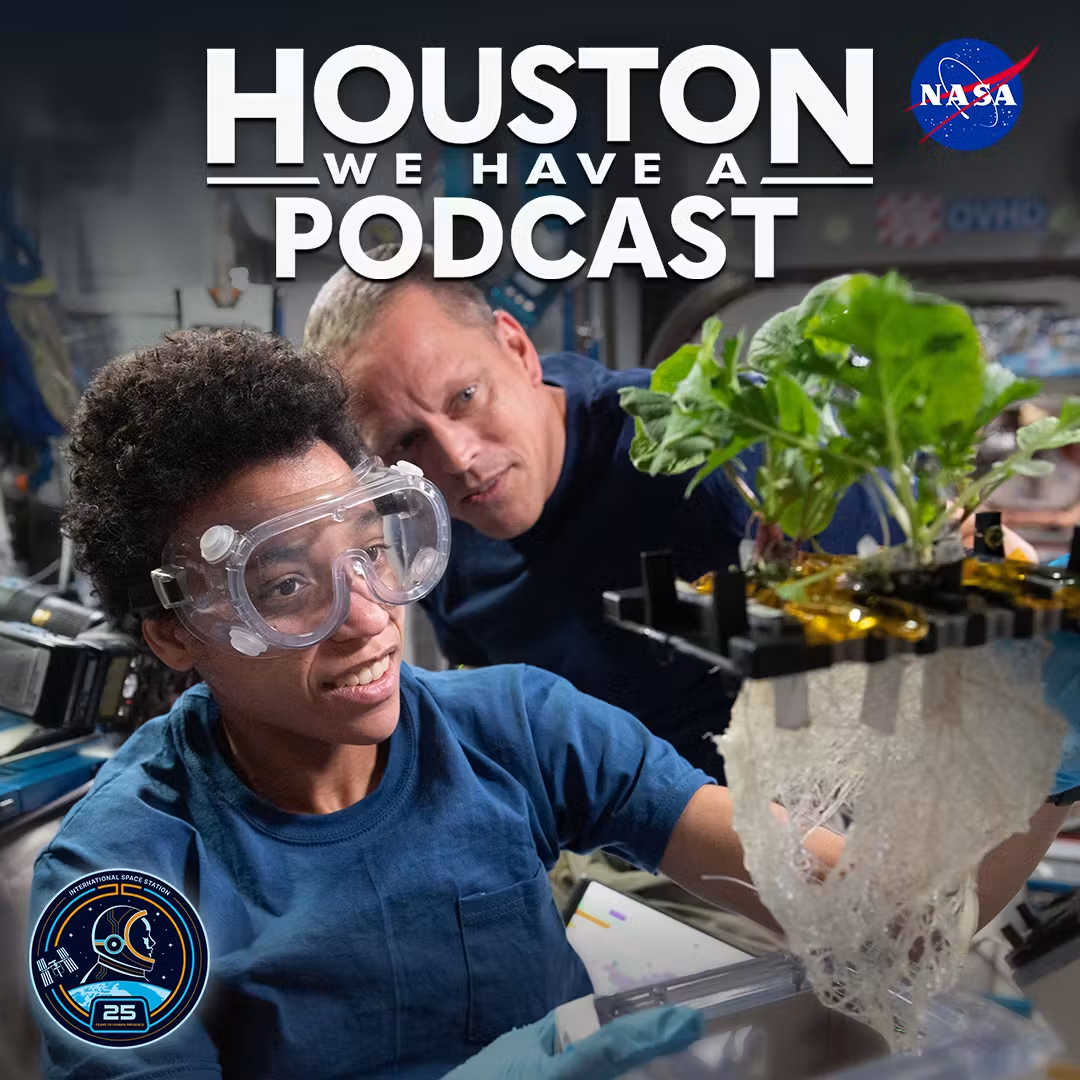
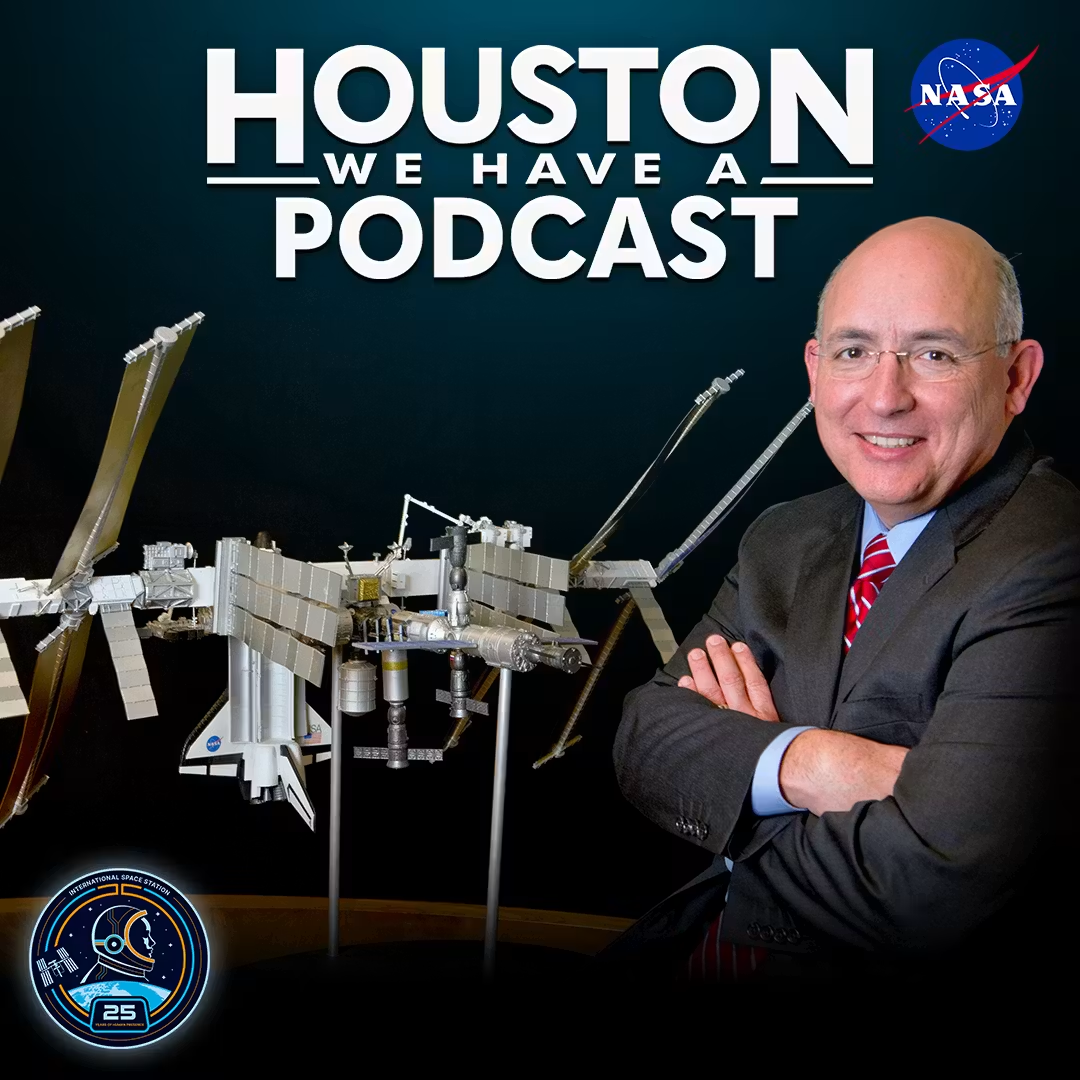
International Space Station leaders Laura Shaw and Jennifer Buchli discuss the science, discoveries, and innovations that have defined nearly 25 years aboard the orbiting laboratory. HWHAP 406.
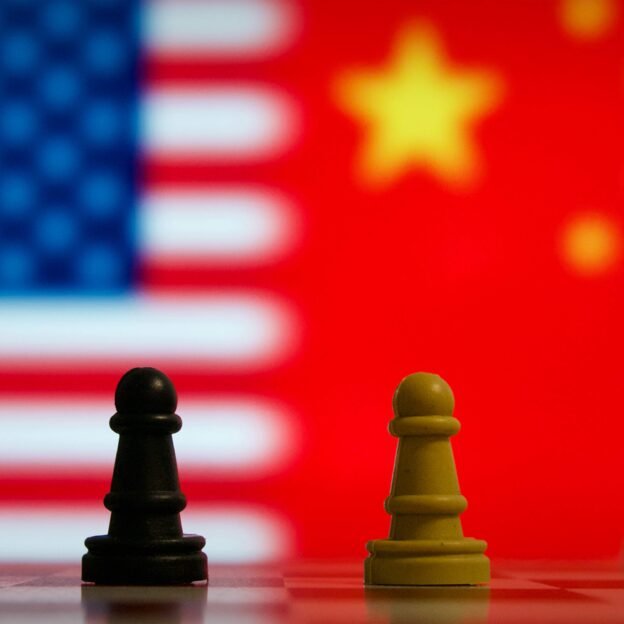
What will AI look like in 2026? Is the hype a bubble or a tech revolution that will transform everything? This episode, the global politics shaping the future of AI and what it means for you. Guests include tech entrepreneur Alvin Wang Graylin, NPR tech reporter John Ruwitch, and OpenAI CEO Sam Altman in conversation with TED’s Chris Anderson.
TED Radio Hour+ subscribers now get access to bonus episodes, with more ideas from TED speakers and a behind the scenes look with our producers. A Plus subscription also lets you listen to regular episodes (like this one!) without sponsors. Sign-up at: plus.npr.org/ted
See pcm.adswizz.com for information about our collection and use of personal data for sponsorship and to manage your podcast sponsorship preferences.
NPR Privacy Policy
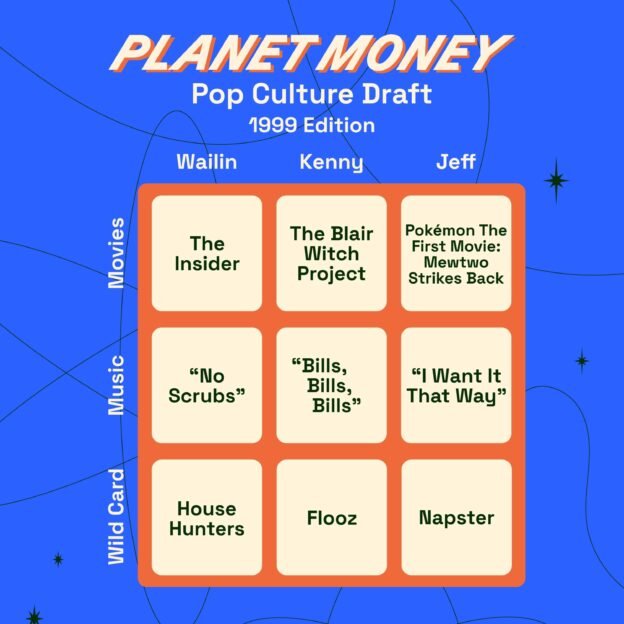
Welcome to the inaugural Planet Money Pop Culture Draft! In today’s episode (a Planet Money+ episode we’re releasing into the main feed) we’re gonna go back to the year 1999. Three hosts, Kenny Malone, Wailin Wong, and Jeff Guo, go head to head and each drafts a “team” of economic pop culture. So a movie, a song, and a wild card pick that best represents the Planet Money spirit!
It could be a movie related to business or maybe a song about money … as long as it came out in 1999! Listen to hear each of them make the case for why their team should be crowned the winner!
If you want more bonus episodes like this one and to support our work, sign up for Planet Money+.
Listen free: Apple Podcasts, Spotify, the NPR app or anywhere you get podcasts.
Facebook / Instagram / TikTok / Our weekly Newsletter.
This episode was hosted by Kenny Malone, Wailin Wong, and Jeff Guo. It was produced by Viet Le and edited by Planet Money’s executive producer Alex Goldmark.
See pcm.adswizz.com for information about our collection and use of personal data for sponsorship and to manage your podcast sponsorship preferences.
NPR Privacy Policy
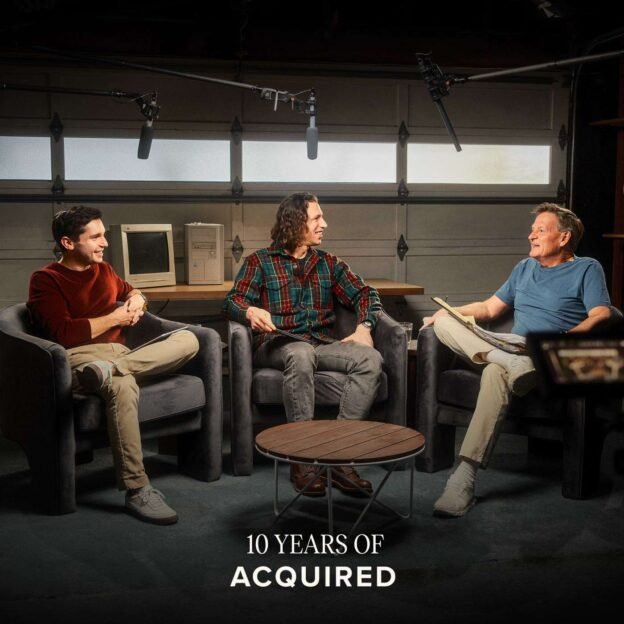
Why has Acquired — seemingly against all odds — “worked”? It’s a puzzling question: episodes are four hours long, they come out infrequently, and they usually don’t have guests or video. Hardly the standard-issue playbook for podcasting success! And yet well over a million smart, curious and exceedingly busy humans share their (your!) valuable time with us every month. Why? This is the exact paradox that has been rolling around in the head of Michael Lewis (yes, that Michael Lewis) since he found the show earlier this year.
So we asked Michael to be our guest “interlocutor” and share what he thinks is going on here, while we share ten lessons we’ve stolen (graciously) from companies we’ve studied and brought into Acquired itself. He takes us through the entire Acquired journey: how we started, why we’ve never hired anyone or raised money, how we pick episodes, what our business model actually is, why we focus on quality and enjoyment over maximizing enterprise value, and ultimately why we’re all — you, him, us — kindred spirits together. Oh, and just for fun, we recorded this episode where another special journey began — the garage where Google was founded.
Thank you for an incredible decade together… here’s to the next one!
Sponsors:
Thank-yous:
- First, to Google for loaning us the garage. The sawhorse table desk, PC and CRT monitor on display in the background were all Google originals courtesy of the Google Founders Collection at the Computer History Museum. So cool!
- Second, to our friends at Shep Films for helping us seriously up our game on production quality this episode!
Our Favorite Michael Lewis Books:
Carve Outs:
- Books:
- Podcasts:
- Video:
- Video Games:
- Products:
- Parenting:
More Acquired!
© Copyright 2015-2026 ACQ, LLC
Note: Acquired hosts and guests may hold assets discussed in this episode. This podcast is not investment advice, and is intended for informational and entertainment purposes only. You should do your own research and make your own independent decisions when considering any financial transactions.
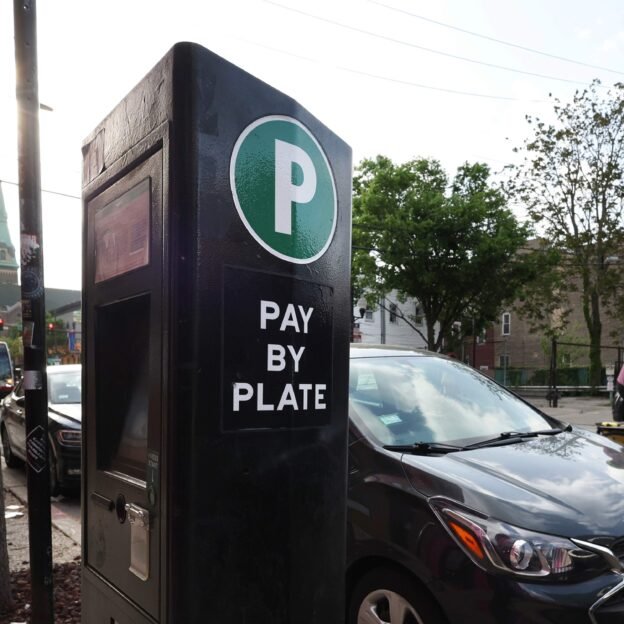
In 2008, Chicago’s budget was in a bad place. The city needed money. One way to raise money was to increase property taxes, but what politician wants to do that? So instead, Mayor Richard M. Daley’s administration looked around at the resources the city had, and thought, ‘Any of this worth anything?’ They opted to lease out the city’s metered parking system — to privatize all 36,000 of its parking meters.
The plan: have private companies bid on operating the meters, modernizing the system, and keeping the profits for a certain number of years. In exchange, they would give Chicago a big lump sum payment. The winning bid was $1.16 billion dollars for a 75-year lease.
Today’s episode is the story of how that bid got put together, and how it came to be hated. There are kidnapped parking meters, foot chases through City Hall, and trash bags filled with secret documents.
Pre-order the Planet Money book and get a free gift. / Subscribe to Planet Money+
Listen free: Apple Podcasts, Spotify, the NPR app or anywhere you get podcasts.
Facebook / Instagram / TikTok / Our weekly Newsletter.
This episode was produced by Willa Rubin with help from Luis Gallo and Sam Yellowhorse Kesler. It was edited by Jess Jiang, fact-checked by Vito Emanuel and engineered by Cena Loffredo and Robert Rodriguez. Alex Goldmark is our executive producer.
See pcm.adswizz.com for information about our collection and use of personal data for sponsorship and to manage your podcast sponsorship preferences.
NPR Privacy Policy
Former ISS program manager and Axiom Space co-founder Michael Suffredini reflects on the ambitious path to building the International Space Station and the lessons learned from a decade of leadership. HWHAP 405.
From our favorite songs to our own voices, we’re surrounded by sound all day. But how does all this noise affect our emotions and behavior? This hour, TED speakers explore how sound shapes our lives. Guests include musician and professor of songwriting Scarlet Keys, AI CEO Pierre Barreau, voice expert Rebecca Kleinberger and musician Snow Raven.
(Original Broadcast Date: February 21, 2025)
TED Radio Hour+ subscribers now get access to bonus episodes, with more ideas from TED speakers and a behind the scenes look with our producers. A Plus subscription also lets you listen to regular episodes (like this one!) without sponsors. Sign-up at plus.npr.org/ted.
See pcm.adswizz.com for information about our collection and use of personal data for sponsorship and to manage your podcast sponsorship preferences.
NPR Privacy Policy
Before his passing, conductor Robert Franz guided us through the first movement of Dvorák’s “New World Symphony” using his four essential tools for listening—rhythm, melody, texture and visuals. As the year comes to a close, Manoush Zomorodi shares one of her favorite TED Radio Hour+ episodes.
Robert Franz was also featured in episode, “How we experience time.”
To hear more bonus content like this and to support NPR and public radio, sign up for TED Radio Hour+ at plus.npr.org/ted
See pcm.adswizz.com for information about our collection and use of personal data for sponsorship and to manage your podcast sponsorship preferences.
NPR Privacy Policy