People discovering information about their own lives that they did not know and suddenly everything looks very different.
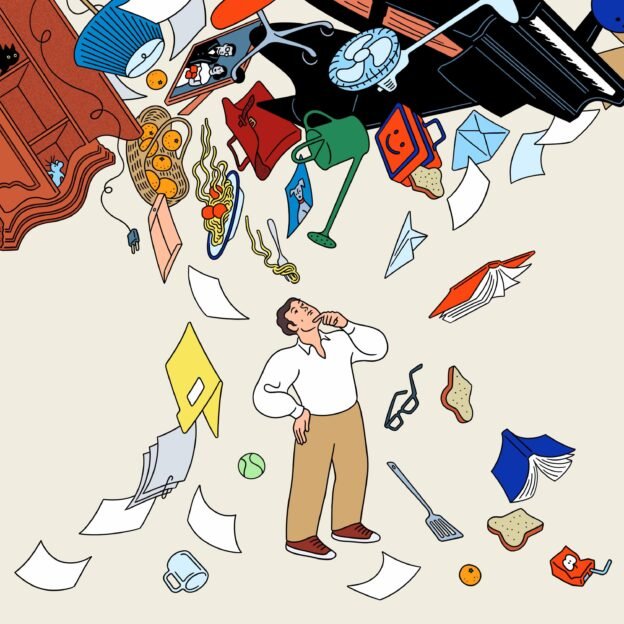
People discovering information about their own lives that they did not know and suddenly everything looks very different.
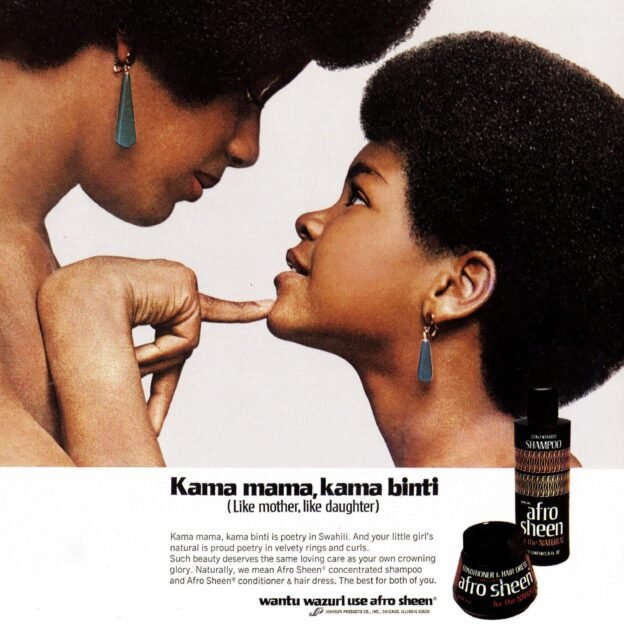
The Afro is one of the most iconic hairstyles of the last century. And one of its main ingredients was a hair product – Afro Sheen. But Afro Sheen did so much more than make Black afros shine. It was the money behind the television show Soul Train, it helped fuel the civil rights movement – all because of an entrepreneur named George Johnson.
For decades, Joan and George Johnson owned and ran Johnson Products Company, a Black hair care company out of Chicago. Their intimate understanding of what Black people wanted and needed – for their hair and for their lives – helped grow the Black middle class and became an engine for Black culture and power. They helped turn the Black haircare industry into what is now a multi-billion-dollar industry. But although they helped create this industry, they no longer have a part in it.
Today on the show – the story of the rise and fall of Johnson Products. We’re gonna tell you this story in three hairstyles. The conk, the afro… and the jheri curl.
Related episodes:
‘Soul Train’ and the business of Black joy
Pre-order the Planet Money book and get a free gift. / Subscribe to Planet Money+
Listen free: Apple Podcasts, Spotify, the NPR app or anywhere you get podcasts.
Facebook / Instagram / TikTok / Our weekly Newsletter.
This episode of Planet Money was hosted by Sonari Glinton and Erika Beras. It was produced by James Sneed, edited by Marianne McCune, fact-checked by Sierra Juarez, and engineered by Jimmy Keeley. Alex Goldmark is Planet Money’s executive producer.
See pcm.adswizz.com for information about our collection and use of personal data for sponsorship and to manage your podcast sponsorship preferences.

We’ve been checking in on the economic conditions in Venezuela for about a decade now. In response to the U.S. strike and the capture of Venezuelan president Nicolás Maduro this weekend, we’re re-surfacing this episode with an update.
The original version ran in 2016, with an update in 2024.
Back in 2016, things were pretty bad in Venezuela. Grocery stores didn’t have enough food. Hospitals didn’t have basic supplies, like gauze. Child mortality was spiking. Businesses were shuttering. It was one of the epic economic collapses of our time. And it was totally avoidable.
Venezuela used to be a relatively rich country. It has just about all the economic advantages a country could ask for: Beautiful beaches and mountains ready for tourism, fertile land good for farming, an educated population, and oil, lots and lots of oil.
But during the boom years, the Venezuelan government made some choices that add up to an economic time bomb.
Today on the show, we run through the decisions that foreshadowed the collapse, and we hear from people in Venezuela in 2016 at a particularly low point for the economy, then again and in 2024 after a bounce back and a stabilization, in part due to the unlikely impact of the U.S. dollar.
Pre-order the Planet Money book and get a free gift. / Subscribe to Planet Money+
Listen free: Apple Podcasts, Spotify, the NPR app or anywhere you get podcasts.
Facebook / Instagram / TikTok / Our weekly Newsletter.
This original episode was hosted by Robert Smith and Noel King. It was produced by Nick Fountain and Sally Helm. Our update in 2024 was hosted by Amanda Aronczyk, produced by Sean Saldana, fact checked by Sierra Juarez, and engineered by Neal Rauch. Today’s episode was hosted by Kenny Malone and produced by James Sneed. Alex Goldmark is our Executive Producer.
For sponsor-free episodes of The Indicator and Planet Money, subscribe to Planet Money+ via Apple Podcasts or at plus.npr.org.
See pcm.adswizz.com for information about our collection and use of personal data for sponsorship and to manage your podcast sponsorship preferences.

Rolex is a series of paradoxes. They sell obsolete and objectively inferior mechanical devices for 10-1000x the price of their superior digital successors… and demand is stronger than ever in history! Their products are comparable to a Hermès Birkin bag in price, luxury status and waitlist times… yet they produce over 1m units / year (roughly 10x annual Birkin production). They make the most universally recognized and desired Swiss watches… yet their founder wasn’t Swiss and didn’t start the company in Switzerland! If Rolex were publicly traded, they’d almost certainly be among the top 50 market cap companies in the world… yet they’re 100% owned by a charitable foundation in Geneva that (among other things) literally just gives away money to local people in the city.
Tune in for one of the most fascinating and admirable companies we’ve ever covered on Acquired. We had an absolute blast making the episode, and hope you enjoy it as much as we did!
This episode was released on February 23, 2025.
Sponsors:
Links:
Carve Outs:
More Acquired!
© Copyright 2015-2026 ACQ, LLC
Note: Acquired hosts and guests may hold assets discussed in this episode. This podcast is not investment advice, and is intended for informational and entertainment purposes only. You should do your own research and make your own independent decisions when considering any financial transactions.

In unpredictable times, how can we stay calm, grounded, and on course? This hour, TED speakers lead us through uncertainty. Guests include former medical clown Matt Wilson, psychologist Jamil Zaki, writer and filmmaker Hrund Gunnsteinsdóttir and human rights activist Yifat Susskind.
(Original broadcast date: January 10, 2025)
TED Radio Hour+ subscribers now get access to bonus episodes, with more ideas from TED speakers and a behind the scenes look with our producers. A Plus subscription also lets you listen to regular episodes (like this one!) without sponsors. Sign-up at: plus.npr.org/ted
See pcm.adswizz.com for information about our collection and use of personal data for sponsorship and to manage your podcast sponsorship preferences.
Costco is not only Charlie Munger’s favorite company of all time (plus he’s on the board, natch), it’s an absolutely fascinating study in how seemingly opposite characteristics can combine to create incredible company value. For instance: Costco has the cheapest prices of any major retailer in America — and also the wealthiest customer base. They pay their hourly workers 30% above the industry norm (and give them excellent healthcare + 401k benefits) — and are almost 3x more profitable on labor than Walmart. Speaking of Walmart, Costco stocks 40x fewer SKUs than their Bentonville-based rivals — yet sells an average of 15x more volume of each. And oh yeah, practically all of Costco’s C-Suite started their careers as baggers and checkout clerks! Tune in for a mind-bending exploration of one of the world’s most iconic — and iconically unique — companies.
This episode was released on August 20, 2023.
Links:
Carve Outs:
Sponsors:
More Acquired!
© Copyright 2015-2026 ACQ, LLC
Note: Acquired hosts and guests may hold assets discussed in this episode. This podcast is not investment advice, and is intended for informational and entertainment purposes only. You should do your own research and make your own independent decisions when considering any financial transactions.

2025 is finally over. It was a wild year for the U.S. economy. Tariffs transformed global trading, consumer sentiment hit near-historic lows, and stocks hit dramatic new heights! So … which of these economic stories defined the year?
We will square off in a family feud to make our case, debate, and decide it.
Also, as we enter 2026, we are watching the trends and planning out what next years stories are likely to be. So we’re picking which indicators will become next years most telling.
On today’s episode, our indicators of this past year AND our top indicator predictions for 2026.
Related episodes:
The Indicators of this year and next (2024)
This indicator hasn’t flashed this red since the dot-com bubble
What would it mean to actually refund the tariffs?
What AI data centers are doing to your electric bill
What indicators will 2025 bring?
Pre-order the Planet Money book and get a free gift. / Subscribe to Planet Money+
Listen free: Apple Podcasts, Spotify, the NPR app or anywhere you get podcasts.
Facebook / Instagram / TikTok / Our weekly Newsletter.
This episode of Planet Money was produced by James Sneed. The episodes of The Indicator were produced by Angel Carreras, edited by Julia Ritchey, engineered by Robert Rodrigez and Kwesi Lee, and fact-checked by Sierra Juarez. Kate Concannon is the editor of the Indicator. Alex Goldmark is our executive producer.
For sponsor-free episodes of The Indicator and Planet Money, subscribe to Planet Money+ via Apple Podcasts or at plus.npr.org.
See pcm.adswizz.com for information about our collection and use of personal data for sponsorship and to manage your podcast sponsorship preferences.
With the year coming to a close, we’re sharing our most popular Planet Money bonus episode of 2025!
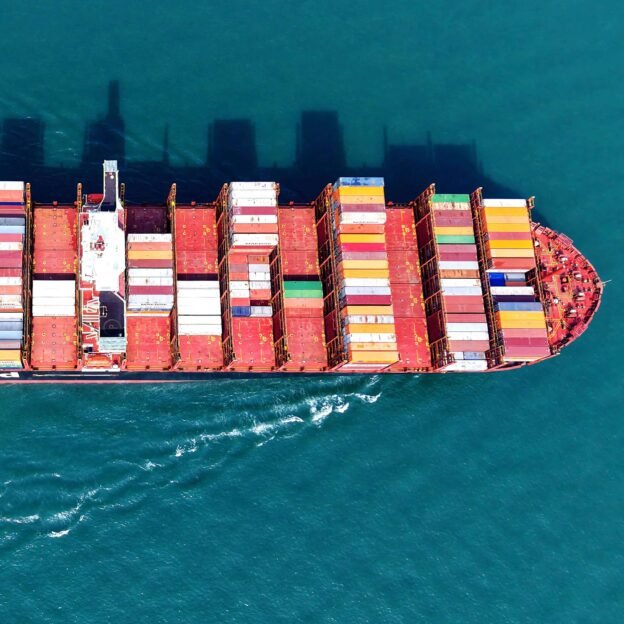
As U.S. trade with China exploded in the early 2000’s, American manufacturing began to shrivel. Those workers struggled to adapt and find new jobs. It ran counter to how mainstream economics at the time viewed free trade … that it would be a clear win for the U.S. Greg Rosalsky talks with David Autor about why economists got free trade with China so wrong.
Autor, an MIT economics professor, and his colleagues published a series of eye-opening studies over the last 15 years or so that brought to light the costs of U.S. trade with China. We also hear Autor’s thoughts on the role of tariffs and get an update on his research. With better, more precise data, Autor says we have a more nuanced and “bleaker” picture of what happened to these manufacturing workers.
You can read about Autor’s research and sign up for The Planet Money Newsletter here.
To hear more bonus content like this and support NPR and public media, sign up for Planet Money+ in Apple Podcasts or at plus.npr.org/planetmoney. Regular episodes remain free to listen!
See pcm.adswizz.com for information about our collection and use of personal data for sponsorship and to manage your podcast sponsorship preferences.
Most stories keep going even after we set down our microphones and the music fades up. That’s why, at the end of each year, we look back and we take stock.
We call this tradition “The Rest of the Story.” And we bring you updates on the stories we’ve reported, and from the people we’ve met along the way.
Today, we check in on an engineer and patent attorney who made a safer saw; we get an update on the Planet Money game; an update on money in Gaza; and we have updates on a diamond that may or may not have had a second life.
Listen to the original stories:
Planet Money buys a mystery diamond
In Gaza, money is falling apart
BOARD GAMES 1: We’re making a game
This episode of Planet Money was produced by Luis Gallo, edited by Alex Goldmark, fact-checked by Vito Emanuel, and engineered by Debbie Daughtry.
Pre-order the Planet Money book and get a free gift. / Subscribe to Planet Money+
Play the new version of our game here. Version 4.
Listen free: Apple Podcasts, Spotify, the NPR app or anywhere you get podcasts.
Facebook / Instagram / TikTok / Our weekly Newsletter.
See pcm.adswizz.com for information about our collection and use of personal data for sponsorship and to manage your podcast sponsorship preferences.

Finding “the one” can seem like life’s ultimate goal—but should it be? This hour, TED speakers expand the definition of life partnership, whether it’s with a friend, a spouse, a pet, or no one at all.
Guest include journalist Rhaina Cohen, marriage and family therapist Stephanie Yates-Anyabwile, social psychologist Bella DePaulo and photographer Elias Weiss Friedman of “The Dogist.”
Original broadcast date: February 7, 2025
TED Radio Hour+ subscribers now get access to bonus episodes, with more ideas from TED speakers and a behind the scenes look with our producers. A Plus subscription also lets you listen to regular episodes (like this one!) without sponsors. Sign-up at plus.npr.org/ted.
See pcm.adswizz.com for information about our collection and use of personal data for sponsorship and to manage your podcast sponsorship preferences.