It’s easy to despair with another government shutdown. But this hour, three speakers argue that simple upgrades are key to restoring faith in the American experiment. Guests include venture capitalist and political consultant Bradley Tusk, political advisor Jennifer Pahlka and e-governance expert Anna Piperal.
TED Radio Hour+ subscribers now get access to bonus episodes, with more ideas from TED speakers and a behind the scenes look with our producers. A Plus subscription also lets you listen to regular episodes (like this one!) without sponsors. Sign-up at: plus.npr.org/ted
See pcm.adswizz.com for information about our collection and use of personal data for sponsorship and to manage your podcast sponsorship preferences.
NPR Privacy Policy
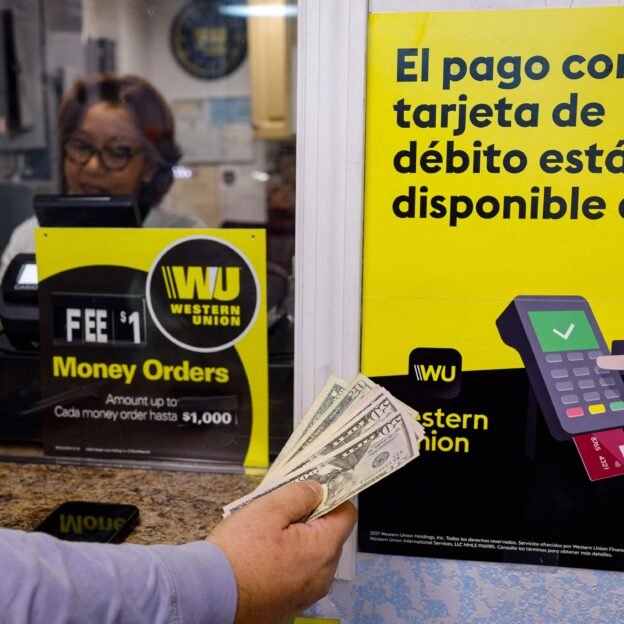
For decades, the U.S. has been the single biggest source of remittances worldwide. A remittance is a transfer of money, typically from an immigrant to their family in their country of origin. But we are in the middle of a big, loud and very public immigration crackdown on those who are here without legal status. And that crackdown is disrupting the global remittance market.
People who have come to the U.S. from a handful of countries — especially some Central American countries — have been sending more money back to their countries of origin. And it’s a bit of a puzzle because … you might think the opposite would be the case.
As immigration plummets, we try to figure out why remittances are surging in some countries, and not others. And we learn why a surge in money sent home inspires joy — but also fear.
Pre-order the Planet Money book and get a free gift. / Subscribe to Planet Money+
Listen free: Apple Podcasts, Spotify, the NPR app or anywhere you get podcasts.
Facebook / Instagram / TikTok / Our weekly Newsletter.
Register here for our live Zoom event about our board game project on November 1st.
This episode was hosted by Erika Beras and Greg Rosalsky. It was produced by Luis Gallo with help from Sam Yellowhorse Kesler. It was edited by Marianne McCune with fact-checking help from Sierra Juarez. It was engineered by Patrick Murray. Alex Goldmark is Planet Money’s executive producer.
See pcm.adswizz.com for information about our collection and use of personal data for sponsorship and to manage your podcast sponsorship preferences.
NPR Privacy Policy
Trader Joe’s breaks every rule of modern retail. They don’t do e-commerce. They don’t do delivery. No sales, coupons, or loyalty programs. They only stock 4,000 SKUs versus 50,000+ at normal supermarkets. Their parking lots are famously terrible and they’re constantly out of your favorite items. Shoppers brave long lines and cramped aisles while overly-friendly employees in Hawaiian shirts try to chat them up. Everything about the Trader Joe’s experience seems designed to drive modern consumers away. And yet they generate $2,000+ per square foot in sales — double their nearest competitor in Whole Foods and nearly 4x the industry average — and Americans are obsessed with them. How on earth did a company that so steadfastly refuses to participate in the 21st century build the most beloved grocery chain in America?
Today we tell the full story: how “Trader” Joe Coulombe started out cloning 7-Elevens in 1960s Los Angeles, pivoted to slinging hard liquor, discovered the enormous market opportunities for California wine and health food before anyone else, and ultimately built perhaps the most counter-positioned business we’ve ever studied on Acquired by doing almost everything differently than the supermarket-CPG industrial complex. Tune in for a wild voyage on the high seas of grocery retail!
Sponsors:
Links:
Carve Outs:
More Acquired!
© Copyright 2015-2026 ACQ, LLC
Note: Acquired hosts and guests may hold assets discussed in this episode. This podcast is not investment advice, and is intended for informational and entertainment purposes only. You should do your own research and make your own independent decisions when considering any financial transactions.
The U.S. Constitution famously outlaws “cruel and unusual punishments.” But there’s another, far more obscure part of the Constitution called the Excessive Fines Clause, which basically says that the fine has to fit the crime. So far, the Supreme Court has been pretty mysterious about what that means. But for Ken Jouppi, the fate of his $95,000 plane hinges on it.
Ken is a bush pilot. He used to run an air taxi service in Fairbanks, Alaska. In 2012, police caught one of Ken’s passengers with a six-pack of Budweiser in her luggage. Over that six-pack, Ken was convicted of bootlegging. As punishment, he was ordered to forfeit his $95,000 Cessna.
The Supreme Court is now considering whether to take Ken’s case. And what’s at stake here is more than just a plane. Hanging in the balance is an increasingly popular — and controversial — business model for criminal justice.
More on economics and the law:
– Fine and punishment
– The prisoner’s solution
– Paying for the crime
– Rescues at sea, and how to make a fortune
Pre-order the Planet Money book and get a free gift. / Subscribe to Planet Money+
Listen free: Apple Podcasts, Spotify, the NPR app or anywhere you get podcasts.
Facebook / Instagram / TikTok / Our weekly Newsletter.
Today’s episode was produced by James Sneed and Sam Yellowhorse Kesler with help from Luis Gallo. It was edited by Jess Jiang, fact-checked by Sierra Juarez and engineered by Ko Tagasugi Chernovin with help from Robert Rodriguez. Planet Money’s executive producer is Alex Goldmark.
See pcm.adswizz.com for information about our collection and use of personal data for sponsorship and to manage your podcast sponsorship preferences.
NPR Privacy Policy
The average American household throws away $200 of food each month. How can we get more food onto plates and less into landfills? This hour, changing the food system, from the farm to your kitchen. Guests include food waste expert Dana Gunders, social entrepreneur Jasmine Crowe-Houston, chef and sustainability activist Anthony Myint and behavioral scientist Jiaying Zhao.
Original broadcast date: December 6, 2024.
TED Radio Hour+ subscribers now get access to bonus episodes, with more ideas from TED speakers and a behind the scenes look with our producers. A Plus subscription also lets you listen to regular episodes (like this one!) without sponsors. Sign-up at: plus.npr.org/ted
See pcm.adswizz.com for information about our collection and use of personal data for sponsorship and to manage your podcast sponsorship preferences.
NPR Privacy Policy
When TikTok videos started to go viral on Instagram and Reddit, TikTok turned to professional sound designers to protect their content.
More and more companies are paying to develop a “sonic identity” – a series of sounds, songs, and micro-jingles to help maintain a unified brand.
In this episode, in conjunction with the sound design podcast Twenty Thousand Hertz, we hear the backstory to possibly the most successful audio branding campaigns in history. It’s a tale of guerilla marketing and the power of sonic suggestion.
Pre-order the Planet Money book, and get a free gift / Subscribe to Planet Money+
Listen free: Apple Podcasts, Spotify, the NPR app or anywhere you get podcasts.Facebook / Instagram / TikTok / Our weekly Newsletter.
This adapted episode was hosted by Kenny Malone and Dallas Taylor. It was produced by Casey Emmerling and James Sneed. The episode was edited by Jess Jiang. Alex Goldmark is our Executive Producer.
See pcm.adswizz.com for information about our collection and use of personal data for sponsorship and to manage your podcast sponsorship preferences.
NPR Privacy Policy
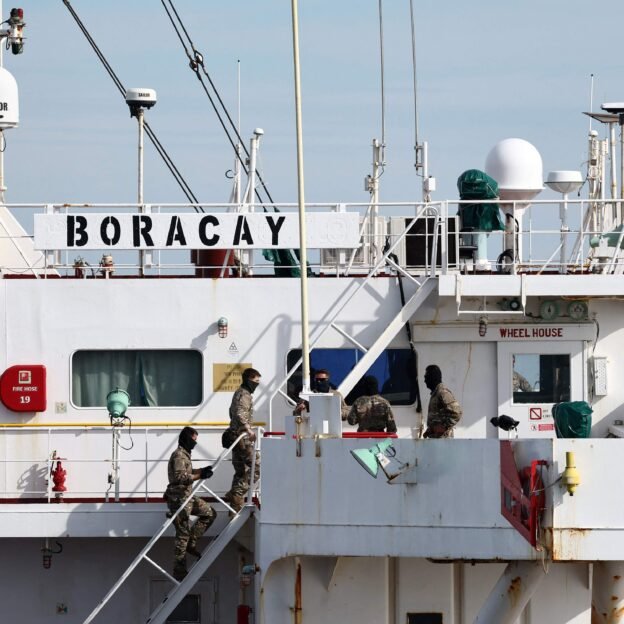
Bjarne Caesar Skinnerup works as a maritime pilot in the straits of Denmark. That means he’s used to seeing oil tankers. But after the start of the war in Ukraine, the tankers started getting weird. They were flying flags he’d never seen before. They were old, very old, though many had taken on new names. Something was off.
He’d stumbled on a shadow fleet of hundreds of tankers ferrying sanctioned oil out of Russia … with near impunity.
Today on the show, how those ships are transforming the global oil market and fueling the war in Ukraine. And why this all might be a financial and environmental disaster waiting to happen.
Pre-order the Planet Money book and get a free gift. / Subscribe to Planet Money+
Listen free: Apple Podcasts, Spotify, the NPR app or anywhere you get podcasts.
Facebook / Instagram / TikTok / Our weekly Newsletter.
This episode was hosted by Alexi Horowitz-Ghazi and Daniel Ackerman. It was produced by Willa Rubin and edited by Marianne McCune. It was fact-checked by Sierra Juarez and engineered by Kwesi Lee and Cena Loffredo. Alex Goldmark is our executive producer.
See pcm.adswizz.com for information about our collection and use of personal data for sponsorship and to manage your podcast sponsorship preferences.
NPR Privacy Policy
The way we spend our hours defines our lives. This hour, TED speakers explore how we make choices about time, meaning and attention in a world of infinite options.
TED Radio Hour+ subscribers now get access to bonus episodes, with more ideas from TED speakers and a behind the scenes look with our producers. A Plus subscription also lets you listen to regular episodes (like this one!) without sponsors. Sign-up at plus.npr.org/ted.
See pcm.adswizz.com for information about our collection and use of personal data for sponsorship and to manage your podcast sponsorship preferences.
NPR Privacy Policy
Ira Glass shares some news about This American Life
To sign up as a Life Partner, visit thisamericanlife.org/lifepartners
Based on the simple premise, “Ideas worth spreading,” Chris Anderson spent the last 25 years turning the non-profit TED organization into a globally recognized media powerhouse. Now he’s ready to announce a new chapter for TED, along with a new steward and visionary: Sal Khan.
See pcm.adswizz.com for information about our collection and use of personal data for sponsorship and to manage your podcast sponsorship preferences.
NPR Privacy Policy