Acting Vehicle Integration Office Manager for NASA’s Orion Program Chris Edelen discusses the spacecraft that will carry astronauts around the Moon on Artemis II. HWHAP 398.
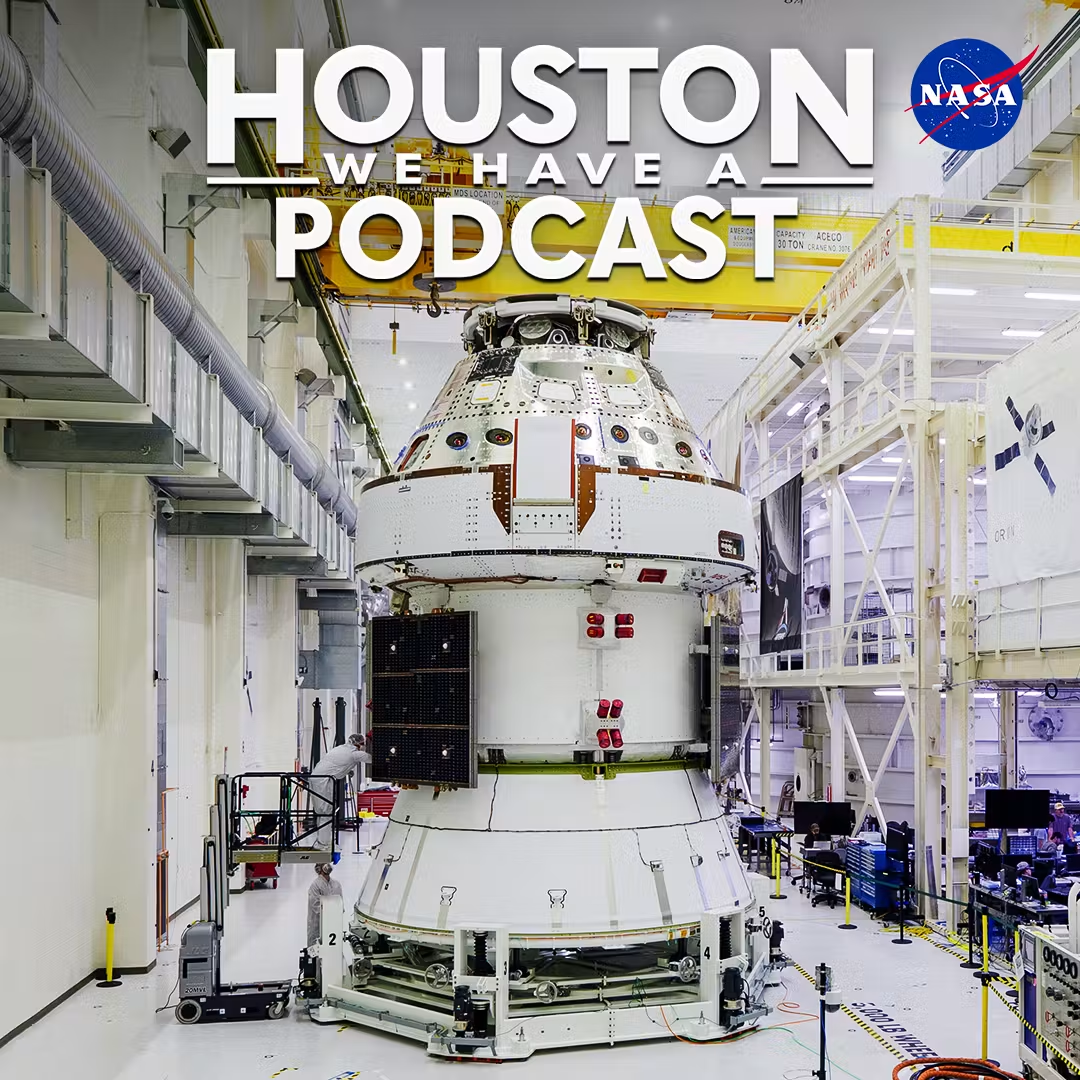
Acting Vehicle Integration Office Manager for NASA’s Orion Program Chris Edelen discusses the spacecraft that will carry astronauts around the Moon on Artemis II. HWHAP 398.
From sustaining a marriage to making new friends, forming connections requires courage. This hour, TED speakers guide us through being brave during the most difficult moments in relationships. Guests include writer and podcaster Kelly Corrigan, journalist Allison Gilbert and clinical psychologists Julie and John Gottman.
Original broadcast date: November 1, 2024
TED Radio Hour+ subscribers now get access to bonus episodes, with more ideas from TED speakers and a behind the scenes look with our producers. A Plus subscription also lets you listen to regular episodes (like this one!) without sponsors. Sign-up at: plus.npr.org/ted
See pcm.adswizz.com for information about our collection and use of personal data for sponsorship and to manage your podcast sponsorship preferences.
Tariffs are the favorite tool of our current president, but there are lots of other ways that governments insert themselves into the free exchange of goods and services. Some of these trade barriers are so insidious and have been going on for so long that it may surprise you that they even exist.
We bring you the classic story of what happens when you try to protect an American industry and end up hurting another American industry. Well intentioned plans turn into trade barriers that make our lives more expensive.
Check out our Summer School video cheat sheet TikTok.
Help support Planet Money and hear our bonus episodes by subscribing to Planet Money+ in Apple Podcasts or at plus.npr.org/planetmoney.
Always free at these links: Apple Podcasts, Spotify, the NPR app or anywhere you get podcasts.
Find more Planet Money: Facebook / Instagram / TikTok / Our weekly Newsletter.
The series is hosted by Robert Smith and produced by Eric Mennel. Our project manager is Devin Mellor. This episode was edited by Planet Money Executive Producer Alex Goldmark and fact-checked by Emily Crawford.
See pcm.adswizz.com for information about our collection and use of personal data for sponsorship and to manage your podcast sponsorship preferences.
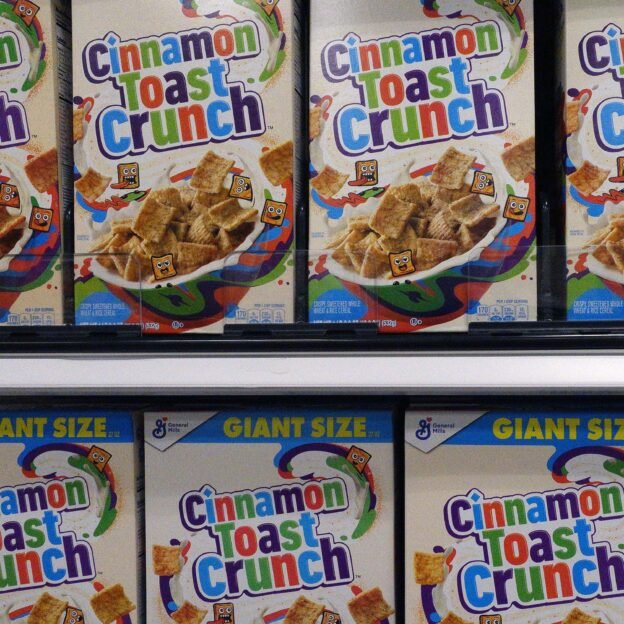
For most Americans, we just lived through the highest period of inflation in our lives. And we are reminded of this every time we go grocery shopping. All over TikTok, tons of people have posted videos of how little they got for… $20. $40. $100. Most upsetting to us: an $8 box of Cinnamon Toast Crunch.
Food prices are almost 30% higher than they were five years ago. It’s bad. And those new, higher prices aren’t going away.
At the same time, prices are no longer inflating at a wild pace. For the last two years, the rate of inflation has slowed way down. And yet, our fears or feelings that things will spiral out of control again? Those have not slowed down.
This mismatch has been giving us all the… feelings. Inflation feelings. Infeelings.
On our latest show: we sort through our infeeltions. We talk to the economists who have studied us. We learn why our personal inflation calculators don’t always match the professional ones.
Listen free at these links: Apple Podcasts, Spotify, the NPR app or anywhere you get podcasts.
Find more Planet Money: Facebook / Instagram / TikTok / Our weekly Newsletter.
Support Planet Money, get bonus episodes and sponsor-free listening and now Summer School episodes one week early by subscribing to Planet Money+ in Apple Podcasts or at plus.npr.org/planetmoney.
See pcm.adswizz.com for information about our collection and use of personal data for sponsorship and to manage your podcast sponsorship preferences.
NASA astronauts Don Pettit and Matt Dominick share their experiences capturing stunning photography from the International Space Station. HWHAP 397.
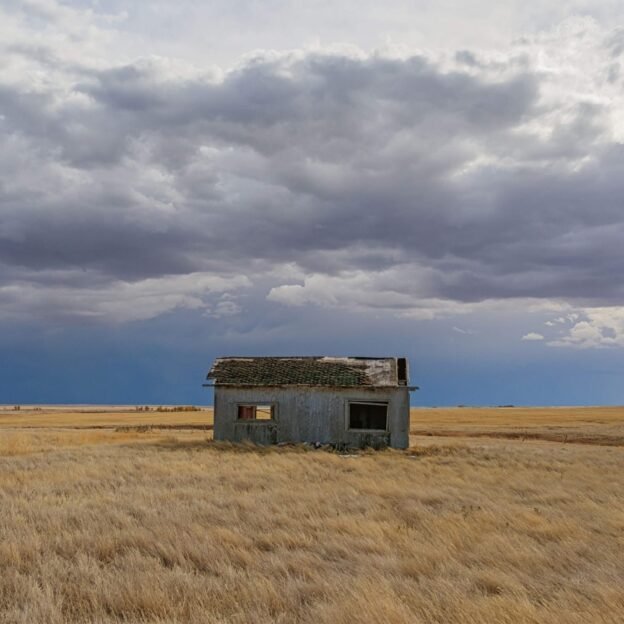
Lots left vacant, offices full of equipment but devoid of people, entire villages literally left to the wolves–this hour, TED speakers share stories about bringing new life to abandoned places. Guests include evolutionary biologist Shane Campbell-Staton, entrepreneur Garry Cooper, urban renewal expert Anika Goss, and conservationist Alysa McCall. (Original broadcast date: September 8, 2023)
TED Radio Hour+ subscribers now get access to bonus episodes, with more ideas from TED speakers and a behind the scenes look with our producers. A Plus subscription also lets you listen to regular episodes (like this one!) without sponsors. Sign-up at: plus.npr.org/ted
For handpicked podcast recommendations every week, subscribe to NPR’s Pod Club newsletter at npr.org/podclub.
See pcm.adswizz.com for information about our collection and use of personal data for sponsorship and to manage your podcast sponsorship preferences.
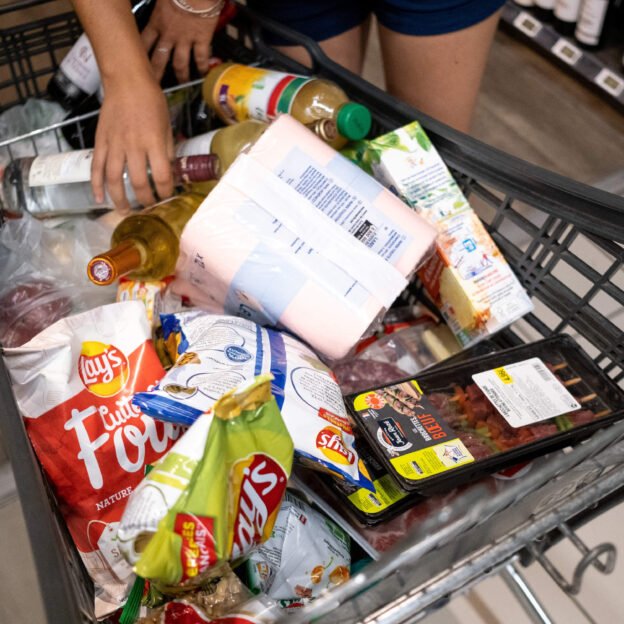
After President Trump fired the head of the Bureau of Labor Statistics, economists and statisticians across the board were horrified. Because the firing raises the spectre of potential manipulation – and it raises the worry that, in the future, the numbers won’t be as trustworthy.
So: we looked at two countries that have some experience with data manipulation. To ask what happens when governments get tempted to cook the books. And…once they cook the books… how hard is it to UN-cook them?
It’s two statistical historical cautionary tales. First, we learn how Argentina tried to mask its true inflation rate, and how that effort backfired. Then, we hear about the difficult process of cleaning up the post-cooked-book mess, in Greece.
For more:
– Can we just change how we measure GDP?
– The price of lettuce in Brooklyn
– What really goes on at the Bureau of Labor Statistics (Update)
– Can we still trust the monthly jobs report? (Update)
– How office politics could take down Europe
– The amazing shrinking economy might stop shrinking
Listen free at these links: Apple Podcasts, Spotify, the NPR app or anywhere you get podcasts.
Find more Planet Money: Facebook / Instagram / TikTok / Our weekly Newsletter.
Support Planet Money, get bonus episodes and sponsor-free listening and now Summer School episodes one week early by subscribing to Planet Money+ in Apple Podcasts or at plus.npr.org/planetmoney.
See pcm.adswizz.com for information about our collection and use of personal data for sponsorship and to manage your podcast sponsorship preferences.
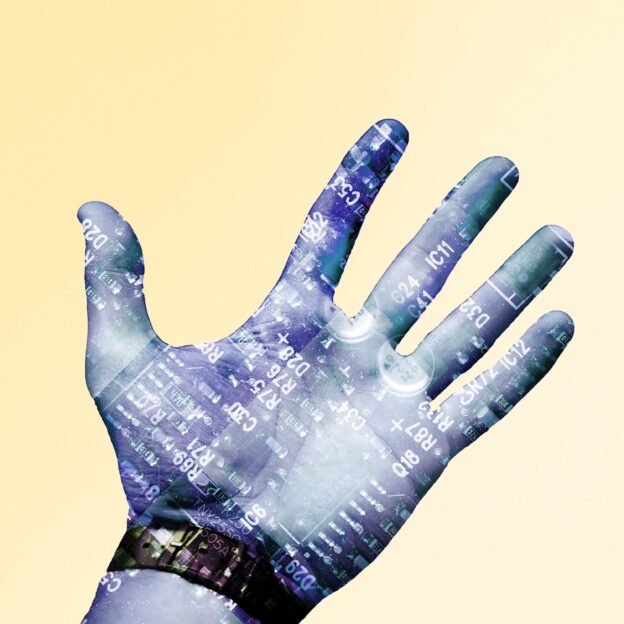
Our skin protects us, connects us, and constantly gathers data about the world around us. This hour, we explore how skin shapes our sense of self and how tech might change the way we touch and feel. Guests include mechanical engineer Katherine Kuchenbecker, materials scientist Anna Maria Coclite, TV broadcaster Lee Thomas and author Kathryn Schulz.
TED Radio Hour+ subscribers now get access to bonus episodes, with more ideas from TED speakers and a behind the scenes look with our producers. A Plus subscription also lets you listen to regular episodes (like this one!) without sponsors. Sign-up at: plus.npr.org/ted
For handpicked podcast recommendations every week, subscribe to NPR’s Pod Club newsletter at npr.org/podclub.
See pcm.adswizz.com for information about our collection and use of personal data for sponsorship and to manage your podcast sponsorship preferences.
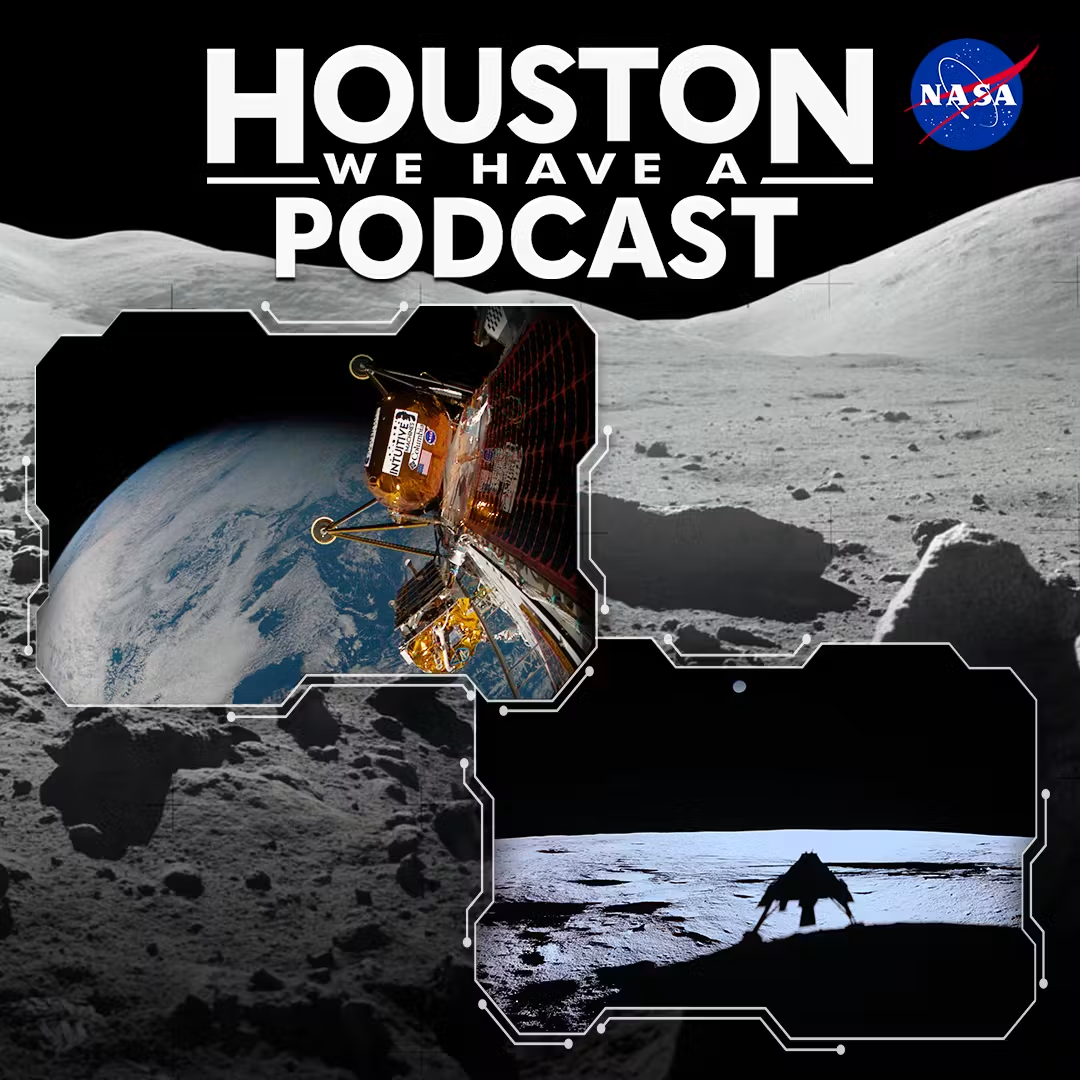
NASA project scientists Maria Banks and Sue Lederer revisit recent Commercial Lunar Payload Services missions and discuss research on the Moon. HWHAP 396.
LIVE SHOW: August 18th in Brooklyn. Tickets here. (PM+ supporters get a 10 percent discount off their tickets. Listen to the July 8th bonus episode to get the code!)
In economics, a market is a place (even virtual) where buyers and sellers meet to exchange goods or services. Economists love markets. It’s like all of our supply and demand graphs have come to life. Almost everything you buy goes through some sort of marketplace—your cup of coffee came from trading in the bean markets. Your spouse might have come from the dating marketplace on the apps. Even kids will tell you one Snickers is worth at least two Twix.
But sometimes, as we’ll see today, markets can go terribly wrong; greed can run out of control; lives can be at risk. That’s when the government often steps in and gives the market a little nudge to work better. Today’s episode: Market Design.
The series is hosted by Robert Smith and produced by Eric Mennel. Our project manager is Devin Mellor. This episode was edited by Planet Money Executive Producer Alex Goldmark and fact-checked by Emily Crawford.
Help support Planet Money and hear our bonus episodes by subscribing to Planet Money+ in Apple Podcasts or at plus.npr.org/planetmoney.
Always free at these links: Apple Podcasts, Spotify, the NPR app or anywhere you get podcasts.
Find more Planet Money: Facebook / Instagram / TikTok / Our weekly Newsletter.
See pcm.adswizz.com for information about our collection and use of personal data for sponsorship and to manage your podcast sponsorship preferences.