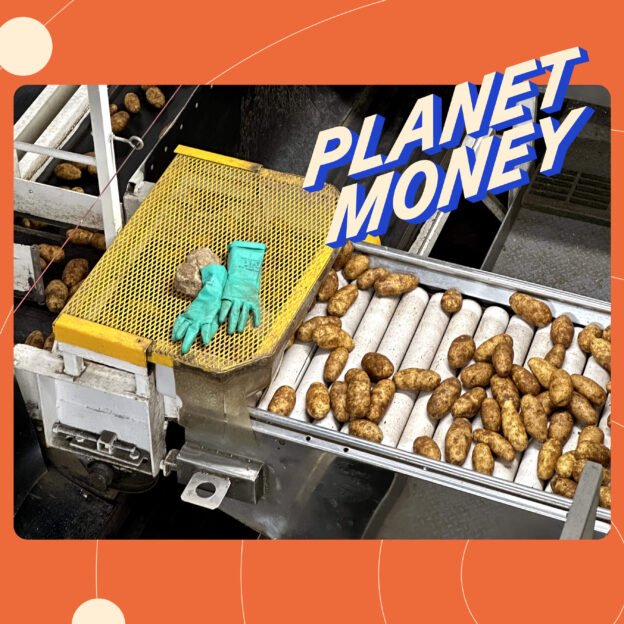
Ever since free trade opened up between the US and Mexico in the 1990s, trillions of dollars of goods have been going back and forth between the two countries, from cars to strawberries to MRI machines to underwear. But one major exception has been fresh American potatoes.
Today on the show, we tell the trade saga of the American potato. For more than 25 years, there was a place that American potatoes could not go to freely. A place that the entire American potato industry was desperate to access. A vast, untapped market: Mexico.
But standing in their way – the Mexican potato lobby and a trade loophole.
This episode was hosted by Erika Beras and Jeff Guo. It was produced by Willa Rubin and edited by Meg Cramer. It was fact-checked by Sierra Juarez. Engineering by Cena Loffredo. Alex Goldmark is Planet Money‘s executive producer.
Help support Planet Money and hear our bonus episodes by subscribing to Planet Money+ in Apple Podcasts or at plus.npr.org/planetmoney.
See pcm.adswizz.com for information about our collection and use of personal data for sponsorship and to manage your podcast sponsorship preferences.
NPR Privacy Policy
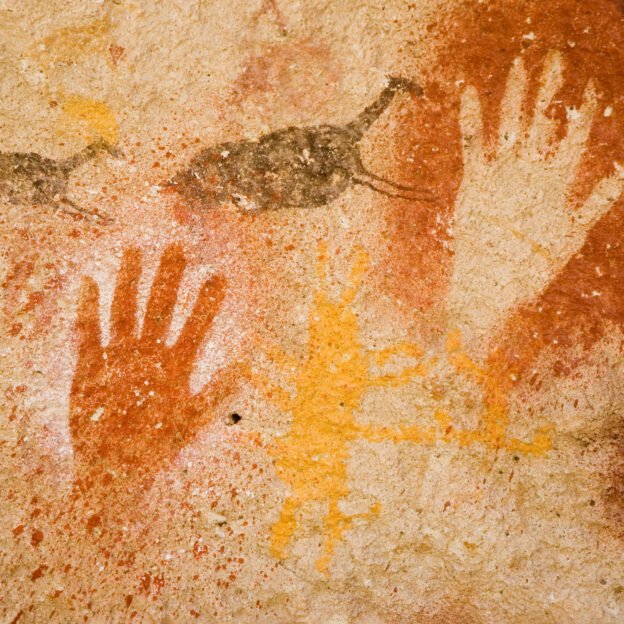
For millennia, humans have created artifacts of their lives — from art, to books, to music. This hour, we explore ideas about capturing the ephemeral human experience for future generations to find. Guests include paleoanthropologist Genevieve von Petzinger, museum curator Ariana Curtis, music curator Alexis Charpentier and artist Katie Paterson.
Original broadcast date: November 4, 2022.
TED Radio Hour+ subscribers now get access to bonus episodes, with more ideas from TED speakers and a behind the scenes look with our producers. A Plus subscription also lets you listen to regular episodes (like this one!) without sponsors. Sign-up at plus.npr.org/ted.
See pcm.adswizz.com for information about our collection and use of personal data for sponsorship and to manage your podcast sponsorship preferences.
NPR Privacy Policy
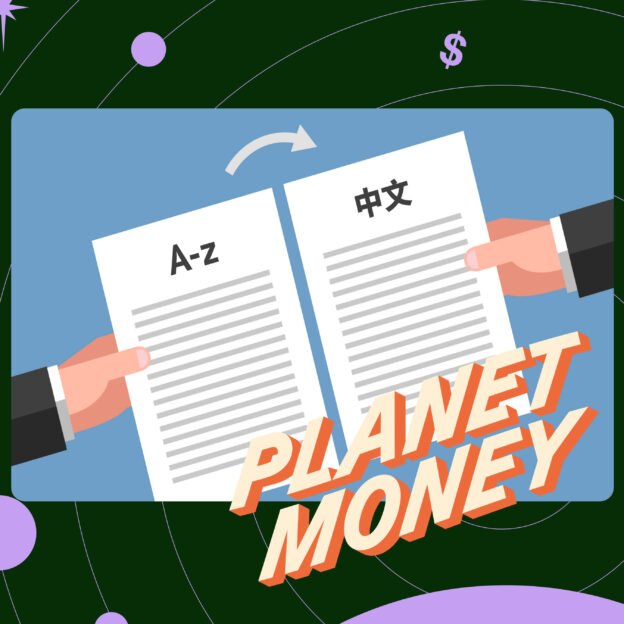
If you believe the hype, translators will all soon be out of work. Luis von Ahn, CEO and co-founder of the language learning app Duolingo, doesn’t think AI is quite there… yet. In this interview, Greg Rosalsky talks with Luis about AI and how it’s reshaping translation jobs and the language learning industry. We also ask him about headlines earlier this year suggesting Duolingo laid off some of its workers and replaced them with AI.
This is one of Greg’s Behind The Newsletter conversations where he shares his interviews with policy makers, business leaders, and economists who appear in The Planet Money Newsletter.
This episode was first released as a bonus episode for Planet Money+ listeners earlier this year. We’re sharing it today for all listeners. To hear more episodes like this one and support NPR in the process, sign up for Planet Money+ at plus.npr.org. We’ll have a fresh bonus episode out in two weeks!
You can sign up for the The Planet Money Newsletter and check out past editions here:
https://www.npr.org/planetmoneynewsletter
See pcm.adswizz.com for information about our collection and use of personal data for sponsorship and to manage your podcast sponsorship preferences.
NPR Privacy Policy
After the gift exchange comes another great holiday tradition: returns season. Once again, we are joining the fun in our own Planet Money way. We are returning to stories from years past to see what’s changed since we last reported them. It’s an episode we call The Rest of the Story.
We have updates on zombie mortgages, student loan forgiveness, Argentina’s economy under its self-described anarcho-capitalist president, and the best place in the world to give birth to twins. Plus, a return to… returns.
So while you’re looking for that holiday sweater in a better size, or waiting in line to trade in your Dutch oven for an air fryer, take a listen to all our latest little audio gifts. And see you in 2025!
This episode was hosted by Alexi Horowitz-Ghazi. It was produced by Sam Yellowhorse Kesler, and edited by Keith Romer and Jess Jiang. It was fact-checked by Sierra Juarez and engineered by Cena Loffredo. Alex Goldmark is Planet Money‘s executive producer.
Help support Planet Money and hear our bonus episodes by subscribing to Planet Money+ in Apple Podcasts or at plus.npr.org/planetmoney.
See pcm.adswizz.com for information about our collection and use of personal data for sponsorship and to manage your podcast sponsorship preferences.
NPR Privacy Policy
We often view paradise as a place of safety, beauty, tranquility. It’s an ideal we long for, but one we can rarely find. This hour, TED speakers search for utopia and come to terms with reality. Guests include wildfire expert George Whitesides, author Pico Iyer, physicist Ramón Méndez Galain, and tech entrepreneur Ramona Pierson. We also hear from two residents of Paradise, California, Richard and Zetta Gore.
Original broadcast date: November 10, 2023
TED Radio Hour+ subscribers now get access to bonus episodes, with more ideas from TED speakers and a behind the scenes look with our producers. A Plus subscription also lets you listen to regular episodes (like this one!) without sponsors. Sign-up at plus.npr.org/ted.
See pcm.adswizz.com for information about our collection and use of personal data for sponsorship and to manage your podcast sponsorship preferences.
NPR Privacy Policy
Writing can help you process thoughts, preserve memories, chronicle the stories of you and your loved ones. But that’s only if you can get past the blank page. In this bonus episode, best-selling memoirist Kelly Corrigan offers advice for putting pen to paper. Corrigan has written four New York Times-bestselling books about her life and family in the last decade, including Tell Me More and The Middle Place. She was featured in the episode, “A guide to being brave in relationships.”
To get access to more bonus episodes like this one, sign up for TED Radio Hour+. When you do, all your episodes also become sponsor-free. That’s because you are directly supporting our work at NPR. Learn more at plus.npr.org/ted
See pcm.adswizz.com for information about our collection and use of personal data for sponsorship and to manage your podcast sponsorship preferences.
NPR Privacy Policy
This year, there was some economic good news to go around. Inflation generally ticked down. Unemployment more or less held around 4-percent. Heck, the Fed even cut interest rates three times. But for a lot of people, the overall economic vibes were more important. And the vibes… were still off.
We might have achieved the soft landing the Fed was hoping for, but we saw some wackiness in the relationship between unemployment and job vacancies. Meanwhile, Bitcoin went to the moon. We have covered all of that in this past year, but which of these economic stories really defined the year?
Fortunately, we don’t have to decide. You all do.
On today’s show, a collaboration with our daily podcast The Indicator, we have Indicator Family Feud! Two Planet Money hosts enter, one Indicator host… also enters. And all three leave, having had a great time with lively discussion and light ribbing. Plus, some mild scheduling issues. But, we can’t stress enough that no hosts were harmed in the making of this podcast.
Then, we look ahead to 2025 to see what indicators we think will define the coming year – the future and the past, on our latest episode!
Help support Planet Money and hear our bonus episodes by subscribing to Planet Money+ in Apple Podcasts or at plus.npr.org/planetmoney.
See pcm.adswizz.com for information about our collection and use of personal data for sponsorship and to manage your podcast sponsorship preferences.
NPR Privacy Policy
Our planet is in serious trouble. There are a million species of plants and animals in danger of extinction, and the biggest cause is companies destroying their habitats to farm food, mine minerals, and otherwise get the raw materials to turn into the products we all consume.
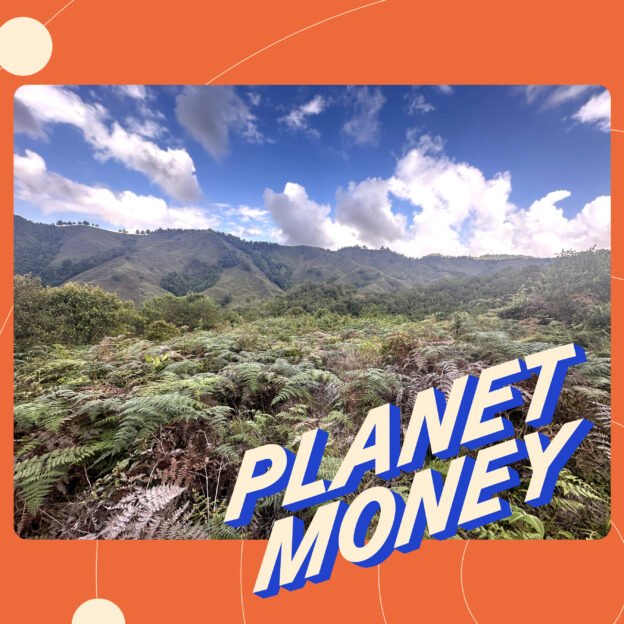
So, when Mauricio Serna was in college, he realized his family’s plot of land in Colombia, called El Globo, presented a unique opportunity. Sure, it had historically been a cattle ranch. But if he could get the money to turn it back into cloud forest, perhaps it could once again be a habitat for the animals who used to live there — animals like the yellow-eared parrot, the tree ocelot, and the spectacled bear (of Paddington fame).
On today’s show, Mauricio’s quest to make a market for a new-ish financial instrument: the biodiversity credit. We peek under the hood to try to figure out how these credits actually work. Is the hype around them a bunch of hot air? Or could they be a critical tool for saving thousands of species around the world?
Today’s episode was hosted by Stan Alcorn and Alexi Horowitz-Ghazi. It was co-reported by Tomás Uprimny. It was produced by James Sneed, edited by Jess Jiang, fact-checked by Sierra Juarez, and engineered by Cena Loffredo. Alex Goldmark is Planet Money’s executive producer.
Help support Planet Money and hear our bonus episodes by subscribing to Planet Money+ in Apple Podcasts or at plus.npr.org/planetmoney.
See pcm.adswizz.com for information about our collection and use of personal data for sponsorship and to manage your podcast sponsorship preferences.
NPR Privacy Policy
NASA’s expert in exploration architectures discusses how the agency stays on track to take humans farther into deep space through reviews such as the Architecture Concept review. HWHAP 366.
To understand AI, you need to hear Mustafa Suleyman’s story. From youth hotline founder to DeepMind creator and Microsoft AI chief, his journey explains AI’s evolution and his plans for its future.
TED Radio Hour+ subscribers now get access to bonus episodes, with more ideas from TED speakers and a behind the scenes look with our producers. A Plus subscription also lets you listen to regular episodes (like this one!) without sponsors. Sign-up at: plus.npr.org/ted.
Correction: This story incorrectly states that DeepMind was one of the first AI companies. DeepMind was not one of the first AI companies, it was one of the first AGI—artificial general intelligence—companies.
See pcm.adswizz.com for information about our collection and use of personal data for sponsorship and to manage your podcast sponsorship preferences.
NPR Privacy Policy