Every ten years, a group of German farmers gather in the communal farm fields of the Osing for the Osingverlosung, a ritual dating back centuries. Osing refers to the area. And verlosung means “lottery,” as in a land lottery. All of the land in this communal land is randomly reassigned to farmers who commit to farming it for the next decade.
Hundreds of years ago, a community in Germany came up with their own, unique solution for how to best allocate scarce resources. For this community, the lottery is a way to try and make the system of land allotment more fair and avoid conflict.
Today on the show, we go to the lottery and follow along as every farmer has a shot at getting the perfect piece of land — or the absolute worst piece of land! And we see what we can learn from this living, medieval tradition that tries to balance fairness and efficiency.
This episode was hosted by Erika Beras and Emma Peaslee. It was produced by Emma Peaslee. It was edited by Jess Jiang. Reporting help from Sofia Shchukina. It was fact checked by Sierra Juarez. It was engineered by Cena Loffredo. Alex Goldmark is Planet Money‘s executive producer.
Help support Planet Money and hear our bonus episodes by subscribing to Planet Money+ in Apple Podcasts or at plus.npr.org/planetmoney.
See pcm.adswizz.com for information about our collection and use of personal data for sponsorship and to manage your podcast sponsorship preferences.
NPR Privacy Policy
On episode 362, a NASA project manager and a design engineer discuss the Orion Crew Survival System Suit that future Artemis crews will wear on their journeys to and from the Moon.
This is the story behind one of the most valuable — and perhaps, most improbable — technologies humanity has ever created. It’s a breakthrough called extreme ultraviolet lithography, and it’s how the most advanced microchips in the world are made. The kind of chips powering the latest AI models. The kind of chips that the U.S. is desperately trying to keep out of the hands of China.
For years, few thought this technology was even possible. It still sounds like science fiction: A laser strong enough to blast holes in a bank vault hits a droplet of molten tin. The droplet explodes into a burst of extreme ultraviolet light. That precious light is funneled onto a wafer of silicon, where it etches circuits as fine as a strand of DNA. Only one company in the world that can make these advanced microchip etching machines: a Dutch firm called ASML.
Today on the show, how this breakthrough in advanced chipmaking happened — and how it almost didn’t. How the long-shot idea was incubated in U.S. nuclear weapons laboratories and nurtured by U.S. tech giants. And, why a Dutch company now controls it.
This episode was hosted by Jeff Guo and Sally Helm. It was produced by Willa Rubin and edited by Jess Jiang. It was fact-checked by Dania Suleman, and engineered by Patrick Murray. Alex Goldmark is Planet Money‘s executive producer.
Help support Planet Money and hear our bonus episodes by subscribing to Planet Money+ in Apple Podcasts or at plus.npr.org/planetmoney.
See pcm.adswizz.com for information about our collection and use of personal data for sponsorship and to manage your podcast sponsorship preferences.
NPR Privacy Policy
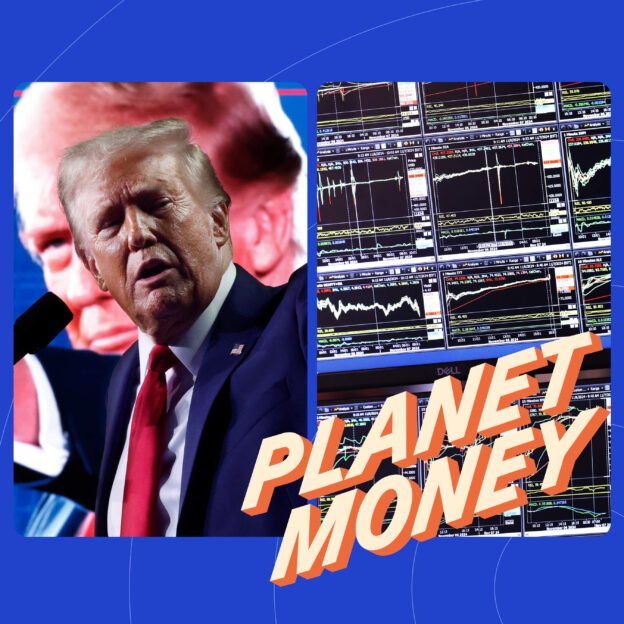
On the day after the election, Wall Street responded in a dramatic way. Some stocks went way up, others went way down. By reading those signals — by breaking down what people were buying and what they were selling — you can learn a lot about where the economy might be headed. Or at least, where people are willing to bet the economy is headed.
On today’s show, we decode what Wall Street thinks about the next Trump presidency — what it means for different parts of the economy, and what it means for everyone. Does the wisdom of the market think President Trump will actually impose new tariffs and lift regulations? What about taxes and spending? And will inflation ultimately go up or down?
What markets bet President Trump will do. That’s today’s episode.
This episode was hosted by Jeff Guo, Sally Helm, Erika Beras, and Keith Romer. It was produced by Sam Yellowhorse Kesler and Willa Rubin. It was edited by Martina Castro and fact-checked by Sierra Juarez. Engineering by Gilly Moon. Alex Goldmark is Planet Money‘s executive producer.
Help support Planet Money and hear our bonus episodes by subscribing to Planet Money+ in Apple Podcasts or at plus.npr.org/planetmoney.
See pcm.adswizz.com for information about our collection and use of personal data for sponsorship and to manage your podcast sponsorship preferences.
NPR Privacy Policy
On episode 361, former NASA flight director Gerry Griffin discusses his trailblazing career in the agency and his experience leading multiple Apollo missions, including the final lunar landing on Apollo 17.
Artificial intelligence is powerful, but what about natural intelligence? This hour, TED speakers explore the intrinsic genius in animal language, insect behavior, plant anatomy and our immune system.
Guests include neuroscientist Greg Gage, computational neuroscientist Frances Chance, social psychoneuroimmunologist Keely Muscatell and environmental researcher Karen Bakker.
Original broadcast date: March 8, 2024
See pcm.adswizz.com for information about our collection and use of personal data for sponsorship and to manage your podcast sponsorship preferences.
NPR Privacy Policy
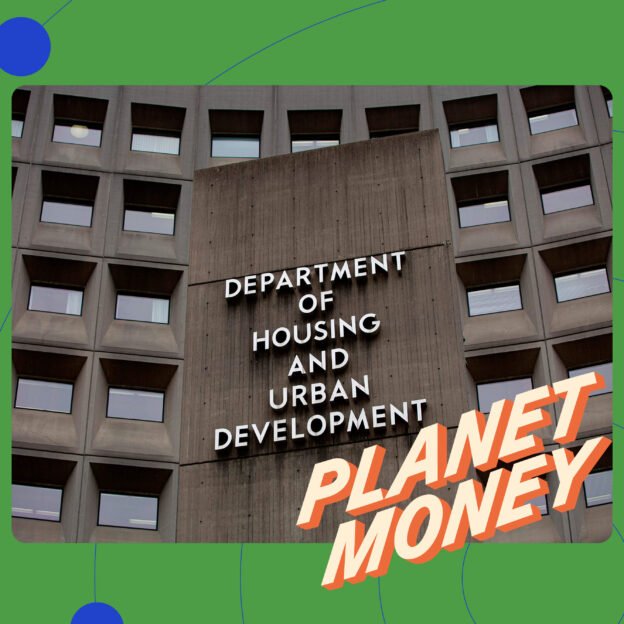
Back in the 90s, the federal government ran a bold experiment, giving people vouchers to move out of high-poverty neighborhoods into low-poverty ones. They wanted to test if housing policy could be hope – whether an address change alone could improve jobs, earnings and education.
The answer to that seems obvious. But it did not at all turn out as they expected.
Years later, when new researchers went back to the data on this experiment, they stumbled on something big. Something that is changing housing policy across the country today.
Today’s episode was originally hosted by Karen Duffin, produced by Aviva DeKornfeld, and edited by Bryant Urstadt. The update was hosted by Amanda Aronczyk, produced by Sean Saldana and fact checked by Sierra Juarez. Our supervising executive producer is Alex Goldmark.
Help support Planet Money and hear our bonus episodes by subscribing to Planet Money+ in Apple Podcasts or at plus.npr.org/planetmoney.
See pcm.adswizz.com for information about our collection and use of personal data for sponsorship and to manage your podcast sponsorship preferences.
NPR Privacy Policy
Ray and Becky Queen live in rural Oklahoma with their kids (and chickens). The Queens were able to buy that home with a VA loan because of Ray’s service in the Army. During COVID, the Queens – like millions of other Americans – needed help from emergency forbearance. They were told they could pause home payments for up to a year and then pick up again making affordable mortgage payments with no problems.
That’s what happened for most American homeowners who took forbearance. But not for tens of thousands of military veterans like Ray Queen.
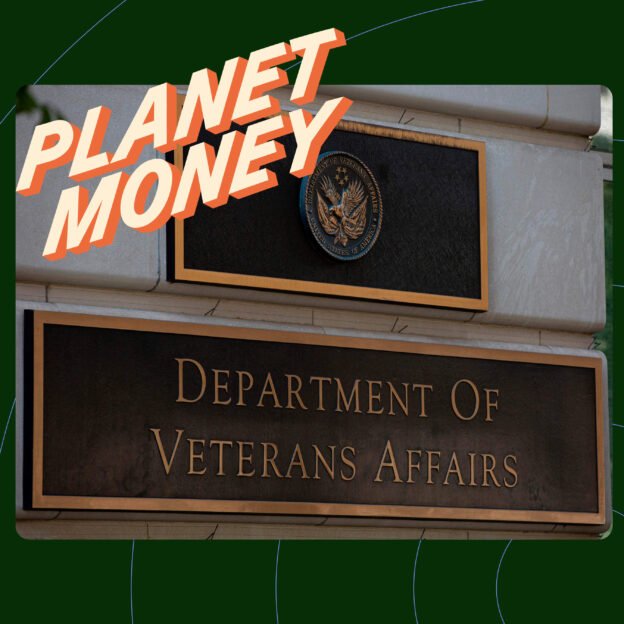
On today’s show, we follow two reporters’ journey to figure out what went wrong with the VA’s loan forbearance program. How did something meant to help vets keep their houses during COVID end up stranding tens of thousands of them on the brink of foreclosure? And, once the error was spotted, did the government do enough to make things right?
Today’s episode was produced by James Sneed. It was edited by Meg Cramer. And fact-checked by Dania Suleman. Engineering by Cena Loffredo. Alex Goldmark is Planet Money‘s executive producer.
Help support Planet Money and hear our bonus episodes by subscribing to Planet Money+ in Apple Podcasts or at plus.npr.org/planetmoney.
See pcm.adswizz.com for information about our collection and use of personal data for sponsorship and to manage your podcast sponsorship preferences.
NPR Privacy Policy
From sustaining a marriage to making new friends, forming connections requires courage. This hour, TED speakers guide us through being brave during the most difficult moments in relationships. Guests include writer and podcaster Kelly Corrigan, journalist Allison Gilbert and clinical psychologists Julie and John Gottman.
TED Radio Hour+ subscribers now get access to bonus episodes, with more ideas from TED speakers and a behind the scenes look with our producers. A Plus subscription also lets you listen to regular episodes (like this one!) without sponsors. Sign-up at: plus.npr.org/ted
See pcm.adswizz.com for information about our collection and use of personal data for sponsorship and to manage your podcast sponsorship preferences.
NPR Privacy Policy
On episode 360, NASA experts discuss how NASA astronauts have the opportunity to exercise their right to vote from aboard the International Space Station and the process to make it happen.