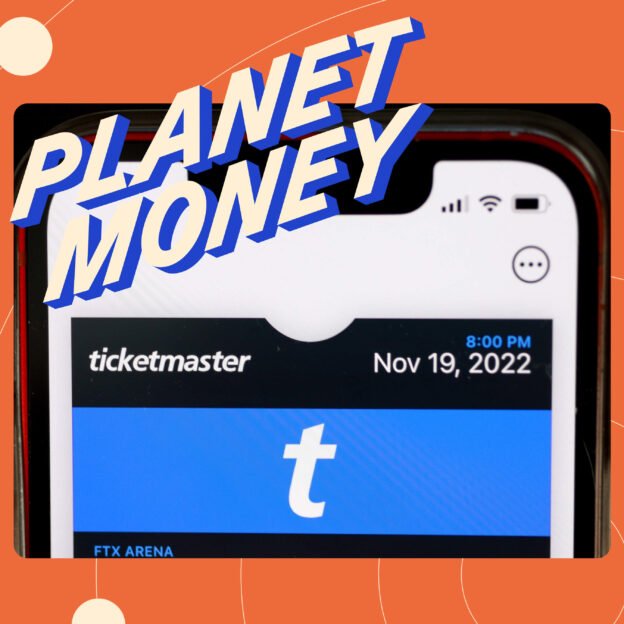
If you… exist in the world, it’s likely that you have gotten a letter or email at some point informing you that your data was stolen. This happened recently to potentially hundreds of millions of people in a hack that targeted companies like Ticketmaster, AT&T, Advance Auto Parts and others that use the data cloud company Snowflake.
On today’s show, we try to figure out where that stolen data ended up, how worried we should be about it, and what we’re supposed to do when bad actors take our personal and private information. And: How our information is being bought, sold, and stolen.
This episode was hosted by Amanda Aronczyk and Keith Romer. It was produced by Sam Yellowhorse Kesler and edited by Meg Cramer. It was engineered by Ko Takasugi-Czernowin with an assist from Kwesi Lee, and fact-checked by Dania Suleman. Alex Goldmark is Planet Money‘s executive producer.
Help support Planet Money and hear our bonus episodes by subscribing to Planet Money+ in Apple Podcasts or at plus.npr.org/planetmoney.
See pcm.adswizz.com for information about our collection and use of personal data for sponsorship and to manage your podcast sponsorship preferences.
NPR Privacy Policy
Meta is a company everyone knows (literally, everyone). But, somehow, it’s also a company that few people feel they actually understand. Their products are used by more humans than any other’s in history — almost half of the entire world’s population daily. But… what is Meta? Why do they do what they do? How do they do what they do? Ask ten people and you’ll likely get ten very different sets of answers.
Today, we dive deeper than we’ve ever gone trying to find Acquired’s answers to those questions. And after months of research and 6+ hours of incredible stories about how they (and really “they” being Mark himself) bet it all and win time and time again in the face of overwhelming odds, we arrive at our answers. Facebook, Instagram, WhatsApp, Threads, AI, Oculus, Orion, it’s all here. Tune in for one of the greatest corporate stories of all time: Meta, a Mark Zuckerberg Production.
Sponsors:
Links:
Carve Outs:
More Acquired!
© Copyright 2015-2026 ACQ, LLC
Note: Acquired hosts and guests may hold assets discussed in this episode. This podcast is not investment advice, and is intended for informational and entertainment purposes only. You should do your own research and make your own independent decisions when considering any financial transactions.
There’s something strange going on in hospitals. Cheap, common drugs that nurses use every day seem to be constantly hit by shortages. These are often generic drugs that don’t seem super complicated to make, things like dextrose and saline (aka sugar water and salt water).
So what’s going on? The answer, as with anything in healthcare, is complicated.
On today’s show: why hospitals keep running out of generic drugs. The story behind these shortages tells us a lot about how these drugs are made, bought and sold–and, it shows us how these markets can falter without the proper care.
This episode was hosted by Sally Helm and Alexi Horowitz-Ghazi. It was produced by Willa Rubin, with help from James Sneed and Sam Yellowhorse Kesler. It was edited by Martina Castro. Fact-checking by Dania Suleman. Planet Money‘s executive producer is Alex Goldmark.
Help support Planet Money and hear our bonus episodes by subscribing to Planet Money+ in Apple Podcasts or at plus.npr.org/planetmoney.
See pcm.adswizz.com for information about our collection and use of personal data for sponsorship and to manage your podcast sponsorship preferences.
NPR Privacy Policy
On episode 359, a NASA astrobiology program scientist discusses looking for signs of life beyond us in the stars, and the study of the origin, evolution, and distribution of life in the universe.
From our planet’s underwater caves to its ancient soils, there are entire worlds right beneath our feet. This hour, we explore the subterranean forces that shape our lives above the ground. Guests include cave diver Jill Heinerth, death care advocate Katrina Spade, soil scientist Asmeret Asefaw Berhe and paleontologist Nizar Ibrahim. Original broadcast date: March 11, 2022.
TED Radio Hour+ subscribers now get access to bonus episodes, with more ideas from TED speakers and a behind the scenes look with our producers. A Plus subscription also lets you listen to regular episodes (like this one!) without sponsors. Sign-up at plus.npr.org/ted.
See pcm.adswizz.com for information about our collection and use of personal data for sponsorship and to manage your podcast sponsorship preferences.
NPR Privacy Policy
On today’s show, we have two stories from The Indicator, Planet Money‘s daily podcast. They just launched Love Week, a weeklong series exploring the business and economic side of romance.
First, hosts Wailin Wong and Adrian Ma fire up the gas logs and pour a mug of cocoa to discuss the made-for-TV rom-com machine, and how television executives learned to mass produce seasonal romance.
Then, Wailin and host Darian Woods discuss another romance medium: the romance novel. Once relegated to supermarket aisles, these books are now mainstream. And authors, an often-maligned group within publishing, have found greater commercial success than many writers in other genres. We find out how romance novelists rode the e-book wave and networked with each other to achieve their happily-for-now status in the industry.
This episode is hosted by Erika Beras, Wailin Wong, Adrian Ma, and Darian Woods. These episodes of The Indicator were originally produced by Julia Ritchey and engineered by Kwesi Lee. They were fact-checked by Sierra Juarez. Kate Concannon is The Indicator‘s Editor.
You can listen to the rest of the series at The Indicator’s feed, or at npr.org/love
Help support Planet Money and hear our bonus episodes by subscribing to Planet Money+ in Apple Podcasts or at plus.npr.org/planetmoney.
See pcm.adswizz.com for information about our collection and use of personal data for sponsorship and to manage your podcast sponsorship preferences.
NPR Privacy Policy
Over the past two decades, there’s been a sort of tectonic economic shift happening under our feet. More and more companies have switched from selling goods one by one to selling services, available as a subscription. These days everything from razor blades to meal kits to car washes have become subscriptions. But all that convenience has also come with a dark side – some companies have designed their offerings to be as easy as possible to sign up for and also as difficult as possible to cancel. Many consumers are now paying for way more subscriptions than they even know about.
On today’s show, we discover how we all fell into this subscription trap – who is winning and who is losing in this brave new subscription based world – and what both the government and the free market are doing to try and fix it.
This episode was hosted by Alexi Horowitz-Ghazi and Jeff Guo. It was produced by James Sneed. It was edited by Jess Jiang, fact-checked by Sierra Juarez, and engineered by Valentina Rodriguez Sanchez. Alex Goldmark is Planet Money‘s executive producer.
Help support Planet Money and hear our bonus episodes by subscribing to Planet Money+ in Apple Podcasts or at plus.npr.org/planetmoney.
See pcm.adswizz.com for information about our collection and use of personal data for sponsorship and to manage your podcast sponsorship preferences.
NPR Privacy Policy
On episode 358, the Deputy Chief Scientist for the International Space Station dives into the different ways the orbiting laboratory provides benefits to humanity.
Big life decisions are never easy. Should you follow a plan? Make a hard pivot? Improvise as you go? This hour, TED speakers who’ve made extreme life choices and their advice for getting unstuck. Guests include comedian and musician Reggie Watts, biomedical researcher Sonia Vallabh and conservationist Kristine McDivitt Tompkins.
TED Radio Hour+ subscribers now get access to bonus episodes, with more ideas from TED speakers and a behind the scenes look with our producers. A Plus subscription also lets you listen to regular episodes (like this one!) without sponsors. Sign-up at: plus.npr.org/ted
See pcm.adswizz.com for information about our collection and use of personal data for sponsorship and to manage your podcast sponsorship preferences.
NPR Privacy Policy
(For our story on this year’s Nobel in Economics, check out our daily show, The Indicator!)
Let’s face it. Economics is filled with terms that don’t always make sense to the average person. Terms that sometimes mean what you think they mean, but sometimes not at all. Not even close.
We surveyed 188 economists. And we asked them: What are the most misunderstood terms in the field of economics?
On today’s show, their answers! Hear stories about near recessions, a problem with insurance, econ at your local movie theater, and… an economics term that will make undergrads blush. Strap in, and bring your popcorn!
This episode was hosted by Amanda Aronczyk and Alexi Horowitz-Ghazi. It was produced by Sam Yellowhorse Kesler with help from Sean Saldana. It was edited by Jess Jiang, engineered by Valentina Rodríguez Sánchez and fact-checked by Sierra Juarez. Alex Goldmark is our executive producer.
Help support Planet Money and hear our bonus episodes by subscribing to Planet Money+ in Apple Podcasts or at plus.npr.org/planetmoney.
See pcm.adswizz.com for information about our collection and use of personal data for sponsorship and to manage your podcast sponsorship preferences.
NPR Privacy Policy