Ben has some big news. Actually, double big news! On what has become a holiday tradition here at Acquired, we cozy up to the fire to do our annual review of the show “in public”. We reflect on what can only be described as an absolutely mind-blowing 2023 (LVMH! Jensen! Costco! Charlie! Half a million plus listeners!) and look ahead to some big things cooking for 2024. Plus as always, we wrap with extended carve outs (joined this year by some surprise guests) for anyone still shopping for those holiday perfect gifts.
Huge thank you to everyone for making 2023 an amazing year again here in Acquired-land, and cheers to even greater things to come in 2023!
Sponsors:
More Acquired!
© Copyright 2015-2026 ACQ, LLC
Links / Extended Carve Outs!
Note: Acquired hosts and guests may hold assets discussed in this episode. This podcast is not investment advice, and is intended for informational and entertainment purposes only. You should do your own research and make your own independent decisions when considering any financial transactions.
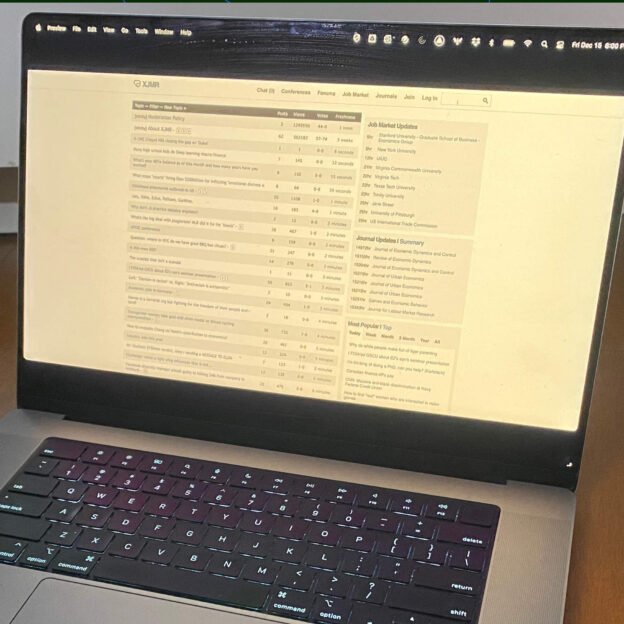
Economics Job Market Rumors is a website that’s half a job information Wiki, where people post about what’s going on inside economics departments, and half a discussion forum, where anyone with an internet connection can ask the economics hive mind whatever they want. All anonymously.
People can talk about finding work, share rumors, and just blow off steam. And that steam can get scaldingly hot. The forum has become notorious for racist and sexist posts, often attacking specific women and people from marginalized backgrounds.
Last year, economist Florian Ederer and engineer Kyle Jensen discovered a flaw in the way the site gave anonymity to its users. The flaw made it possible to identify which universities and institutions were the sources of many of the toxic posts on the site. And helped answer a longstanding question that’s dogged the economics profession: was the toxicity on EJMR the work of a bunch of fringey internet trolls, or was it a symptom of a much deeper problem within economics itself?
This episode was hosted by Mary Childs and Alexi Horowitz-Ghazi. It was produced by Willa Rubin with help from James Sneed and Sam Yellowhorse Kesler. It was edited by Keith Romer and engineered by Josh Newell. Fact-checking by Sierra Juarez. Alex Goldmark is Planet Money’s executive producer.
Help support Planet Money and get bonus episodes by subscribing to Planet Money+ in Apple Podcasts or at plus.npr.org/planetmoney.
See pcm.adswizz.com for information about our collection and use of personal data for sponsorship and to manage your podcast sponsorship preferences.
NPR Privacy Policy
It’s easy to focus on the nuances that get lost in translation, but what about the insights that are found? This hour, TED speakers reveal what we gain by adapting and translating information. Guests include textual scientist Gregory Heyworth, economist Ralph Chami, microbiologist and nanotechnologist Fatima AlZahra’a Alatraktchi and polyglot Lýdia Machová.
TED Radio Hour+ subscribers now get access to bonus episodes, with more ideas from TED speakers and a behind the scenes look with our producers. A Plus subscription also lets you listen to regular episodes (like this one!) without sponsors. Sign-up at: plus.npr.org/ted
See pcm.adswizz.com for information about our collection and use of personal data for sponsorship and to manage your podcast sponsorship preferences.
NPR Privacy Policy
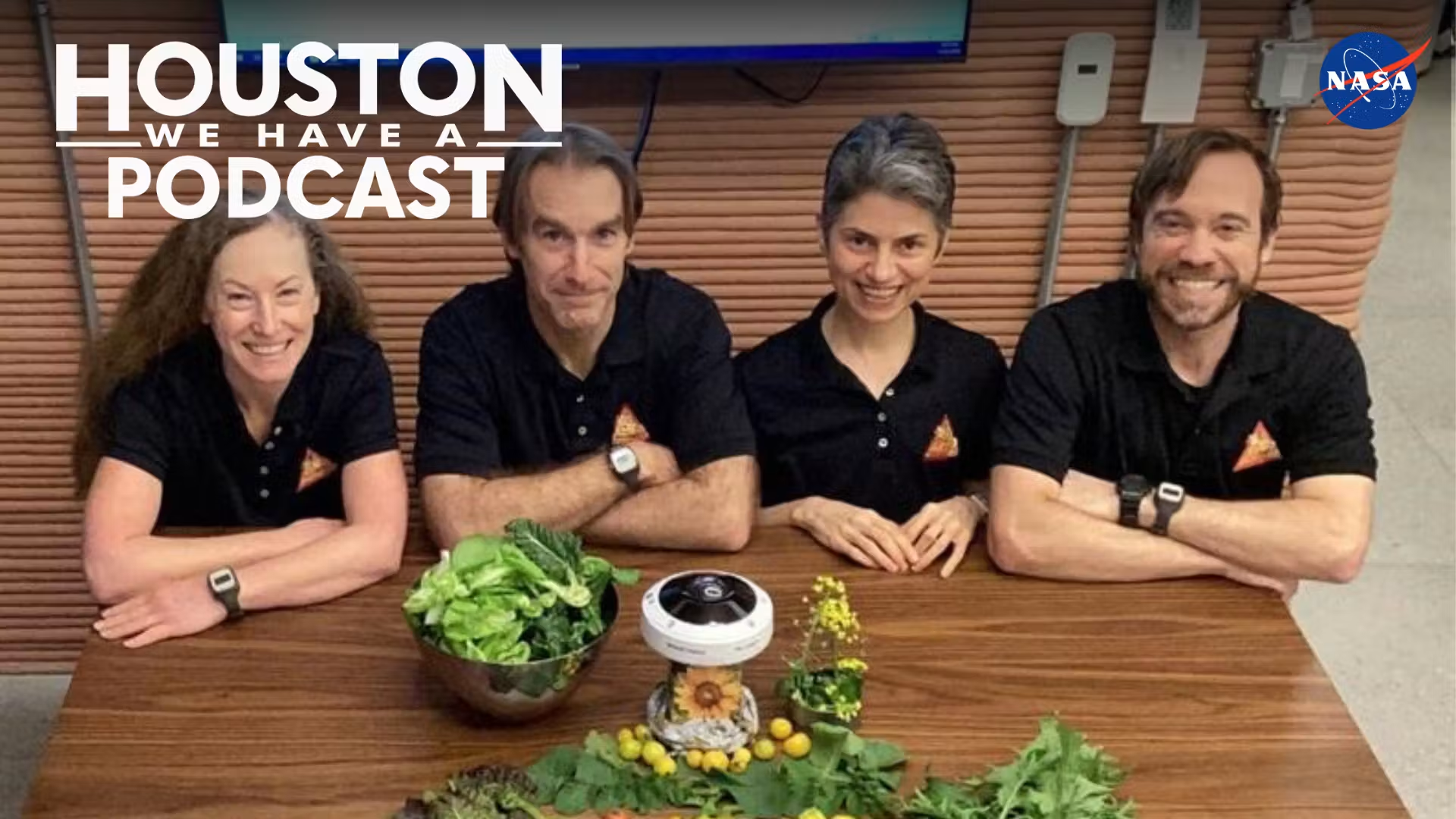
The CHAPEA crew gives an update in their fifth month of a one-year stay in a simulated Mars habitat and Dr. Suzanne Bell discusses behavioral health and performance of the analog mission. This is the fifth audio log of a monthly series. HWHAP Episode 316.
Maybe she’s born with it, maybe it’s __________.
The best part of waking up, is _______ in your cup!
Got ____?
If you can identify these brands based on tagline alone, it’s possible you… are a 90s kid.
The ’90s were arguably the peak moment of advertisers trying to make an impression on us that could last for decades. They got us to sing their jingles and say their slogans. These kinds of ads are called brand or image marketing. And it became a lot harder to pull off in the 21st century.
On today’s show, we look back at the history of advertising, and two pretty unassuming products that totally transformed ads.
This show was hosted by Sarah Gonzalez and Kenny Malone. It was produced by James Sneed, and engineered by James Willets. It was fact checked by Sierra Juarez, and edited by Molly Messick. Alex Goldmark is Planet Money’s executive producer.
Help support Planet Money and get bonus episodes by subscribing to Planet Money+ in Apple Podcasts or at plus.npr.org/planetmoney.
See pcm.adswizz.com for information about our collection and use of personal data for sponsorship and to manage your podcast sponsorship preferences.
NPR Privacy Policy
What if you could borrow money on the cheap and use it to pay for just about anything? The U.S. government can, and does, with U.S. Treasuries. But the market for Treasuries might be more fragile than we know.
In this episode, Yesha Yadav of Vanderbilt Law School explains why.
This episode was first published as a bonus episode for our Planet Money+ listeners. Today we’re making it available for everyone. To hear more episodes like this, and to hear Planet Money and The Indicator without sponsor messages, support the show by signing up for Planet Money+ in Apple Podcasts or at plus.npr.org/planetmoney.
See pcm.adswizz.com for information about our collection and use of personal data for sponsorship and to manage your podcast sponsorship preferences.
NPR Privacy Policy
Remember pagers? They were huge in the 80s — these little devices that could receive short messages. Sir Mix-A-Lot even had a song about them! But then cell phones came along, and pagers more or less became obsolete.
Except there’s one group of people who still carry pagers: medical doctors. At a surprisingly large number of hospitals, the pager remains the backbone of communication. Need to ask a doctor a question? Page them. Need to summon a doctor to an emergency? Page them. And then… wait for them to call you back.
Almost everyone agrees that pagers are a clunky and error-prone way for doctors to communicate. So why do so many hospitals still rely on them?On today’s show: A story about two doctors who hatched a plan to finally rid their hospital of pagers. And the surprising lessons they learned about why some obsolete technologies can be so hard to replace.
This episode was hosted by Jeff Guo and Nick Fountain. It was produced by Sam Yellowhorse Kesler. It was edited by Keith Romer and fact-checked by Sierra Juarez. It was engineered by Robert Rodriguez with help from Maggie Luthar. Alex Goldmark is Planet Money’s executive producer.
Help support Planet Money and get bonus episodes by subscribing to Planet Money+ in Apple Podcasts or at plus.npr.org/planetmoney.
See pcm.adswizz.com for information about our collection and use of personal data for sponsorship and to manage your podcast sponsorship preferences.
NPR Privacy Policy
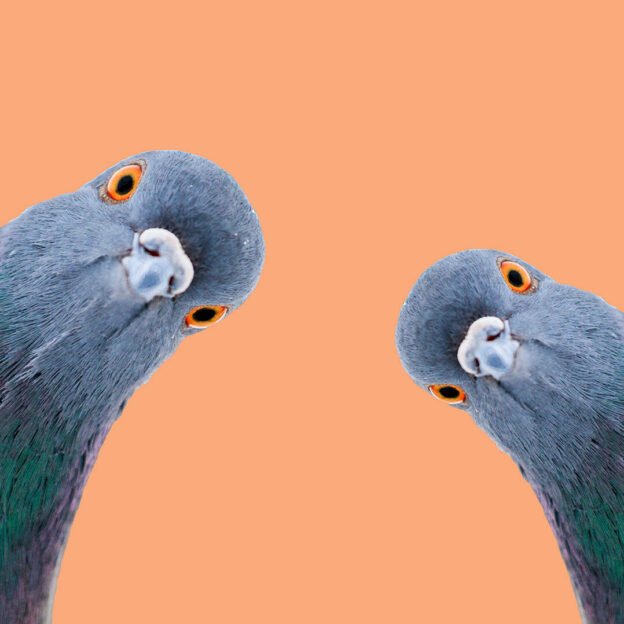
Being jolted out of the everyday can be a good thing. From an elaborate farce, to benign naughtiness, to a life-altering event—this hour, TED speakers explain the productive side of the provocative. Guests include bird truther Peter McIndoe, psychologist Paul Bloom and cognitive scientist Maya Shankar.
TED Radio Hour+ subscribers now get access to bonus episodes, with more ideas from TED speakers and a behind the scenes look with our producers. A Plus subscription also lets you listen to regular episodes (like this one!) without sponsors. Sign-up at: plus.npr.org/ted
See pcm.adswizz.com for information about our collection and use of personal data for sponsorship and to manage your podcast sponsorship preferences.
NPR Privacy Policy
NASA scientist Dr. Sharmila Bhattacharya describes how space biology research can contribute to significant scientific and technological advancements that not only enable space exploration for future long duration space missions, but also benefits life on Earth. HWHAP Episode 315.
Today on the show, we have two episodes from our daily podcast, The Indicator, about things we spend a lot of time thinking about this time of year: food and drink.
First up, we explore how changes in economic conditions led to one of the U.K.’s iconic (and affordable) staple foods becoming a luxury.
Then, the story of one Indigenous woman whose small business went head-to-head with Coca-Cola over a trademark dispute.
Help support Planet Money and get bonus episodes by subscribing to Planet Money+ in Apple Podcasts or at plus.npr.org/planetmoney.
See pcm.adswizz.com for information about our collection and use of personal data for sponsorship and to manage your podcast sponsorship preferences.
NPR Privacy Policy