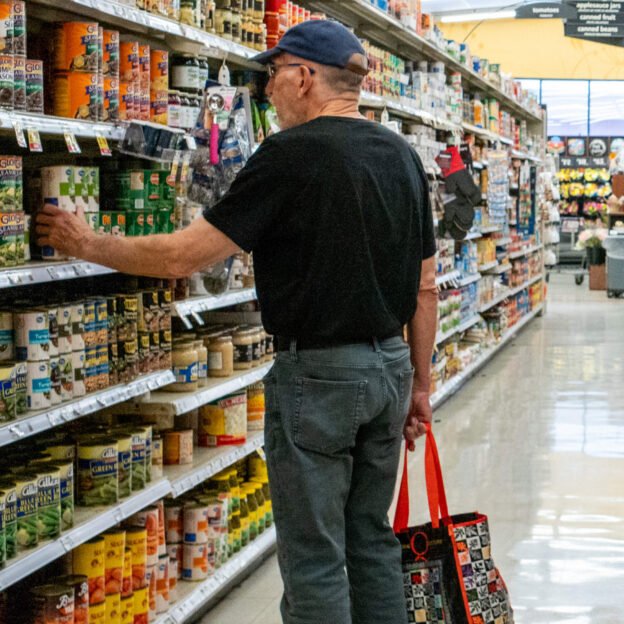
Would you say that you and your family are better off or worse off, financially, than you were a year ago? Do you think in 12 months we’ll have good times, financially, or bad? Generally speaking, do you think now is a good time or a bad time to buy a house?
These are the kinds of questions baked into the Consumer Sentiment Index. And while the economy has been humming along surprisingly well lately, sentiment has stayed surprisingly low.
Today on the show: We are really bummed about the economy, despite the fact that unemployment and inflation are down. So, what gives? We talk to a former Fed economist trying to get to the heart of this paradox, and travel to Michigan to check in on the place where they check the vibes of the economy.
Help support Planet Money and get bonus episodes by subscribing to Planet Money+ in Apple Podcasts or at plus.npr.org/planetmoney.
See pcm.adswizz.com for information about our collection and use of personal data for sponsorship and to manage your podcast sponsorship preferences.
NPR Privacy Policy
Original broadcast date: January 27, 2023. Information feels more accessible than ever, but the ways we store data are surprisingly fragile. Can we save anything forever? This hour, TED speakers explore preserving our past, present and future. Guests include artist CM Ralph, digital librarian Brewster Kahle, molecular biologist Dina Zielinski and archaeologist Chris Fisher.
TED Radio Hour+ subscribers now get access to bonus episodes, with more ideas from TED speakers and a behind the scenes look with our producers. A Plus subscription also lets you listen to regular episodes (like this one!) without sponsors. Sign-up at plus.npr.org/ted.
See pcm.adswizz.com for information about our collection and use of personal data for sponsorship and to manage your podcast sponsorship preferences.
NPR Privacy Policy
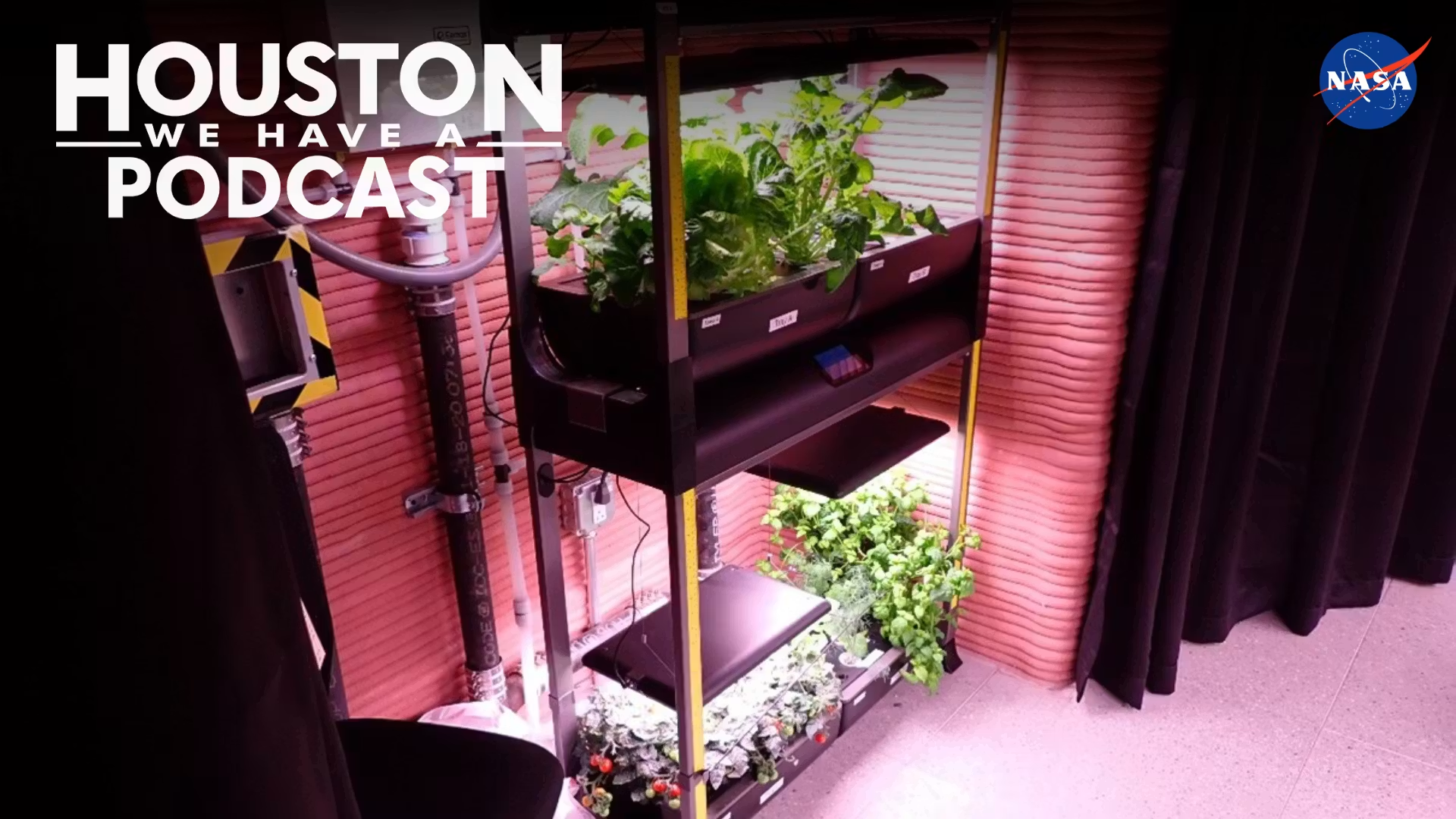
The CHAPEA crew gives an update amid their one-year stay in a simulated Mars habit, and Gioia Massa discusses crop production on Mars. This is the fourth audio log of a monthly series. HWHAP Episode 314.
In the state of Oregon, there is a glut of grass. A wealth of weed. A crisis of chronic.
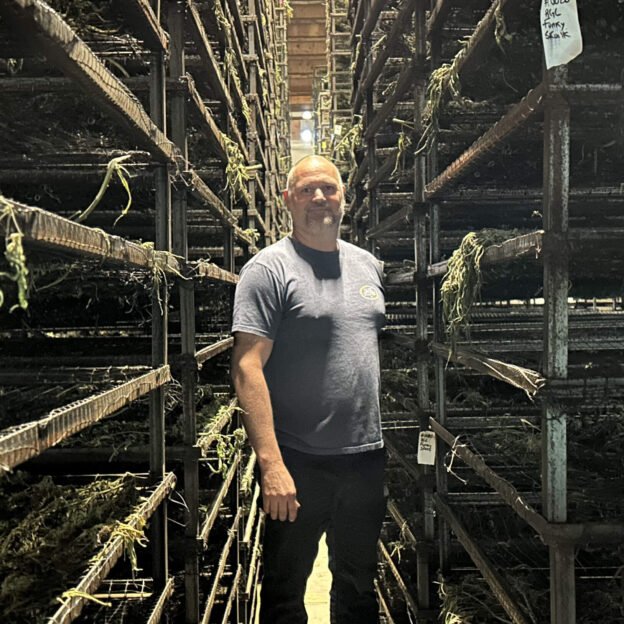
And, jokes aside, it’s a real problem for people who work in the cannabis industry like Matt Ochoa. Ochoa runs the Jefferson Packing House in Medford, Oregon, which provides marijuana growers with services like drying, trimming and packing their product. He has seen literal tons of usable weed being left in marijuana fields all over the state of Oregon. Because, Ochoa says, there aren’t enough buyers.
There are just over four million people in Oregon, and so far this year, farmers have grown 8.8 million pounds of weed. Which means there’s nearly a pound of dried, smokable weed for every single person in the state of Oregon. As a result, the sales price for legal marijuana in the last couple of years has plummeted.
Economics has a straightforward solution for Oregon’s overabundance problem: trade! But, Oregon’s marijuana can only be sold in Oregon. No one in any state can legally sell weed across state lines, because marijuana is still illegal under federal law. On today’s episode, how a product that is simultaneously legal and illegal can create some… sticky business problems.
Help support Planet Money and get bonus episodes by subscribing to Planet Money+ in Apple Podcasts or at plus.npr.org/planetmoney.
See pcm.adswizz.com for information about our collection and use of personal data for sponsorship and to manage your podcast sponsorship preferences.
NPR Privacy Policy
To paraphrase Visa founder Dee Hock, how many of you know Visa? Great, all of you. Now, how many of you know how it started? Or, for that matter, who started it? Who runs and governs it? Where is it headquartered? What’s its business model?
For the 11th largest market cap company in the world, Visa’s history and strategy is almost shockingly unknown. A huge portion of the world’s population uses their products on a daily basis (you might say Visa is… everywhere people want to be), but very few know the amazing story behind how that came to be. Or why Visa continues to be one of the most incredible and incredibly durable business franchises of all-time. (50%+ net income margins!! On $30B of revenue!) Today we do our part to change that. Tune in for one heck of a journey.
Sponsors:
More Acquired!
© Copyright 2015-2026 ACQ, LLC
Links:
Carve Outs:
Note: Acquired hosts and guests may hold assets discussed in this episode. This podcast is not investment advice, and is intended for informational and entertainment purposes only. You should do your own research and make your own independent decisions when considering any financial transactions.
Around the world, democratic ideals are being tested in surprising ways. As the curtains rise on a big election year, TED speakers explore what can keep people united and what drives them apart. Guests include journalist and Broadway producer Jose Antonio Vargas, civil war expert Barbara Walter, and political scientist Yascha Mounk.
TED Radio Hour+ subscribers now get access to bonus episodes, with more ideas from TED speakers and a behind the scenes look with our producers. A Plus subscription also lets you listen to regular episodes (like this one!) without sponsors. Sign-up at: plus.npr.org/ted
See pcm.adswizz.com for information about our collection and use of personal data for sponsorship and to manage your podcast sponsorship preferences.
NPR Privacy Policy
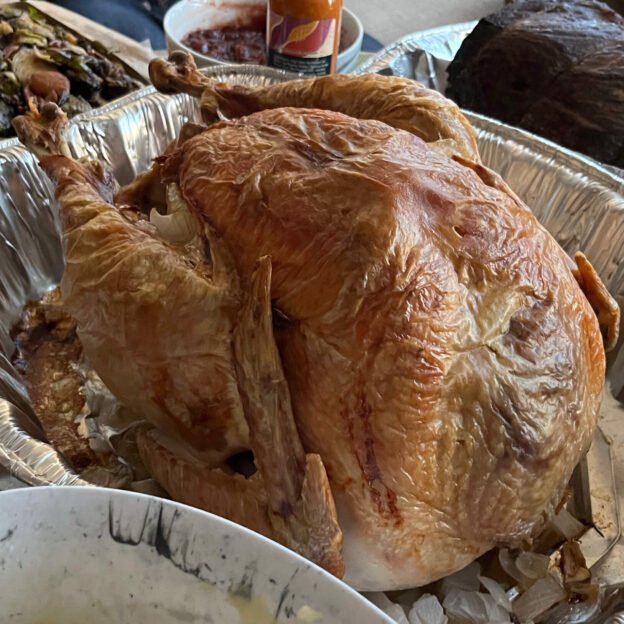
Here at Planet Money, Thanksgiving is not just a time to feast on turkey, stuffing, mashed potatoes, green bean casseroles and pie(s). It’s also a time to feast on economics. Today, we host a very Planet Money Thanksgiving feast, and solve a few economic questions along the way.
First: a turkey mystery. Around the holidays, demand for turkey at grocery stores goes up by as much as 750%. And when turkey demand is so high, you might think that the price of turkey would also go up. But data shows, the price of whole turkeys actually falls around the holidays; it goes down by around 20%. So what’s going on? The answer has to do what might be special about supply and demand around the holidays.
We also reveal what is counted (and not counted) in the ways we measure the economy.
And we look to economics to help solve the perennial Thanksgiving dilemma: Where should each dinner guest sit? Who should sit next to whom?
This episode was hosted by Erika Beras and Jeff Guo. It was produced by James Sneed with an assist from Emma Peaslee and edited by Jess Jiang. It was fact-checked by Sierra Juarez and engineered by Josh Newell.
Help support Planet Money and get bonus episodes by subscribing to Planet Money+ in Apple Podcasts or at plus.npr.org/planetmoney.
Always free at these links: Apple Podcasts, Spotify, Google Podcasts, the NPR app or anywhere you get podcasts.
Find more Planet Money: Facebook / Instagram / TikTok / Our weekly Newsletter.
See pcm.adswizz.com for information about our collection and use of personal data for sponsorship and to manage your podcast sponsorship preferences.
NPR Privacy Policy
Some of the most influential and beloved novels of the last few years have been about money, finance, and the global economy. Some overtly so, others more subtly. It got to the point where we just had to call up the authors to find out more: What brought them into this world? What did they learn? How were they thinking about economics when they wrote these beautiful books?
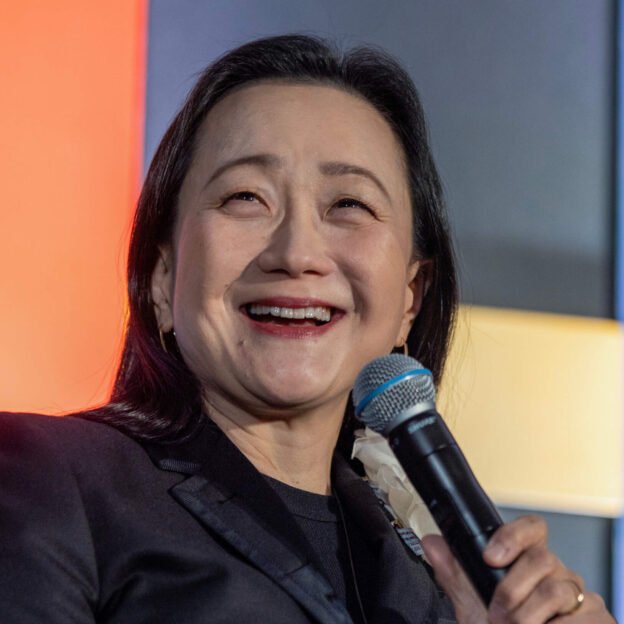
Today on the show: we get to the bottom of it. We talk to three bestselling contemporary novelists — Min Jin Lee (Pachinko and Free Food for Millionaires), Emily St. John Mandel (Station Eleven, The Glass Hotel and Sea of Tranquility), and Hernan Diaz (Trust, In the Distance) – about how the hidden forces of economics and money have shaped their works.
This episode was hosted by Mary Childs and Alexi Horowitz-Ghazi. It was produced by Willa Rubin, edited by Molly Messick, and engineered by Neisha Heinis. Fact-checking by Sierra Juarez.
Help support Planet Money and get bonus episodes by subscribing to Planet Money+ in Apple Podcasts or at plus.npr.org/planetmoney.
Always free at these links: Apple Podcasts, Spotify, Google Podcasts, the NPR app or anywhere you get podcasts.
Find more Planet Money: Facebook / Instagram / TikTok / Our weekly Newsletter.
Music: Universal Music Production – “This Summer,” “Music Keeps Me Dancing,” “Rain,” and “All The Time.”
See pcm.adswizz.com for information about our collection and use of personal data for sponsorship and to manage your podcast sponsorship preferences.
NPR Privacy Policy
Original broadcast date: September 3, 2021. Food is one of life’s greatest pleasures, yet many of our food systems are flawed. This hour, TED speakers look to the past to reconnect with what we eat, and the present to reimagine our food future. Guests include forager Alexis Nikole Nelson, chef Sean Sherman, social entrepreneur Jasmine Crowe, and environmental journalist Amanda Little.
TED Radio Hour+ subscribers now get access to bonus episodes, with more ideas from TED speakers and a behind the scenes look with our producers. A Plus subscription also lets you listen to regular episodes (like this one!) without sponsors. Sign-up at: plus.npr.org/ted
See pcm.adswizz.com for information about our collection and use of personal data for sponsorship and to manage your podcast sponsorship preferences.
NPR Privacy Policy
China’s economic growth for the past few decades has been extraordinary. And much of that growth was fueled by real estate – it was like this miraculous economic engine for the country. But recently, that engine seems to have stopped working. And that has raised all kinds of questions not just for China but also for the global economy.
Today on the show, we look at what’s happening inside China’s real estate market. And we try to answer the question: how did we get here?
Help support Planet Money and get bonus episodes by subscribing to Planet Money+ in Apple Podcasts or at plus.npr.org/planetmoney.
See pcm.adswizz.com for information about our collection and use of personal data for sponsorship and to manage your podcast sponsorship preferences.
NPR Privacy Policy