Squishy, slimy, fidgety toys are having a moment. But it’s more than just an anxiety-soothing, social-media fueled trend – these toys are reshaping how toys get made.
Today on the show, we have the story of the once-humble squishy dumpling and what it teaches us about how to make a viral hit and how to manufacture it, without getting left holding the bag. Hear it all firsthand from the creator of this trendy toy.
Read:
Our book: Planet Money: A Guide to the Economic Forces That Shape Your Life
Our weekly longform Planet Money newsletter
Our weekly Indicator round-up newsletter
Follow:
Instagram
TikTok
YouTube
Facebook
Support public media by joining NPR+ at plus.npr.org. You’ll get perks for over 25 NPR podcasts, including bonus episodes and sponsor-free listening for Planet Money.
This episode of Planet Money was produced by Emma Peaslee. It was edited by Marianne McCune. It was fact-checked by Sierra Juarez. It was engineered by Cena Loffredo. Alex Goldmark is Planet Money’s executive producer.
Music: NPR Source Audio – “Melty Heart,” “Summer Escape,” and “Twilight Sparkle”
See pcm.adswizz.com for information about our collection and use of personal data for sponsorship and to manage your podcast sponsorship preferences.
NPR Privacy Policy
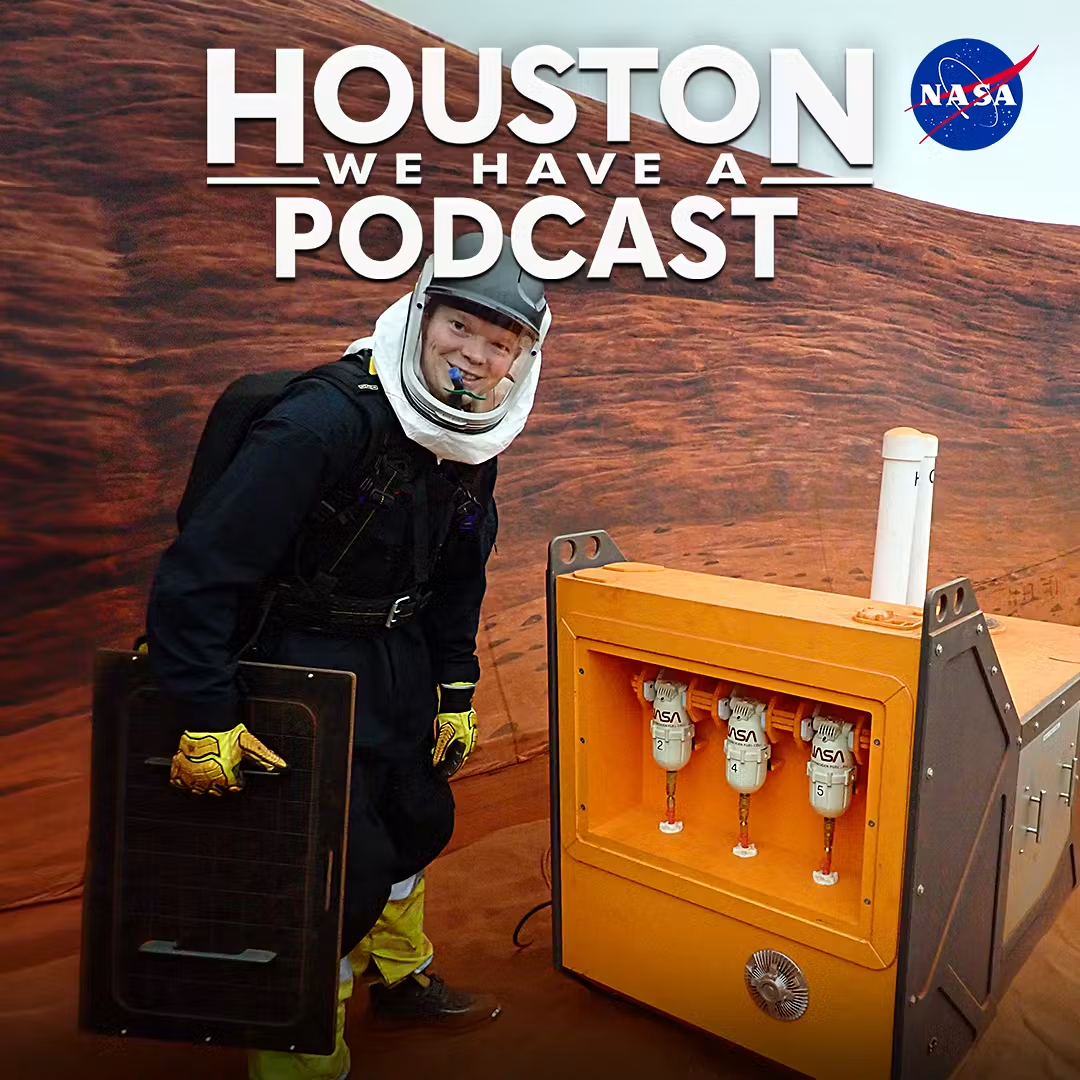
NASA’s CHAPEA II crew shares what it was like to operate through a simulated two-week communications blackout with Earth, and NASA analog scientist Sarah Whiting explains what researchers are learning for future Mars missions. Episode 431
Writer Anne Lamott has gained a cult following through shockingly honest prose on love, death, faith, writing and more. This hour, her wisdom from a career spanning 21 books and some 40 years.
This episode originally aired April 2024.
See pcm.adswizz.com for information about our collection and use of personal data for sponsorship and to manage your podcast sponsorship preferences.
NPR Privacy Policy
Let’s call it the luxury of restraint. This is what enabled Norway to avoid the fate of so many other countries when they discovered oil and it changed the mix of their economy overnight.
Norway! It’s expensive, wealthy, and abundant in resources. We’re going to compare two of them in particular today: deep reservoirs of oil and icy waters full of salmon. While one resource was heavily in demand, the country had an oversupply of the other.
In this episode, we learn how Norway built its wealth by carefully avoiding the pitfalls of discovering oil that have plagued countries in the past and how it creatively created demand for its raw fish abroad.
How do you dodge the dreaded resource curse? What clever ways can you benefit from oversupply? And lastly, how do you get rich and stay that way?
Featured Episodes:
Featured Terms:
- Resource curse / Dutch disease / paradox of plenty
- Coordination problem
- Free-rider problem
Support:
Read:
Follow:
This episode of Planet Money Summer School is hosted by Robert Smith. It was produced by Sophia Paliza-Carre and edited by Planet Money Executive Producer Alex Goldmark. It was fact-checked by Sierra Juarez and engineered by Cena Loffredo with help from Annlie Huang and Robert Rodriguez.
See pcm.adswizz.com for information about our collection and use of personal data for sponsorship and to manage your podcast sponsorship preferences.
NPR Privacy Policy
Defense Secretary Pete Hegseth has ordered everyone over 30 in the military to have their testosterone tested. That inspired us to rerun this classic episode where everyone at This American Life tested their testosterone and compared results. It did not lead to workplace harmony.
Visit thisamericanlife.org/lifepartners to sign up for our premium subscription.
- Prologue: Host Ira Glass talks with producer Alex Blumberg, who explains that he wanted to do this show because of his conflicted relationship with his own testosterone. He tells Ira that the reasons go back to a girl in his 8th-grade homeroom. We also hear from a man who stopped producing testosterone due to a medical treatment, and found his entire personality was altered. (10 minutes)
- Act One: What’s it like to get injected with testosterone? When Griffin Hansbury transitioned, he got massive shots of it and was surprised at the effect it had on him. (17 minutes)
- Act Two: The men and women on staff at This American Life decide to get their testosterone levels tested to see who has the most and least, and whether personality traits actually match hormone levels. (13 minutes)
- Act Three: What happens when a man suddenly loses all of his testosterone? We return to Alex Blumberg’s interview from the top of the show with a man who that happened to. He says life without testosterone is life without desire. By that he doesn’t mean sexual desire. He means any desire. (6 minutes)
- Act Four: Novelist Miriam Toews interviews her 15-year-old son, someone at an age when boys experience a jolt of ten or twenty times the testosterone they had as children, about all the things she doesn’t understand about what he’s going through. (11 minutes)
Transcripts are available at thisamericanlife.org
This American Life privacy policy.
Learn more about sponsor message choices.
Let’s head to a small town in Kenya that’s become globally famous for helping economists answer some of the biggest questions facing humanity.
In Kenya and Nigeria, economics isn’t just theory, it’s real life. We’ll look at some radical experiments that turned out to be enormously successful.
What are the building blocks of health, education and prosperity for all? How does a nation grow rich? What is the most effective way to spend a dollar to fight poverty? We find answers in a town that became the laboratory for new concepts in economic research that netted some researchers the most prestigious prize in economics.
Featured Episodes:
Featured Terms:
- Randomized controlled trial
- Human capital
- Missing middle
Support:
Read:
Follow:
The series is hosted by Robert Smith and produced by Sophia Paliza-Carre. This episode was edited by Planet Money Executive Producer Alex Goldmark. This episode was fact-checked by Leyla Doss, with engineering by Annlie Huang.
See pcm.adswizz.com for information about our collection and use of personal data for sponsorship and to manage your podcast sponsorship preferences.
NPR Privacy Policy
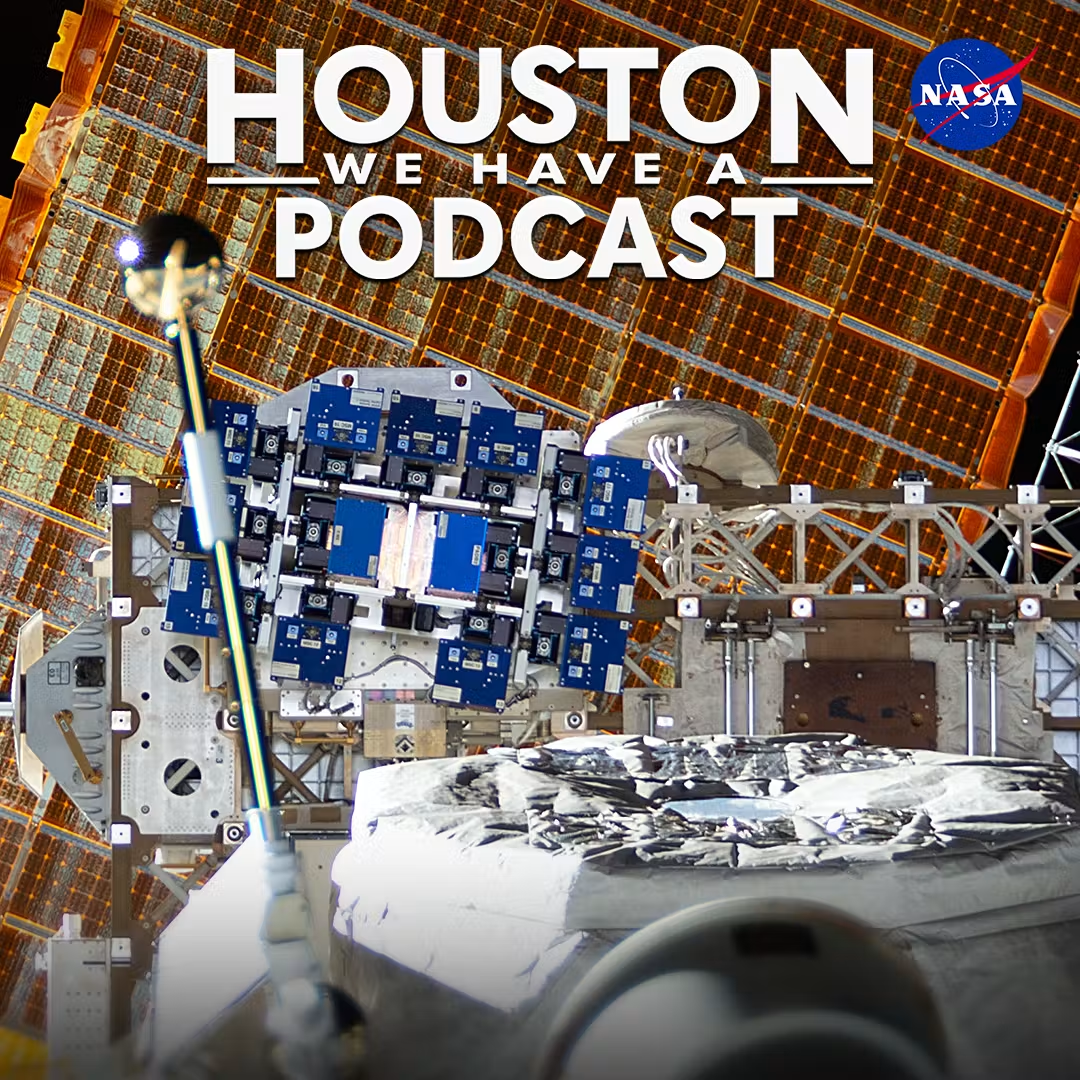
Kim de Groh and Sylvie Crowell review what researchers have learned and published from the Materials International Space Station Experiment (MISSE) platform that tests how materials perform in the harsh environment of space.
GLP-1s could be a breakthrough in addiction treatment. But is medicine alone enough to treat such a complicated disease? This hour, TED speakers explore modern science and old wisdom on addiction. Guests include journalist and physician Dr. Dhruv Khullar, author and behavioral coach Eric Zimmer, and journalist Nayeema Raza.
See pcm.adswizz.com for information about our collection and use of personal data for sponsorship and to manage your podcast sponsorship preferences.
NPR Privacy Policy
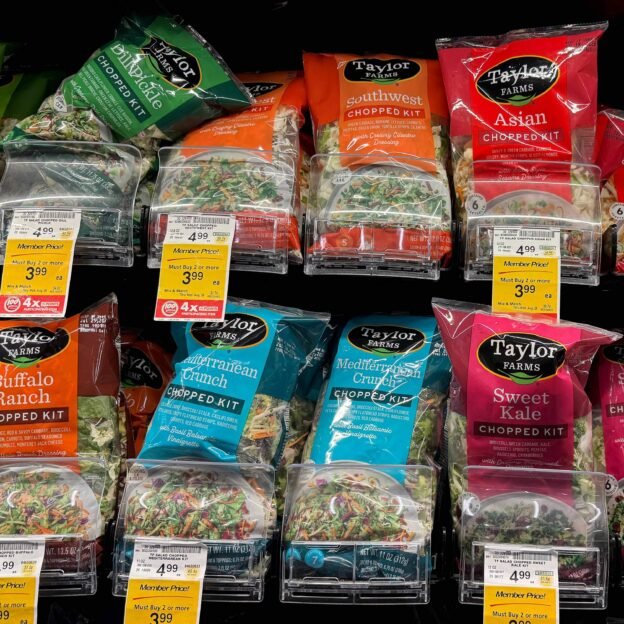
The cyclospora outbreak that’s sickening thousands of Americans got us interested in the rise of Big Lettuce, and the challenges of keeping it clean.
So on today’s show, we tell you just how much lettuce Americans eat every year (SO MUCH!), how bagged lettuce came to dominate grocery store shelves, what that means for food safety, and why these outbreaks continue to happen — despite the FDA’s efforts to stop them.
Check out other related episodes:
Food Scare Squad
How refrigeration took over the world
Support:
Planet Money+
Read:
Our book: Planet Money: A Guide to the Economic Forces That Shape Your Life
Our weekly longform Planet Money newsletter
Our weekly Indicator round-up newsletter
Follow:
Instagram
TikTok
YouTube
Facebook
This episode was hosted by Jeff Guo and Emma Peaslee. It was produced by Emma Peaslee. It was edited by Marianne McCune and it was fact checked by Sierra Juarez and engineered by Annlie Huang. Alex Goldmark is Planet Money’s executive producer.
Music: NPR Source Audio – “Electric Leak,” “West Green Road,” and “Melty Heart”
See pcm.adswizz.com for information about our collection and use of personal data for sponsorship and to manage your podcast sponsorship preferences.
NPR Privacy Policy
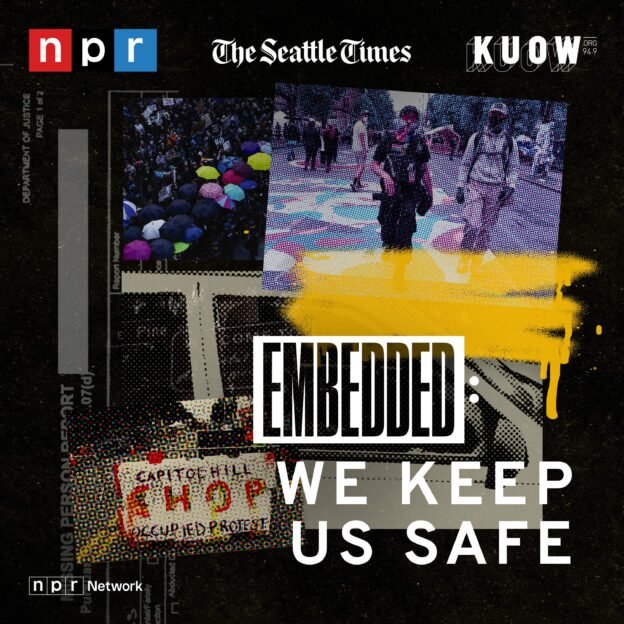
In the summer of 2020, sixteen-year-old Antonio Mays Jr. traveled a thousand miles to join the racial justice movement of his generation in the wake of George Floyd’s killing. Antonio arrived in Seattle during the Capitol Hill Occupied Protest, known as CHOP. Less than a week later, he was shot and killed there. The case remains unsolved.
In this eight-part series, hosts Sydney Brownstone of The Seattle Times and Will James of KUOW team up with NPR’s Embedded to investigate Antonio’s death. They track down key eyewitnesses and surface crucial evidence that’s never been made public.
Find “We Keep Us Safe” in the Embedded podcast feed.
Listen to Embedded wherever you get your podcasts, including the NPR App, Apple Podcasts, Pocket Casts, Spotify, and via RSS.
See pcm.adswizz.com for information about our collection and use of personal data for sponsorship and to manage your podcast sponsorship preferences.
NPR Privacy Policy