People on journeys they did not intend! Or agree to!
Visit thisamericanlife.org/lifepartners to sign up for our premium subscription.
- Prologue: A woman on a nighttime bus ride wakes up to discover the bus driver is taking the passengers somewhere none of them want to go. (8 minutes)
- Act One: Sometimes, the bus ride you’re stuck on, against your will, is the thoughts spinning around in your own mind. (13 minutes)
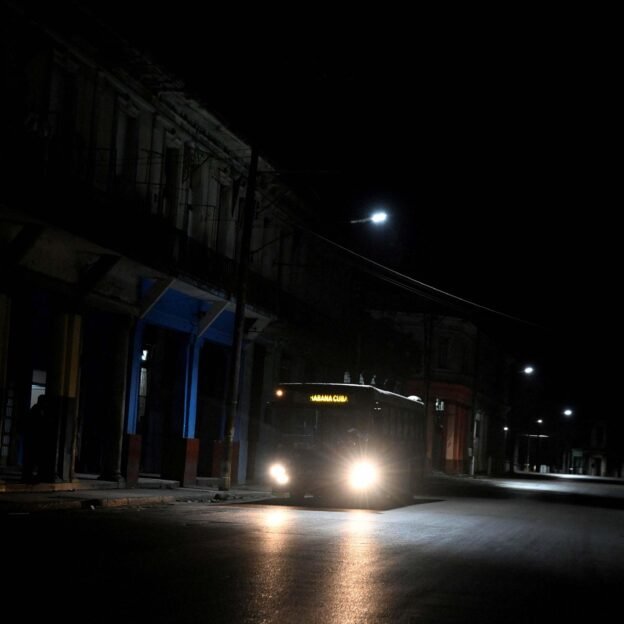
- Act Two: A dispatch from Cuba, where there are not a lot of buses running right now because the whole country is out of oil. (11 minutes)
- Act Three: Sometimes, an entire country can be taken on an unexpected journey against its will. That happened in England, where a crime occurred that was so confounding, so nonsensical, that people just could not wrap their heads around it. (15 minutes)
- Act Four: Someone trapped…not on a bus…but on a plane! When she was 16, Leticia flew from Sao Paolo, where she lived, to Germany. She was seated next to an older woman who did something so surprising during the flight that Leticia still tells people about it today. (9 minutes)
Transcripts are available at thisamericanlife.org
This American Life privacy policy.
Learn more about sponsor message choices.
As the World Cup comes to a close, so does a massive real-time experiment happening just around the edges. Major League Soccer – the top men’s professional soccer league in the U.S. and Canada – has been scrambling to take advantage of this once-in-a-generation opportunity when average American sports fans suddenly cared a lot about soccer.
In between World Cup matches, NPR Sports Correspondent Becky Sullivan has been following Major League Soccer executives as they try to figure out how best to get a foot in the door with sports fans in the U.S.
In this episode, we tag along to see if U.S. and Canadian professional soccer can harness 2026 for the mythical World Cup bump in soccer interest. What strategies are teams using? And does it stand a chance to work?
Support:
Read:
Follow:
This episode of Planet Money was hosted by Becky Sullivan and Kenny Malone. It was produced by James Sneed with an assist from Sam Yellowhorse Kesler and edited by Jess Jiang. It was fact-checked by Sierra Juarez and engineered by Annlie Huang. Alex Goldmark is Planet Money’s executive producer.
See pcm.adswizz.com for information about our collection and use of personal data for sponsorship and to manage your podcast sponsorship preferences.
NPR Privacy Policy
We answer your questions from Threads! HWHAP celebrates nine years of podcasting by bringing on Dr. Kelsey Young to discuss the Artemis II lunar science team, and the crew’s lunar flyby observations and photo targets.
We often view paradise as a place of safety, beauty, tranquility. It’s an ideal we long for but one we can rarely find. This hour, TED speakers search for utopia and come to terms with reality.
Original broadcast date: November 10, 2023
TED Radio Hour+ listeners now get access to bonus episodes, with more ideas from TED speakers and deeper conversations with Manoush. By signing up for Plus, you directly support our work and public media, so all your episodes (like this one!) come to you without sponsor breaks. Learn more at plus.npr.org/ted.
See pcm.adswizz.com for information about our collection and use of personal data for sponsorship and to manage your podcast sponsorship preferences.
NPR Privacy Policy
China’s turbocharged growth may have made it rich, but now it has to deal with rich country problems.
High-speed trains that connect every town. Gleaming new bridges and skyscrapers. An apartment (or two) for every family. No country on Earth has seen the kind of economic growth that China has over the last 50 years. China has become the factory to the world, a grand experiment in central government planning mixed with personal ambition.
It was all enabled by what our guide for today calls, an engineering state, a central planning mindset where leaders believe they can engineer their way out of economic problems. And problems are mounting.
Today on the show, the perils of prosperity and the despair of success as China deals with overbuilding.
We’ll travel back to China’s free-wheeling boom-era of the early 2000s and hang out with a property developer who amassed his wealth at the center of the action – private jet rides, thousand-dollar fish soup, casual bribes. Then, as the economy slows, we ask what can we learn from the despair of success. Does rising youth unemployment signal a less prosperous future? With young people struggling to find white-collar jobs, some of them are opting out of work altogether.
Featured Episodes:
Featured Terms:
- Socialism with Chinese Characteristics
- Engineering State
- Malinvestment
Support:
Read:
Follow:
This episode of Planet Money Summer School is hosted by Robert Smith. It was produced by Sophia Paliza-Carre, fact-checked by Sierra Juarez, and engineered by Maggie Luthar. This episode was edited by Planet Money Executive Producer Alex Goldmark.
See pcm.adswizz.com for information about our collection and use of personal data for sponsorship and to manage your podcast sponsorship preferences.
NPR Privacy Policy
Some people in this country think Antifa is a dangerous domestic terror organization. Some think that’s a complete myth. This week we go to the federal trial where, for the first time, the government sets out to prove that Antifa is real. Zoe Chace reports.
Visit thisamericanlife.org/lifepartners to sign up for our premium subscription.
- Prologue: Host Ira Glass tells the story of what happened at the Prairieland
Detention Center in Alvarado, Texas. The government claims this was an
attack by an Antifa cell. The defense says it was a protest gone awry.
This argument goes to court in a first of its kind trial. (7 minutes)
- Act 1: Reporter Zoe Chace walks us through one of the worst days for the
defense: all these guns. (5 minutes)
- Act 2: Zoe takes us through the testimony of the government’s Antifa expert.
The defense team is optimistic that things are going well for them. (8 minutes)
- Act 3: Zoe goes to jail to talk with one of the cooperating witnesses for the
prosecution, a former church lady named Lynette Sharp. She has a lot
to say about all the events of her life that led to taking a plea deal
and testifying against her friends. (24 minutes)
- Act 4: The verdicts come in. (12 minutes)
Transcripts are available at thisamericanlife.org
This American Life privacy policy.
Learn more about sponsor message choices.
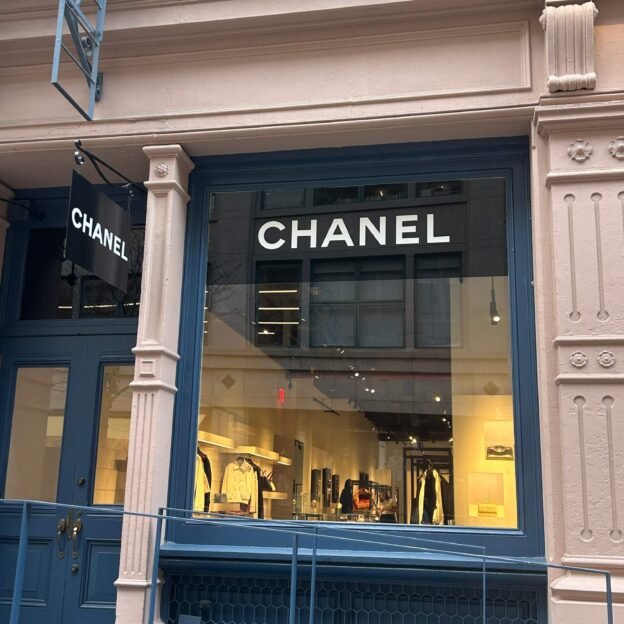
Once upon a time, if you wanted to buy a luxury brand item secondhand (say, a Chanel handbag) you had to have an in. There was no easy way to find one. But over the past decade, the market for secondhand luxury goods has exploded. There are now many online resellers where you can shop for used and discounted luxury items. One big problem — how can you be sure if it’s real and authentic?
Some online resellers claim to have solved this problem. They say they’ve developed a process of authentication, and so buyers can trust that the bag is really Gucci or Cartier or Hermès or whatever. But according to some luxury brands, authenticity is something that is often imitated but never replicated.
In today’s episode of Planet Money, the fight between Chanel and The RealReal. And how luxury brands are reacting to the enormous and growing secondhand market for luxury goods.
Support:
Read:
Follow:
This episode of Planet Money was hosted by Amanda Aronczyk and Jeff Guo. It was produced by James Sneed with help from Charlotte Isidore, who also fact checked this episode. Jess Jiang edited the show and it was engineered by Cena Loffredo. Alex Goldmark is Planet Money‘s executive producer.
See pcm.adswizz.com for information about our collection and use of personal data for sponsorship and to manage your podcast sponsorship preferences.
NPR Privacy Policy
NASA astronaut Anil Menon discusses his journey ahead of his first spaceflight to the International Space Station aboard Soyuz MS-29. Episode 428.
Our bodies are always sending signals … but are we listening? This hour, TED speakers explore new ways to track and understand our health — from cutting-edge technology to simple, everyday habits.
Guests include exercise physiologist Keith Diaz, genomicist Michael Snyder and writer Lizzie Braicks-Rinker.
TED Radio Hour+ listeners now get access to bonus episodes, with more ideas from TED speakers and deeper conversations with Manoush. By signing up for Plus, you directly support our work and public media, so all your episodes (like this one!) come to you without sponsor breaks. Learn more at plus.npr.org/ted.
See pcm.adswizz.com for information about our collection and use of personal data for sponsorship and to manage your podcast sponsorship preferences.
NPR Privacy Policy
Come along as we travel the world in search of the best economic ideas to bring home!
From the beaches of Barbuda to the fjords of Norway, there’s money (and money problems) everywhere. For this summer travel season, Planet Money Summer School will take you on a world tour for your ears. Pack that sense of wonder and nose for adventure, this is our semester abroad. We’re going to explore exotic locales and discover cultural norms, but we’re also going to buckle down and learn the biggest economic lessons around the world from our guides.
We start as far away as you can get from Planet Money headquarters, New Zealand and Australia. We’ll visit a sheep farm to observe an innovative but controversial market for the most important substance on earth, and we’ll ask when do speculators help and when do they hurt the rest of us? Then, we’ll get to know the economist – and jazz musician – who changed how the entire world fights inflation when he released a secret number to tame the dreaded wild beast. How did that work? Spoiler: it was the great leap forward in economic mind tricks.
Featured Episodes:
Featured Terms:
- Multiple equilibria
- Inflation targeting
- Speculators (impact on liquidity)
Support:
Read:
Follow:
This episode of Planet Money Summer School is hosted by Robert Smith. It was produced by Sophia Paliza-Carre, fact-checked by Sierra Juarez, and engineered by Annlie Huang with help from Robert Rodriguez.
Music: NPR Source Audio – “The Boy from Ipanema,” “Desmontes,” “Long Drive,” and “Bondi.”
See pcm.adswizz.com for information about our collection and use of personal data for sponsorship and to manage your podcast sponsorship preferences.
NPR Privacy Policy