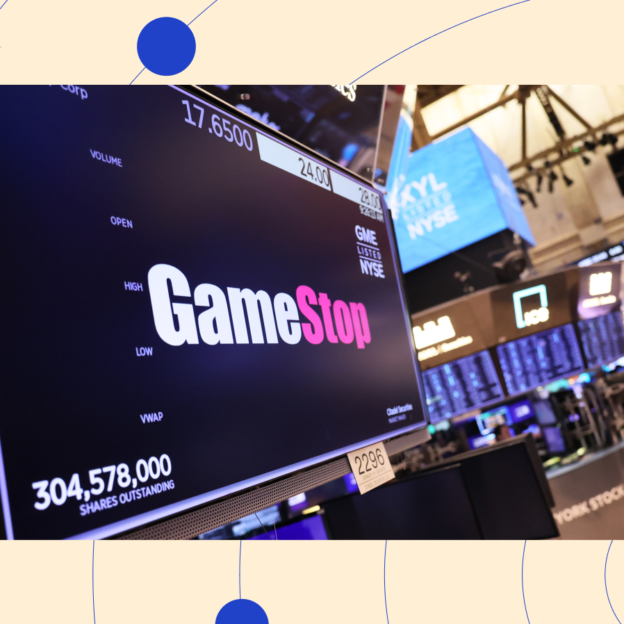
When a group of amateur investors rallied around the stock for GameStop back in 2021, the story blew up the internet. News outlets around the world, including us here at Planet Money, rushed in to explain why the stock for this retail video game company was suddenly skyrocketing, at times by as much as 1700% in value, and what that meant for the rest of us.
When movie producer Aaron Ryder saw the GameStop story — an army of scrappy underdogs, banding together to strike back against a financial system they felt was rigged against them — he knew it had the makings for a great movie. The only problem: so did a bunch of other movie producers and Hollywood studios. So Aaron found himself in the middle of a fast and furious race to make the first Game Stop movie.
On today’s show, one producer’s quest to claim the hottest ticket in Tinseltown and the whole hidden machinery dedicated to turning a news story into box office gold. You’ll never read the word ‘based on a true story’ the same way again.
Today’s episode was reported and hosted by Alexi Horowitz-Ghazi. It was produced by Willa Rubin, edited by Jess Jiang, engineered by James Willetts, and fact-checked by Cooper Katz McKim and James Sneed. Alex Goldmark is our executive producer.
Help support Planet Money and get bonus episodes by subscribing to Planet Money+ in Apple Podcasts or at plus.npr.org/planetmoney.
See pcm.adswizz.com for information about our collection and use of personal data for sponsorship and to manage your podcast sponsorship preferences.
NPR Privacy Policy
Erin Plante is a private detective who specializes in chasing down stolen cryptocurrency. In March of 2022, she got the biggest assignment of her career: Hackers had broken into an online game called Axie Infinity and made off with over $600 million worth of digital money.
It was the largest crypto heist in history. And now it was Erin’s job to find that money and get it back. Erin’s investigation would lead her to face off against some of the world’s most formidable digital money launderers, whose actions would soon raise alarms at the highest levels of government — even threaten the nuclear security of the entire planet.
This episode was hosted by Jeff Guo and Keith Romer, produced by James Sneed, edited by Jess Jiang, fact-checked by Willa Rubin & Sam Yellowhorse Kesler, and engineered by Maggie Luthar. Alex Goldmark is our executive producer.
Help support Planet Money and get bonus episodes by subscribing to Planet Money+ in Apple Podcasts or at plus.npr.org/planetmoney.
See pcm.adswizz.com for information about our collection and use of personal data for sponsorship and to manage your podcast sponsorship preferences.
NPR Privacy Policy
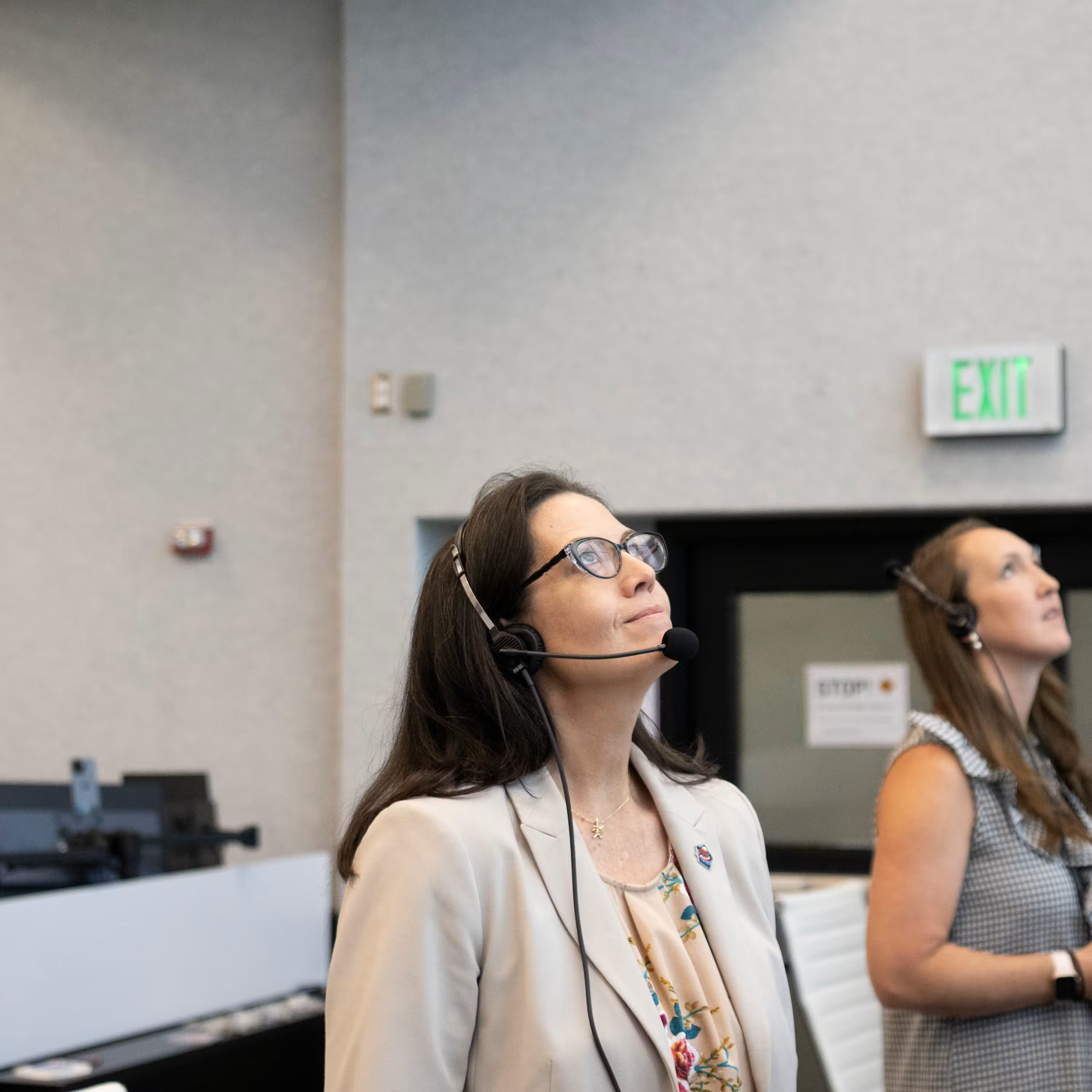
Hear from chief flight director Emily Nelson as she discusses her journey to NASA and what it takes to lead teams inside Mission Control Houston. HWHAP Episode 305.
Original broadcast date: October 16, 2020. Sound surrounds us, from cacophony even to silence. But depending on how we hear, the world can be a different auditory experience for each of us. This hour, TED speakers explore the science of sound. Guests on the show include NPR All Things Considered host Mary Louise Kelly, neuroscientist Jim Hudspeth, writer Rebecca Knill, and sound designer Dallas Taylor.
TED Radio Hour+ subscribers now get access to bonus episodes, with more ideas from TED speakers and a behind the scenes look with our producers. A Plus subscription also lets you listen to regular episodes (like this one!) without sponsors. Sign-up at plus.npr.org/ted
See pcm.adswizz.com for information about our collection and use of personal data for sponsorship and to manage your podcast sponsorship preferences.
NPR Privacy Policy
In China, data on the economy is sometimes difficult to come by. The Chinese government has put a pause on releasing some of its official economic data. But many of the stories emerging from the country paint a clear picture: the second largest economy in the world is struggling.
Today, our friends at The Indicator share some of their recent reporting on China. First up, it’s a special edition of the Beigie Awards focused entirely on China. What can the approach of the Federal Reserve’s Beige Book – i.e. looking at anecdotes that tell us something about where the economy is headed – show us about China’s economy?
Then, we take a deep dive into one of the most alarming indicators in China: the skyrocketing urban youth unemployment rate.
This episode was hosted by Darian Woods, Wailin Wong, and Robert Smith. The original Indicator episodes were produced by Corey Bridges with engineering by Robert Rodriguez. They were fact-checked by Cooper Katz McKim and Sierra Juarez. They were edited by Paddy Hirsch and Kate Concannon.
Help support Planet Money and get bonus episodes by subscribing to Planet Money+ in Apple Podcasts or at plus.npr.org/planetmoney.
See pcm.adswizz.com for information about our collection and use of personal data for sponsorship and to manage your podcast sponsorship preferences.
NPR Privacy Policy
When economists and policymakers talk about getting inflation under control, there’s an assumption they often make: bringing inflation down will probably result in some degree of layoffs and job loss. But that is not the way things have played out since inflation spiked last year. Instead, so far, inflation has come down, and unemployment has stayed low.
So where does the idea of this tradeoff – between inflation and unemployment – come from?
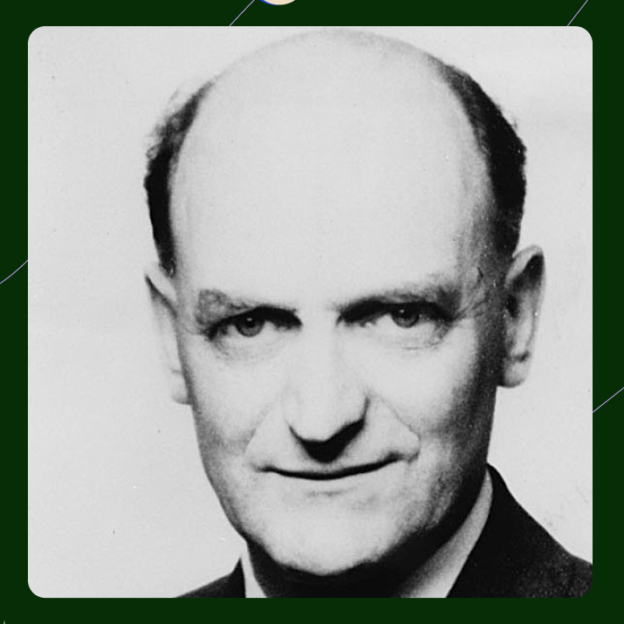
That story starts in the 1940s, with a soft-spoken electrical engineer-turned-crocodile hunter-turned-economist named Bill Phillips. Phillips was consumed by the notion that there are underlying forces at work in the economy. He thought that if macroeconomists could only understand how those forces work, they could keep the economy stable.
On today’s show, how the Phillips Curve was born, why it went mainstream, and why universal truths remain elusive in macroeconomics.
This episode was hosted by Willa Rubin and Nick Fountain, and produced by Sam Yellowhorse Kesler. It was edited by Molly Messick, and engineered by Maggie Luthar. Sierra Juarez checked the facts.
Help support Planet Money and get bonus episodes by subscribing to Planet Money+ in Apple Podcasts or at plus.npr.org/planetmoney.
See pcm.adswizz.com for information about our collection and use of personal data for sponsorship and to manage your podcast sponsorship preferences.
NPR Privacy Policy
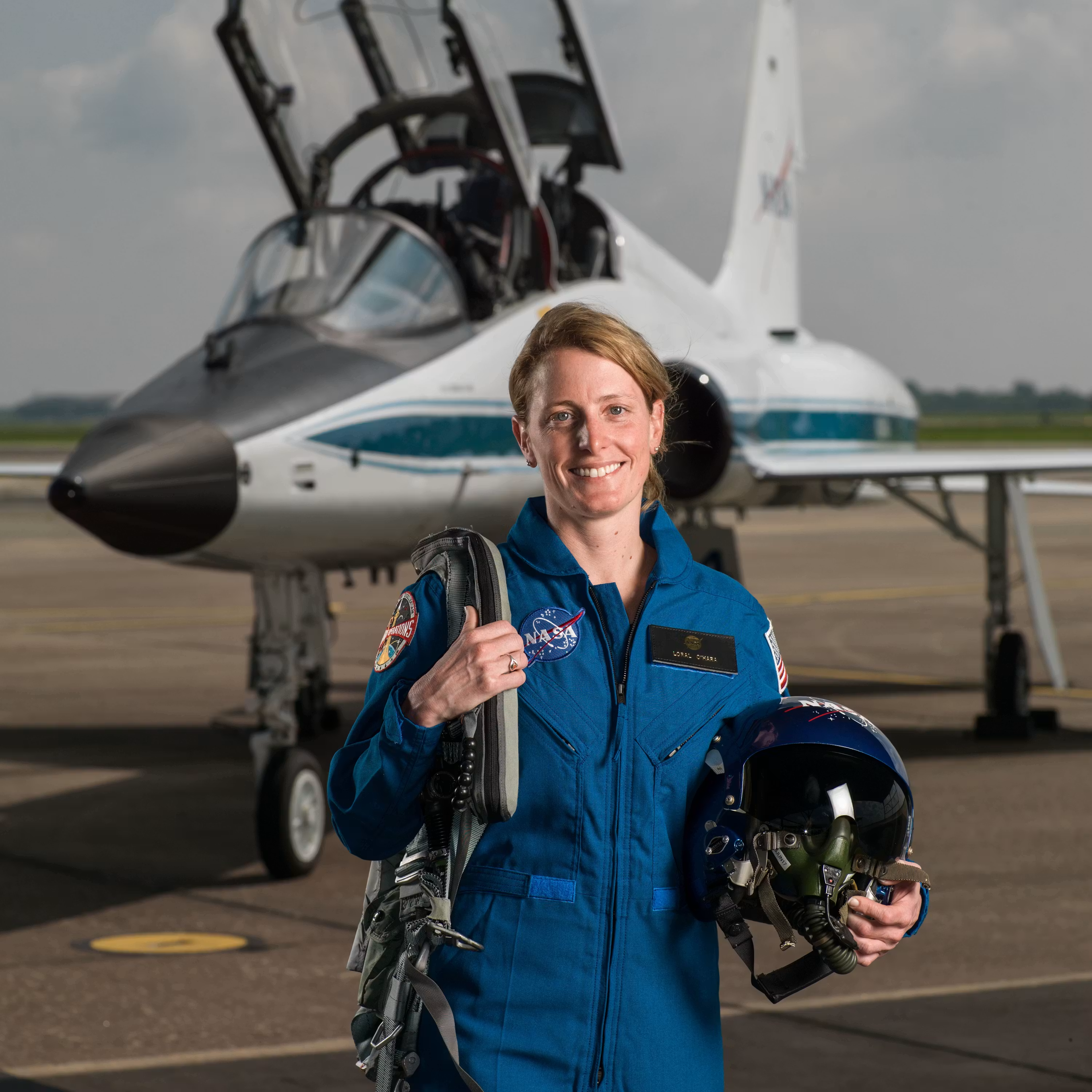
Hear from NASA astronaut Loral O’Hara ahead of her launch to the International Space Station. HWHAP Episode 304.
Lots left vacant, offices full of equipment but devoid of people, entire villages literally left to the wolves–this hour, TED speakers share stories about bringing new life to abandoned places. Guests include evolutionary biologist Shane Campbell-Staton, entrepreneur Garry Cooper, urban renewal expert Anika Goss, and conservationist Alysa McCall.
TED Radio Hour+ subscribers now get access to bonus episodes, with more ideas from TED speakers and a behind the scenes look with our producers. A Plus subscription also lets you listen to regular episodes (like this one!) without sponsors. Sign-up at: plus.npr.org/ted
See pcm.adswizz.com for information about our collection and use of personal data for sponsorship and to manage your podcast sponsorship preferences.
NPR Privacy Policy
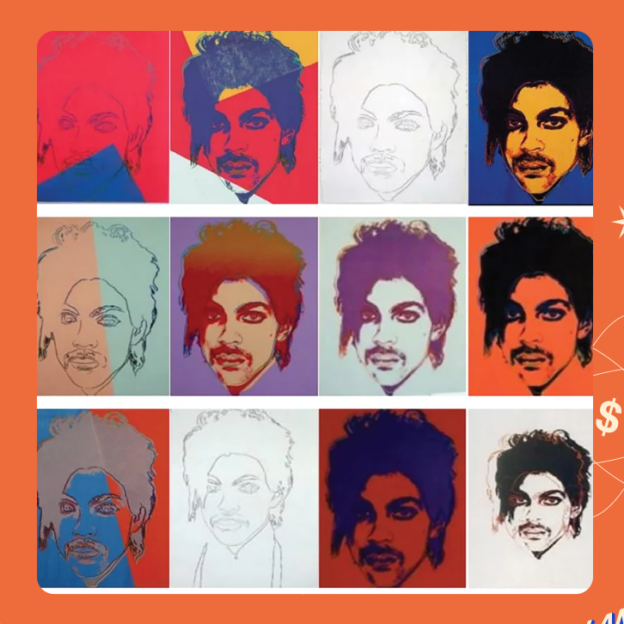
In 1981, photographer Lynn Goldsmith took a portrait of the musician Prince. It’s a pretty standard headshot — it’s in black-and-white, and Prince is staring down the camera lens.
This was early in his career, when he was still building the pop icon reputation he would have today. And in 1984, shortly after Prince had released Purple Rain, he was chosen to grace the cover of Vanity Fair. The magazine commissioned pop culture icon Andy Warhol to make a portrait of Prince for the cover. He used Lynn Goldsmith’s photo, created a silkscreen from it, added some artistic touches, and instead of black-and-white, colored the face purple and set it against a red background. Warhol was paid, Goldsmith was paid, and both were given credit.
However, years later, after both Prince and Warhol had passed away, Goldsmith saw her portrait back out in the world again. But this time, the face was orange, and Goldsmith wasn’t given money or credit. And what began as a typical question of payment for work, led to a firestorm in the Supreme Court. At the center of it, dozens of questions of what makes art unique. And at what point does a derivative work become transformative? The answer, it seems, has to do less with what art critics think, and more with what the market thinks.
Help support Planet Money and get bonus episodes by subscribing to Planet Money+ in Apple Podcasts or at plus.npr.org/planetmoney.
See pcm.adswizz.com for information about our collection and use of personal data for sponsorship and to manage your podcast sponsorship preferences.
NPR Privacy Policy
It’s a(nother) new era for Nvidia.
We thought we’d closed the Acquired book on Nvidia back in April 2022. The story was all wrapped up: Jensen & crew had set out on an amazing journey to accelerate the world’s computing workloads. Along the way they’d discovered a wondrous opportunity (machine learning powered social media feed recommendations). They forged incredible Power in the CUDA platform, and used it to triumph over seemingly insurmountable adversity — the stock market penalty-box.
But, it turned out that was only the precursor to an even wilder journey. Over the past 18 months Nvidia has weathered one of the steepest stock crashes in history ($500B+ market cap wiped away peak-to-trough!). And, it has of course also experienced an even more fantastical rise — becoming the platform that’s powering the emergence of perhaps a new form of intelligence itself… and in the process becoming a trillion-dollar company.
Today we tell another chapter in the amazing Nvidia saga: the dawn of the AI era. Tune in!
Links:
Carve Outs:
Sponsors:
More Acquired!
© Copyright 2015-2026 ACQ, LLC
Note: Acquired hosts and guests may hold assets discussed in this episode. This podcast is not investment advice, and is intended for informational and entertainment purposes only. You should do your own research and make your own independent decisions when considering any financial transactions.