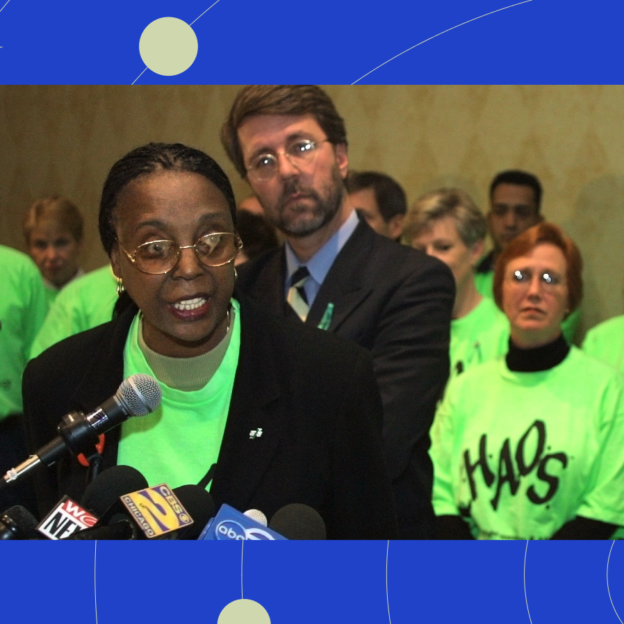
When contract negotiations between Alaska Airlines and their flight attendants’ union broke down in 1993, the union had a choice to make.
The union — The Association of Flight Attendants-CWA — knew that if they chose to strike, Alaska Airlines could use a plan. While Alaska Airlines technically couldn’t fire someone on strike, they could permanently replace the striking flight attendants with new workers. Essentially, if the union went on strike, they could risk thousands of people’s jobs. The flight attendants knew they needed a counter-strategy.
They went with a strategy they called CHAOS: “Create Havoc Around Our System.”
The strategy had two phases. Phase one: The union kept Alaska guessing about when, where, and how a strike might happen. They kept everyone, even their own members, in the dark. And in turn, Alaska Airlines had to be prepared for a strike at any place and any time. Phase two was to go on strike in a targeted and strategic way.
The havoc that the flight attendants created set off a sort-of labor-dispute arms race and would go on to inspire strikes today. And, it showed how powerful it can be to introduce a little chaos into negotiations.
Help support Planet Money and get bonus episodes by subscribing to Planet Money+ in Apple Podcasts or at plus.npr.org/planetmoney.
See pcm.adswizz.com for information about our collection and use of personal data for sponsorship and to manage your podcast sponsorship preferences.
NPR Privacy Policy
In this special series, host Manoush Zomorodi investigates the relationship between our technology and our bodies and asks: How are we physically adapting to meet the demands of the Information Age? Why do so many of us feel utterly drained after a day spent attached to our devices?
Part one kicks off with an exploration into how economic eras have shaped the human body in the past with author Vybarr Cregan-Reid. Then, Columbia University researcher and exercise physiologist Keith Diaz and Manoush discuss his findings and propose a challenge to listeners: Let’s see if we can end this cycle of type, tap, collapse together.
Click here to find out more about the project: npr.org/bodyelectric
Talk to us on Instagram @ManoushZ, and on Facebook @tedradiohour, or record a voice memo and email it to us at BodyElectric@npr.org.
See pcm.adswizz.com for information about our collection and use of personal data for sponsorship and to manage your podcast sponsorship preferences.
NPR Privacy Policy
We’ve got a special 6-part series with an interactive twist coming your way: On Body Electric, TED Radio Hour host Manoush Zomorodi investigates the relationship between our technology and our bodies… and she has a challenge for YOU. Starts Tuesday, October 3rd.
See pcm.adswizz.com for information about our collection and use of personal data for sponsorship and to manage your podcast sponsorship preferences.
NPR Privacy Policy
Ba-dee-yah! Say do you remember? Ba-dee-yah! Questions in September!
That’s right – it’s time for Listener Questions!
Every so often, we like to hear from listeners about what’s on their minds, and we try to get to the bottom of their economic mysteries. On today’s show, we have questions like:
Why is September historically the worst month for the stock market?
How did the Bass Pro Shops hat get so popular in Ecuador?
Are casinos banks?
What is the Federal Reserve’s new plan to make bank transfers faster?
Today’s show was hosted by Sarah Gonzalez and produced by James Sneed. The audio engineer for this episode was Josephine Nyounai. It was fact checked by Sierra Juarez and edited by Dave Blanchard. Alex Goldmark is our executive producer.
Help support Planet Money and get bonus episodes by subscribing to Planet Money+ in Apple Podcasts or at plus.npr.org/planetmoney.
See pcm.adswizz.com for information about our collection and use of personal data for sponsorship and to manage your podcast sponsorship preferences.
NPR Privacy Policy
Original broadcast date: October 21, 2022. True crime mysteries can be dark and thrilling. But what if humans can’t crack the case? What if the suspect … isn’t human? This hour, TED Radio Hour investigates crimes with a wild twist. Guests include forensic scientist Lauren Pharr Parks, author Mary Roach, dog trainer and conservationist Megan Parker, wildlife intelligence analyst Sarah Stoner.
TED Radio Hour+ subscribers now get access to bonus episodes, with more ideas from TED speakers and a behind the scenes look with our producers. A Plus subscription also lets you listen to regular episodes (like this one!) without sponsors. Sign-up at: plus.npr.org/ted
See pcm.adswizz.com for information about our collection and use of personal data for sponsorship and to manage your podcast sponsorship preferences.
NPR Privacy Policy
Psyche’s principal investigator Lindy Elkins-Tanton walks us through the science and technology of the mission to a metal-rich asteroid. HWHAP Episode 307.
There seems to be headlines about floods, wildfires, or hurricanes every week. Scientists say this might be the new normal — that climate change is making natural disasters more and more common.
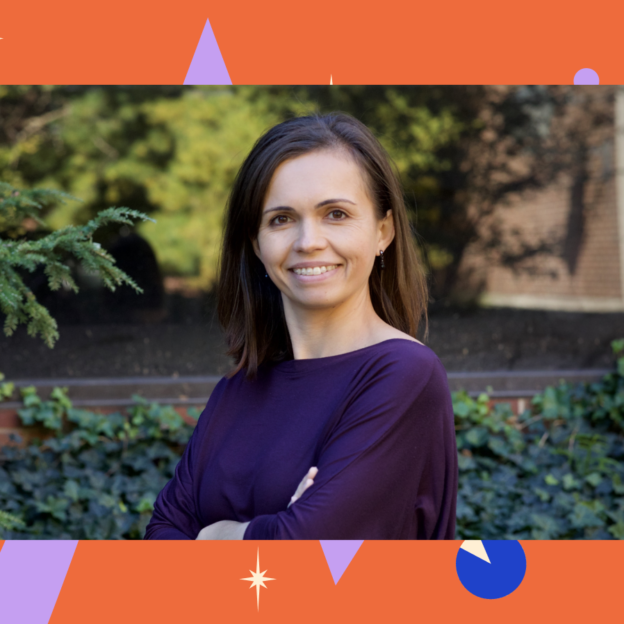
Tatyana Deryugina is a leading expert on the economics of natural disasters — how we respond to them, how they affect the economy, and how they change our lives. And back when Tatyana first started researching natural disasters she realized that there’s a lot we don’t know about their long-term economic consequences. Especially about how individuals and communities recover.
Trying to understand those questions of how we respond to natural disasters is a big part of Tatyana’s research. And her research has some surprising implications for how we should be responding to natural disasters.
This episode was hosted and reported by Jeff Guo. It was produced by Emma Peaslee and edited by Jess Jiang. It was fact checked by Sierra Juarez and engineered by Josephine Nyounai. Alex Goldmark is our executive producer.
Help support Planet Money and get bonus episodes by subscribing to Planet Money+ in Apple Podcasts or at plus.npr.org/planetmoney.
See pcm.adswizz.com for information about our collection and use of personal data for sponsorship and to manage your podcast sponsorship preferences.
NPR Privacy Policy
The Nobel-prize winning economist Simon Kuznets once analyzed the world’s economies this way — he said there are four kinds of countries: developed, underdeveloped, Japan… and Argentina.
If you want to understand what happens when inflation really goes off the rails, go to Argentina. Annual inflation there, over the past year, was 124 percent. Argentina’s currency, the peso, is collapsing, its poverty rate is above 40 percent, and the country may be on the verge of electing a far right Libertarian president who promises to replace the peso with the dollar. Even in a country that is already deeply familiar with economic chaos, this is dramatic.
In this episode, we travel to Argentina to try to understand: what is it like to live in an economy that’s on the edge? With the help of our tango dancer guide, we meet all kinds of people who are living through record inflation and political upheaval. Because even as Argentina’s economy tanks, its annual Mundial de Tango – the biggest tango competition in the world – that show is still on.
This episode was hosted by Amanda Aronczyk and Erika Beras. It was produced by Sam Yellowhorse Kesler with help from James Sneed. It was engineered by Maggie Luthar, fact-checked by Sierra Juarez, and edited by Molly Messick. Alex Goldmark is Planet Money’s executive producer.
Help support Planet Money and get bonus episodes by subscribing to Planet Money+ in Apple Podcasts or at plus.npr.org/planetmoney.
See pcm.adswizz.com for information about our collection and use of personal data for sponsorship and to manage your podcast sponsorship preferences.
NPR Privacy Policy
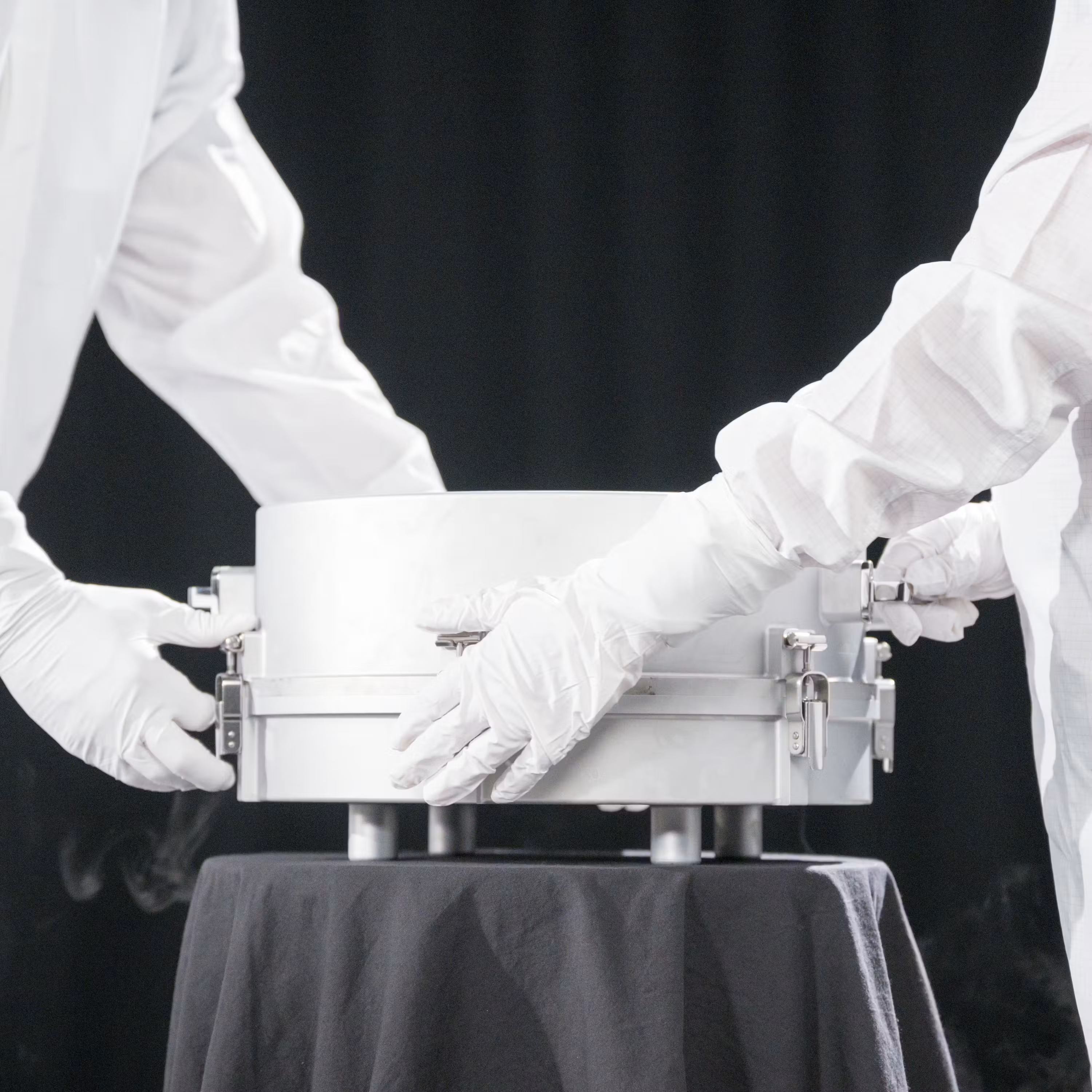
Curation experts at the Johnson Space Center discuss what happens to the asteroid samples after OSIRIS-REx lands in Utah on Sunday, Sept. 24. HWHAP Episode 306.
Week in, week out, we work. But what can we do to not lose ourselves in the 9-to-5 grind? This hour, we question how long we work, why we valorize work, and what good leadership looks like. Guests include executive coach Anne Morriss, economist Juliet Schor, social psychologist Azim Shariff and political scientist Margaret Levi.
TED Radio Hour+ subscribers now get access to bonus episodes, with more ideas from TED speakers and a behind the scenes look with our producers. A Plus subscription also lets you listen to regular episodes (like this one!) without sponsors. Sign-up at: plus.npr.org/ted
See pcm.adswizz.com for information about our collection and use of personal data for sponsorship and to manage your podcast sponsorship preferences.
NPR Privacy Policy