Right now, the economy is running hot. Inflation is high, and central banks are pushing up interest rates to fight it. But before the pandemic, economies around the world were stuck in a different rut: low inflation, low interest rates, low growth.
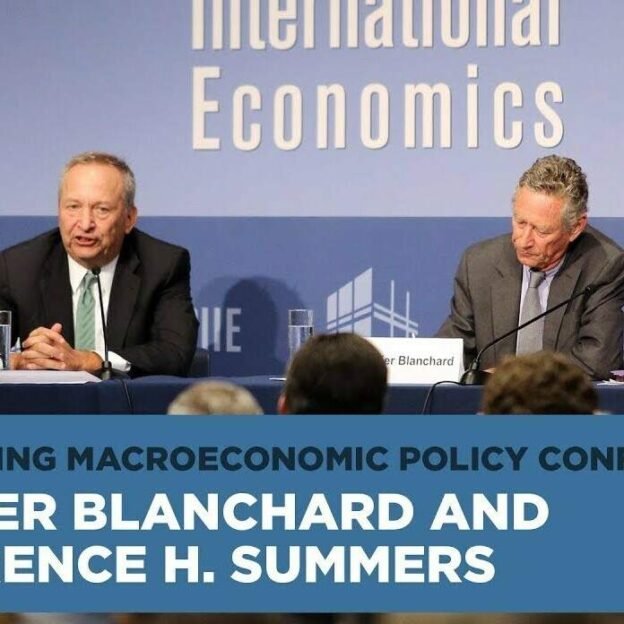
In 2013, Larry Summers unearthed an old term from the Great Depression to explain why the economy was in this rut: secular stagnation. The theory resonated with Olivier Blanchard, another leading scholar, because he had made similar observations himself. Larry and Olivier would go on to build a case for why secular stagnation was a defining theory of the economy and why government policies needed to respond to it. They helped reshape many people’s understanding of the economy, and suggested that this period of slow growth and low interest rates was here to stay for a long time.
But today, Larry and Olivier are no longer the duo they used to be. As inflation has spiked worldwide, interest rates have followed suit. Earlier this year, Larry announced that he was no longer on the secular stagnation train. Olivier, meanwhile, believes we’re just going through a minor blip and will return to a period of low interest rates within the near future. He doesn’t see the deep forces that led to a long-run decline in interest rates as just vanishing. Who’s right? The future of the global economy could depend on the answer.
Help support Planet Money by subscribing to Planet Money+ in Apple Podcasts or at plus.npr.org/planetmoney.
See pcm.adswizz.com for information about our collection and use of personal data for sponsorship and to manage your podcast sponsorship preferences.
NPR Privacy Policy
Learn about a student-built experiment that recently made its way to the International Space Station. HWHAP Episode 284.
Shirin Neshat is seen as a powerful voice for Iranian women…but her art has never been shown in Iran. She speaks on life in exile and how her acclaimed and controversial art is shaped by politics. You can watch a version of this interview on YouTube here. TED Radio Hour+ subscribers now get access to bonus episodes, with more ideas from TED speakers and a behind the scenes look with our producers. A Plus subscription also lets you listen to regular episodes (like this one!) without ads. Sign-up at plus.npr.org/ted.
See pcm.adswizz.com for information about our collection and use of personal data for sponsorship and to manage your podcast sponsorship preferences.
NPR Privacy Policy
Right now, the economy is all over the place. And when things get confusing, we look to basic economic indicators to help explain what’s going on. Today, we’re bringing you two episodes of our daily show The Indicator that focus on the bond market.
The market for U.S. treasury bonds is generally safe, predictable and pretty boring. Recently, though, it’s been anything but. We look into the fluctuations in bond prices and the yield curve (one of our favorite indicators) to try to help us understand where the economy stands right now.
These two Indicator episodes were originally produced by Brittany Cronin and Noah Glick. They were fact-checked by Sierra Juarez and engineered by Gilly Moon and Katherine Silva. Kate Concannon edits The Indicator.
The Planet Money version was produced by Dylan Sloan and edited by Dave Blanchard.
Music: “Funk Lounge,” “A Fulltime Job” and “Velvet Groove.”
Help support Planet Money and get bonus episodes by subscribing to Planet Money+ in Apple Podcasts or at plus.npr.org/planetmoney.
See pcm.adswizz.com for information about our collection and use of personal data for sponsorship and to manage your podcast sponsorship preferences.
NPR Privacy Policy
In the 1980’s Nintendo was on top of the world, with the NES achieving over 90% market share of home video games globally. So how did they fall ALL the way down to ~10% in just a few short console generations? And how did they then build themselves back up (and down and up again) to the top of the world again? Spoiler: it all hinged on one very small, yet very large and durable platform… the Game Boy. Fire up your favorite portable entertainment device and tune in for the epic story of Nintendo’s fall from grace and journey back to the top — capped off by our robust discussion of where they go from here, and whether this 130+ year old company may still (!) be misunderstood and mis-valued.
Sponsors:
More Acquired!
© Copyright 2015-2026 ACQ, LLC
Links:
Carve Outs:
Note: Acquired hosts and guests may hold assets discussed in this episode. This podcast is not investment advice, and is intended for informational and entertainment purposes only. You should do your own research and make your own independent decisions when considering any financial transactions.
It’s been a month since the collapse of Silicon Valley Bank touched off the worst episode of banking turmoil since 2008. While the financial system appears to have stabilized, we’re still reckoning with what happened. Regulators are getting dragged before Congress. The Federal Reserve and the FDIC have promised reports on what went wrong with bank oversight. And judging by our inbox, you, our listeners, have a lot of lingering questions.
Questions like: Was it a bailout? Where were the regulators? Is it over yet? And what about those other banks that were teetering on the edge?
Today on the show, some answers for you.
This episode was produced by Sam Yellowhorse Kesler with help from Willa Rubin. It was engineered by Brian Jarboe. It was fact-checked by Sierra Juarez and edited by Molly Messick. Jess Jiang is our acting executive producer.
Help support Planet Money and get bonus episodes by subscribing to Planet Money+ in Apple Podcasts or at plus.npr.org/planetmoney.
See pcm.adswizz.com for information about our collection and use of personal data for sponsorship and to manage your podcast sponsorship preferences.
NPR Privacy Policy
The Artemis II astronauts discuss their past, present, and what they are looking forward to on their future mission to the Moon. HWHAP Episode 283.
Original broadcast date: January 7, 2022. New innovations in gene and stem cell technology have the power to shape ecosystems and even change humanity. This hour, TED speakers share the breakthroughs heralding the next scientific revolution. Guests include biochemist Jennifer Doudna, physicist and biotech entrepreneur Nabiha Saklayen and conservation innovator and biotech entrepreneur Ryan Phelan.
TED Radio Hour+ subscribers now get access to bonus episodes, with more ideas from TED speakers and a behind the scenes look with our producers. A Plus subscription also lets you listen to regular episodes (like this one!) without ads. Sign-up at plus.npr.org/ted.
See pcm.adswizz.com for information about our collection and use of personal data for sponsorship and to manage your podcast sponsorship preferences.
NPR Privacy Policy
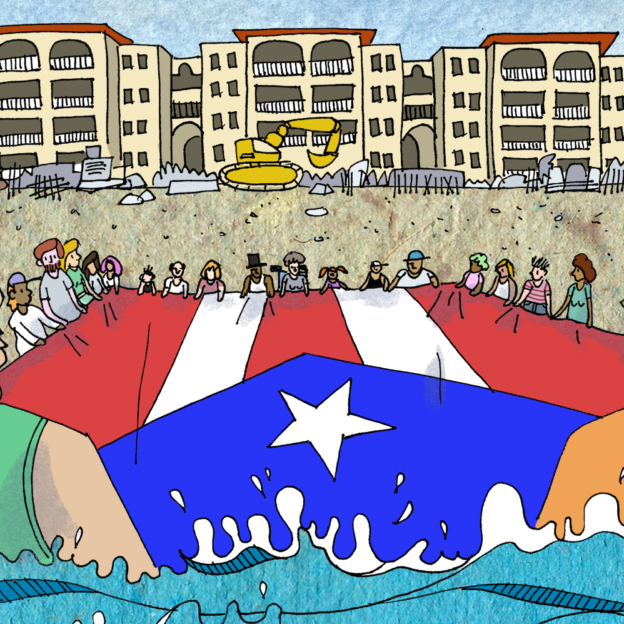
Puerto Rico’s beaches are an integral part of life on the island, and by law, they’re one of the few places that are truly public. In practice, the sandy stretch of land where the water meets the shore is one of the island’s most contested spaces.
Today we’re featuring an episode of the podcast La Brega from WNYC Studios and Futuro Studios, a show about Puerto Rico and the Puerto Rican experience. On the island, a legal definition dating back to the Spanish colonial period dictates what counts as a beach. But climate change, an influx of new residents and a real estate boom are all threatening legal public access to some of Puerto Rico’s most cherished spaces. The debate all comes down to one question: what counts as a beach?
You can listen to the rest of La Brega (in English and Spanish) here. They have two full seasons out, which explore the Puerto Rican experience through history and culture. Check it out.
This episode was reported by Alana Casanova-Burgess and produced by Ezequiel Rodriguez Andino and Joaquin Cotler, with help from Tasha Sandoval. It was edited by Mark Pagan, Marlon Bishop, and Jenny Lawton and engineered by Joe Plourde. The zona maritimo terrestre was sung as a bolero by Los Rivera Destino.
The Planet Money version was produced by Dave Blanchard, fact checked by Sierra Juarez, edited by Keith Romer, and engineered by Brian Jarboe.
Help support Planet Money and get bonus episodes by subscribing to Planet Money+ in Apple Podcasts or at plus.npr.org/planetmoney.
See pcm.adswizz.com for information about our collection and use of personal data for sponsorship and to manage your podcast sponsorship preferences.
NPR Privacy Policy
7 Powers author Hamilton Helmer and his Strategy Capital colleague Chenyi Shi join us again to discuss their latest research on a topic that’s highly relevant to the recent Acquired canon: how to build a second business line. This incredibly important “transforming” question faces every great company who has achieved initial product success (as well as their investors). Do we continue solely along the established path, or do we attempt to grow new branches on the tree? Some companies grow new businesses with tremendous success — Amazon and AWS, Nintendo and video games, Nvidia and CUDA — yet many others fail miserably. For the first time Hamilton and Chenyi share their research-based playbook on how companies should approach this decision and choose wisely. Tune in!
Sponsors:
More Acquired!
© Copyright 2015-2026 ACQ, LLC
Link to Hamilton’s 2-Axis Chart
Note: Acquired hosts and guests may hold assets discussed in this episode. This podcast is not investment advice, and is intended for informational and entertainment purposes only. You should do your own research and make your own independent decisions when considering any financial transactions.