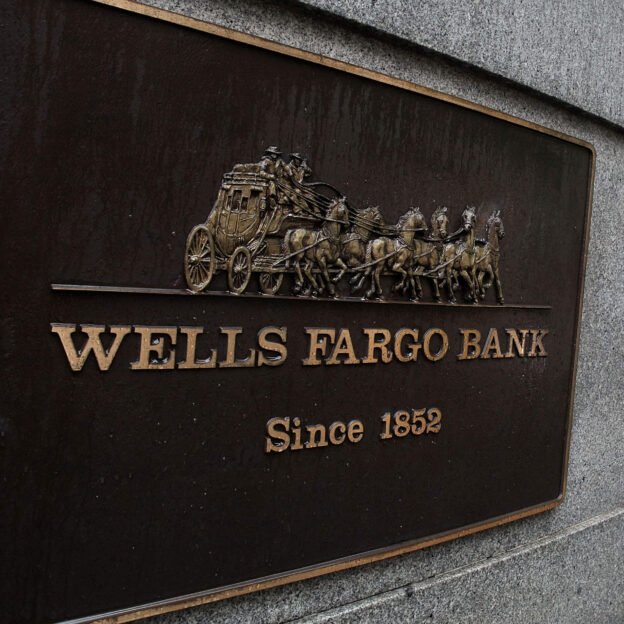
After a successful career in advertising, Erika Williams decided it was time for a change. She went back to school to get an MBA at the University of Chicago, and eventually, in 2012, she got a job at Wells Fargo as a financial advisor. It was the very job she wanted.
Erika is Black–and being a Black financial advisor at a big bank is relatively uncommon. Banking was one of the last white collar industries to really hire Black employees. And when Erika gets to her office, she’s barely situated before she starts to get a weird feeling. She feels like her coworkers are acting strangely around her.
“I was just met with a lot of stares. And then the stares just turned to just, I mean, they just pretty much ignored me. And that was my first day, and that was my second day. And it was really every day until I left.”
She wasn’t sure whether to call her experience racism…until she learned that there were other Black employees at other Wells Fargo offices feeling the exact same way.On today’s episode, Erika’s journey through these halls of money and power. And why her story is not unique, but is just one piece of the larger puzzle.
Help support Planet Money and get bonus episodes by subscribing to Planet Money+ in Apple Podcasts or at plus.npr.org/planetmoney.
See pcm.adswizz.com for information about our collection and use of personal data for sponsorship and to manage your podcast sponsorship preferences.
NPR Privacy Policy
Former NASA chief historian discusses his new e-book that shares some of the most significant moments and programs from NASA’s entire history. HWHAP Episode 286.
Original broadcast date: October 7, 2022. We encounter friction every day — in all its forms — as we brush our teeth, go for a jog, argue with a friend. This hour, TED speakers explore how this force can be dialed up or down to improve our lives. Guests include tribologist Jennifer Vail, democracy activist and whistleblower Yaël Eisenstat, Sierra Leone’s Minister of Education David Moinina Sengeh and TV producer Elan Gale.
TED Radio Hour+ subscribers now get access to bonus episodes, with more ideas from TED speakers and a behind the scenes look with our producers. A Plus subscription also lets you listen to regular episodes (like this one!) sponsor-free. Sign-up at: plus.npr.org/ted
See pcm.adswizz.com for information about our collection and use of personal data for sponsorship and to manage your podcast sponsorship preferences.
NPR Privacy Policy
Note: This episode originally aired in September, 2014.
Zoos follow a fundamental principle: You can’t sell or buy the animals. It’s unethical and illegal to put a price tag on an elephant’s head. But money is really useful — it lets you know who wants something and how much they want it. It lets you get rid of things you don’t need and acquire things that you do need. It helps allocate assets where they are most valued. In this case, those assets are alive, and they need a safe home in the right climate.
So zoos and aquariums are left asking: What do you do in a world where you can’t use money?
This episode was originally produced by Jess Jiang.
Help support Planet Money and get bonus episodes by subscribing to Planet Money+ in Apple Podcasts or at plus.npr.org/planetmoney.
See pcm.adswizz.com for information about our collection and use of personal data for sponsorship and to manage your podcast sponsorship preferences.
NPR Privacy Policy
We sit down Benchmark’s legendary gaming investors Mitch Lasky and Blake Robbins (now also of the excellent Gamecraft podcast fame) to discuss the history and future of gaming business models. This episode is the perfect bookend to our Nintendo/Sega gaming series this season on Acquired — no one is more qualified than Mitch and Blake to breakdown how the business side of the industry has evolved so radically from the Periscope quarter-drop days to the forever games and platform based publishers of today.
Regardless if you’re a gamer, understanding the incredible innovation that’s taken place over the past two decades in gaming and what it portends for other industries is critical for any founder and investor to understand. Tune in!
Links
Sponsors:
More Acquired!
© Copyright 2015-2026 ACQ, LLC
Note: Acquired hosts and guests may hold assets discussed in this episode. This podcast is not investment advice, and is intended for informational and entertainment purposes only. You should do your own research and make your own independent decisions when considering any financial transactions.
Imagine if we built cars the same way we build houses. First, a typical buyer would meet with the car designer, and tell them what kind of car they want. Then the designer would draw up plans for the car.
The buyer would call different car builders in their town and show them the blueprints. And the builders might say, “Yeah, I can build you that car based on this blueprint. It will cost $1 million and it will be ready in a year and a half.”
There are lots of reasons why homes are so expensive in the U.S., zoning and land prices among them. But also, the way we build houses is very slow and very inefficient. So, why don’t we build homes the way we build so many other things, by mass producing them in a factory?
In this episode, the century-old dream of the factory-built house, and the possibility of a prefab future.
This episode was produced by Emma Peaslee. Molly Messick edited the show, and it was fact-checked by Sierra Juarez. Brian Jarboe mastered the episode. Jess Jiang is our acting Executive Producer.
Help support Planet Money and get bonus episodes by subscribing to Planet Money+ in Apple Podcasts or at plus.npr.org/planetmoney.
See pcm.adswizz.com for information about our collection and use of personal data for sponsorship and to manage your podcast sponsorship preferences.
NPR Privacy Policy
Experts share the preparations and excitement ahead of the OSIRIS-REx asteroid sample that is returning to Earth in September 2023. HWHAP Episode 285.
Original broadcast date: July 15, 2022. “The birds and the bees” may be a euphemism for human reproduction, but procreation of actual winged animals is far wilder. This hour, TED speakers explore how birds, bees and bugs multiply. Guests include beekeeper Noah Wilson-Rich, biologist Carin Bondar, behavioral ecologist Marlene Zuk and comedian Julia Sweeney.
TED Radio Hour+ subscribers now get access to bonus episodes, with more ideas from TED speakers and a behind the scenes look with our producers. A Plus subscription also lets you listen to regular episodes (like this one!) without ads. Sign-up at: plus.npr.org/ted
See pcm.adswizz.com for information about our collection and use of personal data for sponsorship and to manage your podcast sponsorship preferences.
NPR Privacy Policy
This past January, researchers uncovered that Black taxpayers are three to five times as likely to be audited as everyone else. One likely reason for this is that the IRS disproportionately audits lower-income earners who claim a tax benefit called the earned income tax credit. And this, says law professor Dorothy Brown, is just one example of the many ways that race is woven through our tax system, its history, and its enforcement.
Dorothy discovered the hidden relationship between race and the tax system sort of by accident, when she was helping her parents with their tax return. The amount they paid seemed too high. Eventually, her curiosity about that observation spawned a whole area of study.
This episode is a collaboration with NPR’s Code Switch podcast. Host Gene Demby spoke to Dorothy Brown about how race and taxes play out in marriage, housing, and student debt.
This episode was produced by James Sneed, with help from Olivia Chilkoti. It was edited by Dalia Mortada and Courtney Stein, and engineered by James Willets & Brian Jarboe.
Help support Planet Money and get bonus episodes by subscribing to Planet Money+ in Apple Podcasts or at plus.npr.org/planetmoney.
See pcm.adswizz.com for information about our collection and use of personal data for sponsorship and to manage your podcast sponsorship preferences.
NPR Privacy Policy
Sega and the Genesis was THE underdog story of the early 90’s. In a single console generation, Sega went from ~zero to 50% US market share and dethroned Nintendo’s seemingly invincible global monopoly. But — somehow — it all then died. Two console generations later Sega was out of the hardware game entirely, and the company was sold off for pieces to a pachinko manufacturer. How on earth did this happen??
Today we’re launching Acquired Shorts in order to tell this story and others like it: side tales from the “Acquired Cinematic Universe” that are too brief for a full episode, but too good to leave in the vault. We’d love to hear your thoughts on the format (and this episode). Please send us your feedback in Slack, email or Twitter!
Links:
Carve Outs:
Sponsors:
More Acquired!
© Copyright 2015-2026 ACQ, LLC
Note: Acquired hosts and guests may hold assets discussed in this episode. This podcast is not investment advice, and is intended for informational and entertainment purposes only. You should do your own research and make your own independent decisions when considering any financial transactions.