For years, we’ve heard that social media is fueling a teen mental health crisis. But the evidence is more complicated. Developmental psychologist Candice Odgers unpacks what the research actually says—and where parents, policymakers, and the media often get it wrong.
TED Radio Hour+ listeners now get access to bonus episodes, with more ideas from TED speakers and deeper conversations with Manoush. By signing up for Plus, you directly support our work and public media, so all your episodes (like this one!) come to you without sponsor breaks. Learn more at plus.npr.org/ted.
See pcm.adswizz.com for information about our collection and use of personal data for sponsorship and to manage your podcast sponsorship preferences.
NPR Privacy Policy
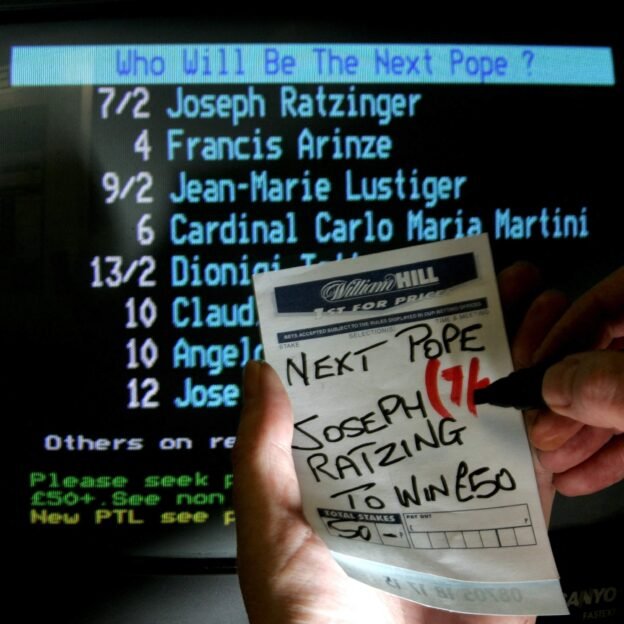
Prediction markets aren’t new. Election betting was common until the 1940s, then mysteriously faded away.
There was an entire political era when party bosses were expected to conspicuously gamble on their candidates (even if they secretly hedged).
And in the 1980s, a few economists designed an election market that beat out election polling 74 percent of the time.
Today, we’re running an excerpt from our friends at Throughline, NPR’s excellent history podcast. Subscribe right now if you don’t already. And, listen to their extended version of the episode to hear about the early markets for betting on terrorism and military uses of prediction markets.
Support:
Read:
Follow:
Today’s episode was produced for Planet Money by Sam Yellowhorse Kesler, edited by Alex Goldmark, and engineered by Maggie Luthar. The original Throughline episode was produced by Rund Abdelfatah, Casey Miner, Cristina Kim, Devin Katayama, Sarah Wyman, Julia Redpath, and Kyana Moghadam.
See pcm.adswizz.com for information about our collection and use of personal data for sponsorship and to manage your podcast sponsorship preferences.
NPR Privacy Policy
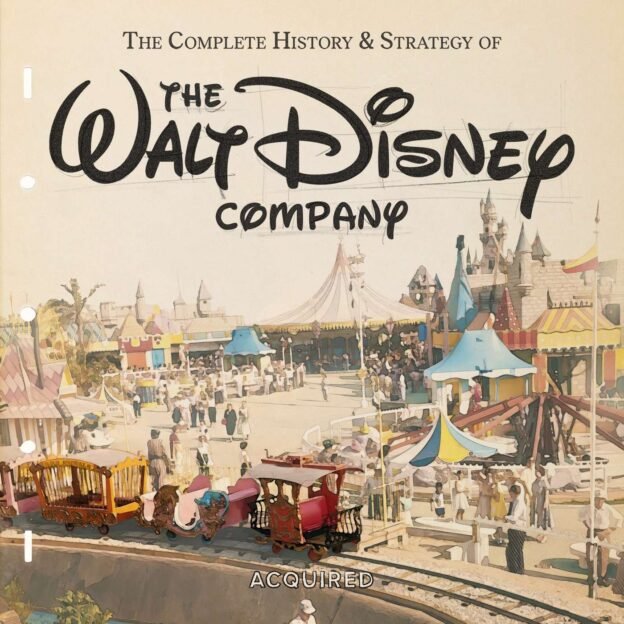
The Walt Disney Company is the most successful enterprise ever created for monetizing human nostalgia. Today it’s the king of global entertainment, holding the intellectual property rights to the childhood memories of billions of people (including, likely, all of you) and is a reliable, predictable profitable business. But it didn’t start that way.
During Walt’s era, Disney operated like an unhinged moonshot factory, blowing its finances on one seemingly crazy project after another, like the very first feature-length animated film or a theme park inspired by Walt’s fascination with model trains (spoiler: Disneyland). Walt’s relentless ambition to bet the company over and over again not only created some of the most monumental artistic achievements of the 20th century (Snow White, Fantasia, Disney Imagineering), but also resulted in the accidental invention of the modern “flywheel” business model. In this episode, we tell the story of the ultimate marriage of art, commerce, and engineering — The Walt Disney Company: Walt’s Era.
Sponsors:
Many thanks to our fantastic Spring ’26 Season partners:
Links:
Carve Outs:
More Acquired:
00:00 Start
01:10 Intro
06:03 Walt’s Early Life & Artistic Calling (1901-1919)
12:22 From Commercial Art to Laugh-o-grams (1919-1923)
23:05 Hollywood, The Alice Comedies & Oswald’s Loss (1923-1928)
43:27 Mickey Mouse & The Synchronized Sound Breakthrough (1928)
01:01:21 The IP Flywheel & Mickey Merch Explosion (1929-1933)
01:09:57 Flywheel Terminology Unpacked
01:18:53 Snow White: Walt’s $1.5M Folly (1934-1937)
01:52:01 The Burbank Studio, Debt & Strike (1938-1941)
02:04:28 The Animators’ Strike & Walt’s Disillusionment (1941)
02:15:43 WWII, The Vault & Creative Slump (1941-1950)
02:24:27 Post-War Slump to Cinderella’s Comeback (1945-1950)
02:33:48 Walt’s Obsession: Model Trains to Disneyland (1950-1952)
02:38:44 Financing Disneyland: ABC, SRI & Davy Crockett (1953-1955)
03:17:05 Disneyland’s Grand Opening & The Evolving Flywheel (1955-1958)
03:41:55 The Florida Project & Walt’s Last Dream (1961-1966)
03:54:26 Walt’s Untimely Death & Roy’s Legacy (1966-1971)
03:57:57 Roy Finishes Walt Disney World (1966-1971)
04:01:09 The Post-Walt Slump & Corporate Raiders (1970s-1984)
04:09:44 Analysis: Why No Other Disney Flywheels?
04:17:15 7 Powers
04:20:45 Quintessence
04:23:50 Carve-Outs + Outro
Note: Acquired hosts and guests may hold assets discussed in this episode. This podcast is not investment advice, and is intended for informational and entertainment purposes only. You should do your own research and make your own independent decisions when considering any financial transactions.
We spend an hour in the last two minutes of the fourth quarter, behind and desperate, with people trying any damn thing they can think of.
Visit thisamericanlife.org/lifepartners to sign up for our premium subscription.
- Prologue: Five years after Ora first started experiencing mysterious and debilitating health problems, she decides to try a treatment that she knows very well might kill her. Host Ira Glass talks to her about the experience. (9 minutes)
- Act One: Two lawyers have just three months to stop their client’s execution. In Texas, where this story takes place, these kinds of appeals to get people off death row fail 94% of the time. (38 minutes)
- Act Two: At the Otay Mesa Detention Center in San Diego, migrants figured out an ingenious way to communicate with the activists gathered outside of the detention center’s walls. (13 minutes)
Transcripts are available at thisamericanlife.org
This American Life privacy policy.
Learn more about sponsor message choices.
Maybe the real monster in the Alien franchise isn’t actually the killer alien. Because behind the acid blood and jump scares is an even more insidious horror: a single employer with unchecked power. That employer is named Weyland-Yutani, a mega-corporation that dominates workers across the galaxy.
Weyland-Yutani is a sort of extreme example of what economists call a monopsony — when one employer dominates a labor market and gains power to underpay and mistreat workers. Sure, it’s science fiction. But a growing number of economists argue that monopsony power is a much bigger deal in the real world than previously thought.
We watch scenes from the movie Alien with labor economist Arin Dube, whose new book, The Wage Standard, shines a spotlight on the problem of monopsony power in the modern economy. We ask Arin what policy ideas he has that would have maybe prevented the worker tragedy seen in Alien. And we use his answer to try and rewrite the movie (spoiler: the movie becomes much shorter and less exciting).
Plus, we speak with Fede Álvarez, the director and co-writer of Alien: Romulus, which puts Weyland-Yutani’s poor treatment of workers front row and center.
For more on monopsony and anti-trust:
Support:
Read:
Follow:
Today’s episode of Planet Money was hosted by Greg Rosalsky and Kenny Malone. It was produced by James Sneed, edited by Jess Jiang, fact-checked by Sierra Juarez, and engineered by Robert Rodriguez. Our executive producer is Alex Goldmark.
See pcm.adswizz.com for information about our collection and use of personal data for sponsorship and to manage your podcast sponsorship preferences.
NPR Privacy Policy
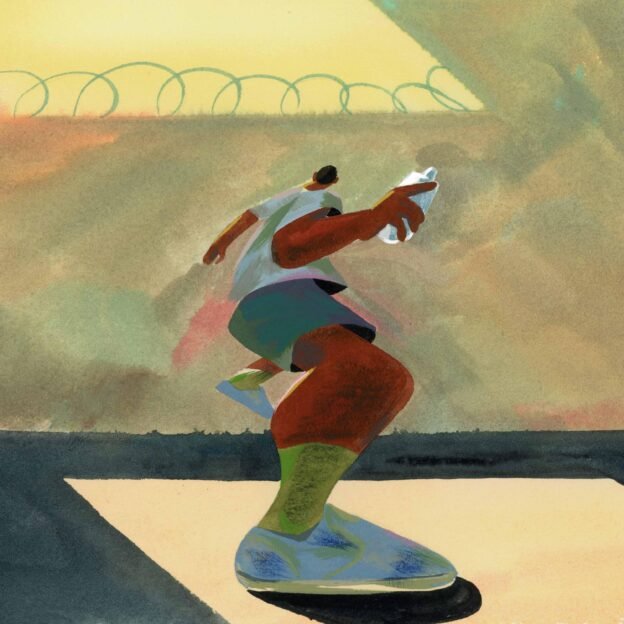
The thrill of victory, the agony of defeat — sports cliches are everywhere. But what does it actually take to think like a winner? This hour, TED speakers explore the psychology of winning and losing.
Original broadcast date: July 19, 2024
TED Radio Hour+ listeners now get access to bonus episodes, with more ideas from TED speakers and deeper conversations with Manoush. By signing up for Plus, you directly support our work and public media, so all your episodes (like this one!) come to you without sponsor breaks. Learn more at plus.npr.org/ted.
See pcm.adswizz.com for information about our collection and use of personal data for sponsorship and to manage your podcast sponsorship preferences.
NPR Privacy Policy
The cyber weapon that might have prevented nuclear war.
The U.S. and Israel have long been in conflict with Iran over their nuclear development program. Some of that conflict has been out in the open, with bombs and blockades, but some of it has been invisible.
Recently some security researchers discovered a cyberweapon likely tied to that invisible conflict. It looks like it was designed to hide on nuclear scientists computers, then throw off their calculations–just as they got close to achieving their goals.
Sounds like something out of science fiction. But it was created 20 years ago.
On today’s show: a whodunit about hackers, ‘Cyber Paleontologists’, spy-vs-spy protocols, cryptic intelligence leaks, nuclear physics, high-precision math, and epistemological warfare.
Pictured: Juan Andres Guerrero Saade (JAGS) and his ‘Fast16 – NOTHING TO SEE HERE, CARRY ON’ tattoo.
Support:
Read:
Follow:
This episode was hosted by Nick Fountain and Erika Beras. It was produced by Willa Rubin and edited by Marianne McCune with help from Jess Jiang. It was fact-checked by Charlotte Isidore and engineered by Kwesi Lee. Alex Goldmark is our executive producer.
Music: NPR Source Audio – “High Tech Expert,” “Digital Wave,” and “Hyper Pop.”
See pcm.adswizz.com for information about our collection and use of personal data for sponsorship and to manage your podcast sponsorship preferences.
NPR Privacy Policy
It’s the late 1960s, and a California TV repairman named Bob sees an opportunity to help people cheat death with the new science of cryonics. But freezing dead people isn’t easy. And apologizing for the mistakes you make along the way? Even harder.
Visit thisamericanlife.org/lifepartners to sign up for our premium subscription.
- Prologue: Host Ira Glass talks about the way most political apologies go, and chats with a man named Derek Jones about similar sorts of apologies among preteen girls and King David, in the Old Testament. (7 minutes)
- Act One: In the late 1960s, a California TV repairman named Bob Nelson joined a group of enthusiasts who believed they could cheat death with a new technology called cryonics. But freezing dead people so scientists can reanimate them in the future is a lot harder than it sounds. Harder still was admitting to the family members of people Bob had frozen that he’d screwed up. Sam Shaw reports. (42 minutes)
- Act Two: There’s a famous William Carlos Williams poem called “This is Just to Say.” It’s about, among other things, causing a loved one inconvenience and offering a non-apologizing apology. Producer Sean Cole explains that this is possibly the most spoofed poem around. We asked some of our regular contributors to get into the act. Sarah Vowell, David Rakoff, Starlee Kine, Jonathan Goldstein, Shalom Auslander, and Heather O’Neill all came up with their own variations of Williams’s classic lines. (7 minutes)
Transcripts are available at thisamericanlife.org
This American Life privacy policy.
Learn more about sponsor message choices.
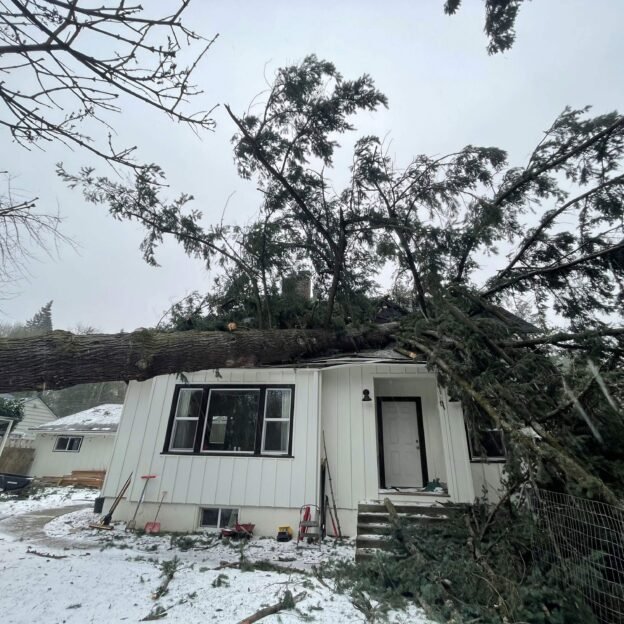
Can the government stop you from cutting down your own tree? In many towns and cities these days, removing a tree now requires a permit. You might have to pay a fee, or promise to plant replacement trees. But sometimes, the city won’t let you cut down the tree at all, even a tree in your own backyard.
That’s because trees are important for air quality, for flood control, and for public health. They help keep neighborhoods cool on hot days. But some think that tree protection laws have gone too far — that they might even be unconstitutional.
On today’s episode, it’s the latest showdown between property rights and local zoning laws. Typically, towns and cities enjoy a lot of power when it comes to zoning and permits. They can ban certain types of buildings. They can make you paint your house a certain color. But can they make it illegal to cut down a tree? And what does it mean to “own” a piece of property anyway?
Support:
Read:
Follow:
This episode of Planet Money was hosted by Jeff Guo and Amanda Aronczyk. It was produced by James Sneed and Emma Peaslee, edited by Jess Jiang, and fact-checked by Vito Emanuel. It was engineered by Robert Rodriguez and Cena Loffredo. Alex Goldmark is our executive producer.
See pcm.adswizz.com for information about our collection and use of personal data for sponsorship and to manage your podcast sponsorship preferences.
NPR Privacy Policy
The Artemis III astronauts discuss their backgrounds and training ahead of them to prepare for one of the most complex human spaceflight missions in history. Episode 426.