On this country’s 250th birthday, we bring you stories about the most American people, places, objects, and social norms that make this country what it is.
Visit thisamericanlife.org/lifepartners to sign up for our premium subscription.
- Prologue: Ira talks to Pablo Torre about Major League Baseball’s new challenge system, and how it’s been optimized for maximum drama. (10 minutes)
- Act One: Writer Jiayang Fan wrestles with a very common question she has never quite understood. (5 minutes)
- Act Two: People come from all over the country to walk down one of Michigan’s tallest sand dunes, and then promptly turn around and trudge back up. Aviva DeKornfeld talks to Americans spending their limited vacation time on this punishing activity. (8 minutes)
- Act Three: Emanuele Berry talks to Ira about Season 13 of the reality TV show, Survivor, known to fans as the “race war” season. (8 minutes)
- Act Four: Years before his famous dictionary, Noah Webster wrote a book that took on a life of its own and served an unexpected purpose. (8 minutes)
- Act Five: Emmanuel Dzotsi investigates a musical phenomenon very particular to the United States: singers embellishing the end of the national anthem. (9 minutes)
Transcripts are available at thisamericanlife.org
This American Life privacy policy.
Learn more about sponsor message choices.
Lionel Messi is arguably the greatest soccer scorer of all time. But when it comes to penalty kicks, Messi is merely average. Why? Maybe the answer involves game theory.
According to game theory, there’s an optimal strategy for taking penalty kicks. This strategy involves an idea that was once somewhat controversial in economics — that is, until economists started studying soccer players in real life.
On today’s show, we kick it over to the hosts of the Soccernomics podcast to explain how game theory has changed soccer, and how soccer has changed game theory.
Watch the penalty shootout between Manchester United and Chelsea in the Champions League final in 2008.
Support:
Planet Money+
Read:
Our book: Planet Money: A Guide to the Economic Forces That Shape Your Life
Our weekly longform Planet Money newsletter
Our weekly Indicator round-up newsletter
Follow:
Instagram
TikTok
YouTube
Facebook
This episode of Planet Money was produced by Emma Peaslee with help from James Sneed. It was edited by Jess Jiang. It was fact checked by Sierra Juarez and engineered by Annlie Huang. Alex Goldmark is our executive producer.
The Soccernomics episode was originally hosted by Ashish Malhotra, Simon Kuper and Stefan Szymanski and sound designed by Alex Roldan.
See pcm.adswizz.com for information about our collection and use of personal data for sponsorship and to manage your podcast sponsorship preferences.
NPR Privacy Policy
Whether you love fashion or hate it, we all have to get dressed in the morning, and the industry affects us in complex ways. This hour, the outrageous, environmental and seedy sides of fashion.
Guests include designer Machine Dazzle, supply chain expert Aparna Mehta, journalist Amanda Mull and supermodel Cameron Russell.
Original broadcast date: September 6, 2024
TED Radio Hour+ listeners now get access to bonus episodes, with more ideas from TED speakers and deeper conversations with Manoush. By signing up for Plus, you directly support our work and public media, so all your episodes (like this one!) come to you without sponsor breaks. Learn more at plus.npr.org/ted.
See pcm.adswizz.com for information about our collection and use of personal data for sponsorship and to manage your podcast sponsorship preferences.
NPR Privacy Policy
Lorem ipsum dolor sit amet, consectetur adipiscing elit, sed do eiusmod tempor incididunt ut labore et dolore magna aliqua. Ut enim ad minim veniam, quis nostrud exercitation ullamco laboris nisi ut aliquip ex ea commodo consequat.
Lorem ipsum dolor sit amet, consectetur adipiscing elit, sed do eiusmod tempor incididunt ut labore et dolore magna aliqua. Ut enim ad minim veniam, quis nostrud exercitation ullamco laboris nisi ut aliquip ex ea commodo consequat.
Lorem ipsum dolor sit amet, consectetur adipiscing elit, sed do eiusmod tempor incididunt ut labore et dolore magna aliqua. Ut enim ad minim veniam, quis nostrud exercitation ullamco laboris nisi ut aliquip ex ea commodo consequat.
Will limiting how much students can borrow force schools to lower their prices?
The Department of Education thinks so. It has a new plan to bring down tuition costs. Starting today, July 1st, it’s going to cap how much it’s willing to loan to graduate students.
You read that right. To reduce the burden of school…the plan is to give students less money to pay for school.
This plan is, in part, based on an idea that’s been floating around higher education circles for decades: The Bennett Hypothesis, which claims there’s a direct relationship between student borrowing and tuition prices. And therefore, if the Department of Education — the biggest student loan provider in the country — limits how much students can take out, then schools will have no choice but to charge students less.
This hypothesis was floated roughly 40 years ago…without evidence. But now, as the Trump administration rolls out their Bennettian plan, we have decades of data to see how true this hypothesis is.
Today on the show: NPR Education Correspondent Cory Turner explains this theory, and what the new plan influenced by it will mean for borrowers this fall.
Other notes:
Support:
Read:
Follow:
This episode was hosted by Cory Turner and Kenny Malone. It was produced by Willa Rubin and edited by Marianne McCune. It was fact-checked by Charlotte Isidore and engineered by Robert Rodriguez. Alex Goldmark is our executive producer.
Music: NPR Source Audio – “Morning Chorus,” “Belle Mar,” and “The Sky Was Orange.”
See pcm.adswizz.com for information about our collection and use of personal data for sponsorship and to manage your podcast sponsorship preferences.
NPR Privacy Policy
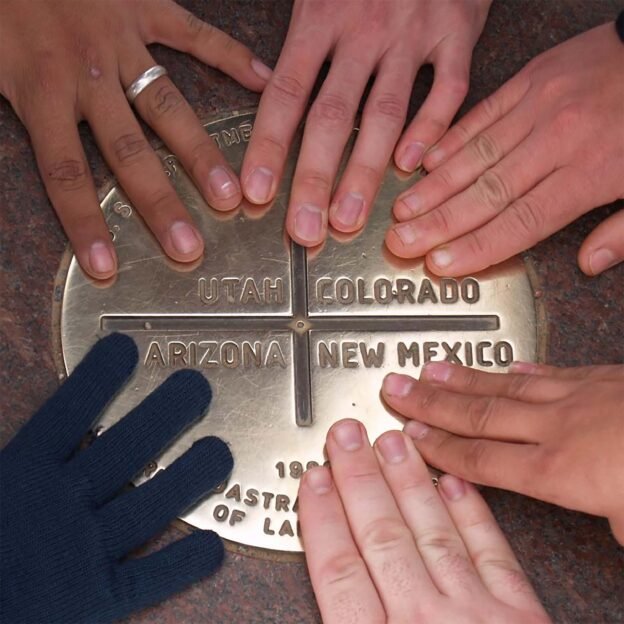
We try to tell the story of life in America through portraits of life on four different corners, in four different states across the nation.
Visit thisamericanlife.org/lifepartners to sign up for our premium subscription.
- Prologue: Host Ira Glass talks about the Four Corners tourist monument where Arizona, Colorado, Utah and New Mexico meet. (2 minutes)
- Act One: Sarah Vowell has a theory that you can tell the entire history of the United States by standing on one street corner—specifically at Michigan Avenue and Wacker Drive in Chicago—and describing all the events that happened within eyeshot of the corner. She covers three centuries of history, from Louis Joliet to Keanu Reeves. (21 minutes)
- Act Two: Scott Richer and Julie Riggs of Louisville, Kentucky, were supposed to have their first kiss at the corner where South Fourth Street meets the alley behind the West End Baptist Church. But it went wrong. (7 minutes)
- Act Three: Writer Mike Paterniti tells a story of dogs and a community of dogwalkers that formed on the grounds of an old cemetery at the corner of Vaughn and Clifford in Portland, Maine. (14 minutes)
- Act Four: Writer Achy Obejas reads a piece of short fiction from her book, We Came All the Way from Cuba So You Could Dress Like This? (11 minutes)
Transcripts are available at thisamericanlife.org
This American Life privacy policy.
Learn more about sponsor message choices.
In the early 90’s, a company called General Magic began working on a portable device that would allow people to check email, make phone calls, even play games. It was basically a smartphone. But it never caught on.
On today’s show, a theory about why this device failed. General Magic had generous investors, world-class talent and creative freedom. But is it possible what they needed was constraints?
Further reading and viewing:
David Epstein’s book is Inside the Box: How Constraints Make Us Better.
Tony Fadell’s book is Build: An Unorthodox Guide to Make Things Worth Making.
Sarah Kerruish and Matt Maude’s documentary is called General Magic.
Support:
Read:
Follow:
This episode was hosted by Erika Beras and Emma Peaslee. It was produced by Emma Peaslee with help from Sam Yellowhorse Kesler and James Sneed. It was edited by Marianne McCune and fact-checked by Charlotte Isidore. It was engineered by Jimmy Keeley with help from Cena Loffredo. Alex Goldmark is Planet Money’s executive producer.
See pcm.adswizz.com for information about our collection and use of personal data for sponsorship and to manage your podcast sponsorship preferences.
NPR Privacy Policy
Dr. Giuseppe Iaria discusses scientific results from the Wayfinding investigation on space station and what it reveals about how astronauts navigate, adapt, and form mental maps in space. Episode 427.