NASA’s SpaceX Crew-11 quartet each dive into their paths to space and what lies ahead aboard the International Space Station. HWHAP 393.
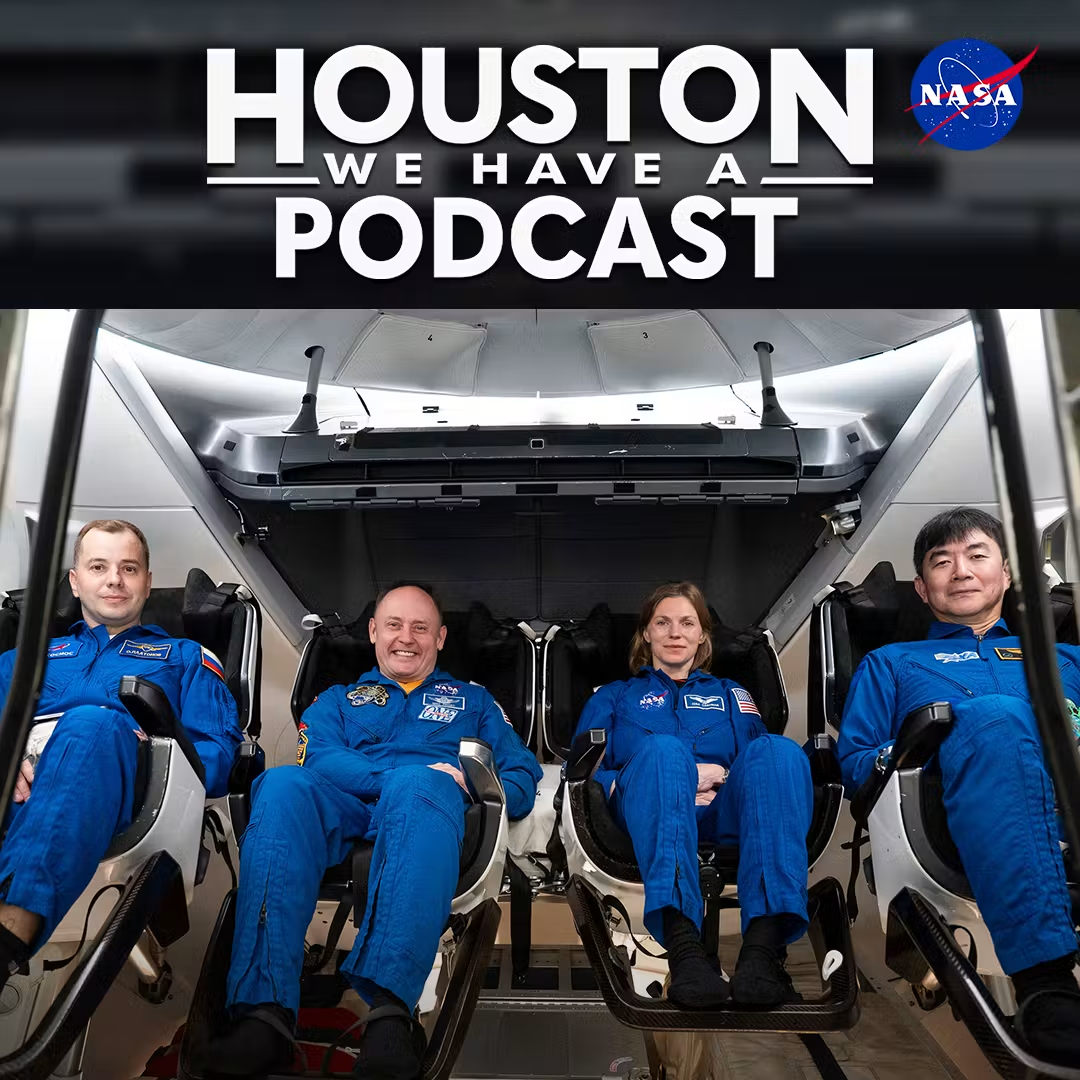
NASA’s SpaceX Crew-11 quartet each dive into their paths to space and what lies ahead aboard the International Space Station. HWHAP 393.
Act now to ensure public media remains free and accessible to all. Your donation will help this essential American service survive and thrive. Visit donate.npr.org now.
See pcm.adswizz.com for information about our collection and use of personal data for sponsorship and to manage your podcast sponsorship preferences.
Act now to ensure public media remains free and accessible to all. Your donation will help this essential American service survive and thrive. Visit donate.npr.org now.
See pcm.adswizz.com for information about our collection and use of personal data for sponsorship and to manage your podcast sponsorship preferences.

As AI infiltrates every aspect of our lives, who are some of the people behind this huge inflection point? In this special three-part series, you’ll hear from the people predicting and shaping our tech future. Host Manoush Zomorodi reports on the latest and revisits her favorite conversations with the minds crafting the digital world we live in today: what they’ve gotten right — and wrong — and where they think we’re headed next. Part 2 features Microsoft AI CEO Mustafa Suleyman and MIT psychologist Sherry Turkle.
For handpicked podcast recommendations every week, subscribe to NPR’s Pod Club newsletter at npr.org/podclub.
TED Radio Hour+ subscribers now get access to bonus episodes, with more ideas from TED speakers and a behind-the-scenes look with our producers. A subscription also lets you listen to regular episodes (like this one!) without sponsors. Sign up at plus.npr.org/ted.
See pcm.adswizz.com for information about our collection and use of personal data for sponsorship and to manage your podcast sponsorship preferences.
Ira Glass talks with longtime producer Nancy Updike about the most personal stories they have put on the radio. This is a sample of the bonus episodes we regularly release to our This American Life Partners.
To gain access to all the bonus episodes AND help us keep making This American Life, join at thisamericanlife.org/lifepartners.
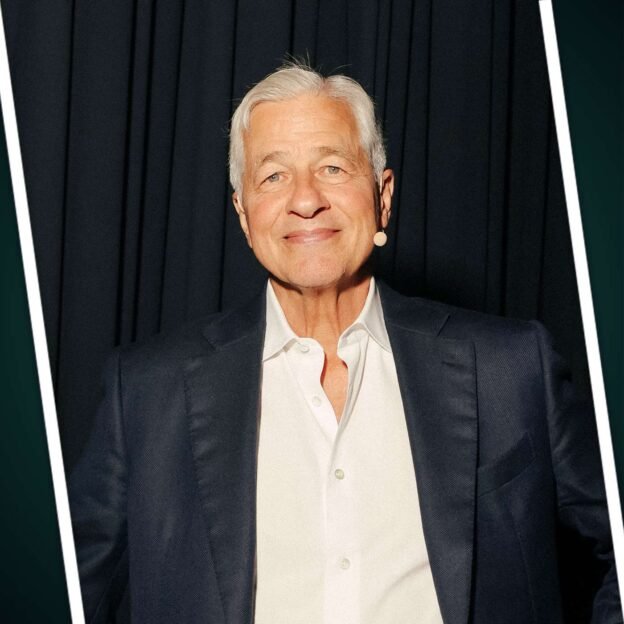
We sit down with Jamie Dimon for a live conversation at Radio City Music Hall, covering the incredible journey from his 1998 firing at Citgroup (where he was widely expected to become CEO) to building the most powerful bank in the world. Today JPMorgan Chase is a juggernaut — the most systemically important non-governmental financial institution in the world, with over twice the market capitalization of its nearest competitor. But it certainly wasn’t always this way! Jamie takes us from his career restart at the struggling Chicago-based Bank One through how he transformed that platform into the foundation for the modern JPMorgan Chase. We dive into the “fortress balance sheet” strategy that has defined his tenure, and cover blow-by-blow Jamie’s approach to the Great Financial Crisis, Bear Stearns, WaMu, First Republic and more. Tune in for an incredible conversation, live from New York City’s most iconic venue!
Sponsors:
Episode image photo credit: Rockefeller Center
More Acquired!
© Copyright 2015-2026 ACQ, LLC
Note: Acquired hosts and guests may hold assets discussed in this episode. This podcast is not investment advice, and is intended for informational and entertainment purposes only. You should do your own research and make your own independent decisions when considering any financial transactions.
We all know the government uses taxes to pay for things. But what about using taxes to control behavior? This week on Summer School, Professor Darrick Hamilton of The New School, helps us explore the true power of the tax code. Can taxes help lift people out of poverty? What about saving the planet?
Get tickets to our August 18th live show and graduation ceremony at The Bell House, in Brooklyn. (Planet Money+ supporters get a 10 percent discount off their tickets. Listen to the July 8th bonus episode to get the discount code!)
The series is hosted by Robert Smith and produced by Eric Mennel. Our project manager is Devin Mellor. This episode was edited by Planet Money Executive Producer Alex Goldmark and fact-checked by Emily Crawford and Sierra Juarez. Engineering by Robert Rodriguez.
Always free at these links: Apple Podcasts, Spotify, the NPR app or anywhere you get podcasts.
Find more Planet Money: Facebook / Instagram / TikTok / Our weekly Newsletter.
Help support Planet Money and hear our bonus episodes by subscribing to Planet Money+ in Apple Podcasts or at plus.npr.org/planetmoney.
See pcm.adswizz.com for information about our collection and use of personal data for sponsorship and to manage your podcast sponsorship preferences.
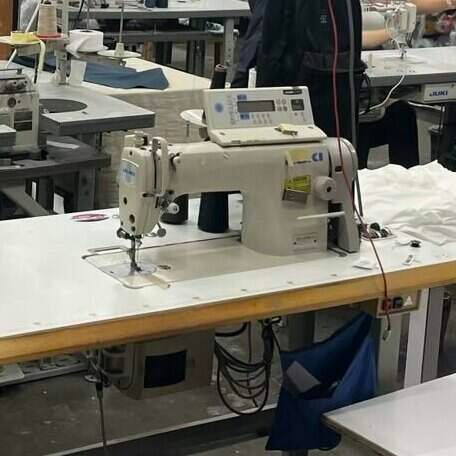
What people might picture when they think of “Made in America” … might not look like the “Made in America” we have today.
The U.S. does have a domestic manufacturing industry, including a garment manufacturing industry.
In today’s episode: We buy a garment made by factory workers in the U.S. – a basic purple sports bra – and learn how many people it took to make it, how much workers got paid to work on it … and whether garment manufacturing is a job Americans want, or even know how, to do.
Plus: why domestic garment manufacturing exists at all in the U.S., and whether the industry can grow.
Other episodes:
– What “Made in China” actually means
This episode was reported and hosted by Sarah Gonzalez. It was produced by Willa Rubin with production help from Emma Peaslee. It was edited by Marianne McCune, and it was fact-checked by Sierra Juarez who also helped with research. It was engineered by Robert Rodriguez. Alex Goldmark is our executive producer.
Support Planet Money, get bonus episodes and sponsor-free listening and now Summer School episodes one week early by subscribing to Planet Money+ in Apple Podcasts or at plus.npr.org/planetmoney.
Find more Planet Money: Facebook / Instagram / TikTok / Our weekly Newsletter.
Listen free at these links: Apple Podcasts, Spotify, the NPR app or anywhere you get podcasts.
Help support Planet Money and hear our bonus episodes by subscribing to Planet Money+ in Apple Podcasts or at plus.npr.org/planetmoney.
See pcm.adswizz.com for information about our collection and use of personal data for sponsorship and to manage your podcast sponsorship preferences.
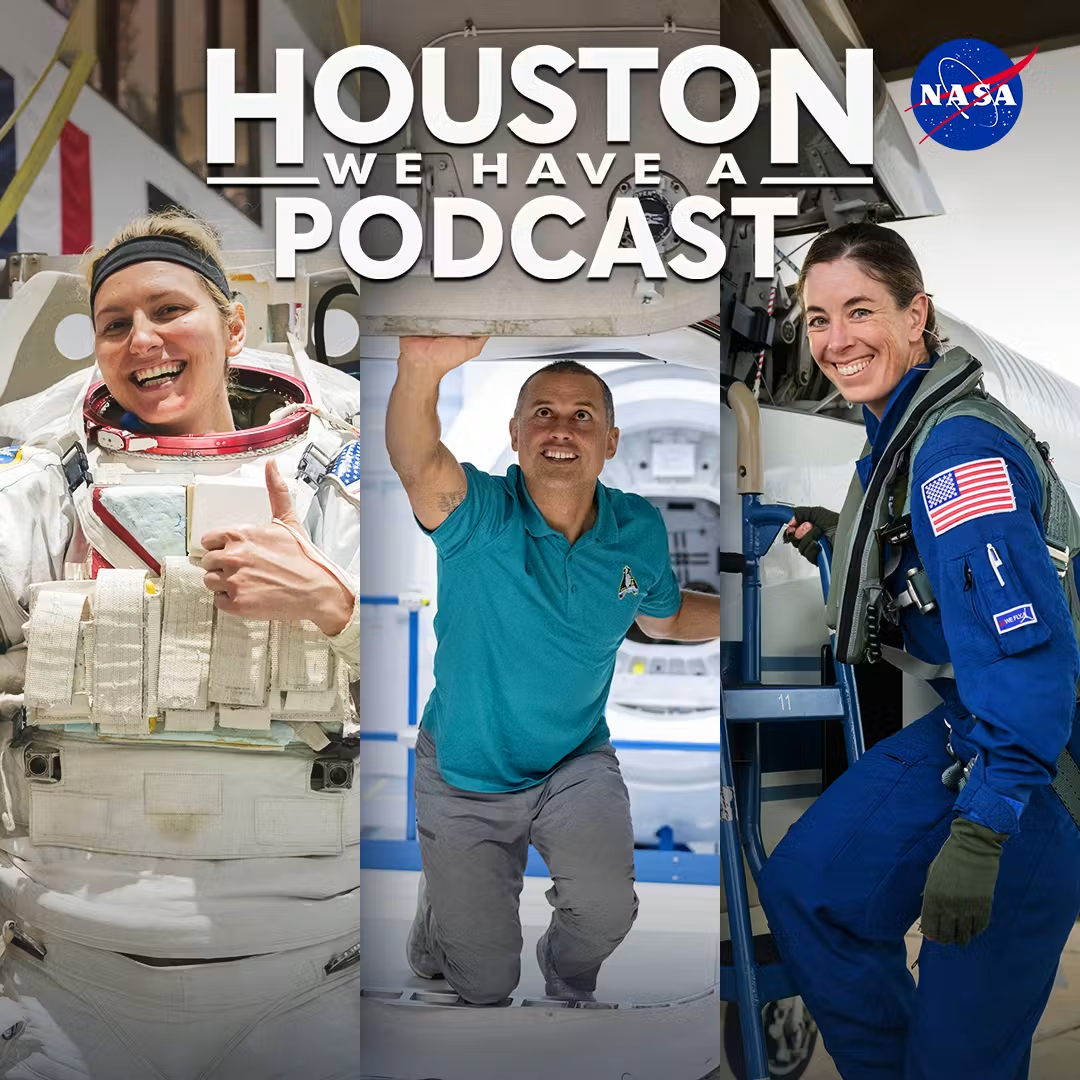
Houston We Have a Podcast celebrates eight years! Three astronauts from the agency’s most recent class discuss their first year of training and answer questions from our listeners. HWHAP 392.

As AI infiltrates every aspect of our lives, who are some of the people behind this huge inflection point? In this special three-part series, you’ll hear from the people predicting and shaping our tech future. Host Manoush Zomorodi reports on the latest and revisits her favorite conversations with the minds crafting the digital world we live in today: what they’ve gotten right — and wrong — and where they think we’re headed next. Part 1 features futurist Ray Kurzweil and counterculture icon Stewart Brand.
TED Radio Hour+ subscribers now get access to bonus episodes, with more ideas from TED speakers and a behind the scenes look with our producers. A Plus subscription also lets you listen to regular episodes (like this one!) without sponsors. Sign-up at plus.npr.org/ted.
See pcm.adswizz.com for information about our collection and use of personal data for sponsorship and to manage your podcast sponsorship preferences.