Even though the 145% tariff on Chinese imports only lasted a month, it already inflicted its scars on the economy. Global trade is just not something you can turn off and on like that.
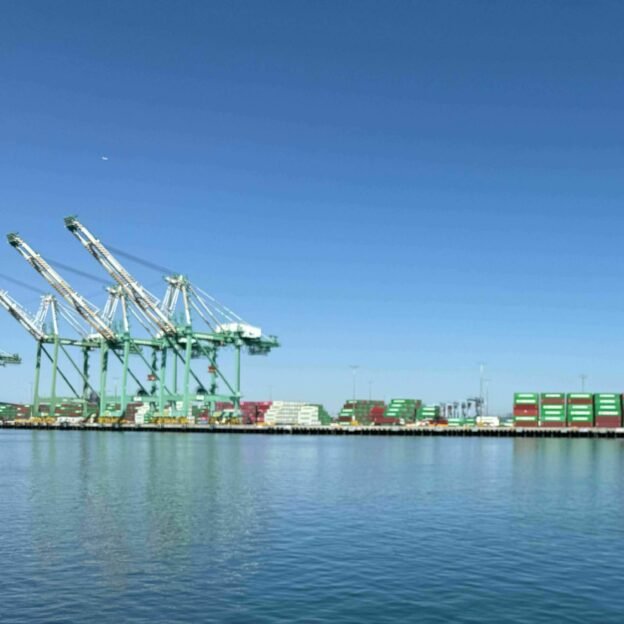
Some companies got really unlucky. Like those whose goods arrived at U.S. ports before the pause. If a medium size company had a million dollars worth of goods imported, they had to pay an extra million and a half dollars on top of that – just for the tariff.
Today we are bringing you a portrait of this unfathomably high tariff. What a month of 145% tariffs looked like and felt like for three people in the global economy whose lives were all affected and still will be. The ones who got lucky and the ones who got really unlucky.
This episode of Planet Money was produced by Emma Peaslee and edited by Jess Jiang. It was engineered by Jimmy Keeley and fact-checked by Willa Rubin. Alex Goldmark is our executive producer.
Find more Planet Money: Facebook / Instagram / TikTok / Our weekly Newsletter. Listen free at these links: Apple Podcasts, Spotify, the NPR app or anywhere you get podcasts. Help support Planet Money and hear our bonus episodes by subscribing to Planet Money+ in Apple Podcasts or at plus.npr.org/planetmoney.
Music: NPR Source Audio – “Bass Talks,” “Bassline Motion,” and “What Da Funk”
See pcm.adswizz.com for information about our collection and use of personal data for sponsorship and to manage your podcast sponsorship preferences.
NPR Privacy Policy
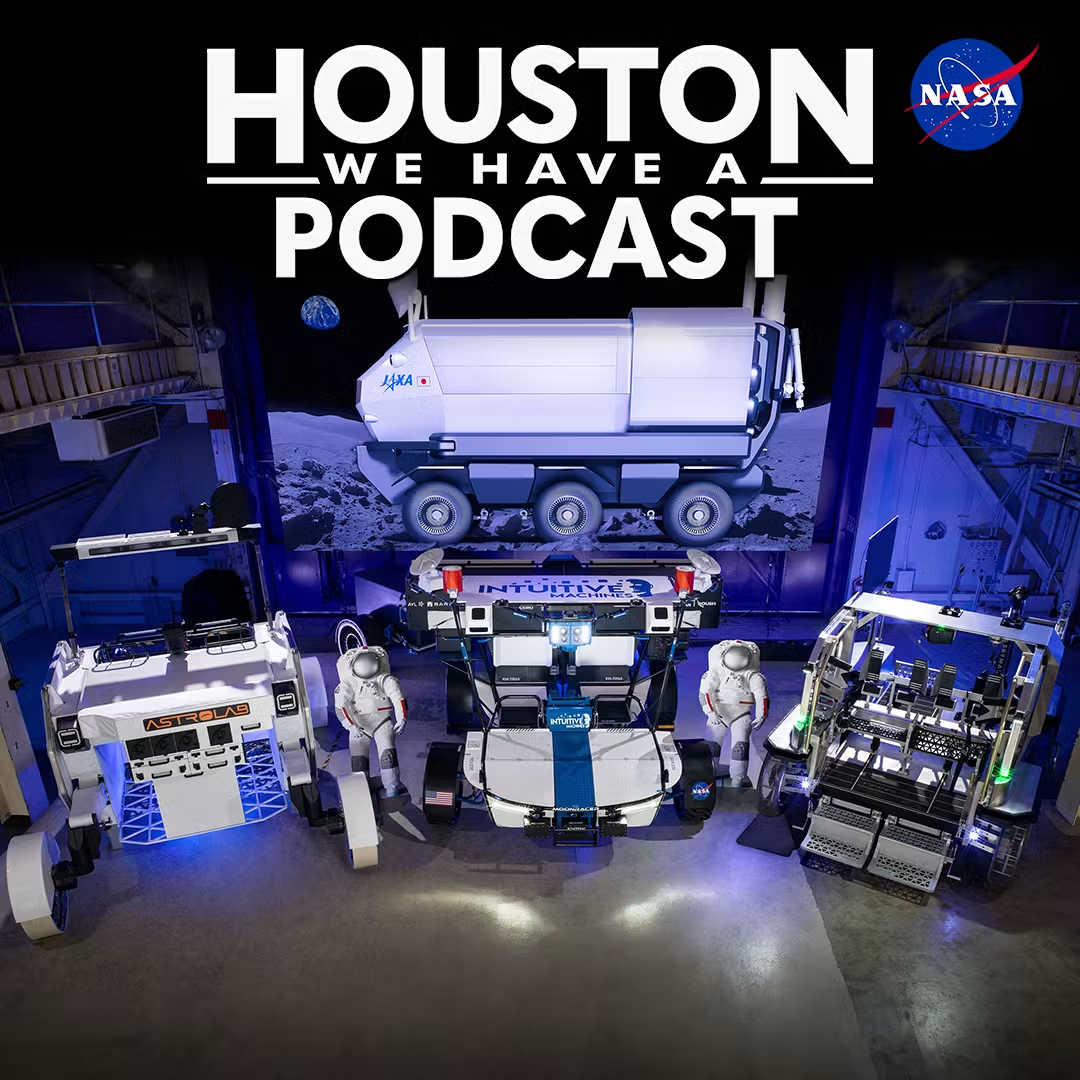
Two NASA project managers discuss how astronauts will drive on the lunar surface during future Moon missions. HWHAP 385.
Why does one hour drag by, but a year can pass in a flash? And how does our relationship with time influence our behavior? This hour, TED speakers share ideas on making the most of the time we have. Guests include artist Katie Paterson, cognitive neuroscientist Irena Arslanova, music director Robert Franz and the late-psychologist Philip Zimbardo.
TED Radio Hour+ subscribers now get access to bonus episodes, with more ideas from TED speakers and a behind the scenes look with our producers. A Plus subscription also lets you listen to regular episodes (like this one!) without sponsors. Sign-up at: plus.npr.org/ted
See pcm.adswizz.com for information about our collection and use of personal data for sponsorship and to manage your podcast sponsorship preferences.
NPR Privacy Policy
The U.S. exports billions of dollars worth of agricultural products each year — things like soybeans, corn and pork. And over the last month, these exports have been caught up in a trade war.
U.S. farmers have been collateral damage in a trade war before. In 2018, President Trump put tariffs on a bunch of Chinese products including flatscreen TVs, medical devices and batteries. But China matched those tariffs with their own retaliatory tariffs. They put tariffs on a lot of U.S. agricultural products they’d been buying, like soybeans, sorghum, and livestock. That choice looked strategic. Hitting these products with tariffs hurt Trump’s voter base and might help China in a negotiation. And in some cases, China could find affordable alternative options from other countries.
Today on the show: what happened in 2018, how the government prevented some U.S. farms from going bankrupt, and what was lost even after the trade war ended.
This episode was produced by Sylvie Douglis and edited by Jess Jiang. It was engineered by Robert Rodriguez and fact-checked by Sierra Juarez. Alex Goldmark is our executive producer.
Find more Planet Money: Facebook / Instagram / TikTok / Our weekly Newsletter.
Listen free at these links: Apple Podcasts, Spotify, the NPR app or anywhere you get podcasts.
Help support Planet Money and hear our bonus episodes by subscribing to Planet Money+ in Apple Podcasts or at plus.npr.org/planetmoney.
See pcm.adswizz.com for information about our collection and use of personal data for sponsorship and to manage your podcast sponsorship preferences.
NPR Privacy Policy
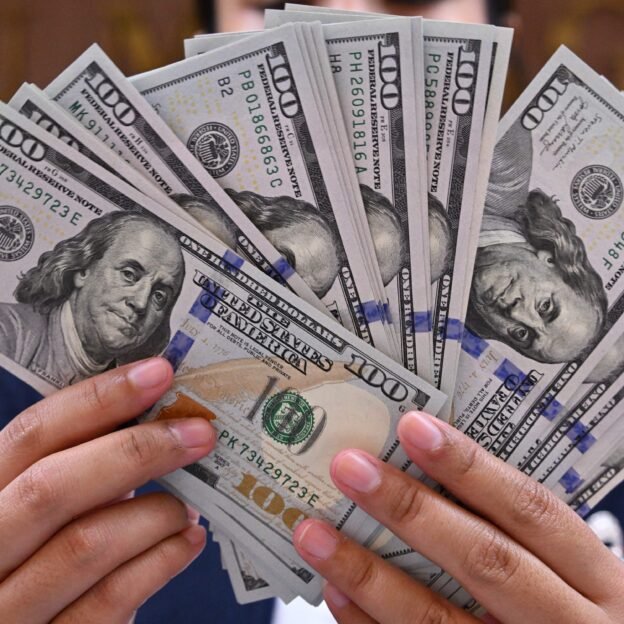
For decades, dollars have been the world’s common financial language. Central banks everywhere hold dollars as a way to safely store their wealth. Countries, businesses, and people use it to trade; around 90% of all foreign exchange transactions involve dollars. It’s the world’s money, the world’s “reserve currency.”
But what if that is changing? What if the world stops seeing the dollar as safe?
Today on the show, what is a “reserve currency”? Why is it the dollar? And if the dollar falls from favor, what will replace it?
This episode of Planet Money was produced by Emma Peaslee with help from James Sneed. It was edited by Marianne McCune with fact checking help from Sierra Juarez. It was engineered by Kwesi Lee. Alex Goldmark is our executive producer.
The Dollar Trap by Eswar Prasad
Exorbitant Privilege by Barry Eichengreen
Our Dollar. Your Problem by Ken Rogoff
Find more Planet Money: Facebook / Instagram / TikTok / Our weekly Newsletter.
Listen free at these links: Apple Podcasts, Spotify, the NPR app or anywhere you get podcasts.
Help support Planet Money and hear our bonus episodes by subscribing to Planet Money+ in Apple Podcasts or at plus.npr.org/planetmoney.
Music: NPR Source Audio – “Virtual Machine,” “Fake Blood” and “Successful Secrets”
See pcm.adswizz.com for information about our collection and use of personal data for sponsorship and to manage your podcast sponsorship preferences.
NPR Privacy Policy
A NASA scientist discusses how imagery and data collected from the International Space Station can support natural disaster response teams on the ground. HWHAP 384
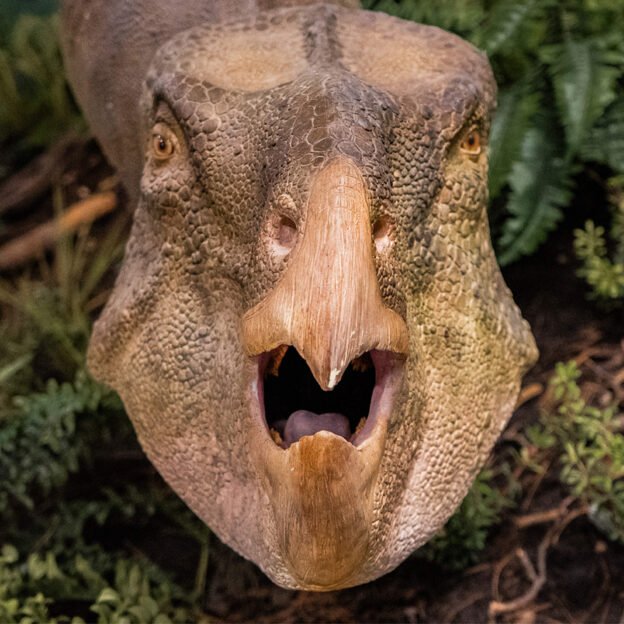
What happened in the days, even hours, after an asteroid set off the fifth extinction? A New Jersey quarry, and site of a new museum founded by paleontologist Ken Lacovara, sheds light on the mystery. Original broadcast date: August 16, 2024
See pcm.adswizz.com for information about our collection and use of personal data for sponsorship and to manage your podcast sponsorship preferences.
NPR Privacy Policy
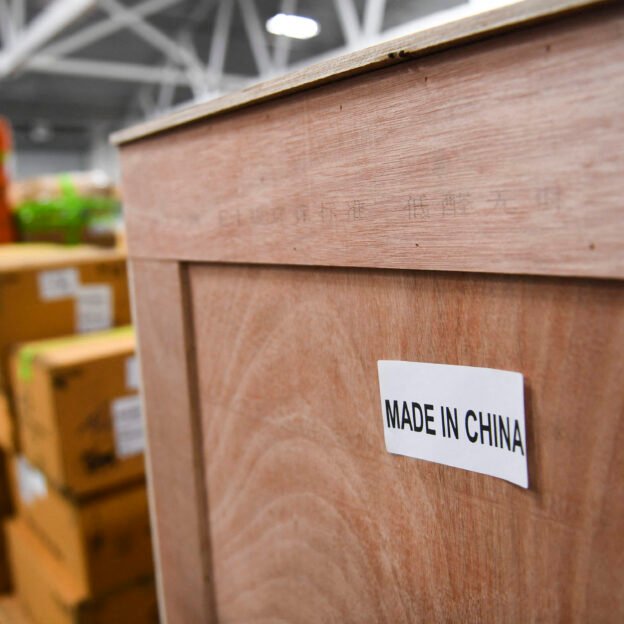
Virtually every product brought into the United States must have a so-called “country of origin.” Think of it as the official place it comes from. And this is the country that counts for calculating tariffs.
But what does it really mean when something is a “Product of China”? How much of it actually comes from China? And how do customs officials draw the line?
Here in the U.S., the rules are delightfully counterintuitive. A product’s country of origin is not necessarily where that product got on the container ship to come here. It’s not necessarily where most of its ingredients are from or even where most of the manufacturing happened.
Our system is much stranger. The answers can be surprisingly philosophical — and at times, even poetic.
This episode of Planet Money was produced by James Sneed with help from Sylvie Douglis. It was edited by Jess Jiang, fact-checked by Sierra Juarez, and engineered by Kwesi Lee. Alex Goldmark is our executive producer.
Find more Planet Money: Facebook / Instagram / TikTok / Our weekly Newsletter.
Listen free at these links: Apple Podcasts, Spotify, the NPR app or anywhere you get podcasts.
Help support Planet Money and hear our bonus episodes by subscribing to Planet Money+ in Apple Podcasts or at plus.npr.org/planetmoney.
See pcm.adswizz.com for information about our collection and use of personal data for sponsorship and to manage your podcast sponsorship preferences.
NPR Privacy Policy
Why is it so hard to find a bathroom when you need one?
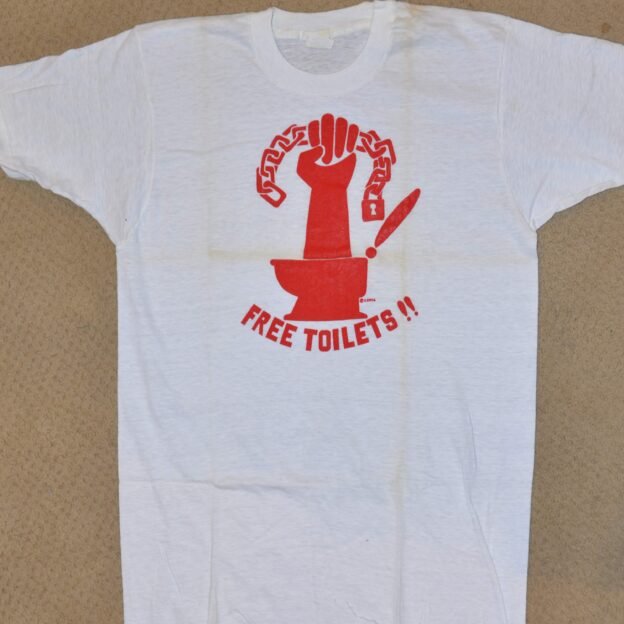
In the U.S., we used to have lots of publicly accessible toilets. But many had locks on the doors and you had to put in a coin to use them. Pay toilets created a system of haves and have nots when it came to bathroom access. So in the 60s, movements sprung up to ban pay toilets.
Problem is: when the pay toilets went away, so too did many free public toilets.
Today on the show, how toilets exist in a legal and economic netherworld; they’re not quite a public good, not quite a problem the free market can solve.
Why we’re stuck, needing to go, with nowhere to go.
This episode was produced by Willa Rubin with help from James Sneed. It was edited by Marianne McCune and engineered by Cena Loffredo. It was fact-checked by Sierra Juarez. Alex Goldmark is our executive producer.
Find more Planet Money: Facebook / Instagram / TikTok / Our weekly Newsletter.
Listen free at these links: Apple Podcasts, Spotify, the NPR app or anywhere you get podcasts.
Help support Planet Money and hear our bonus episodes by subscribing to Planet Money+ in Apple Podcasts or at plus.npr.org/planetmoney.
Music: Audio Network – “Smoke Rings,” “Can’t Walk Away” and “Bright Crystals.”
See pcm.adswizz.com for information about our collection and use of personal data for sponsorship and to manage your podcast sponsorship preferences.
NPR Privacy Policy
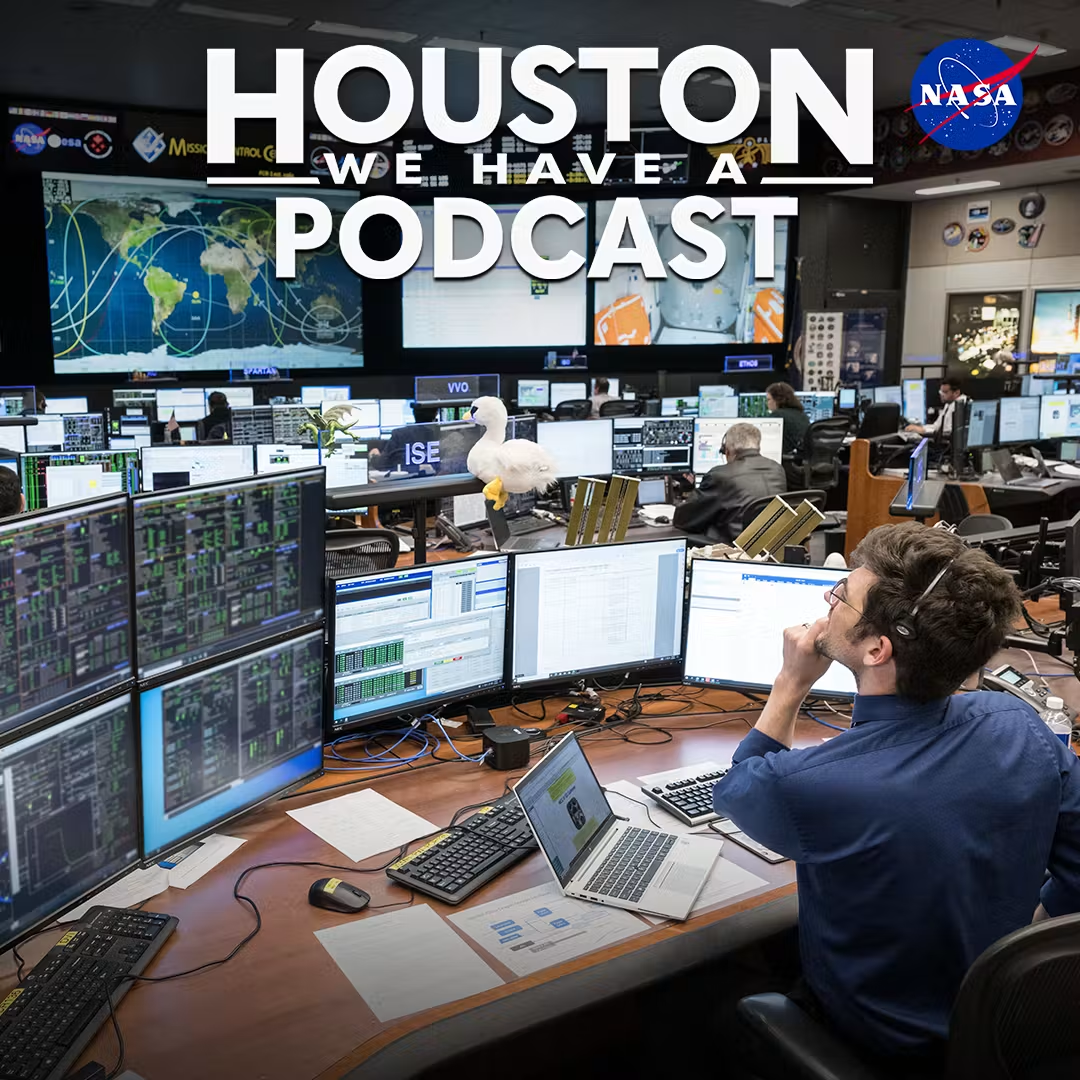
Four NASA flight
controllers discuss specialized operations like spacewalks and spacecraft
arrivals that keep the International Space Station running. HWHAP
383