Every day, we make countless choices—but are these decisions guided by desire or design? This hour, TED speakers on what shapes the food we eat, how we power our homes, and how we communicate. Guests include food systems expert Sarah Lake, infrastructure engineer Deb Chachra, cross-cultural psychologist Michele Gelfand, urban planner Jeff Speck, and Tempe resident Ignacio Delgadillo.
TED Radio Hour+ subscribers now get access to bonus episodes, with more ideas from TED speakers and a behind the scenes look with our producers. A Plus subscription also lets you listen to regular episodes (like this one!) without sponsors. Sign-up at plus.npr.org/ted.
See pcm.adswizz.com for information about our collection and use of personal data for sponsorship and to manage your podcast sponsorship preferences.
NPR Privacy Policy
On today’s show: we’re … venting.
We at Planet Money are an ensemble show – each with different curiosities and styles. But we recently realized many of us have something in common: We’re annoyed consumers.
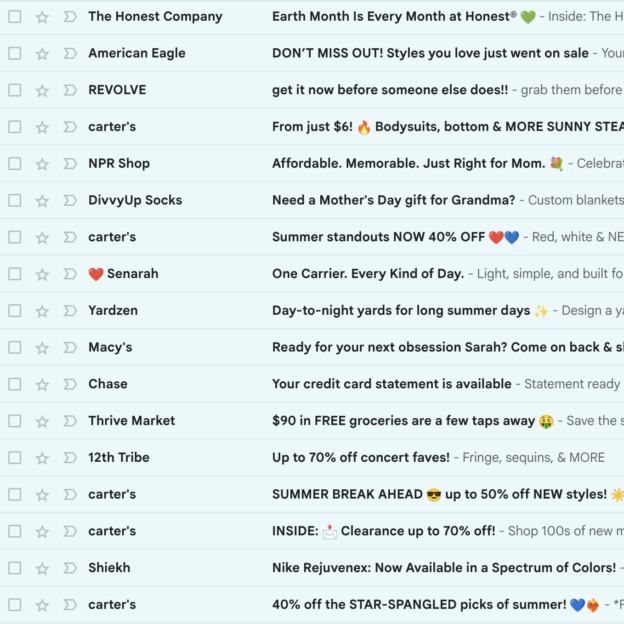
So we’re going to get ranty … but then try to understand the people annoying us. Like stingy coffee shops, manufacturers that don’t design things for repair … and stores that send way to many emails every day.
Along the way, we learn a very sad thing about satisfaction and the future of skilled labor in the U.S.
(Also, we should all just stop using umbrellas. They have negative consumption externalities. Come on people.)
This episode was produced by James Sneed. It was edited by Marianne McCune, fact-checked by Sierra Juarez, and engineered by James Willetts. Alex Goldmark is our executive producer.
Find more Planet Money: Facebook / Instagram / TikTok / Our weekly Newsletter.
Listen free at these links: Apple Podcasts, Spotify, the NPR app or anywhere you get podcasts.
Help support Planet Money and hear our bonus episodes by subscribing to Planet Money+ in Apple Podcasts or at plus.npr.org/planetmoney.
See pcm.adswizz.com for information about our collection and use of personal data for sponsorship and to manage your podcast sponsorship preferences.
NPR Privacy Policy
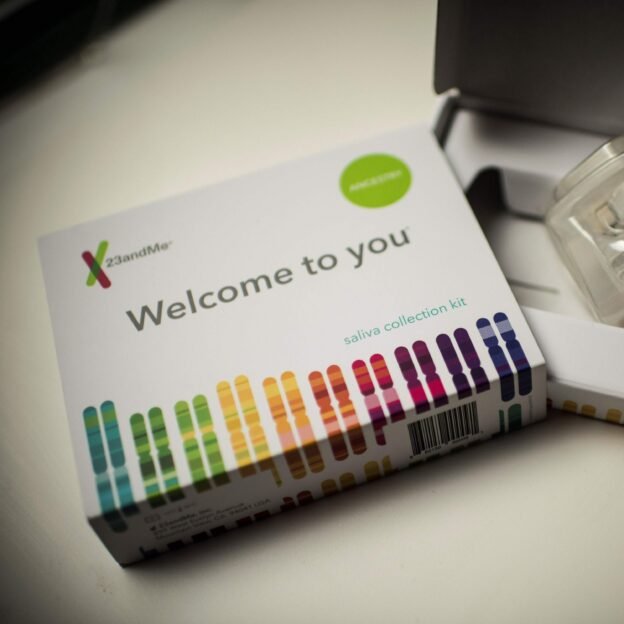
Reporter Alexi Horowitz-Ghazi’s Aunt Vovi signed up for 23andMe back in 2017, hoping to learn more about the genetic makeup of her ancestors. Vovi was one of over 15 million 23andMe customers who sent their saliva off to be analyzed by the company.
But last month, 23andMe filed for bankruptcy, and it announced it would be selling off that massive genetic database. Today on the show, what might happen to Vovi’s genetic data as 23andMe works its way through the bankruptcy process, how the bankruptcy system has treated consumer data privacy in the past, and what this case reveals about the data that all of us willingly hand over to companies every single day.
This episode was produced by Sylvie Douglis and edited by Jess Jiang. It was engineered by Harry Paul and Neal Rauch and fact-checked by Tyler Jones. Alex Goldmark is our executive producer.
Find more Planet Money: Facebook / Instagram / TikTok / Our weekly Newsletter.
Listen free at these links: Apple Podcasts, Spotify, the NPR app or anywhere you get podcasts.
Help support Planet Money and hear our bonus episodes by subscribing to Planet Money+ in Apple Podcasts or at plus.npr.org/planetmoney.
Music: NPR Source Audio – “Lazybones,” “Twirp,” and “On Your Marks”
See pcm.adswizz.com for information about our collection and use of personal data for sponsorship and to manage your podcast sponsorship preferences.
NPR Privacy Policy
After 37 years at
NASA, an experienced commentator of more than 80 shuttle flights shares lessons
of communications and leadership ahead of his retirement. HWHAP 382
Forgetting a name, a poorly executed hug, the 7th grade — awkwardness is part of our lives whether we like it or not. But what if we put the embarrassment aside and embraced our awkward selves? Guests include social scientist Ty Tashiro, cartoonist Liana Finck, journalist Melissa Dahl and sex and relationship counselor Erin Chen.
Original broadcast date: April 19, 2024.
TED Radio Hour+ subscribers now get access to bonus episodes, with more ideas from TED speakers and a behind the scenes look with our producers. A Plus subscription also lets you listen to regular episodes (like this one!) without sponsors. Sign-up at plus.npr.org/ted.
See pcm.adswizz.com for information about our collection and use of personal data for sponsorship and to manage your podcast sponsorship preferences.
NPR Privacy Policy
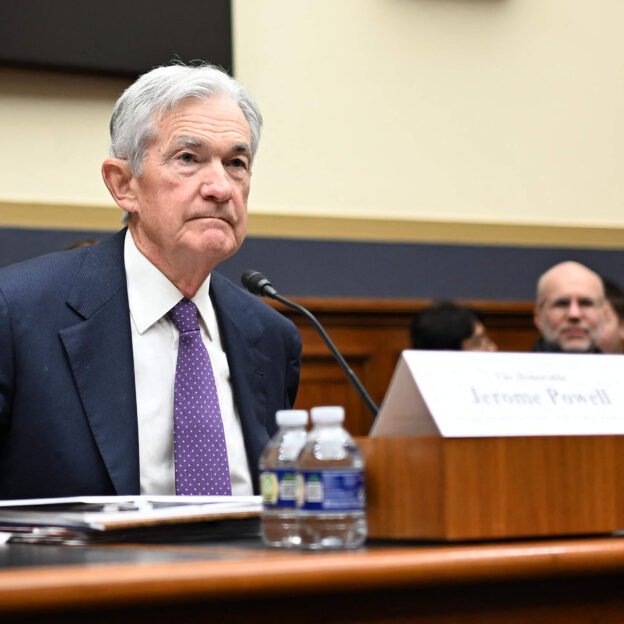
President Donald Trump has been loudly critical of Federal Reserve Chair Jerome Powell for years now. Since January, the President has accused him of playing politics by keeping interest rates high. Trump has also threatened to oust Powell — which would mark an extraordinary shift away from the independence of the central bank.
Today on the show, three Indicators: a short history of the Federal Reserve and why it’s insulated from day-to-day politics; how the Fed amassed a ton of power in recent years; and a Trump executive order that took some of that power away.
The original episodes from the Indicator were produced by Corey Bridges, Brittany Cronin, and Julia Ritchey. They were engineered by Cena Loffredo, James Willetts, and Gilly Moon, and fact-checked by Sierra Juarez. Kate Concannon is the editor of the Indicator. Follow us wherever you get your podcasts.
This episode of Planet Money was produced by James Sneed and edited by Marianne McCune & Mary Childs. Alex Goldmark is our executive producer.
For more of The Indicator from Planet Money, subscribe to Planet Money+ via Apple Podcasts or at plus.npr.org. Or, find us: TikTok, Instagram, Facebook.
Listen free at these links: Apple Podcasts, Spotify, the NPR app or anywhere you get podcasts.
Help support Planet Money and hear our bonus episodes by subscribing to Planet Money+ in Apple Podcasts or at plus.npr.org/planetmoney.
See pcm.adswizz.com for information about our collection and use of personal data for sponsorship and to manage your podcast sponsorship preferences.
NPR Privacy Policy
What if we told you that the most important company in US healthcare was run from a farm in rural Wisconsin? And that farm contained the world’s largest subterranean auditorium, as well as Disneyland—style replicas of Hogwarts and the Emerald City? What if we told you that the person who started, runs and owns this establishment has legally ensured that it will never be sold, never go public and never acquire another company? And that this person, Judy Faulkner, is also likely the wealthiest and most successful self-made woman in history?
Welcome to the story of Epic Systems, the software company that underpins the majority of the American healthcare system today. Epic isn’t “just” an electronic medical record (the category it’s usually lumped into), or an online patient portal (which is how most of the US population interacts with it via its MyChart application). It’s more akin to a central nervous system for hospitals and health clinics. Almost everything in a hospital — from patient interactions to billing, staffing, scheduling, prescriptions and even research — happens on Epic’s platform, and over 90% of American medical schools’ graduating doctors, nurses and health administrative staff are trained on it during their educations. Tune in as we dive into the almost-unbelievable story of how this epic company came to be!
Sponsors:
Links:
Carve Outs:
More Acquired!
© Copyright 2015-2026 ACQ, LLC
Note: Acquired hosts and guests may hold assets discussed in this episode. This podcast is not investment advice, and is intended for informational and entertainment purposes only. You should do your own research and make your own independent decisions when considering any financial transactions.
Recently, one of our NPR colleagues wrote a message to all of NPR saying he had extra eggs to sell for cheap, but needed a fair way to distribute them during a shortage. What is Planet Money here for if not to get OVERLY involved in this kind of situation?
Our colleague didn’t want to charge more than $5, so we couldn’t just auction the eggs off. A lottery? Too boring, he said.
Okay! A very Planet Money puzzle to solve.
Today on the show, we go in search of novel systems to help our colleague decide who gets his scarce resource: cheap, farm-fresh eggs. We steal from the world of new product development to try and secretly test for egg love, and we discover a pricing method used in development economics that may be America’s next great gameshow.
This episode of Planet Money was produced by Emma Peaslee and it was edited by Marianne McCune. It was fact checked by Sierra Juarez and engineered by Jimmy Keeley. Alex Goldmark is our executive producer.
Find more Planet Money: Facebook / Instagram / TikTok / Our weekly Newsletter.
Listen free at these links: Apple Podcasts, Spotify, the NPR app or anywhere you get podcasts.
Help support Planet Money and hear our bonus episodes by subscribing to Planet Money+ in Apple Podcasts or at plus.npr.org/planetmoney.
Music: NPR Source Audio – “Punchy Punchline,” “Game Face,” “Feeling the Funk,” and “The Host Most Wanted”
See pcm.adswizz.com for information about our collection and use of personal data for sponsorship and to manage your podcast sponsorship preferences.
NPR Privacy Policy
Two NASA Artemis experts discuss how the agency is preparing future moonwalkers to use new tools to explore the unique science near the lunar South Pole. HWHAP 381
The latest innovations in biotech are upending our approach to disease, longevity and climate change. Are we ready? This hour, TED speakers share ideas at the forefront of this new wave. Guests include co-founder of the Human Cell Atlas Aviv Regev, physical chemist Brad Ringeisen and immunoengineer Aaron Morris.
TED Radio Hour+ subscribers now get access to bonus episodes, with more ideas from TED speakers and a behind the scenes look with our producers. A Plus subscription also lets you listen to regular episodes (like this one!) without sponsors. Sign-up at: plus.npr.org/ted.
See pcm.adswizz.com for information about our collection and use of personal data for sponsorship and to manage your podcast sponsorship preferences.
NPR Privacy Policy