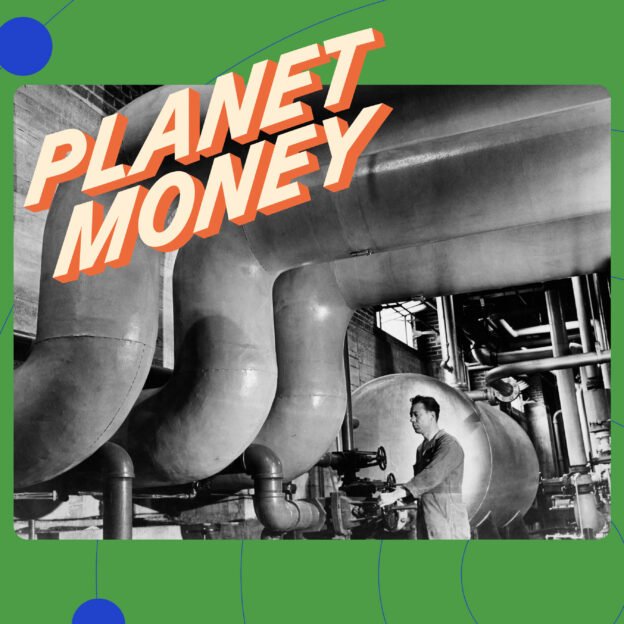
Last year, Tyson Foods shuttered a meat processing plant in Perry, Iowa. The company said it made the decision because the plant was old and inefficient. But the closure was devastating for the residents of Perry. The plant had employed some 1200 workers in a town with a population of only 8000.
At the same time, Tyson was also busy hiring workers elsewhere. It was working with a non-profit group that helps connect companies with asylum seekers and refugees looking for work. Tyson ultimately hired hundreds of new workers through this partnership.
Was this just a coincidence? Or were these two stories actually one story – a story about one of the country’s biggest meat processors forcing out American workers and replacing them with migrants? On today’s show we take a look at the controversy surrounding Tyson’s hiring moves and how things look from the perspective of the workers themselves.
Find more Planet Money: Facebook / Instagram / TikTok / Our weekly Newsletter.
Listen free at these links: Apple Podcasts, Spotify, the NPR app or anywhere you get podcasts.
Help support Planet Money and hear our bonus episodes by subscribing to Planet Money+ in Apple Podcasts or at plus.npr.org/planetmoney.
See pcm.adswizz.com for information about our collection and use of personal data for sponsorship and to manage your podcast sponsorship preferences.
NPR Privacy Policy
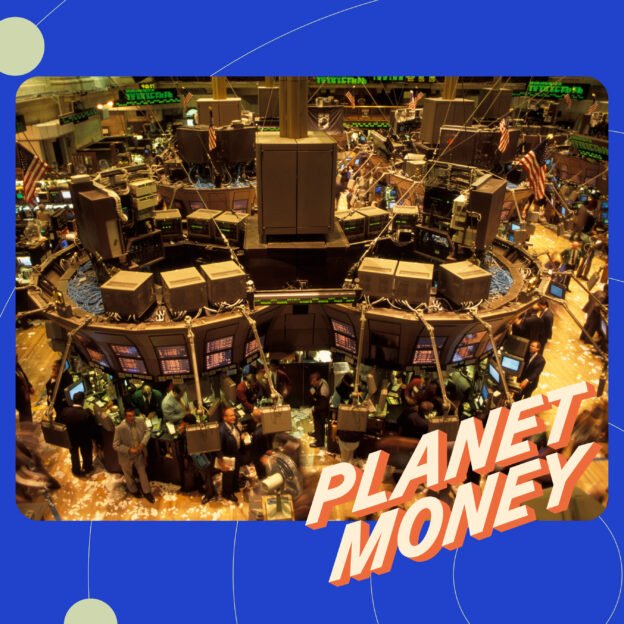
There’s this cautionary tale, in the finance world, that nearly any trader can tell you. It’s about placing too much confidence in math and models. It’s the story of Long Term Capital Management.
The story begins back in the 90s. A group of math nerds figured out how to use a mathematical model to identify opportunities in the market, tiny price discrepancies, that they could bet big on. Those bets turned into big profits, for them and their clients. They were the toast of Wall Street; it looked like they’d solved the puzzle of risk-taking. But their overconfidence in their strategy led to one of the biggest financial implosions in U.S. history, and destabilized the entire market.
On today’s show, what happens when perfect math meets the mess of human nature? And what did we learn (and what did we not learn) from the legendary tale of Long Term Capital Management?
This episode of Planet Money was hosted by Mary Childs and Jeff Guo. It was produced by Sam Yellowhorse Kesler and edited by Jess Jiang. It was fact-checked by Sierra Juarez and engineered by Robert Rodriguez. Alex Goldmark is our executive producer.
Find more Planet Money: Facebook / Instagram / TikTok / Our weekly Newsletter.
Listen free at these links: Apple Podcasts, Spotify, the NPR app or anywhere you get podcasts.
Help support Planet Money and hear our bonus episodes by subscribing to Planet Money+ in Apple Podcasts or at plus.npr.org/planetmoney.
See pcm.adswizz.com for information about our collection and use of personal data for sponsorship and to manage your podcast sponsorship preferences.
NPR Privacy Policy
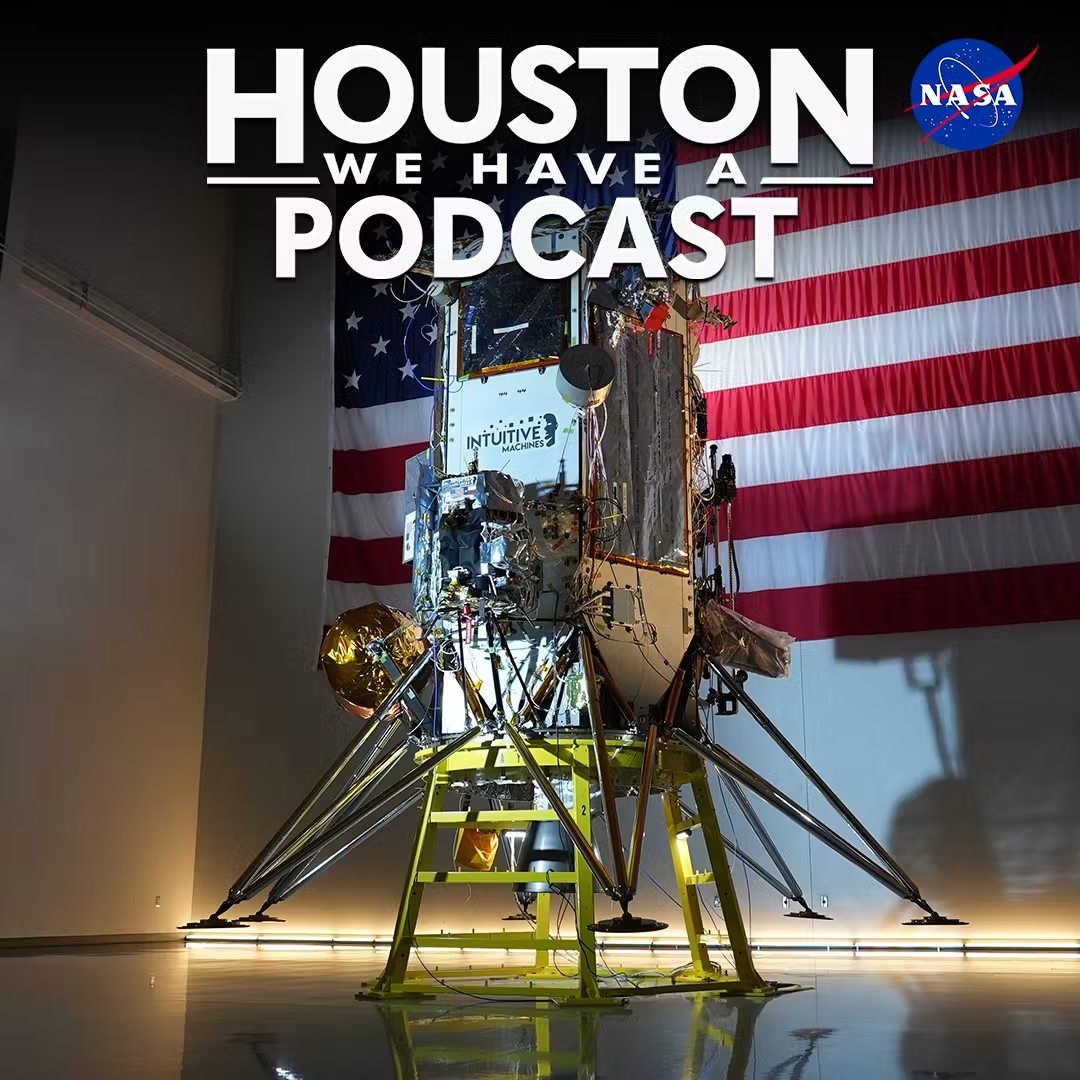
NASA’s Commercial Lunar Payload Services project scientist and Intuitive Machines President and CEO discuss upcoming IM-2 mission and what’s in store for this delivery to the lunar surface. HWHAP 373.
From our favorite songs to our own voices, we’re surrounded by sound all day. But how does all this noise affect our emotions and behavior? This hour, TED speakers explore how sound shapes our lives. Guests include musician and professor of songwriting Scarlet Keys, AI CEO Pierre Barreau, voice expert Rebecca Kleinberger and musician Snow Raven.
TED Radio Hour+ subscribers now get access to bonus episodes, with more ideas from TED speakers and a behind the scenes look with our producers. A Plus subscription also lets you listen to regular episodes (like this one!) without sponsors. Sign-up at plus.npr.org/ted.
See pcm.adswizz.com for information about our collection and use of personal data for sponsorship and to manage your podcast sponsorship preferences.
NPR Privacy Policy
So the president can’t spend more money than Congress has agreed and voted to spend. But can the president spend less money than Congress wants?
It all comes down to something called “impoundment” and the Impoundment Control Act of 1974, which controls when and how a president can take away money Congress has appropriated.
President Trump followed the Impoundment Control Act rules back in 2018. But now, in his second term, he’s saying he thinks that law is unconstitutional.
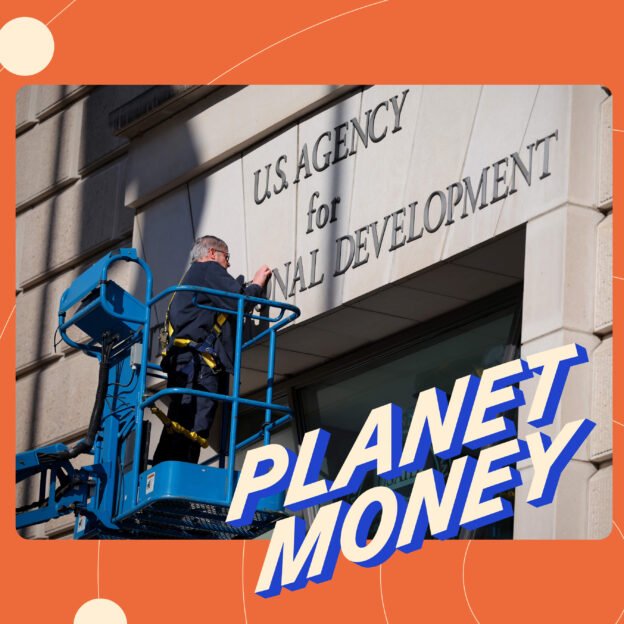
On this episode: the history of impoundment, from Thomas Jefferson to Richard Nixon and Bill Clinton. And what constitutional scholars and judges are saying after Trump attempted to dismantle a federal agency and freeze trillions in federal funding that goes to states for everything from new school buses to public health research.
We’ve got more about impoundment in the latest Planet Money newsletter.
Check out The Indicator’s episodes on the gutting of USAID and how American farmers are affected in USAID cuts. And, our previous episode on the big government money pipe that’s being closely watched right now.
Find more Planet Money: Facebook / Instagram / TikTok / Our weekly Newsletter.
Listen free at these links: Apple Podcasts, Spotify, the NPR app or anywhere you get podcasts.
Help support Planet Money and hear our bonus episodes by subscribing to Planet Money+ in Apple Podcasts or at plus.npr.org/planetmoney.
See pcm.adswizz.com for information about our collection and use of personal data for sponsorship and to manage your podcast sponsorship preferences.
NPR Privacy Policy
There has been chaotic uncertainty around billions of dollars allocated by Congress. The Trump administration ordered a pause on — and review of — certain types of federal assistance. A judge blocked that freeze. But reports continue to emerge that certain parts of the government were not getting their money.
As a result, hundreds and hundreds of people have lost their jobs, clinics and daycares across the country have been left wondering if they’ll have money to operate, retirees have worried about getting their payments.
But the United States is a country of transparency. And if you know where to look, there is a way to cut through all the confusion. Because there’s this one big pipe from the US Treasury through which most federal spending flows.
So, today, we discover a way to go look at that money pipe. And we’ll look at some of the people and the programs on the other end of that pipe. And we tell you about a tool (it’s at The Hamilton Project! Right here.) that you can use to follow along from home, right now, as this gigantic federal spending story continues developing and developing.
Find more Planet Money: Facebook / Instagram / TikTok / Our weekly Newsletter.
Listen free at these links: Apple Podcasts, Spotify, the NPR app or anywhere you get podcasts.
Help support Planet Money and hear our bonus episodes by subscribing to Planet Money+ in Apple Podcasts or at plus.npr.org/planetmoney.
See pcm.adswizz.com for information about our collection and use of personal data for sponsorship and to manage your podcast sponsorship preferences.
NPR Privacy Policy
NASA experts discuss launching and returning cargo to the International Space Station and the planning that goes into delivering several months worth of supplies and crucial science to astronauts in space. HWHAP 372.
To move forward, the United States must confront its history of racial inequality. This hour, three perspectives on looking to the past to build a better future for Black Americans. Guests include author Joseph McGill Jr., Code Switch co-host B.A. Parker and opinion columnist Charles Blow.
Original broadcast date: February 23, 2024.
TED Radio Hour+ subscribers now get access to bonus episodes, with more ideas from TED speakers and a behind the scenes look with our producers. A Plus subscription also lets you listen to regular episodes (like this one!) without sponsors. Sign-up at plus.npr.org/ted.
See pcm.adswizz.com for information about our collection and use of personal data for sponsorship and to manage your podcast sponsorship preferences.
NPR Privacy Policy
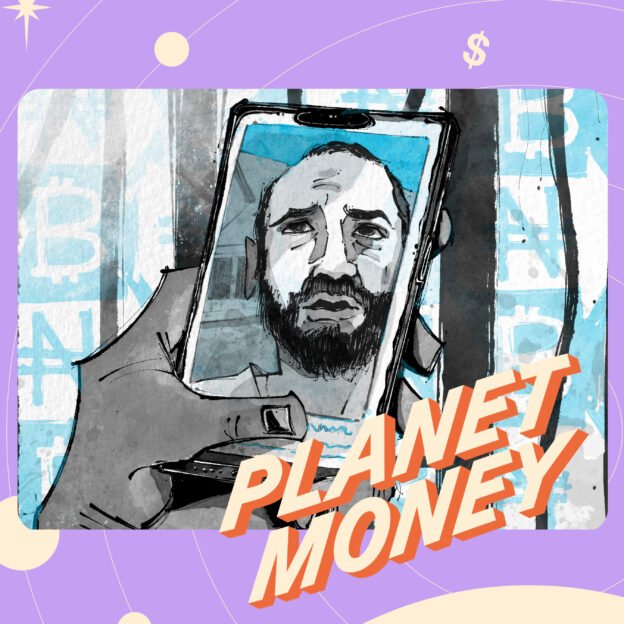
The trip that changed Tigran Gambaryan’s life forever was supposed to be short — just a few days. When he flew to Nigeria in February of 2024, he didn’t even check a bag. Tigran is a former IRS Special Agent. He made his name investigating high-profile dark web and cryptocurrency cases. Some colleagues called him the ‘Crypto Wizard’ because of his pioneering work tracing crypto transactions for law enforcement. Since 2021, he’s worked at the world’s largest crypto exchange, Binance.
Tigran was in Nigeria as a sort of envoy. He was supposed to meet with government officials and show them that Binance – and crypto itself – was safe, reliable, and law-abiding.
One of the most important meetings was at the headquarters of the Office of the National Security Advisor. He says officials there made him wait hours. And when officials finally came into the room, they accused Binance of a host of crimes and of tanking the Nigerian economy. They then told Tigran that they weren’t going to let him leave Nigeria until they were satisfied that Binance was going to remedy the situation.
On today’s show, in a collaboration with Click Here from Recorded Future News, we hear about Tigran’s eight month detention in Nigeria. In his first recorded interview after his release, he shares details about his captivity, how he survived one of Nigeria’s most infamous prisons, and how he got out.
Support our show and hear bonus episodes by subscribing to Planet Money+ in Apple Podcasts or on npr.org.
See pcm.adswizz.com for information about our collection and use of personal data for sponsorship and to manage your podcast sponsorship preferences.
NPR Privacy Policy
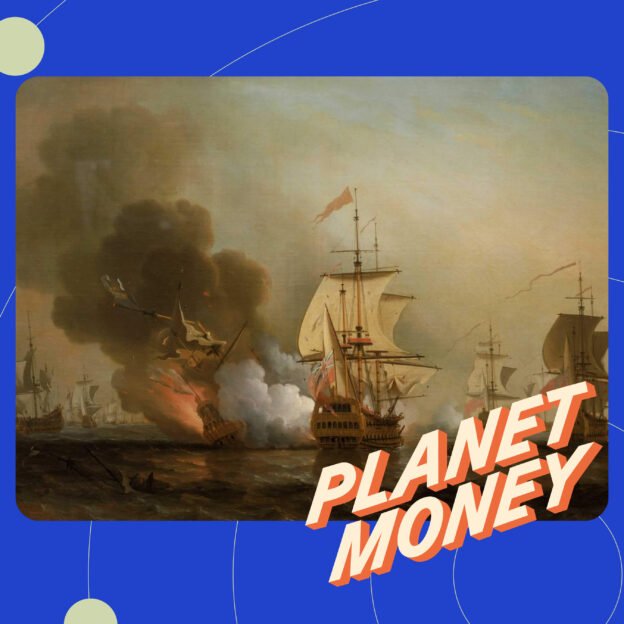
The San Jose was a marvel of 17th century technology. The Spanish galleon weighed more than a thousand tons, was made of wood reinforced with iron, and featured three masts and 64 cannons. In its cargo were gold, silver, silk and porcelain. But in 1708, it sank after a battle with an English ship near what is now Colombia.
For centuries, the shipwreck was the stuff of legends, until 2015 when underwater investigators found what they believed to be the San Jose’s wreckage. The treasure on board this ship could be worth billions of dollars. But who owns it? Today on the show, four groups stake their claims to the wreck of the San Jose. Those claims reveal a lot about who has a say over the bottom of the sea and how we can begin to untangle the complicated legacy of colonialism.
This episode of Planet Money was hosted by Erika Beras and Mary Childs. It was produced by Sam Yellowhorse Kesler with reporting help from Willa Rubin and edited by Keith Romer. It was fact-checked by Sierra Juarez and engineered by Neil Rauch with help from Robert Rodriguez. Alex Goldmark is Planet Money’s executive producer.
Help support Planet Money and hear our bonus episodes by subscribing to Planet Money+ in Apple Podcasts or at plus.npr.org/planetmoney.
See pcm.adswizz.com for information about our collection and use of personal data for sponsorship and to manage your podcast sponsorship preferences.
NPR Privacy Policy