“Wanna see a trick? Give us any topic and we can tie it back to the economy.”
That is the bold promise in Planet Money‘s tagline. And we believe the show does live up to it. Over the last year, we’ve told stories about breakdancing, rum, pagers, buffets, colors, and heartbreak.
But then one host wondered: what if we really held ourselves to that promise? What if we challenged ourselves to find economic meaning in the most esoteric and far-flung topics imaginable?
That’s when we turned to you, our listeners. And boy did you deliver. You sent in ideas so obscure, so banananas, so guaranteed to stump and bamboozle that our host maybe started to regret her life choices…but she was resolved to give it a try.
This episode was hosted by Sally Helm and Keith Romer. It was produced by James Sneed. It was edited by Molly Messick and fact-checked by Sierra Juarez. Engineering by Kwesi Lee. Alex Goldmark is Planet Money‘s executive producer.
Help support Planet Money and hear our bonus episodes by subscribing to Planet Money+ in Apple Podcasts or at plus.npr.org/planetmoney.
See pcm.adswizz.com for information about our collection and use of personal data for sponsorship and to manage your podcast sponsorship preferences.
NPR Privacy Policy
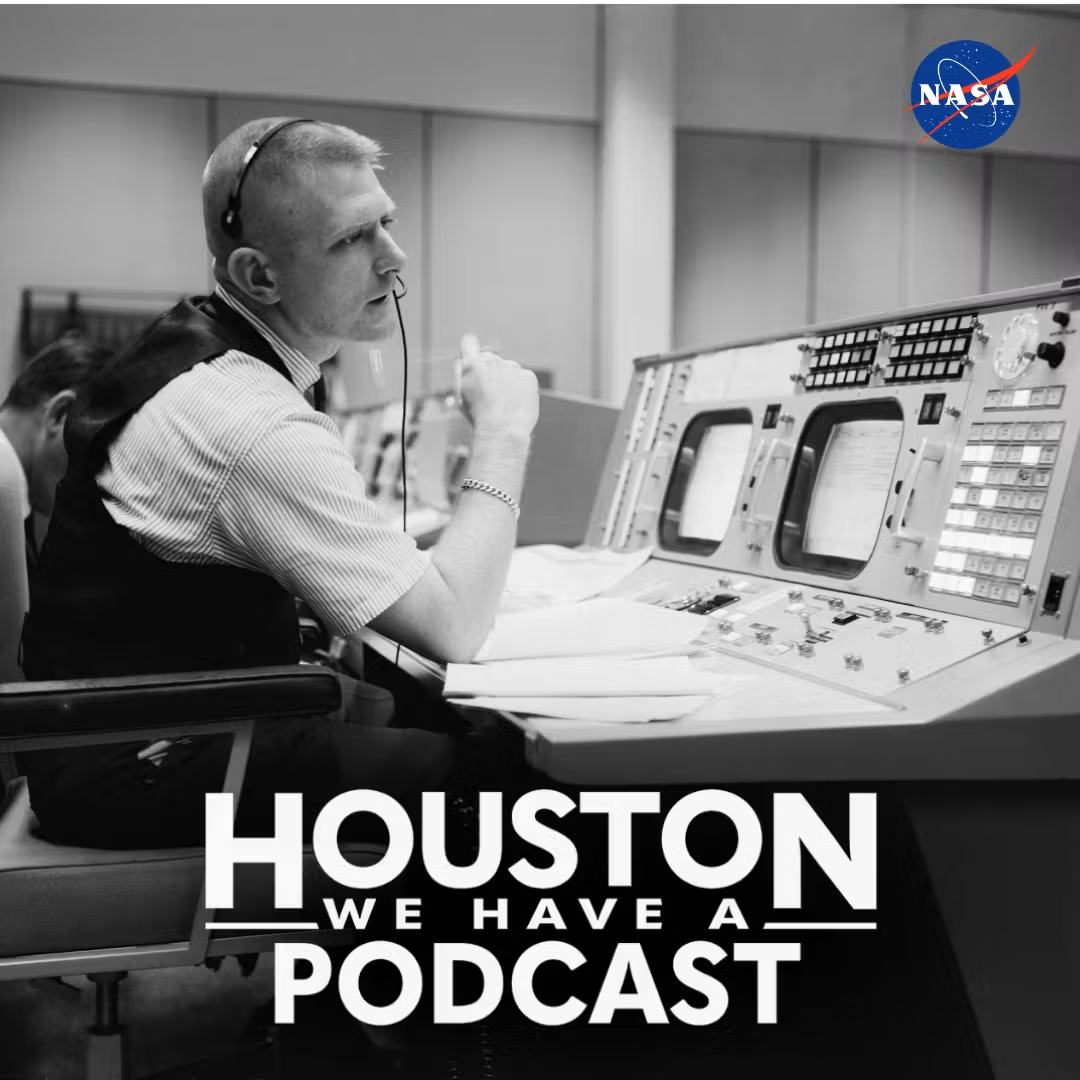
On episode 355, Gene Kranz, lead flight director for Apollo mission 13, discusses leading America to the first lunar landing, his leadership and legacy, and lessons that must be carried into NASA’s future exploration goals.
There are two sides to every coin — and sometimes our strengths become weaknesses. This hour, TED speakers explore the mixed blessings and volatile flip sides of mental health, parenting and AI. Guests include developmental psychologist Yuko Munakata, entrepreneur Andy Dunn and AI researcher Yejin Choi.
Original broadcast date: August 11, 2023
TED Radio Hour+ subscribers now get access to bonus episodes, with more ideas from TED speakers and a behind the scenes look with our producers. A Plus subscription also lets you listen to regular episodes (like this one!) without sponsors. Sign-up at plus.npr.org/ted.
See pcm.adswizz.com for information about our collection and use of personal data for sponsorship and to manage your podcast sponsorship preferences.
NPR Privacy Policy
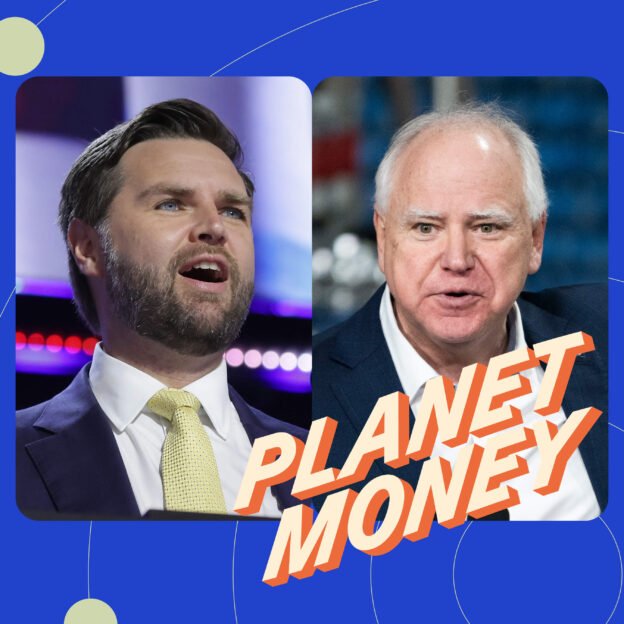
Next week, JD Vance and Tim Walz will face off in the only confirmed vice presidential debate ahead of the election. As voters look ahead to what their economic policies might be, we look back to see what they have said and done, and how it turned out.
Planet Money’s newsletter author Greg Rosalsky has spent some time combing through the economic records of Vance and Walz, and has some knowledge to share. Why does Walz support universal free school lunches, and why do some criticize him for it? Why have some called Vance a “Khan-servative?” And, how much do these candidates represent a break from the past?
This episode was hosted by Nick Fountain and Greg Rosalsky. It was produced by James Sneed and Emma Peaslee. It was edited by Meg Cramer. Sierra Juarez fact-checked it, and it was engineered by Valentina Rodríguez Sánchez. Alex Goldmark is Planet Money‘s Executive Producer.
Help support Planet Money and hear our bonus episodes by subscribing to Planet Money+ in Apple Podcasts or at plus.npr.org/planetmoney.
See pcm.adswizz.com for information about our collection and use of personal data for sponsorship and to manage your podcast sponsorship preferences.
NPR Privacy Policy
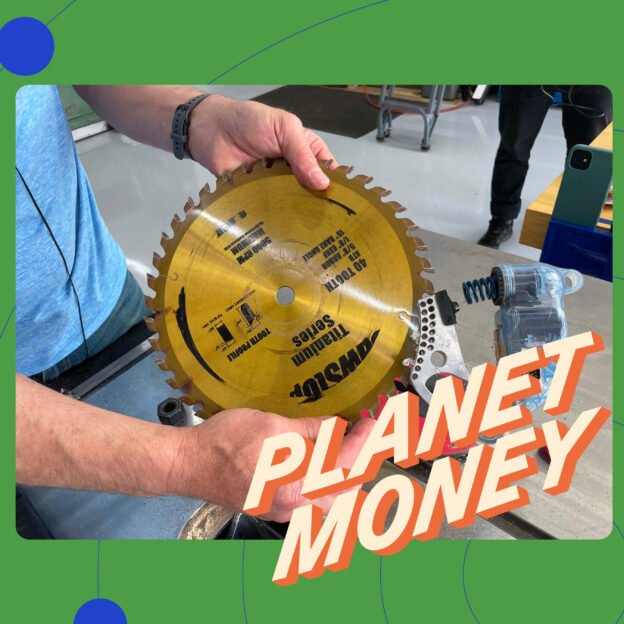
Table saws are extremely dangerous. The government estimates that injuries from table saws send something like 30,000 people to the emergency room every year. 3,000 of those end in amputations. The costs of those injuries are enormous. Are they also avoidable?
In 1999, inventor Steve Gass had a realization: Humans conduct electricity pretty well; Wood does not. Could he develop a saw that could tell the difference between the two?
Steve invented a saw that can detect a finger and stop the blade in milliseconds. Then, he tried to license it to the big tool companies. He thought it was a slam dunk proposition: It would dramatically reduce the injuries, and the cost of medical treatments and lost wages associated with them.
On today’s episode: What does it take to make table saws safer? When someone gets hurt by a power tool, there are tons of costs, tons of externalities. We all bear the cost of the injury, in some way. So, it can be in society’s best interest to minimize those costs. We follow Steve’s quest to save thousands of fingers. It brought him face-to-face with roomfuls of power tool company defense attorneys, made him the anti-hero of the woodworking world, and cost the lives of many, many hot dogs.
Help support Planet Money and hear our bonus episodes by subscribing to Planet Money+ in Apple Podcasts or at plus.npr.org/planetmoney.
See pcm.adswizz.com for information about our collection and use of personal data for sponsorship and to manage your podcast sponsorship preferences.
NPR Privacy Policy
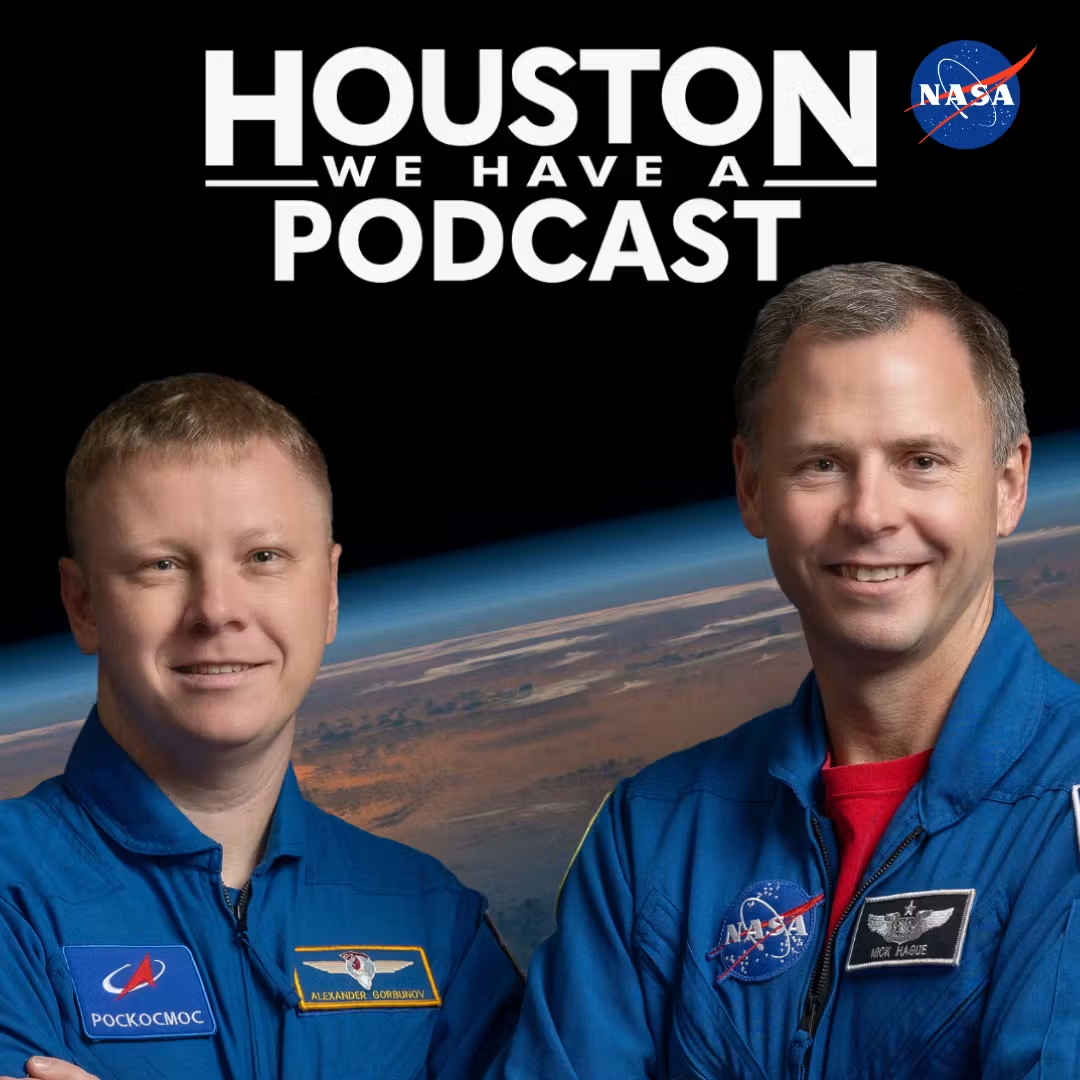
On episode 354, NASA astronaut Nick Hague and Roscosmos cosmonaut Aleksandr Gorbunov of discuss their mission, personal life, and preparation ahead of their launch to the station.
We all work in teams, from families, to companies, and everything in between. So what’s the secret to doing it better? This hour, TED speakers share surprising strategies for successful teamwork. Guests include activist Hajer Sharief, social psychologist Amy Edmondson and private equity investor Pete Stavros.
TED Radio Hour+ subscribers now get access to bonus episodes, with more ideas from TED speakers and a behind the scenes look with our producers. A Plus subscription also lets you listen to regular episodes (like this one!) without sponsors. Sign-up at: plus.npr.org/ted
See pcm.adswizz.com for information about our collection and use of personal data for sponsorship and to manage your podcast sponsorship preferences.
NPR Privacy Policy
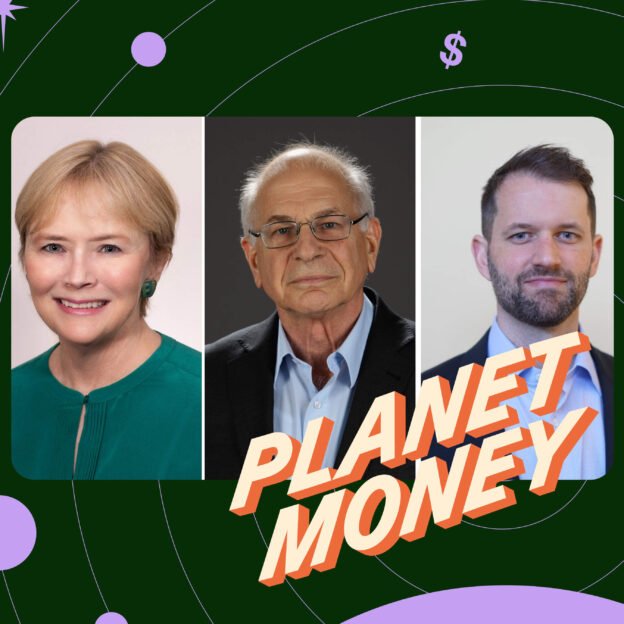
People often say that money can’t buy you happiness. Sometimes, if you ask them to tell you more about it, they’ll mention a famous 2010 study by Nobel Prize winners Daniel Kahneman and Angus Deaton. That study found that higher household income correlates with greater emotional well-being, but only up to around $75,000 a year. After that, more money didn’t seem to matter.
This was a famous study by two famous academics. The result stood for over a decade. And it feels good, right? Maybe the rich aren’t so much happier than anyone else. But researchers have recently done a complete 180 on this idea. In 2021, psychologist Matt Killingsworth found nearly the opposite: That more money does correlate with more happiness. And that the relationship continues well beyond $75,000 per year.
Today on the show: Does more money mean fewer problems? Two researchers with totally different takes come together to hammer out a better understanding of the relationship between money and happiness.
This episode was hosted by Sally Helm and Nick Fountain. It was produced by Sean Saldana, Sam Yellowhorse Kesler, and Emma Peaslee. It was edited by Meg Cramer and fact-checked by Sierra Juarez. Engineering by Cena Loffredo. Alex Goldmark is Planet Money’s executive producer.
Help support Planet Money and hear our bonus episodes by subscribing to Planet Money+ in Apple Podcasts or at plus.npr.org/planetmoney.
See pcm.adswizz.com for information about our collection and use of personal data for sponsorship and to manage your podcast sponsorship preferences.
NPR Privacy Policy
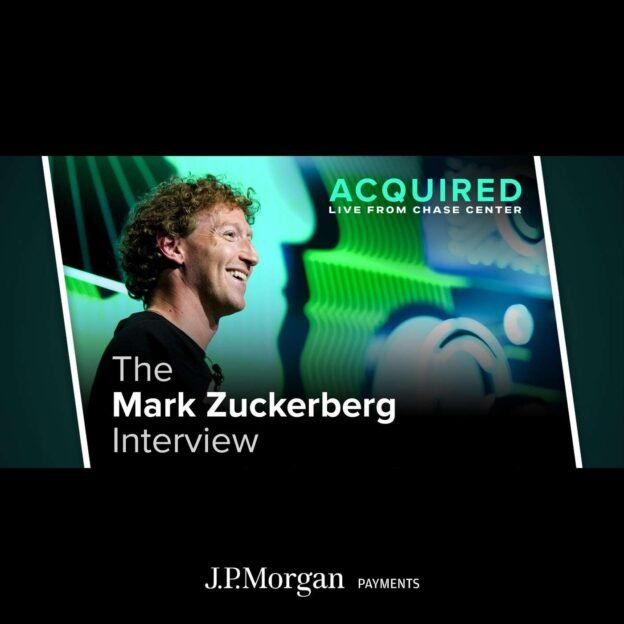
Mark is the iconic founder CEO of our time. At Chase Center on September 10, 2024, he did an unprecedented thing: a live conversation in front of 6,000 people on Meta’s company strategy, sharing stories from early Facebook history, and his thoughts on the future of AI, VR, and AR. Mark was remarkably candid in our discussion, and gave us a window into his real and intense daily demeanor leading Meta. (And his other life endeavors!)
We can’t wait to release the complete video of the whole night, including our surprise conversations with Daniel Ek, Emily Chang, and cameo appearances from Jensen Huang and Mike Taylor (the incredible singer of “Who Got the Truth?”). That’s coming in a couple weeks, but for now: enjoy this conversation with Mark Zuckerberg.
Sponsors:
Links:
More Acquired!
© Copyright 2015-2026 ACQ, LLC
Photo Credit: Mark Zuckerberg by Jeff Sainlar / Meta
© Copyright 2024 ACQ, LLC
Note: Acquired hosts and guests may hold assets discussed in this episode. This podcast is not investment advice, and is intended for informational and entertainment purposes only. You should do your own research and make your own independent decisions when considering any financial transactions.
Today we have a guest episode from 99 Percent Invisible.
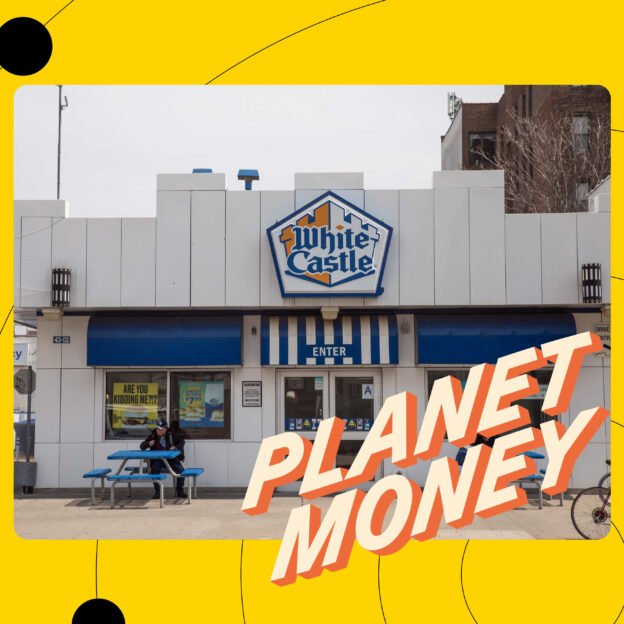
It is about White Castle, the burger chain. Even if you haven’t visited, you have tasted its influence because, as we will learn in this episode, White Castle is really the proto-burger chain.
Our friends at the excellent podcast 99 Percent Invisible bring us the origin story of White Castle and trace its influence on the business of fast food, and on American eating habits. The story is about one man who had an idea for a world where you could get a slider anywhere in the country and get the same tasty, onion-y quality each time. Think of this as a forebear of the modern global economy of sameness.
This episode is hosted by Roman Mars and reported by Mackenzie Martin. It was produced by Jeyca Maldonado-Medina, and edited by Joe Rosenberg. Mix and sound design by Martín Gonzalez. Music by Swan Real with additional music by Jenny Conlee, Nate Query, and John Neufeld. Fact-checking by Graham Hacia. Kathy Tu is 99 Percent Invisible‘s executive producer. Kurt Kohlstedt is their digital director, and Delaney Hall is their senior editor.
See pcm.adswizz.com for information about our collection and use of personal data for sponsorship and to manage your podcast sponsorship preferences.
NPR Privacy Policy