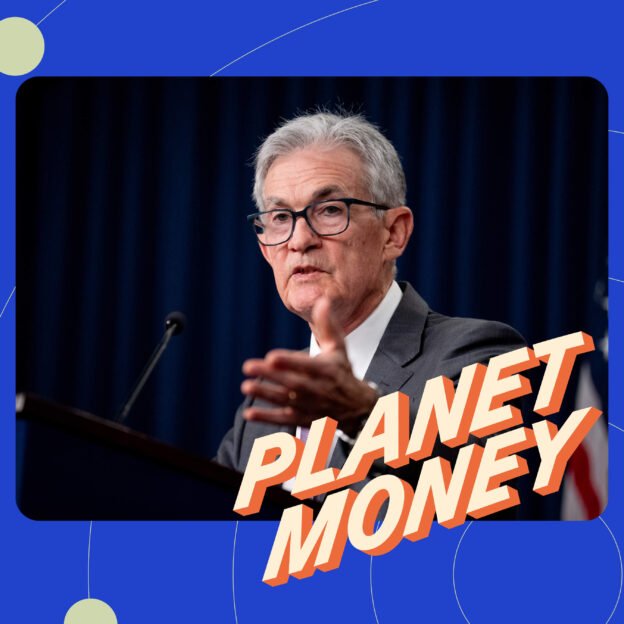
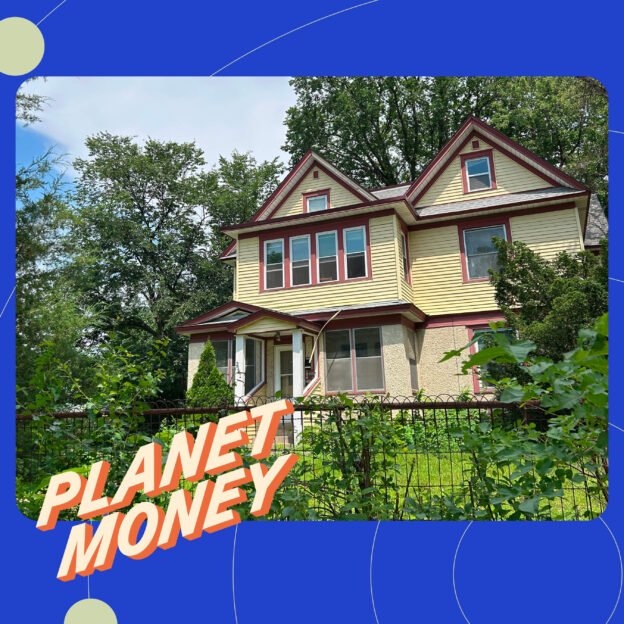
The Federal Reserve raised interest rates to get inflation under control. One side effect is that taking out a mortgage to buy a home has gotten very expensive. That’s especially a problem for some homeowners who managed to get a lower mortgage rate years ago. They have a sort of… champagne problem. Or, “golden handcuffs” as it’s called.
These homeowners may find they are “locked in” to their current home. In order to move to a new home, they have to take out a new mortgage at a much higher rate. It is one of the many problems plaguing the housing market right now.
The Fed is expected to start cutting rates next week. Will the golden handcuff mess finally start to unlock? And what does it mean for people looking to buy their first home?
On today’s episode: We go deep into the golden handcuff problem and why it matters for everyone (including non-homeowners). We have FOMO about a big economic symposium in Jackson Hole, Wyoming. And we contemplate how to pronounce one of the most important interest rates in the economy: The IORB.
This episode was hosted by Kenny Malone and Alexi Horowitz-Ghazi. It was produced by Sean Saldana. It was edited by Jess Jiang and fact-checked by Sierra Juarez. Engineering by Cena Loffredo. Alex Goldmark is Planet Money‘s executive producer.
Help support Planet Money and hear our bonus episodes by subscribing to Planet Money+ in Apple Podcasts or at plus.npr.org/planetmoney.
See pcm.adswizz.com for information about our collection and use of personal data for sponsorship and to manage your podcast sponsorship preferences.
NPR Privacy Policy
On episode 353, the Artemis II crew’s chief training officer discusses her career at NASA, the complexity of astronaut training, and what it takes to prepare the quartet for their mission around the Moon.
We encounter friction every day — in all its forms — as we brush our teeth, go for a jog, argue with a friend. This hour, TED speakers explore how this force can be dialed up or down to improve our lives. Guests include tribologist Jennifer Vail, democracy activist and whistleblower Yaël Eisenstat, Sierra Leone’s Minister of Education David Moinina Sengeh and TV producer Elan Gale. Original broadcast date: October 7, 2022.
TED Radio Hour+ subscribers now get access to bonus episodes, with more ideas from TED speakers and a behind the scenes look with our producers. A Plus subscription also lets you listen to regular episodes (like this one!) without sponsors. Sign-up at: plus.npr.org/ted
See pcm.adswizz.com for information about our collection and use of personal data for sponsorship and to manage your podcast sponsorship preferences.
NPR Privacy Policy
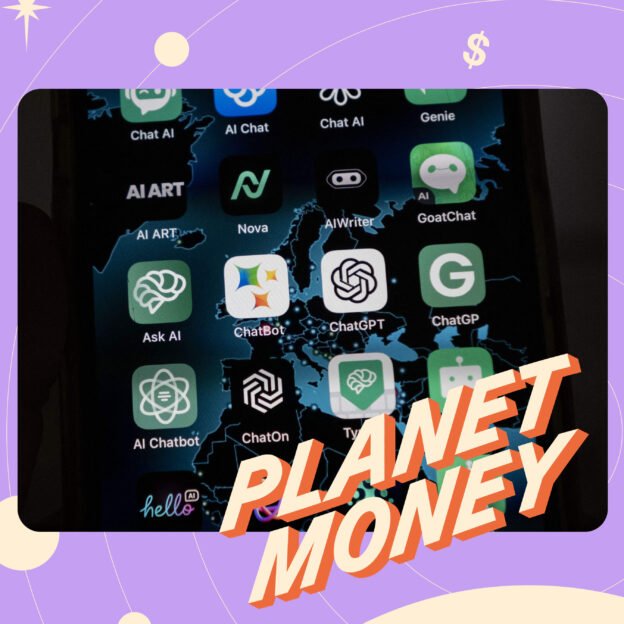
Are the promises made by AI boosters all hype, or are we actually under-appreciating the transformative potential of AI?
Can artificial intelligence make humans more productive, unlock hidden potential and remake work as we know it? Or, should it not even be called intelligence at all, artificial or otherwise.
On today’s episode, we take sides. Two reporters flip a coin to see who argues which point: is AI overrated or underrated? They bring research, real world examples, expert opinions and warm blooded human insight. You decide who makes the best case.
If you’re interested in learning more, check out Greg’s article 10 reasons why AI is overrated. It includes all sorts of reporting we couldn’t fit into the episode. And while you’re there, subscribe to the Planet Money newsletter.
Today’s episode was hosted by Darian Woods and Greg Rosalsky. These episodes of the Indicator were originally produced by Corey Bridges and they were edited by Paddy Hirsch. They were engineered by Valentina Rodríguez Sánchez and Neal Rauch and they were fact checked by Sierra Juarez. Kate Concannan is the Indicator‘s editor.
Help support Planet Money and hear our bonus episodes by subscribing to Planet Money+ in Apple Podcasts or at plus.npr.org/planetmoney.
See pcm.adswizz.com for information about our collection and use of personal data for sponsorship and to manage your podcast sponsorship preferences.
NPR Privacy Policy
On episode 352, a Gateway manager and a CSA astronaut discuss how commercial cargo missions and robotic systems will be vital for sustaining the future lunar space station.
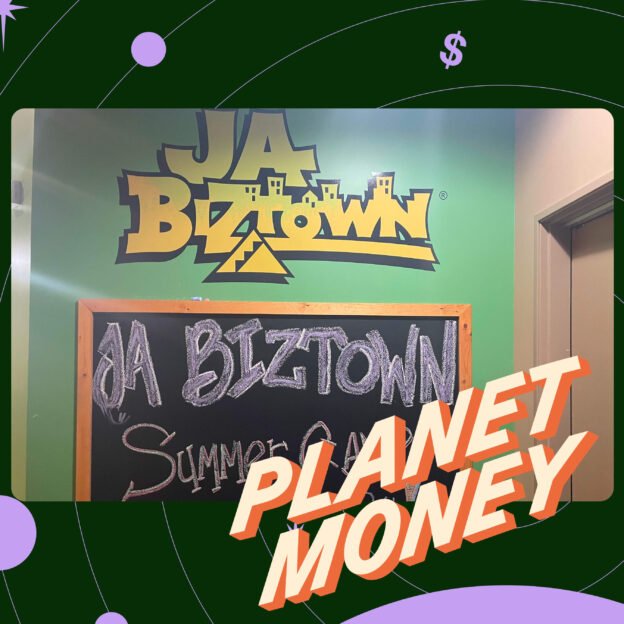
Summer camp is a classic rite of passage in the U.S. It’s a place of self-discovery, where kids come to make new friends and take on new challenges. But what if it were ALSO a place where children came to learn how to survive in a free market economy?
That’s part of the idea behind a summer camp at JA BizTown, in Portland, Oregon. Kids at the camp run tiny fake businesses in a tiny fake town. There are retail stores and restaurants, insurance companies and power utilities. As camp begins, a gaggle of child CEOs take out business loans from their peers in the tiny fake banking industry – and they spend the day racing to run their businesses profitably enough to get out of debt before pickup time.
On today’s show, Planet Money takes a romp through capitalism summer camp. Will the children of BizTown be able to make ends meet and pay back their loans to the banks? Or will a string of defaults send this dollhouse economy into financial collapse? It’s Shark Tank meets Lord of the Flies.
This episode was hosted by Alexi Horowitz-Ghazi and Sally Helm. It was produced by James Sneed, and edited by Jess Jiang. It was fact-checked by Sierra Juarez and engineered by Gilly Moon. Planet Money‘s executive producer is Alex Goldmark.
Help support Planet Money and hear our bonus episodes by subscribing to Planet Money+ in Apple Podcasts or at plus.npr.org/planetmoney.
See pcm.adswizz.com for information about our collection and use of personal data for sponsorship and to manage your podcast sponsorship preferences.
NPR Privacy Policy
Whether you love or hate fashion, we all have to get dressed in the morning. And the industry affects us in complex ways. This hour, the outrageous, environmental, and seedy sides of fashion. Guests include designer Machine Dazzle, supply chain expert Aparna Mehta, journalist Amanda Mull and supermodel Cameron Russell.
TED Radio Hour+ subscribers now get access to bonus episodes, with more ideas from TED speakers and a behind the scenes look with our producers. A Plus subscription also lets you listen to regular episodes (like this one!) without sponsors. Sign-up at: plus.npr.org/ted
See pcm.adswizz.com for information about our collection and use of personal data for sponsorship and to manage your podcast sponsorship preferences.
NPR Privacy Policy
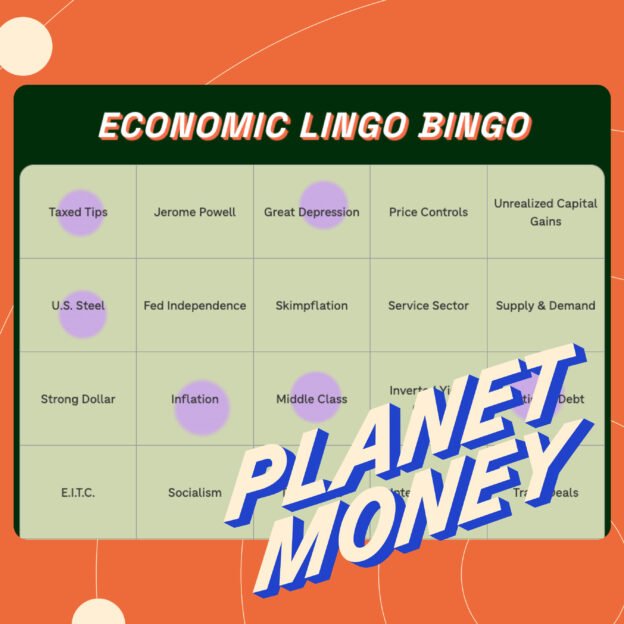
Campaigns can be a jargony slog. And this year, we are seeing a lot of economic terms being thrown around, many of which… aren’t entirely straightforward.
In this episode, we try to make the mess of words that accompany a presidential campaign into something a little less exhausting: A game of bingo.
Follow along as we dig into five terms that we expect to hear in the upcoming presidential debate, along with some others we hope to hear.
You can play along, too, at npr.org/bingo. Play online or print cards to play with friends on debate night!
This episode was hosted by Nick Fountain and Erika Beras. It was produced by Sam Yellowhorse Kesler with help from Emma Peaslee. It was edited by Meg Cramer. It was fact-checked by Sierra Juarez and engineered by Cena Loffredo. Alex Goldmark is our executive producer.
Help support Planet Money and hear our bonus episodes by subscribing to Planet Money+ in Apple Podcasts or at plus.npr.org/planetmoney.
See pcm.adswizz.com for information about our collection and use of personal data for sponsorship and to manage your podcast sponsorship preferences.
NPR Privacy Policy
When Cody Fischer decided to get into real estate development, he had a vision. He wanted to build affordable, energy efficient apartments in Minneapolis, not far from where he grew up.
His vision was well-timed because, in 2019, Minneapolis’s city council passed one of the most ambitious housing plans in the nation. One aim of that plan was to alleviate the city’s housing shortage by encouraging developers like Cody to build, build, build.
But when Cody tried to build, he ran into problems. The kinds of problems that arise all over the country when cities confront a short supply of housing, and try to build their way out.
Today on the show, NIMBYism, YIMBYism and why it’s so hard to fix the housing shortage. Told through the story of two apartment buildings in Minneapolis.
This episode was hosted by Amanda Aronczyk and Kenny Malone. It was produced by Emma Peaslee and Sofia Shchukina, and edited by Molly Messick. It was engineered by James Willets and fact-checked by Sierra Juarez. Alex Goldmark is Planet Money’s executive producer.
Help support Planet Money and hear our bonus episodes by subscribing to Planet Money+ in Apple Podcasts or at plus.npr.org/planetmoney.
See pcm.adswizz.com for information about our collection and use of personal data for sponsorship and to manage your podcast sponsorship preferences.
NPR Privacy Policy
Sometimes, the only way to make an impact is to be loud. This hour, three female performers talk about the rewards — and consequences — that come from speaking out and making people feel uncomfortable. Guests include comedian Lilly Singh, Pussy Riot co-founder Nadya Tolokonnikova and actor, playwright and director Sarah Jones.
Original Broadcast Date: October 20, 2023.
TED Radio Hour+ subscribers now get access to bonus episodes, with more ideas from TED speakers and a behind the scenes look with our producers. A Plus subscription also lets you listen to regular episodes (like this one!) without sponsors. Sign-up at plus.npr.org/ted.
See pcm.adswizz.com for information about our collection and use of personal data for sponsorship and to manage your podcast sponsorship preferences.
NPR Privacy Policy