NASA nutrition scientists discuss how a daily B vitamin supplement might prevent vision changes in astronauts during long-duration space missions. HWHAP Episode 351.
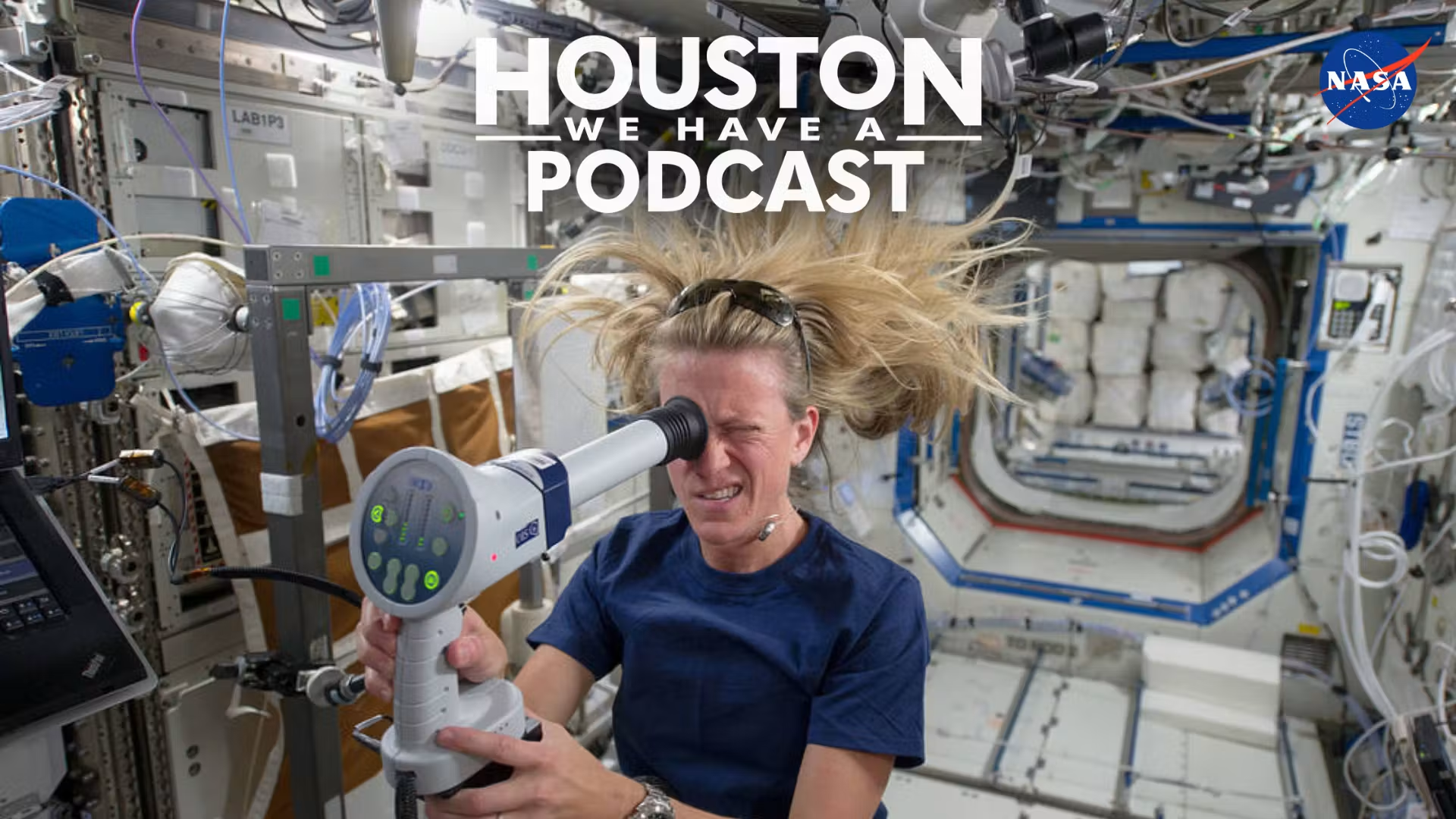
NASA nutrition scientists discuss how a daily B vitamin supplement might prevent vision changes in astronauts during long-duration space missions. HWHAP Episode 351.
Take the 2024 Planet Money Summer School Quiz here to earn your personalized diploma!
Find all the episodes from this season of Summer School here. And past seasons here. And follow along on TikTok here for video Summer School.
We are assembled here on the lawn of Planet Money University for the greatest graduation in history – because it features the greatest economic minds in history. We’ll hear from Adam Smith, Karl Marx, John Maynard Keynes, and some surprising guests as they teach us a little bit more economics, and offer a lot of life advice.
But first, we have to wrap up our (somewhat) complete economic history of the world. We’ll catch up on the last fifty years or so of human achievement and ask ourselves, has economics made life better for us all?
This series is hosted by Robert Smith and produced by Audrey Dilling. Our project manager is Devin Mellor. This episode was edited by Planet Money Executive Producer Alex Goldmark and fact-checked by Sofia Shchukina.
Help support Planet Money and hear our bonus episodes by subscribing to Planet Money+ in Apple Podcasts or at plus.npr.org/planetmoney.
See pcm.adswizz.com for information about our collection and use of personal data for sponsorship and to manage your podcast sponsorship preferences.
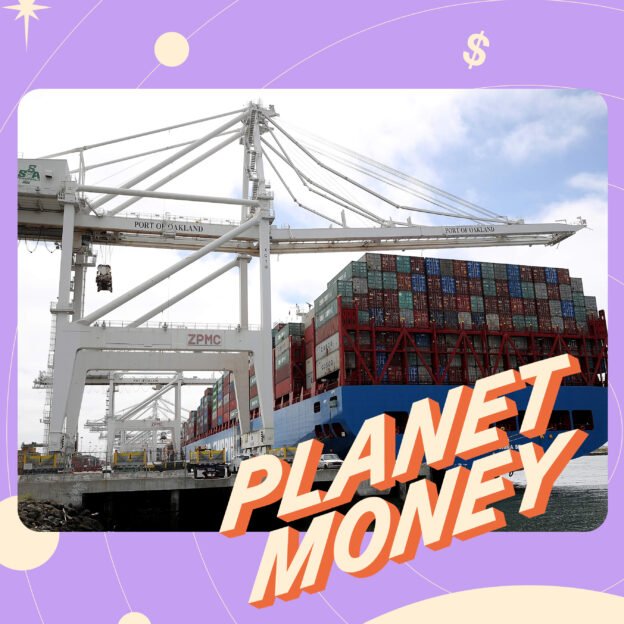
When David Rashid took over US autoparts maker Plews and Edelmann, the company was losing business to its Chinese rival, Qingdao Sunsong. Both companies make power steering hoses, but Sunsong was offering its hoses to retailers at a much lower price.
Then, in 2018, the Trump administration threw companies like Rashid’s a lifeline, by announcing tariffs on a range of Chinese goods, including some autoparts. Rashid thought the tariffs would finally force Sunsong to raise its prices, but, somehow, the company never did.
It was a mystery. And it led Rashid to take on a new role – amateur trade fraud investigator. How could his competitor, Sunsong, absorb that 25% tax without changing its prices? And why had all of Sunsong’s steering hoses stopped coming from China and started coming from Thailand?
On today’s episode, the wide gulf between how tariffs work in theory… and how they actually work in practice. And David Rashid’s quest to figure out what, if anything, he could do about it. It’s a quest that will involve international detectives, forensic chemists, and a friendship founded on a shared love for hummus.
This episode was hosted by Keith Romer and Jeff Guo. It was produced by Emma Peaslee and edited by Molly Messick. It was fact-checked by Sierra Juarez and engineered by Ko Takasugi-Czernowin. Alex Goldmark is our executive producer.
Help support Planet Money and hear our bonus episodes by subscribing to Planet Money+ in Apple Podcasts or at plus.npr.org/planetmoney.
See pcm.adswizz.com for information about our collection and use of personal data for sponsorship and to manage your podcast sponsorship preferences.

It’s never too late to make things right—even when cracks form within our relationships with our families, our environment…or the inevitable. This hour, TED speakers offer healing solutions. Guests include clinical psychologist Becky Kennedy, death doula Alua Arthur and indigenous community leader and conservationist Valérie Courtois. Original broadcast date: October 6, 2023
TED Radio Hour+ subscribers now get access to bonus episodes, with more ideas from TED speakers and a behind the scenes look with our producers. A Plus subscription also lets you listen to regular episodes (like this one!) without sponsors. Sign-up at: plus.npr.org/ted
See pcm.adswizz.com for information about our collection and use of personal data for sponsorship and to manage your podcast sponsorship preferences.
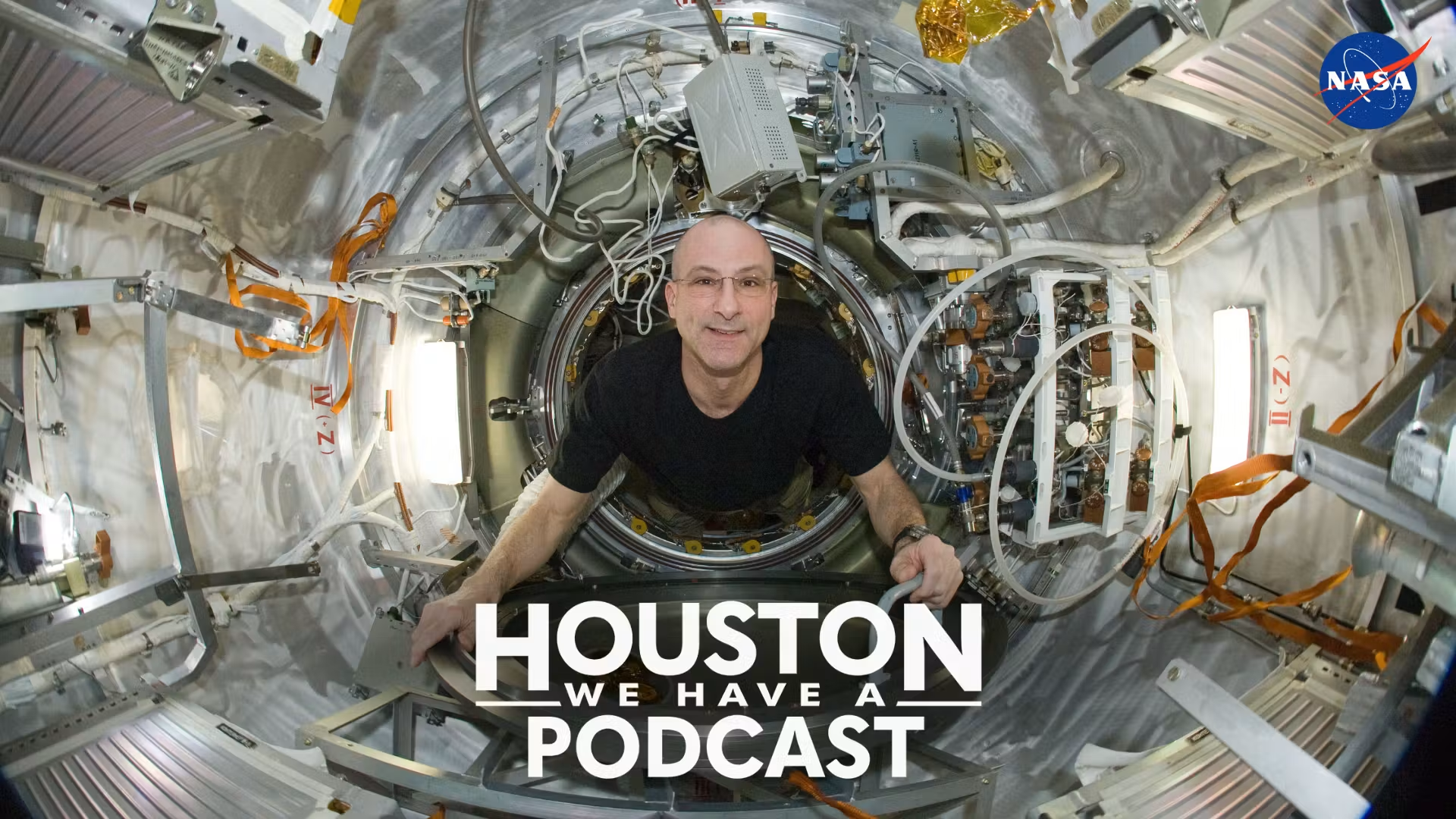
NASA astronaut Don Pettit discusses his life and career ahead of his fourth flight to the International Space Station. HWHAP Episode 350.
Find all the episodes from this season here. And past seasons here. And follow along on TikTok here for video Summer School.
When we last left the United States of America in our economic telling of history, it was the early 1900s and the country’s leaders were starting to feel like they had the economic situation all figured out. Flash forward a decade or so, and the financial picture was still looking pretty good as America emerged from the first World War.
But then, everything came crashing down with the stock market collapse of 1929. Businesses closed, banks collapsed, one in four people was unemployed, families couldn’t make rent, the economy was broken. And this was happening all over the world. Today we’ll look at how leaders around the globe intervened to turn the international economy around, and in the process, how the Great Depression rapidly transformed the relationship between government and business forever.
This series is hosted by Robert Smith and produced by Audrey Dilling. Our project manager is Devin Mellor. This episode was edited by Planet Money Executive Producer Alex Goldmark and fact-checked by Sofia Shchukina.
Help support Planet Money and hear our bonus episodes by subscribing to Planet Money+ in Apple Podcasts or at plus.npr.org/planetmoney.
Always free at these links: Apple Podcasts, Spotify, the NPR app or anywhere you get podcasts.
Find more Planet Money: Facebook / Instagram / TikTok / Our weekly Newsletter.
See pcm.adswizz.com for information about our collection and use of personal data for sponsorship and to manage your podcast sponsorship preferences.
You might have seen ads for online banking services that seem to offer a lot of great stuff — accounts you can open in minutes and without a minimum balance or monthly fees. The ads seem to say: “These aren’t your parents’ boring old banks.” But the truth is: Even though they might resemble banks, they aren’t.
These “bank-like” companies are a type of “fintech” or financial technology company. And this is a story about the potential risks of putting your money into these apps.
Banks go through a whole regulatory gauntlet in order to exist. But, in the past several years, there has been a rise in fintechs that skirt regulations. And many of these pose a real threat to even the most savvy of depositors.
When a little known tech company filed for bankruptcy a few months ago, thousands of people couldn’t access the millions of dollars they saved. On today’s show, we meet some of the people affected and learn what the fintech industry reveals about banking regulation.
Today’s show was hosted by Erika Beras and Sally Helm. It was produced by Sam Yellowhorse Kesler and Sofia Shchukina with help from James Sneed. It was edited by Jess Jiang and fact-checked by Kevin Volkl. It was engineered by Valentina Rodríguez Sánchez with help from James Willetts. Alex Goldmark is our executive producer.
Help support Planet Money and hear our bonus episodes by subscribing to Planet Money+ in Apple Podcasts or at plus.npr.org/planetmoney.
See pcm.adswizz.com for information about our collection and use of personal data for sponsorship and to manage your podcast sponsorship preferences.
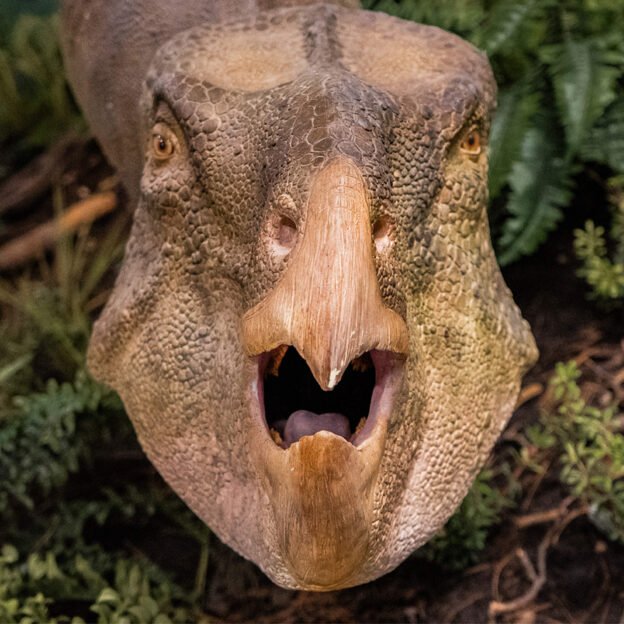
What happened in the days, even hours, after an asteroid set off the fifth extinction? A New Jersey quarry, and site of a new museum founded by paleontologist Ken Lacovara, sheds light on the mystery.
Correction: An earlier version of this story incorrectly stated that Mantua Township, NJ helped to raise money for the construction of the Edelman Fossil Park & Museum. Paleontologist Ken Lacovara partnered with Rowan University to fundraise.
TED Radio Hour+ subscribers now get access to bonus episodes, with more ideas from TED speakers and a behind the scenes look with our producers. A Plus subscription also lets you listen to regular episodes (like this one!) without sponsors. Sign-up at: plus.npr.org/ted
See pcm.adswizz.com for information about our collection and use of personal data for sponsorship and to manage your podcast sponsorship preferences.
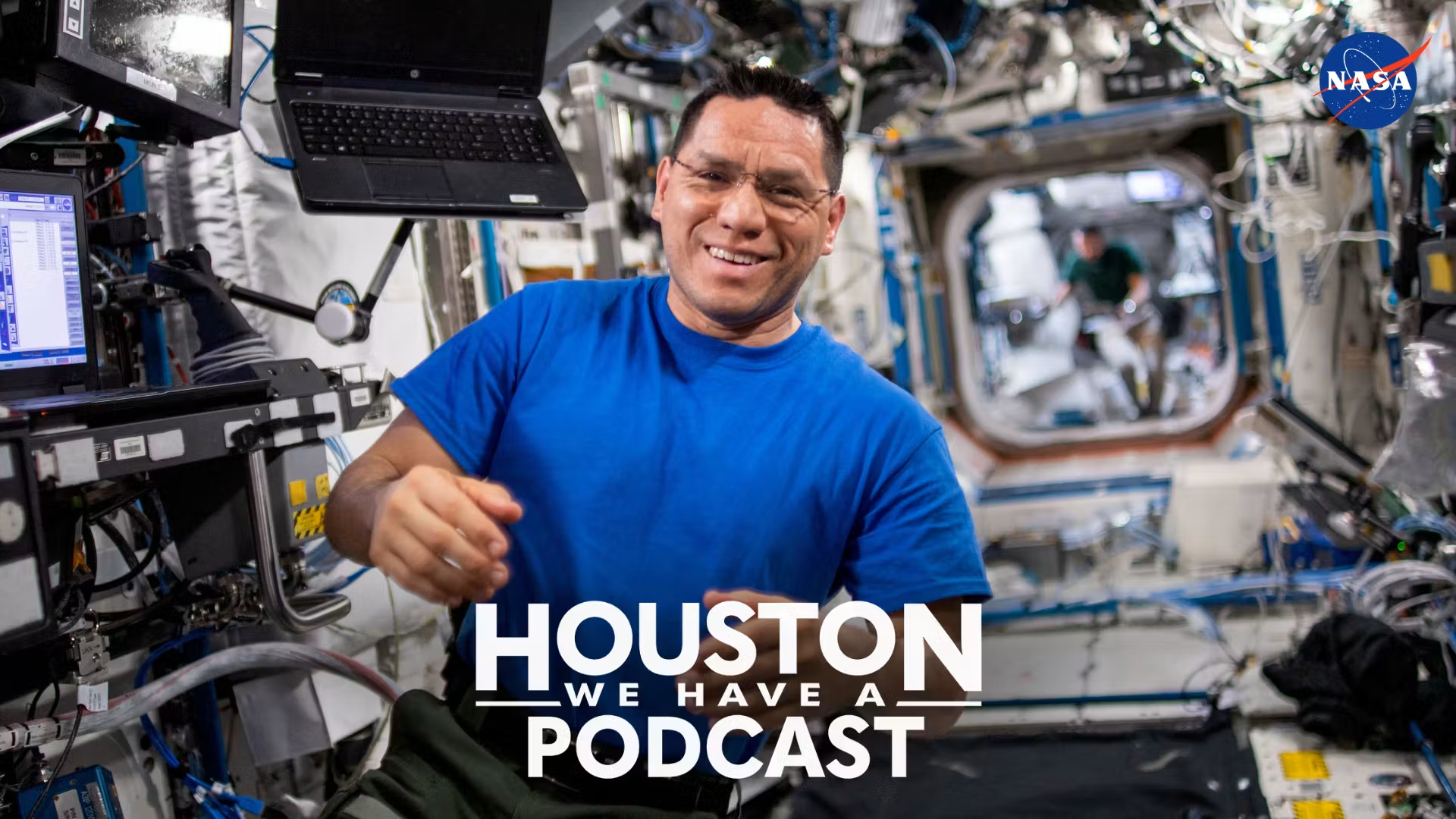
NASA astronaut Frank Rubio reflects on his record-breaking 371 days aboard the International Space Station. HWHAP Episode 349.
Episodes each Wednesday through labor day. Find all the episodes from this season here. And past seasons here. And follow along on TikTok here for video Summer School.
In the middle of the twentieth century, China and its neighbors in East Asia were poor, mostly rural economies. China had been wrecked by a brutal civil war. Taiwan became the home of people fleeing from that conflict. Japan and Korea were rebuilding after their own wars. And then in the later half of the twentieth century, they started their comeback. The governments made some explicit choices that unleashed the power of individual incentives and free market forces and lifted millions of people out of poverty. We focus specifically on China and Taiwan during this time, when they showed a burst of economic progress rarely seen on this globe. Why then? Why there? Can other nations copy that? We’ll try to find out.
This series is hosted by Robert Smith and produced by Audrey Dilling. Our project manager is Devin Mellor. This episode was edited by Planet Money Executive Producer Alex Goldmark and fact-checked by Sofia Shchukina.
Help support Planet Money and hear our bonus episodes by subscribing to Planet Money+ in Apple Podcasts or at plus.npr.org/planetmoney.
See pcm.adswizz.com for information about our collection and use of personal data for sponsorship and to manage your podcast sponsorship preferences.