Episodes each Wednesday through labor day. Find all the episodes from this season here. And past seasons here. And follow along on TikTok here for video Summer School.
Once upon a time, every business was a small business. It was run by the owner, maybe the spouse and the kids. Maybe they borrowed money from friends and relatives, but there was only so big it could get. Then came what can only be described as the big bang of economics. Over the span of a few decades, people figured out a way for businesses to sell ownership shares – otherwise known as stocks – and let people trade those shares. There was suddenly money to buy machines and expand.
Today, we head to the Netherlands around the year 1600. First, we’ll visit the bridge in Amsterdam where some of the first stock trading took place. Then we track down the Dutch water company that’s the source of the oldest “living” bond. It’s the origin of stocks and bonds and the stock market and it leads directly to many of the financial innovations that we still have today.
This series is hosted by Robert Smith and produced by Audrey Dilling. Our project manager is Devin Mellor. This episode was edited by Planet Money Executive Producer Alex Goldmark and fact-checked by Sofia Shchukina.
Help support Planet Money and hear our bonus episodes by subscribing to Planet Money+ in Apple Podcasts or at plus.npr.org/planetmoney.
See pcm.adswizz.com for information about our collection and use of personal data for sponsorship and to manage your podcast sponsorship preferences.
NPR Privacy Policy
True crime mysteries can be dark and thrilling. But what if humans can’t crack the case? What if the suspect … isn’t human? This hour, TED Radio Hour investigates crimes with a wild twist. Guests include forensic scientist Lauren Pharr Parks, author Mary Roach, dog trainer and conservationist Megan Parker, wildlife intelligence analyst Sarah Stoner. Original broadcast date: October 21, 2022.
TED Radio Hour+ subscribers now get access to bonus episodes, with more ideas from TED speakers and a behind the scenes look with our producers. A Plus subscription also lets you listen to regular episodes (like this one!) without sponsors. Sign-up at: plus.npr.org/ted.
See pcm.adswizz.com for information about our collection and use of personal data for sponsorship and to manage your podcast sponsorship preferences.
NPR Privacy Policy
The CHAPEA crew checks in on their last month inside of a simulated Mars habitat, and the principal investigator reflects on the year-long mission ahead of the crew’s egress. HWHAP Episode 346.
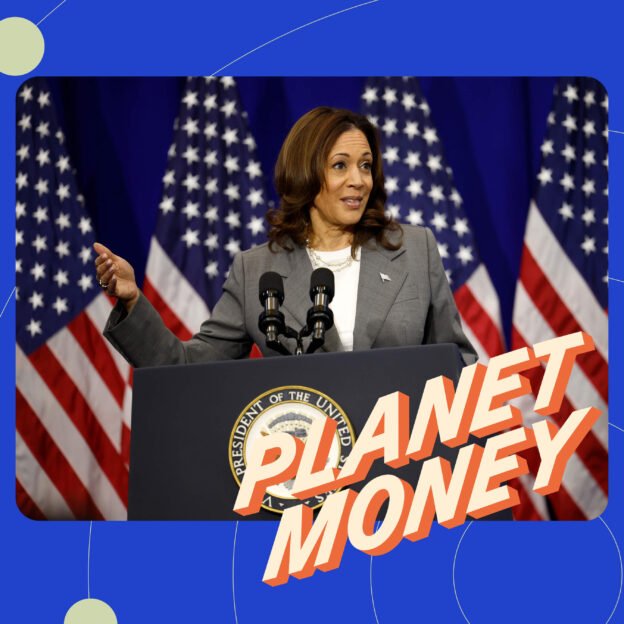
Last weekend we were all thrown for a loop when President Joe Biden dropped out of the presidential race and endorsed Kamala Harris for the nomination. Just like everyone else, we are trying to quickly wrap our heads around what it means now that Harris is almost certainly going to be the Democratic nominee for president.
We expect to see the Harris campaign come out with some official policy proposals in the coming weeks and months. But for now, all we’ve got are clues, little breadcrumbs that she has dropped throughout her career that might lead us to a rough idea of what economic policies she might support.
Today on the show, we’re going to visit three key moments from Harris’ political career that might give us an idea of how her economic agenda might look. First, the 2019 presidential primary debates, where she laid out her own economic policies. Next, a vote in her Senate years that shows where she might fall on future trade agreements. And finally, a fight with some of the country’s biggest banks from her very first year as Attorney General of California.
This episode was hosted by Keith Romer and Nick Fountain. It was produced by Emma Peaslee, edited by Jess Jiang with help from Meg Cramer, and fact checked by Sierra Juarez and Sofia Shchukina. Engineering by Kwesi Lee. Alex Goldmark is Planet Money’s executive producer.
Help support Planet Money and hear our bonus episodes by subscribing to Planet Money+ in Apple Podcasts or at plus.npr.org/planetmoney.
See pcm.adswizz.com for information about our collection and use of personal data for sponsorship and to manage your podcast sponsorship preferences.
NPR Privacy Policy
In 1999, Microsoft became the most valuable company in the world. And in 2019, Microsoft became the most valuable company in the world, again. But… what happened in the twenty years in between? The answer, as we discovered in our research, is probably not what you think.
In this episode we explore and analyze the browser wars and the DOJ case, Windows XP through 8, Surface, Xbox, search, Yahoo!, Bing, the iPhone, Nokia, mobile, social, Facebook… and oh yeah, a little thing called Azure and the enterprise — which ended up becoming so big that no failures mattered. Tune in for Microsoft, Volume II.
Sponsors:
Links:
Carve Outs:
More Acquired!
© Copyright 2015-2026 ACQ, LLC
Note: Acquired hosts and guests may hold assets discussed in this episode. This podcast is not investment advice, and is intended for informational and entertainment purposes only. You should do your own research and make your own independent decisions when considering any financial transactions.
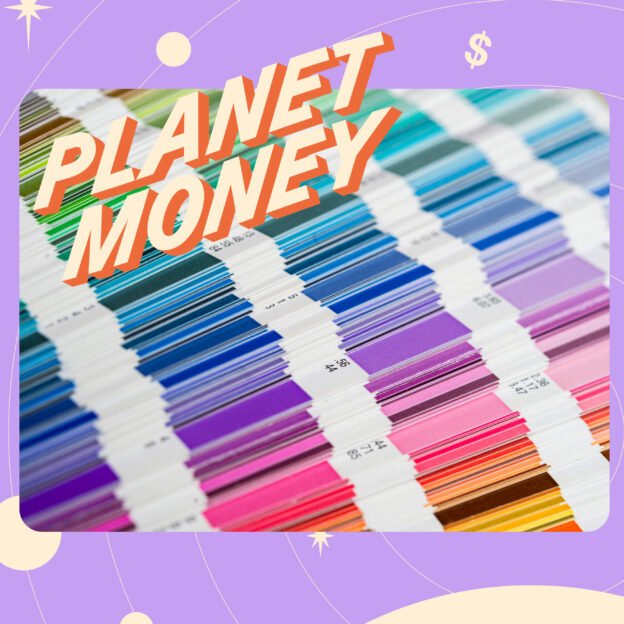
In 2022, artist Stuart Semple opened up his laptop to find that all his designs had turned black overnight. All the colors, across files on Adobe products like Photoshop and Illustrator, were gone. Who had taken the colors away? The story of what happened begins with one company, Pantone.
Pantone is known for their Color of the Year forecasts, but they actually make the bulk of their money from selling color reference guides. These guides are the standard for how designers pretty much anywhere talk about color.
On today’s show, how did Pantone come to control the language of the rainbow? We look back at the history of Pantone, beginning with the man who made Pantone into the industry standard. And, we hear from Stuart, who tried to break the color monopoly.
Share your thoughts — What color should we choose to be Planet Money’s color?
This episode was hosted by Sam Yellowhorse Kesler and Jeff Guo, and produced by Willa Rubin with help from James Sneed. It was edited by Jess Jiang and fact-checked by Sierra Juarez. Engineering by Debbie Daughtry with help from Carl Craft. Alex Goldmark is Planet Money’s executive producer.
Help support Planet Money and hear our bonus episodes by subscribing to Planet Money+ in Apple Podcasts or at plus.npr.org/planetmoney.
See pcm.adswizz.com for information about our collection and use of personal data for sponsorship and to manage your podcast sponsorship preferences.
NPR Privacy Policy
The thrill of victory; the agony of defeat. Sports cliches are everywhere. But what does it actually take to think like a winner? This hour, TED speakers explore the psychology of winning and losing. Guests include former professional soccer player Abby Wambach, cognitive scientist Sian Leah Beilock, journalist Kate Fagan and art historian Sarah Lewis.
TED Radio Hour+ subscribers now get access to bonus episodes, with more ideas from TED speakers and a behind the scenes look with our producers. A Plus subscription also lets you listen to regular episodes (like this one!) without sponsors. Sign-up at: plus.npr.org/ted
See pcm.adswizz.com for information about our collection and use of personal data for sponsorship and to manage your podcast sponsorship preferences.
NPR Privacy Policy
A NASA production coordinator discusses the design and inspiration behind “The Lost Universe”, a virtual game designed to take players to a rogue planet in order to find the missing Hubble Space Telescope. HWHAP Episode 345.
Who has the power? Workers or bosses? It changes through the ages, though it’s usually the bosses. Today, we look at two key moments when the power of labor shifted, for better and worse, and we ask why then? What does history have to say about labor power right now?
We travel to Sicily, Italy in the year 1347, where the bubonic plague is about to strike. The horror known as the Black Death will remake European society in countless ways, but we’ll focus on one silver lining: how economic conditions shifted for workers.
Then we head about 500 years into the future, to an English factory at the dawn of the Industrial Revolution, where textile workers take up arms against the machines taking their jobs and show how rapidly labor supply and demand can change. This is the famed tale of the Luddites, now a byword for knee jerk anti-technology, but the true story has nuance and a desperate but rational violent rebellion.
This series is hosted by Robert Smith and produced by Audrey Dilling. Our project manager is Devin Mellor. This episode was edited by Planet Money Executive Producer Alex Goldmark and fact-checked by Sofia Shchukina.
Help support Planet Money and hear our bonus episodes by subscribing to Planet Money+ in Apple Podcasts or at plus.npr.org/planetmoney.
See pcm.adswizz.com for information about our collection and use of personal data for sponsorship and to manage your podcast sponsorship preferences.
NPR Privacy Policy
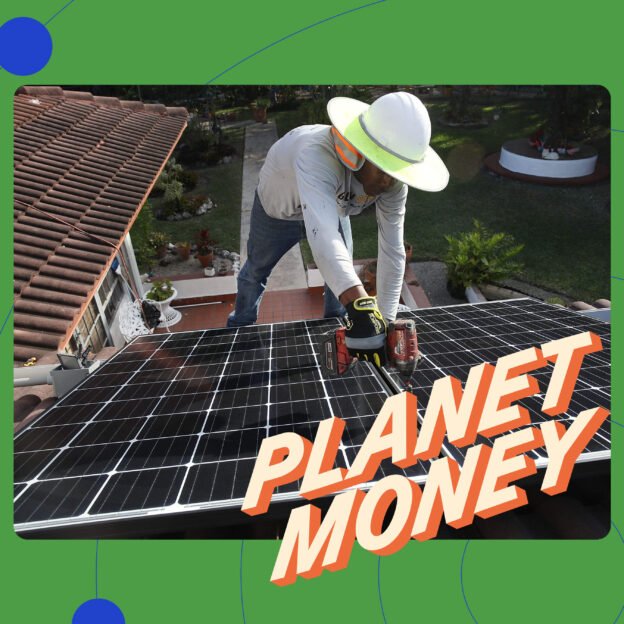
4.5 million households in the U.S. have solar panels on their homes. Most of those customers are happy with it – their electricity bills have just about disappeared, and it’s great for the planet. But thousands and thousands of people are really disappointed with what they’ve been sold. Their panels are more expensive than they should be, and they say it is hard to get someone to come fix them when they break.
It turns out this sometimes crummy customer experience is no accident. It ties back to how big, national solar companies built their businesses in the first place. To entice people to install expensive solar panels, companies developed new financing models which cut upfront costs for customers. And they deployed lots and lots of salespeople to grow their businesses. But in the drive to get more households installing solar panels, consumer costs went up and the focus seemed to shift away from making sure those panels actually worked. All of this left some consumers feeling like they’ve been sold a lie.
On today’s episode, we look into how the residential solar business model has turned some people sour on solar. And we’ll try to figure out where the industry could go from here.
Help support Planet Money and hear our bonus episodes by subscribing to Planet Money+ in Apple Podcasts or at plus.npr.org/planetmoney.
See pcm.adswizz.com for information about our collection and use of personal data for sponsorship and to manage your podcast sponsorship preferences.
NPR Privacy Policy