The CHAPEA crew checks in on their eleventh month in a Mars simulated habitat, and a NASA expert discusses the measures taken to ensure that the year long mission has been conducted safely and ethically. HWHAP Episode 342.
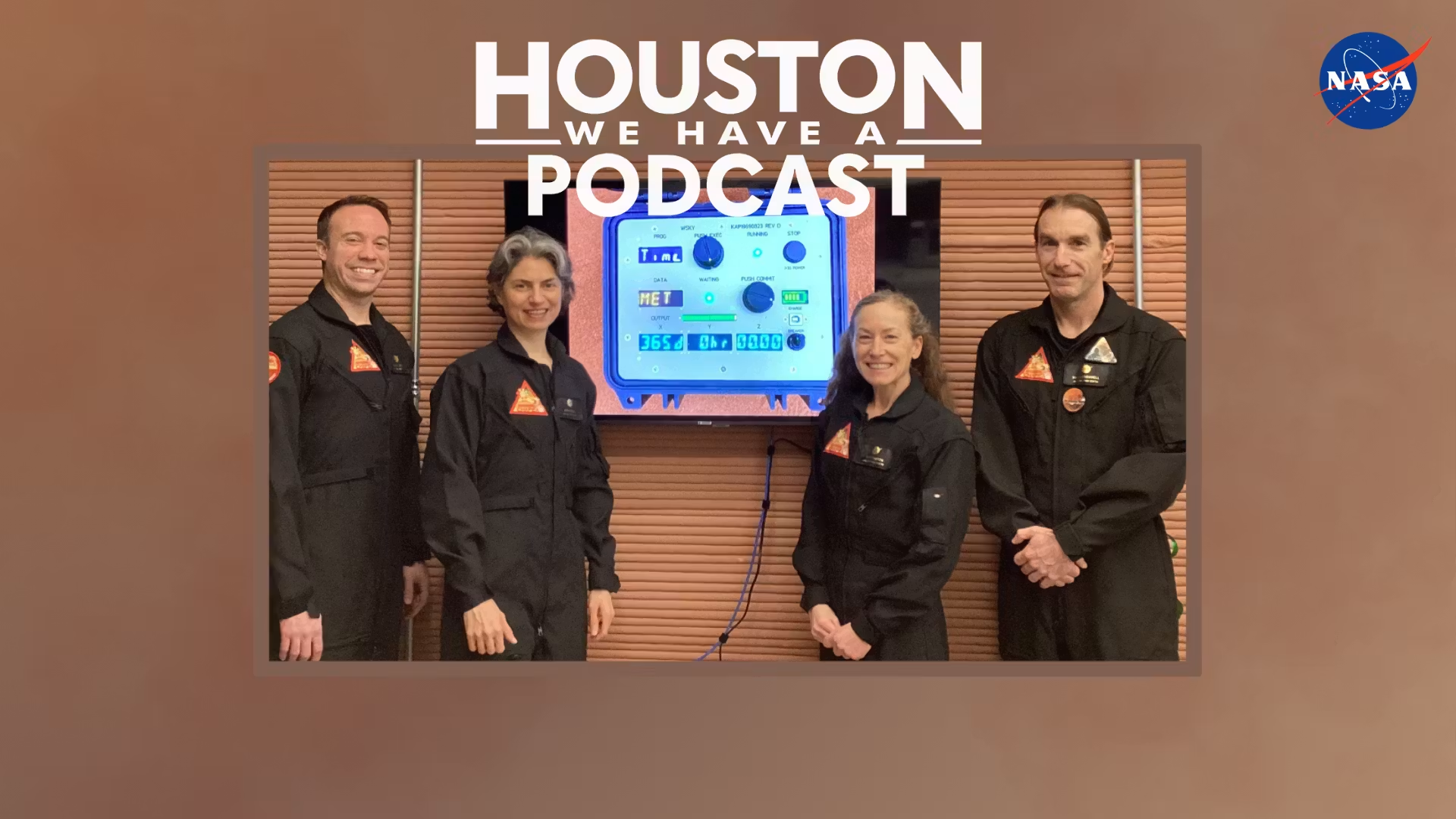
The CHAPEA crew checks in on their eleventh month in a Mars simulated habitat, and a NASA expert discusses the measures taken to ensure that the year long mission has been conducted safely and ethically. HWHAP Episode 342.
(Note: A version of this episode originally ran in 2019.)
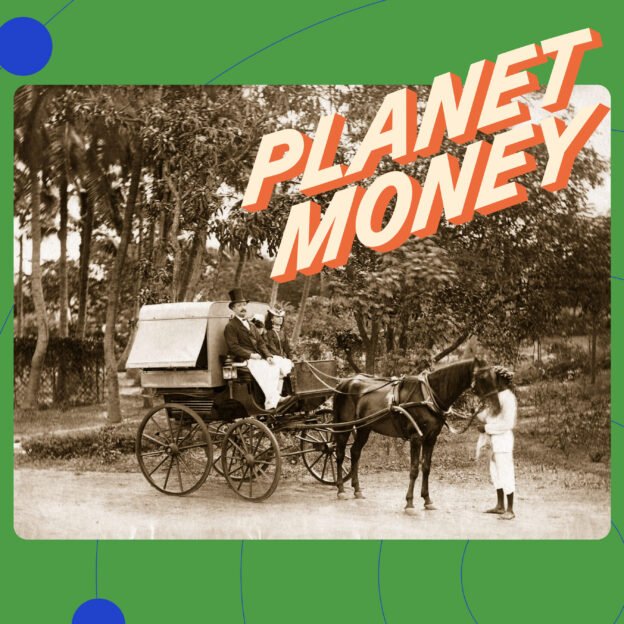
In 1794, George Washington decided to raise money for the federal government by taxing the rich. He did it by putting a tax on horse-drawn carriages.
The carriage tax could be considered the first federal wealth tax of the United States. It led to a huge fight over the power to tax in the U.S. Constitution, a fight that continues today.
Listen back to our 2019 episode: “Could A Wealth Tax Work?”
Listen to The Indicator’s 2023 episode: “Could SCOTUS outlaw wealth taxes?”
This episode was hosted by Greg Rosalsky and Bryant Urstadt. It was originally produced by Nick Fountain and Liza Yeager, with help from Sarah Gonzalez. Today’s update was produced by Willa Rubin and edited by Molly Messick and our executive producer, Alex Goldmark.
Help support Planet Money and hear our bonus episodes by subscribing to Planet Money+ in Apple Podcasts or at plus.npr.org/planetmoney.
See pcm.adswizz.com for information about our collection and use of personal data for sponsorship and to manage your podcast sponsorship preferences.
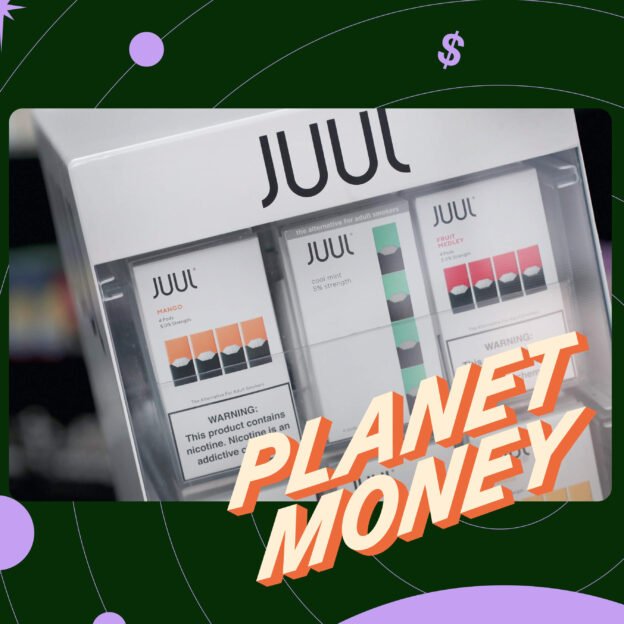
When the vape brand Juul first hit the market back in 2015, e-cigarettes were in a kind of regulatory limbo. At the time, the rules that governed tobacco cigarettes did not explicitly apply to e-cigarettes. Then Juul blew up, fueled a public health crisis over teen vaping, and inspired a regulatory crackdown. But when the government finally stepped in to solve the problem of youth vaping, it may have actually made things worse.
Today’s episode is a collaboration with the new podcast series “Backfired: the Vaping Wars.” You can listen to the full series at audible.com/Backfired.
This episode was hosted by Alexi Horowitz-Ghazi and Leon Neyfakh. It was produced by Emma Peaslee and edited by Jess Jiang with help from Annie Brown. It was fact checked by Sofia Shchukina and engineered by Cena Loffredo. Alex Goldmark is Planet Money‘s executive producer.
Help support Planet Money and hear our bonus episodes by subscribing to Planet Money+ in Apple Podcasts or at plus.npr.org/planetmoney.
See pcm.adswizz.com for information about our collection and use of personal data for sponsorship and to manage your podcast sponsorship preferences.

Boomers, Gen X, Millennials, Gen Z seem to be more divided than ever. But why are tensions running high now? This hour, TED speakers explore new reasons for this generation gap—and how to bridge it. Guests include professor and author Scott Galloway, social entrepreneur Louise Mabulo, advocate Derenda Schubert and writer Anne Helen Petersen.
TED Radio Hour+ subscribers now get access to bonus episodes, with more ideas from TED speakers and a behind the scenes look with our producers. A Plus subscription also lets you listen to regular episodes (like this one!) without sponsors. Sign-up at plus.npr.org/ted
See pcm.adswizz.com for information about our collection and use of personal data for sponsorship and to manage your podcast sponsorship preferences.
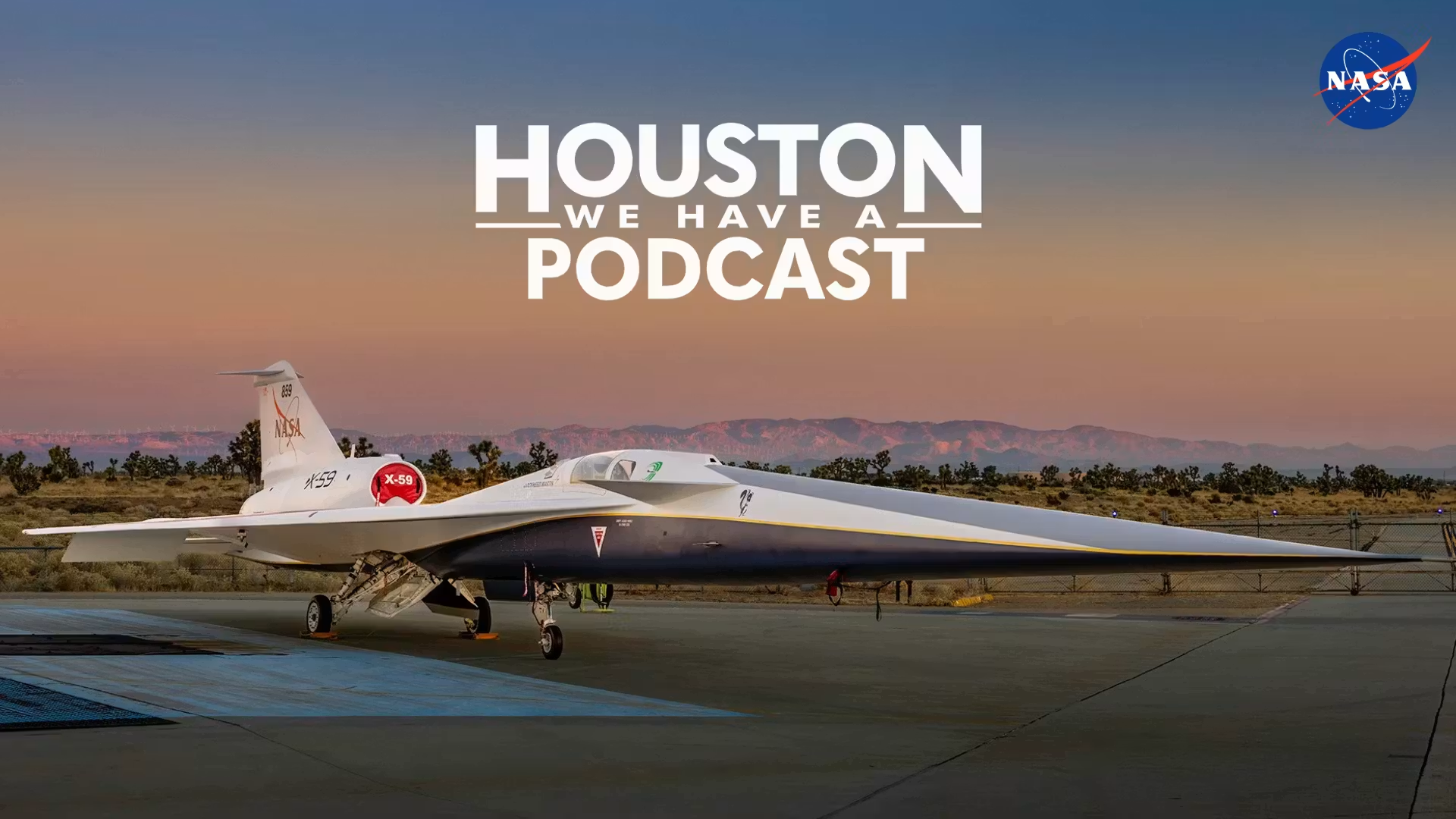
Aerospace engineers discuss NASA’s Quesst mission and the X-59 aircraft designed to fly faster than the speed of sound and test the future of supersonic travel. HWHAP Episode 341.
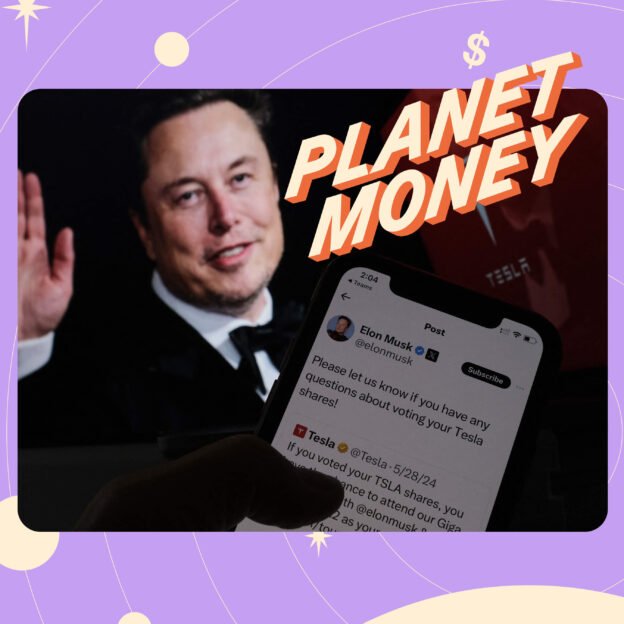
We’ve lived amongst Elon Musk headlines for so long now that it’s easy to forget just how much he sounds like a sci-fi character. He runs a space company and wants to colonize mars. He also runs a company that just implanted a computer chip into a human brain. And he believes there’s a pretty high probability everything is a simulation and we are living inside of it.
But the latest Elon Musk headline-grabbing drama is less something out of sci-fi, and more something pulled from HBO’s “Succession.”
Elon Musk helped take Tesla from the brink of bankruptcy to one of the biggest companies in the world. And his compensation for that was an unprecedentedly large pay package that turned him into the richest person on Earth. But a judge made a decision about that pay package that set off a chain of events resulting in quite possibly the most expensive, highest stakes vote in publicly traded company history.
The ensuing battle over Musk’s compensation is not just another wild Elon tale. It’s a lesson in how to motivate the people running the biggest companies that – like it or not – are shaping our world. It’s a classic economics problem with a very 2024 twist.
Help support Planet Money and hear our bonus episodes by subscribing to Planet Money+ in Apple Podcasts or at plus.npr.org/planetmoney.
See pcm.adswizz.com for information about our collection and use of personal data for sponsorship and to manage your podcast sponsorship preferences.
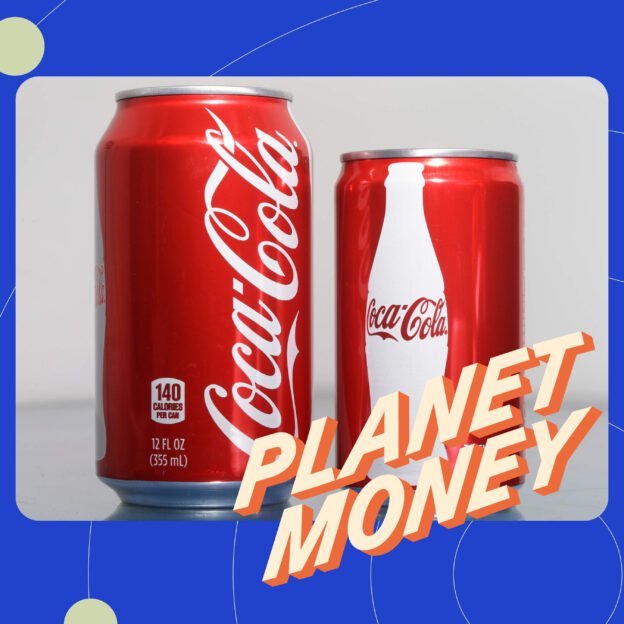
There’s a behind the scenes industry that helps big brands decide questions like: How big should a bag of chips be? What’s the right size for a bottle of shampoo? And yes, also: When should a company do a little shrinkflation?
From Cookie Monster to President Biden, everybody is complaining about shrinkflation these days. But when we asked the packaging and pricing experts, they told us that shrinkflation is just one move in a much larger, much weirder 4-D chess game.
The name of that game is “price pack architecture.” This is the idea that you shouldn’t just sell your product in one or two sizes. You should sell your product in a whole range of different sizes, at a whole range of different price points. Over the past 15 years, price pack architecture has completely changed how products are marketed and sold in the United States.
Today, we are going on a shopping cart ride-along with one of those price pack architects. She’s going to pull back the curtain and show us why some products are getting larger while others are getting smaller, and tell us about the adorable little soda can that started it all.
By the end of the episode, you’ll never look at a grocery store the same way again.
Help support Planet Money and hear our bonus episodes by subscribing to Planet Money+ in Apple Podcasts or at plus.npr.org/planetmoney.
See pcm.adswizz.com for information about our collection and use of personal data for sponsorship and to manage your podcast sponsorship preferences.

For centuries, humans have relied on the oceans for resources and food… but even the deepest sea has its limits. This hour, TED speakers discuss how we can save our seas to save our planet. Guests include marine biologists Asha de Vos, Ayana Elizabeth Johnson, and Alasdair Harris, and oceanographer Sylvia Earle. Original broadcast date: June 25, 2021.
TED Radio Hour+ subscribers now get access to bonus episodes, with more ideas from TED speakers and a behind the scenes look with our producers. A Plus subscription also lets you listen to regular episodes (like this one!) without sponsors. Sign-up at plus.npr.org/ted.
See pcm.adswizz.com for information about our collection and use of personal data for sponsorship and to manage your podcast sponsorship preferences.
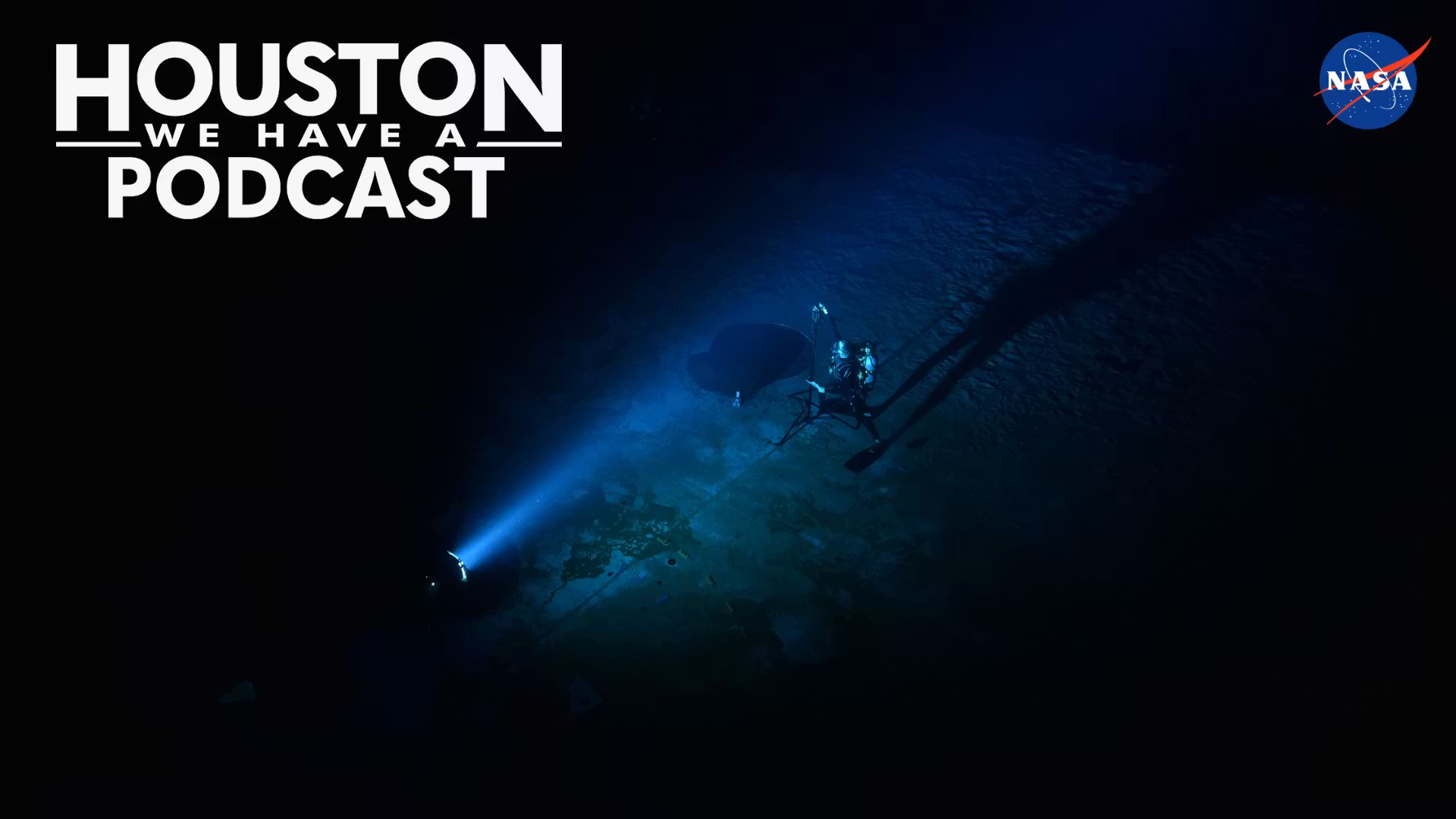
An engineer at the Neutral Buoyancy Laboratory discusses how environmental effects help make spacewalk training more realistic in the 40-foot-deep pool. HWHAP Episode 340.
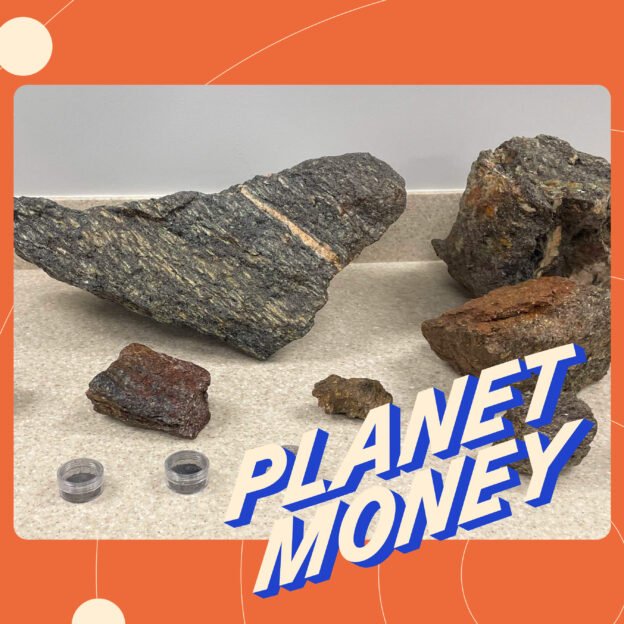
Graphite is sort of the one-hit wonder of minerals. And that hit? Pencils. Everyone loves to talk about pencils when it comes to graphite. If graphite were to perform a concert, they’d close out the show with “pencils,” and everyone would clap and cheer. But true fans of graphite would be shouting out “batteries!” Because graphite is a key ingredient in another important thing that we all use in our everyday lives: lithium ion batteries.
Almost all of the battery-ready graphite in the world comes from one place: China. That’s actually true of lots of the materials that go into batteries, like processed lithium and processed cobalt. Which is why it was such a big deal when, earlier this year, President Biden announced a tariff package that will make a bunch of Chinese imports more expensive. Included in this package are some tariffs on Chinese graphite. He wants to create a new battery future—one that doesn’t rely so much on China.
In this episode, we get down on the ground to look at this big supply chain story through the lens of one critical mineral. And we visit a small town that realizes that it might be the perfect place to create an American graphite industry. And we find that declaring a new battery future is one thing, but making it happen is another thing entirely.
Help support Planet Money and hear our bonus episodes by subscribing to Planet Money+ in Apple Podcasts or at plus.npr.org/planetmoney.
See pcm.adswizz.com for information about our collection and use of personal data for sponsorship and to manage your podcast sponsorship preferences.