Do you have “screen apnea”? Our special series Body Electric continues with former Microsoft executive Linda Stone who coined the term. Around 2007, Linda noticed she had an unhealthy habit while answering emails: she held her breath. On this episode, she tells host Manoush Zomorodi how she tested her friends and colleagues for “screen apnea” and what she’s done since.
Then, Manoush talks to the bestselling author of Breath, science writer James Nestor, who explains how shallow breathing impacts our physical and mental health. He takes us through a simple exercise to ‘reset’ our breath and relieve screen time stress.
Binge the whole Body Electric series here.
Sign up for the Body Electric Challenge and our newsletter here.
Talk to us on Instagram @ManoushZ, or record a voice memo and email it to us at BodyElectric@npr.org.
See pcm.adswizz.com for information about our collection and use of personal data for sponsorship and to manage your podcast sponsorship preferences.
NPR Privacy Policy
Most economic textbooks will tell you that there can be real dangers in running up a big national debt. A major concern is how the debt you add now could slow down economic growth in the future. Economists have not been able to nail down how much debt a country can safely take on. But they have tried.
Back in 2010, two economists took a look at 20 countries over the course of decades, and sometimes centuries, and came back with a number. Their analysis suggested that economic growth slowed significantly once national debt passed 90% of annual GDP… and that is when the fight over debt and growth really took off.
On today’s episode: a deep dive on what we know, and what we don’t know, about when exactly national debt becomes a problem. We will also try to figure out how worried we should be about the United States’ current debt total of 26 trillion dollars.
This episode was hosted by Keith Romer and Nick Fountain. It was produced by Willa Rubin and edited by Molly Messick. It was fact-checked by Sierra Juarez with help from Sofia Shchukina and engineered by Cena Loffredo. Alex Goldmark is Planet Money’s executive producer.
Help support Planet Money and hear our bonus episodes by subscribing to Planet Money+ in Apple Podcasts or at plus.npr.org/planetmoney.
See pcm.adswizz.com for information about our collection and use of personal data for sponsorship and to manage your podcast sponsorship preferences.
NPR Privacy Policy
Thirty years into the opioid crisis, we still struggle to find other options for pain relief. This hour, TED speakers explain new understandings of how the brain interprets pain and new ideas to cope. Guests include equestrian Kat Naud, physician and researcher Amy Baxter and opioid reform advocate Cammie Wolf Rice.
TED Radio Hour+ subscribers now get access to bonus episodes, with more ideas from TED speakers and a behind the scenes look with our producers. A Plus subscription also lets you listen to regular episodes (like this one!) without sponsors. Sign-up at plus.npr.org/ted.
See pcm.adswizz.com for information about our collection and use of personal data for sponsorship and to manage your podcast sponsorship preferences.
NPR Privacy Policy
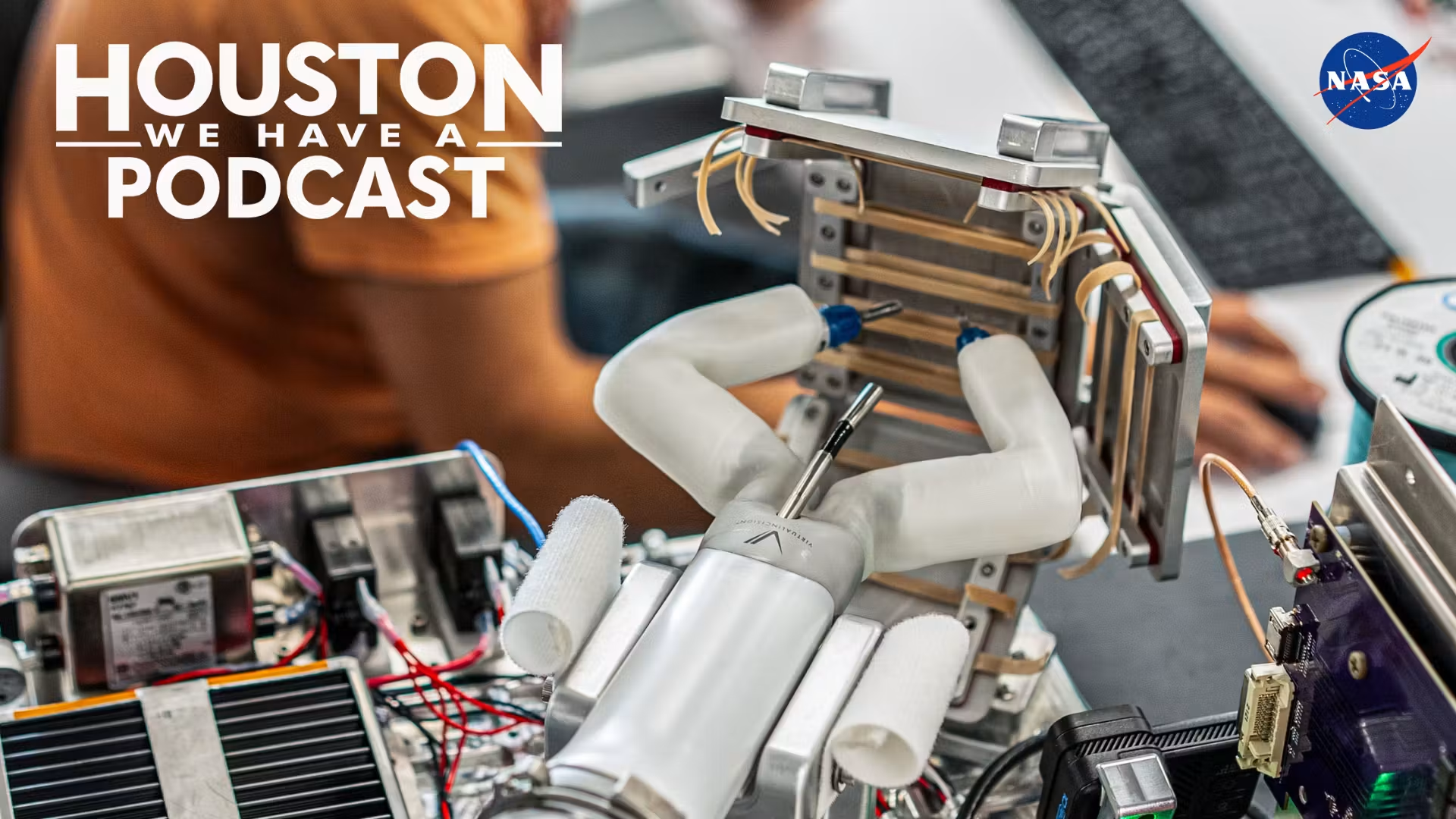
A payload developer and surgeon discuss testing a robotic surgery technology demonstration aboard the International Space Station. HWHAP Episode 339.
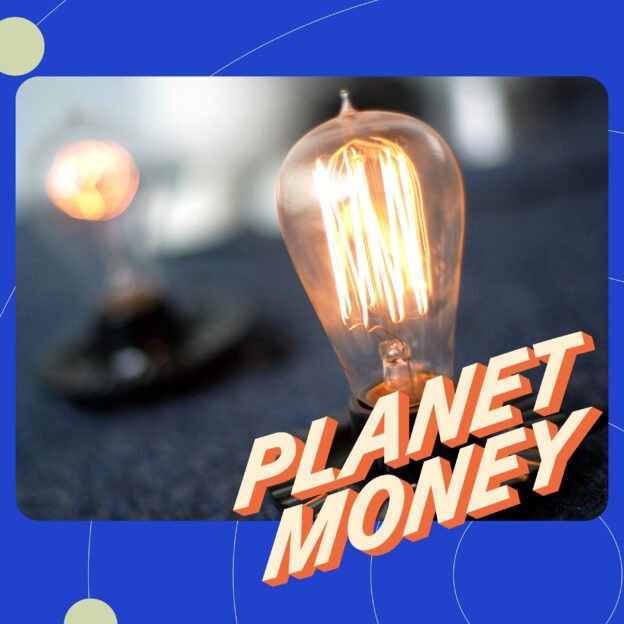
For thousands of years, getting light was a huge hassle. You had to make candles from scratch. This is not as romantic as it sounds. You had to get a cow, raise the cow, feed the cow, kill the cow, get the fat out of the cow, cook the fat, dip wicks into the fat. All that–for not very much light. Now, if we want to light a whole room, we just flip a switch.
The history of light explains why the world today is the way it is. It explains why we aren’t all subsistence farmers, and why we can afford to have artists and massage therapists and plumbers. (And, yes, people who make podcasts about the history of light.) The history of light is the history of economic growth–of things getting faster, cheaper, and more efficient.
On today’s show: How we got from dim little candles made out of cow fat, to as much light as we want at the flick of a switch.
Today’s show was hosted by Jacob Goldstein and David Kestenbaum. It was originally produced by Caitlin Kenney and Damiano Marchetti. Today’s rerun was produced by James Sneed, and edited by Jenny Lawton. It was fact-checked by Sierra Juarez. Engineering by Valentina Rodríguez Sánchez. Alex Goldmark is Planet Money’s executive producer.
Help support Planet Money and hear our bonus episodes by subscribing to Planet Money+ in Apple Podcasts or at plus.npr.org/planetmoney.
See pcm.adswizz.com for information about our collection and use of personal data for sponsorship and to manage your podcast sponsorship preferences.
NPR Privacy Policy
Starbucks. You’d be hard pressed to name any brand that’s more ubiquitous in the world today. With nearly half a billion global customer purchases per week across its stores and 3rd party retail channels, a significant portion of the human population gets their daily fix in the green and white paper cup. (Including our own Ben Gilbert who famously enjoys his daily spinach feta wrap. 🙂
But it wasn’t always this way. Long before the frappuccinos and the PSLs and the cake pops, Starbucks was just a small-time Seattle roaster that only sold beans — and was started not by Howard Schultz but rather the guys who later ran Peet’s (!). Starting from six tiny stores when Howard took over in 1987, this quirky coffee company named after a character from Moby Dick has scaled to nearly 40,000 locations worldwide.
Today, in a first for Acquired, the protagonist himself joins us as a third cohost to tell the whole story of Starbucks. And Howard is in the perfect moment to do this — after three separate stints as CEO he’s now retired, off the board of directors, and in his own words “not coming back.” So place a mobile order (or not! as you’ll hear Howard speak about), sit back with your own favorite Starbucks items, and enjoy.
Sponsors:
The Biggest Thing We’ve Ever Done:
Links:
More Acquired!
© Copyright 2015-2026 ACQ, LLC
© Copyright 2024 ACQ, LLC
Note: Acquired hosts and guests may hold assets discussed in this episode. This podcast is not investment advice, and is intended for informational and entertainment purposes only. You should do your own research and make your own independent decisions when considering any financial transactions.
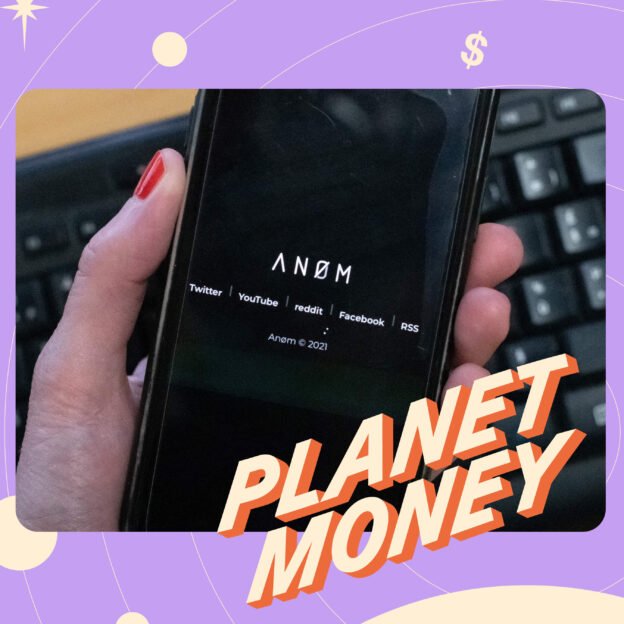
There is a constant arms race between law enforcement and criminals, especially when it comes to technology. For years, law enforcement has been frustrated with encrypted messaging apps, like Signal and Telegram. And law enforcement has been even more frustrated by encrypted phones, specifically designed to thwart authorities from snooping.
But in 2018, in a story that seems like it’s straight out of a spy novel, the FBI was approached with an offer: Would they like to get into the encrypted cell phone business? What if they could convince criminals to use their phones to plan and document their crimes — all while the FBI was secretly watching? It could be an unprecedented peek into the criminal underground.
To pull off this massive sting operation, the FBI needed to design a cell phone that criminals wanted to use and adopt. Their mission: to make a tech platform for the criminal underworld. And in many ways, the FBI’s journey was filled with all the hallmarks of many Silicon Valley start-ups.
On this show, we talk with journalist Joseph Cox, who wrote a new book about the FBI’s cell phone business, called Dark Wire. And we hear from the federal prosecutor who became an unlikely tech company founder.
Help support Planet Money and hear our bonus episodes by subscribing to Planet Money+ in Apple Podcasts or at plus.npr.org/planetmoney.
See pcm.adswizz.com for information about our collection and use of personal data for sponsorship and to manage your podcast sponsorship preferences.
NPR Privacy Policy
Oceans cover nearly 75% of the Earth. While they seem vast and frightening, they’re also enchanting and whimsical. This hour, TED speakers dive into stories of connection — and even love — in the sea. Guests include adventurer Catherine Mohr, marine biologists Marah Hardt and Ayana Elizabeth Johnson and venom scientist Mandë Holford.
Original broadcast date: June 11, 2021
TED Radio Hour+ subscribers now get access to bonus episodes, with more ideas from TED speakers and a behind the scenes look with our producers. A Plus subscription also lets you listen to regular episodes (like this one!) without sponsors. Sign-up at plus.npr.org/ted.
See pcm.adswizz.com for information about our collection and use of personal data for sponsorship and to manage your podcast sponsorship preferences.
NPR Privacy Policy
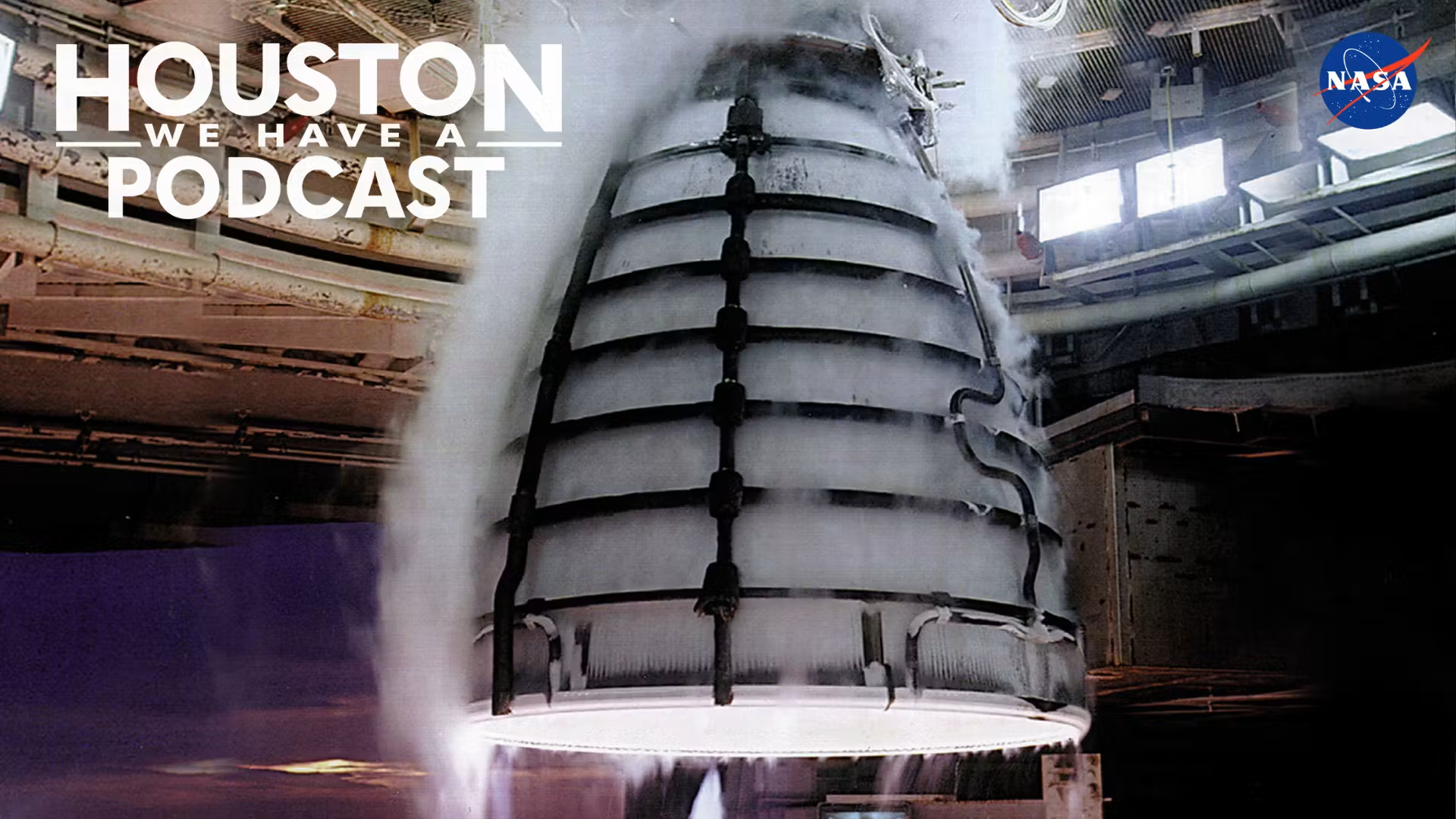
Experts from NASA’s Stennis Space Center discuss the facilities that support RS-25 engine testing for the Space Launch System and future Artemis missions. HWHAP Episode 338.
We are living in a kind of golden age for online fraudsters. As the number of apps and services for storing and sending money has exploded – so too have the schemes that bad actors have cooked up to steal that money. Every year, we hear more and more stories of financial heartbreak. What you don’t often hear about is what happens after the scam?
On today’s show, we follow one woman who was scammed out of over $800,000 on her quest to get her money back. That journey takes her from the halls of the FBI to the fraud departments of some of the country’s biggest financial institutions. And it offers a window into how the systems that are theoretically designed to help the victims of financial cybercrime actually work in practice.
This episode was hosted by Alexi Horowitz-Ghazi and Jeff Guo. It was produced by Willa Rubin and edited by Keith Romer. It was engineered by Neal Rauch and fact-checked by Sierra Juarez. Alex Goldmark is Planet Money‘s executive producer.
Help support Planet Money and hear our bonus episodes by subscribing to Planet Money+ in Apple Podcasts or at plus.npr.org/planetmoney.
See pcm.adswizz.com for information about our collection and use of personal data for sponsorship and to manage your podcast sponsorship preferences.
NPR Privacy Policy