Our special series, Body Electric, is back! This time, host Manoush Zomorodi does a deep dive into our headphone habits… because many of us wear them for hours at a time, and all that listening is taking a toll on our hearing.
Manoush speaks with exposure scientist Rick Neitzel, who has partnered with Apple on a first-of-its-kind study to find how our daily listening patterns are affecting our hearing. Neitzel offers advice on safe listening habits that can help protect our ears in the long term.
Later, Manoush takes us into the future of “consumer hearables” and how tech companies want us to never — ever— take our earbuds out.
Interested in joining the Apple Hearing Study? Sign up here.
Binge the whole Body Electric series here. Sign up for the Body Electric Challenge and our newsletter here.
Talk to us on Instagram @ManoushZ, or record a voice memo and email it to us at BodyElectric@npr.org.
See pcm.adswizz.com for information about our collection and use of personal data for sponsorship and to manage your podcast sponsorship preferences.
NPR Privacy Policy
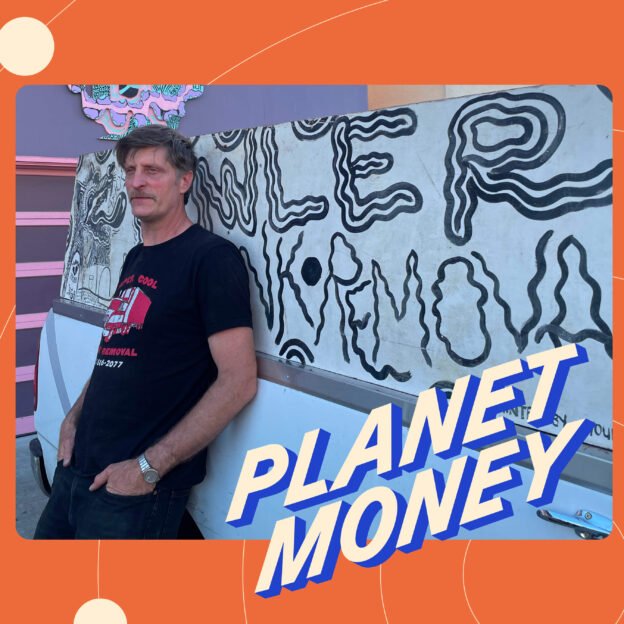
On today’s episode, we ride through the streets of San Francisco with a long-time junkman, Jon Rolston.
Jon has spent the last two decades clearing out houses and offices of their junk. He’s found all sorts of items: a life-time supply of toilet paper, gold rings, $20,000 in cash. Over the years, he’s developed a keen eye for what has value and what might sell. He’s become a kind of trash savant.
As we ride with Jon, he shows us the whole ecosystem of how our reusable trash gets dealt with — from metals (ferrous and non-ferrous) to tires to cardboard. And we see how our junk can sometimes get a second chance at life.
If you can understand the junk market like Jon, you can understand dozens of trends in our economy.
This episode was hosted by Erika Beras and James Sneed, and produced by James Sneed with help from Emma Peaslee. It was edited by Jess Jiang. Engineering by Josh Newell. It was fact-checked by Sierra Juarez. Alex Goldmark is Planet Money’s executive producer.
Help support Planet Money and hear our bonus episodes by subscribing to Planet Money+ in Apple Podcasts or at plus.npr.org/planetmoney.
See pcm.adswizz.com for information about our collection and use of personal data for sponsorship and to manage your podcast sponsorship preferences.
NPR Privacy Policy
Words are never just words. They carry context and controversy; they can signal identity or sow discord. This week, TED speakers explore the history and politics of our ever-evolving language. Guests include linguists Anne Curzan and John McWhorter, social psychologist Dannagal Young and writer Mark Forsyth.
TED Radio Hour+ subscribers now get access to bonus episodes, with more ideas from TED speakers and a behind the scenes look with our producers. A Plus subscription also lets you listen to regular episodes (like this one!) without sponsors. Sign-up at: plus.npr.org/ted
See pcm.adswizz.com for information about our collection and use of personal data for sponsorship and to manage your podcast sponsorship preferences.
NPR Privacy Policy
The CHAPEA crew checks in on their 10th month in a Mars simulated habitat, and a NASA scientist explains her role studying crew habitat design and how it supports behavioral health, team cohesion, and performance. HWHAP Episode 337.
By one estimate, 40 percent of American workers get laid off at least once in their careers. And when that happens, companies will often say, “It’s not personal. It has nothing to do with you or your performance. We’re just changing priorities, making a strategic shift.”
It’s like the business version of: “It’s not you, it’s me.” And just like a breakup, it feels terrible.
This happened to a man we’re calling V, who was working at the same company as his husband when he got laid off. And for V, the experience felt shocking. It left him and his husband with a lot of unresolved questions.
On today’s show, the story of that layoff. And we help that couple get some answers by taking their questions to an HR expert who gives the low-down on lay-offs.
This story is adapted from a 3-part series on layoffs produced by Yowei Shaw for her show, Proxy. The layoff series was edited by John DeLore with research and reporting help from Kim Nederveen Pieterse. You can listen to the full layoff series from Proxy wherever you get your podcasts, and you can support the show and find out more by going to patreon.com/proxypodcast. And you can check out her original song “Gold Star” on Spotify and YouTube.
Help support Planet Money and hear our bonus episodes by subscribing to Planet Money+ in Apple Podcasts or at plus.npr.org/planetmoney.
See pcm.adswizz.com for information about our collection and use of personal data for sponsorship and to manage your podcast sponsorship preferences.
NPR Privacy Policy
Last month, the world narrowly avoided a cyberattack of stunning ambition. The targets were some of the most important computers on the planet. Computers that power the internet. Computers used by banks and airlines and even the military.
What these computers had in common was that they all relied on open source software.
A strange fact about modern life is that most of the computers responsible for it are running open source software. That is, software mostly written by unpaid, sometimes even anonymous volunteers. Some crucial open source programs are managed by just a single overworked programmer. And as the world learned last month, these programs can become attractive targets for hackers.
In this case, the hackers had infiltrated a popular open source program called XZ. Slowly, over the course of two years, they transformed XZ into a secret backdoor. And if they hadn’t been caught, they could have taken control of large swaths of the internet.
On today’s show, we get the story behind the XZ hack and what made it possible. How the hackers took advantage of the strange way we make modern software. And what that tells us about the economics of one of the most important industries in the world.
Help support Planet Money and hear our bonus episodes by subscribing to Planet Money+ in Apple Podcasts or at plus.npr.org/planetmoney.
See pcm.adswizz.com for information about our collection and use of personal data for sponsorship and to manage your podcast sponsorship preferences.
NPR Privacy Policy
“Reduce, reuse, recycle.” We’ve heard that for decades – but does it work? This hour, TED speakers reimagine the well-known slogan and reconsider how we think about what we consume and throw away. Guests include right-to-repair advocate Gay Gordon-Byrne, materials scientist Andrew Dent, technologist Jamie Beard and animal scientist Ermias Kebreab. Original broadcast date: May 20, 2022
TED Radio Hour+ subscribers now get access to bonus episodes, with more ideas from TED speakers and a behind the scenes look with our producers. A Plus subscription also lets you listen to regular episodes (like this one!) without sponsors. Sign-up at plus.npr.org/ted.
See pcm.adswizz.com for information about our collection and use of personal data for sponsorship and to manage your podcast sponsorship preferences.
NPR Privacy Policy
Three experts within the Human Physiology, Performance, Protection and Operations Laboratory (H-3PO) at NASA, explain the ins and outs of this integrated laboratory designed to support human spaceflight. HWHAP Episode 336.
In the past few months, the price of gold has gone way up – even hitting a new high last month at just over $2,400 per troy ounce.
Gold has long had a shiny quality to it, literally and in the marketplace. And we wondered, why is that?
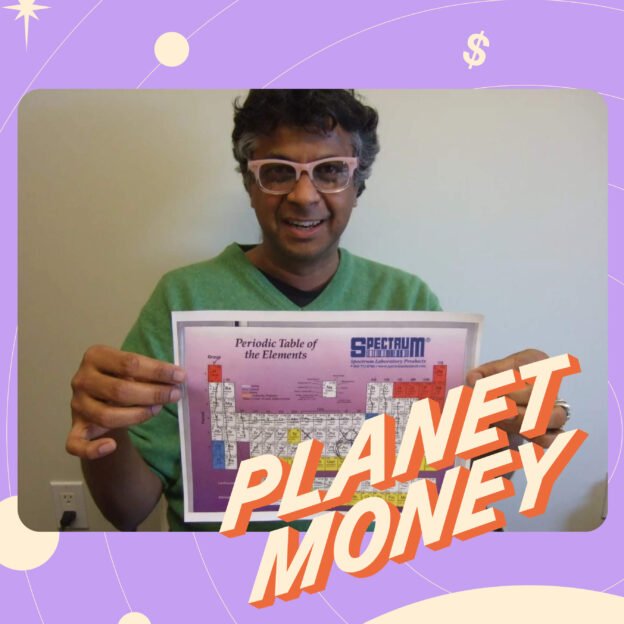
Today on the show, we revisit a Planet Money classic episode: Why Gold? Jacob Goldstein and David Kestenbaum will peruse the periodic table of the elements with one goal in mind: to learn which element would really make the best money.
This classic Planet Money episode was part of the Planet Money Buys Gold series, and was hosted by Jacob Goldstein and David Kestenbaum.
This rerun was hosted by Sally Helm, produced by Willa Rubin, edited by Keith Romer, and fact-checked by Sierra Juarez. Alex Goldmark is our executive producer.
Help support Planet Money and hear our bonus episodes by subscribing to Planet Money+ in Apple Podcasts or at plus.npr.org/planetmoney.
Always free at these links: Apple Podcasts, Spotify, Google Podcasts, the NPR app or anywhere you get podcasts.
See pcm.adswizz.com for information about our collection and use of personal data for sponsorship and to manage your podcast sponsorship preferences.
NPR Privacy Policy
Karen McDonough of Quincy, Mass., was enjoying her tea one morning in the dining room when she saw something odd outside her window: a group of people gathering on her lawn. A man with a clipboard told her that her home no longer belonged to her. It didn’t matter that she’d been paying her mortgage for 17 years and was current on it. She was a nurse with a good job and had raised her kids there. But this was a foreclosure sale, and she was going to lose her house.
McDonough had fallen victim to what’s called a zombie second mortgage. Homeowners think these loans are long dead. But then the loans come back to life because they get bought up, sometimes for pennies on the dollar, by debt collectors that then move to collect and foreclose on people’s homes.
On today’s episode: An NPR investigation reveals the practice to be widespread. Also, what are zombie mortgages? Is all this legal? And is there any way for homeowners to fight the zombies?
You can read more about zombie second mortgages online at: npr.org/zombie
Correction: An earlier version of this episode description misspelled Karen McDonough’s last name as MacDonough.
Help support Planet Money and get bonus episodes by subscribing to Planet Money+ in Apple Podcasts or at plus.npr.org/planetmoney.
See pcm.adswizz.com for information about our collection and use of personal data for sponsorship and to manage your podcast sponsorship preferences.
NPR Privacy Policy