Dynamic pricing is an increasingly common phenomenon: You can see it when Uber prices surge during rainy weather, or when you’re booking a flight at the last minute or buying tickets to your favorite superstar’s concert. On an earnings call last week, Wendy’s ignited a minor controversy by suggesting it would introduce dynamic pricing in its restaurants, but the company quickly clarified that it wasn’t planning on using it for “surge pricing.”
One place you hardly ever see dynamic pricing? American supermarkets.
Why is that? Why shouldn’t the prices for meat or bread or produce go down as they get older? Why does all the milk in the store cost the same, even when the “sell by” dates are weeks apart? Wouldn’t a little more flexibility around prices be better for customers and help reduce waste?
Professors Robert Evan Sanders and Ioannis (Yannis) Stamatopoulus had similar questions. So they set out to discover what was keeping supermarkets from employing a more dynamic approach, and what might convince them it was time for a change … in pricing.
This episode was hosted by Amanda Aronczyk and Nick Fountain. It was produced by Willa Rubin and edited by Keith Romer. It was engineered by Valentina Rodríguez Sánchez and fact-checked by Sierra Juarez.
See pcm.adswizz.com for information about our collection and use of personal data for sponsorship and to manage your podcast sponsorship preferences.
NPR Privacy Policy
NASA is looking to recruit the next class of astronauts, and applications are open! The manager of NASA astronaut selection discusses the selection process and how to apply to an out-of-this-world career. HWHAP Episode 325.5.
It is so expensive to have a kid in the United States. The U.S. is one of just a handful of countries worldwide with no federal paid parental leave; it offers functionally no public childcare (and private childcare is wildly expensive); and women can expect their pay to take a hit after becoming a parent. (Incidentally, men’s wages tend to rise after becoming fathers.)
But outside the U.S., many countries desperately want kids to be born inside their borders. One reason? Many countries are facing a looming problem in their population demographics: they have a ton of aging workers, fewer working-age people paying taxes, and not enough new babies being born to become future workers and taxpayers. And some countries are throwing money at the problem, offering parents generous benefits, even including straight-up cash for kids.
So if the U.S. makes it very hard to have kids, but other countries are willing to pay you for having them….maybe you can see the opportunity here. Very economic, and very pregnant, host Mary Childs did. Which is why she went benefits shopping around the world. Between Sweden, Singapore, South Korea, Estonia, and Canada, who will offer her the best deal for her pregnancy?
Help support Planet Money and get bonus episodes by subscribing to Planet Money+ in Apple Podcasts or at plus.npr.org/planetmoney.
See pcm.adswizz.com for information about our collection and use of personal data for sponsorship and to manage your podcast sponsorship preferences.
NPR Privacy Policy
Original broadcast date: December 23, 2022. Our brains are magnificently complex – and highly fallible. This hour, neuroscientist and novelist Lisa Genova explains how to keep our brains healthy and what to do when something goes wrong.
TED Radio Hour+ subscribers now get access to bonus episodes, with more ideas from TED speakers and a behind the scenes look with our producers. A Plus subscription also lets you listen to regular episodes (like this one!) without sponsors. Sign-up at plus.npr.org/ted.
See pcm.adswizz.com for information about our collection and use of personal data for sponsorship and to manage your podcast sponsorship preferences.
NPR Privacy Policy
The 2021 class of astronaut candidates, known as “The Flies,” is graduating after two years of rigorous training. Learn more about the class, their training, and what they are looking forward to as an astronaut in the Artemis generation. HWHAP Episode 325.
Fundraising is a staple of the school experience in the U.S. There’s an assembly showing off all the prizes kids can win by selling enough wrapping paper or chocolate to their neighbors. But it’s pretty weird, right?
Why do schools turn kids into little salespeople? And why do we let companies come in and dangle prizes in front of students?
We spend a year with one elementary school, following their fundraising efforts, to see how much they raise, and what the money goes to.
The school – Villacorta Elementary in La Puente, California – has one big goal: To raise enough money to send every single student on one field trip. The whole school hasn’t been able to go on one in three years.
We find out what the companies who run school fundraisers do to try to win a school’s business. And we find that this bizarre tradition is … surprisingly tactical. That’s on today’s episode.
Today’s show was hosted by Sarah Gonzalez and produced by Sam Yellowhorse Kesler. It was edited by Jess Jiang, fact checked by Sierra Juarez, and engineered by Valentina Rodríguez Sánchez. Alex Goldmark is Planet Money’s executive producer.
Help support Planet Money and get bonus episodes by subscribing to Planet Money+ in Apple Podcasts or at plus.npr.org/planetmoney.
See pcm.adswizz.com for information about our collection and use of personal data for sponsorship and to manage your podcast sponsorship preferences.
NPR Privacy Policy
Réka Juhász is a professor of economics at the University of British Columbia, and she studies what’s known as industrial policy.
That’s the general term for whenever the government tries to promote specific sectors of the economy. The idea is that they might be able to supercharge growth by giving money to certain kinds of businesses, or by putting up trade barriers to protect certain industries. Economists have long been against it. Industrial policy has been called a “taboo” subject, and “one of the most toxic phrases” in economics. The mainstream view has been that industrial policy is inefficient, even harmful.
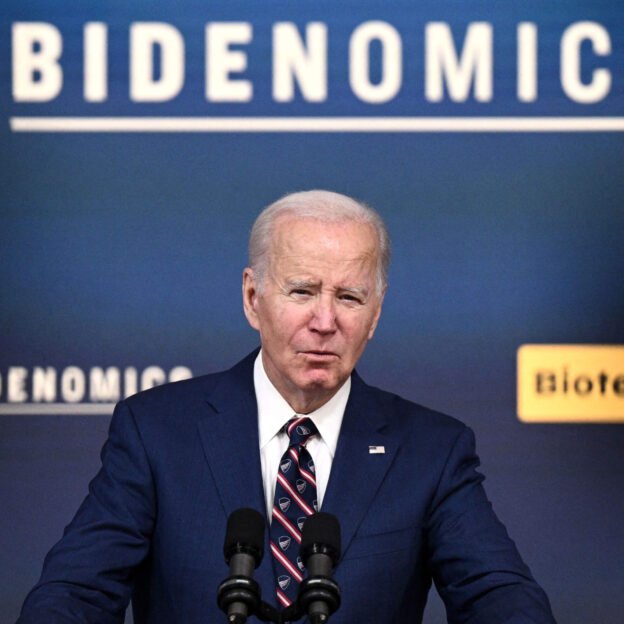
For a long time, politicians largely accepted that view. But in the past several years, countries have started to embrace industrial policy—most notably in the United States. Under President Biden, the U.S. is set to spend hundreds of billions of dollars on industrial policy, to fund things like microchip manufacturing and clean energy projects. It’s one of the most ambitious tests of industrial policy in U.S. history. And the billion dollar question is … will it work?
On today’s show, Réka takes us on a fun, nerdy journey to explain the theory behind industrial policy, why it’s so controversial, and where President Biden’s big experiment might be headed.
Help support Planet Money and get bonus episodes by subscribing to Planet Money+ in Apple Podcasts or at plus.npr.org/planetmoney.
See pcm.adswizz.com for information about our collection and use of personal data for sponsorship and to manage your podcast sponsorship preferences.
NPR Privacy Policy
To move forward, the United States must confront its history of racial inequality. This hour, three perspectives on looking to the past to build a better future for Black Americans. Guests include author Joseph McGill Jr., Code Switch co-host B.A. Parker and opinion columnist Charles Blow.
TED Radio Hour+ subscribers now get access to bonus episodes, with more ideas from TED speakers and a behind the scenes look with our producers. A Plus subscription also lets you listen to regular episodes (like this one!) without sponsors. Sign-up at plus.npr.org/ted.
See pcm.adswizz.com for information about our collection and use of personal data for sponsorship and to manage your podcast sponsorship preferences.
NPR Privacy Policy
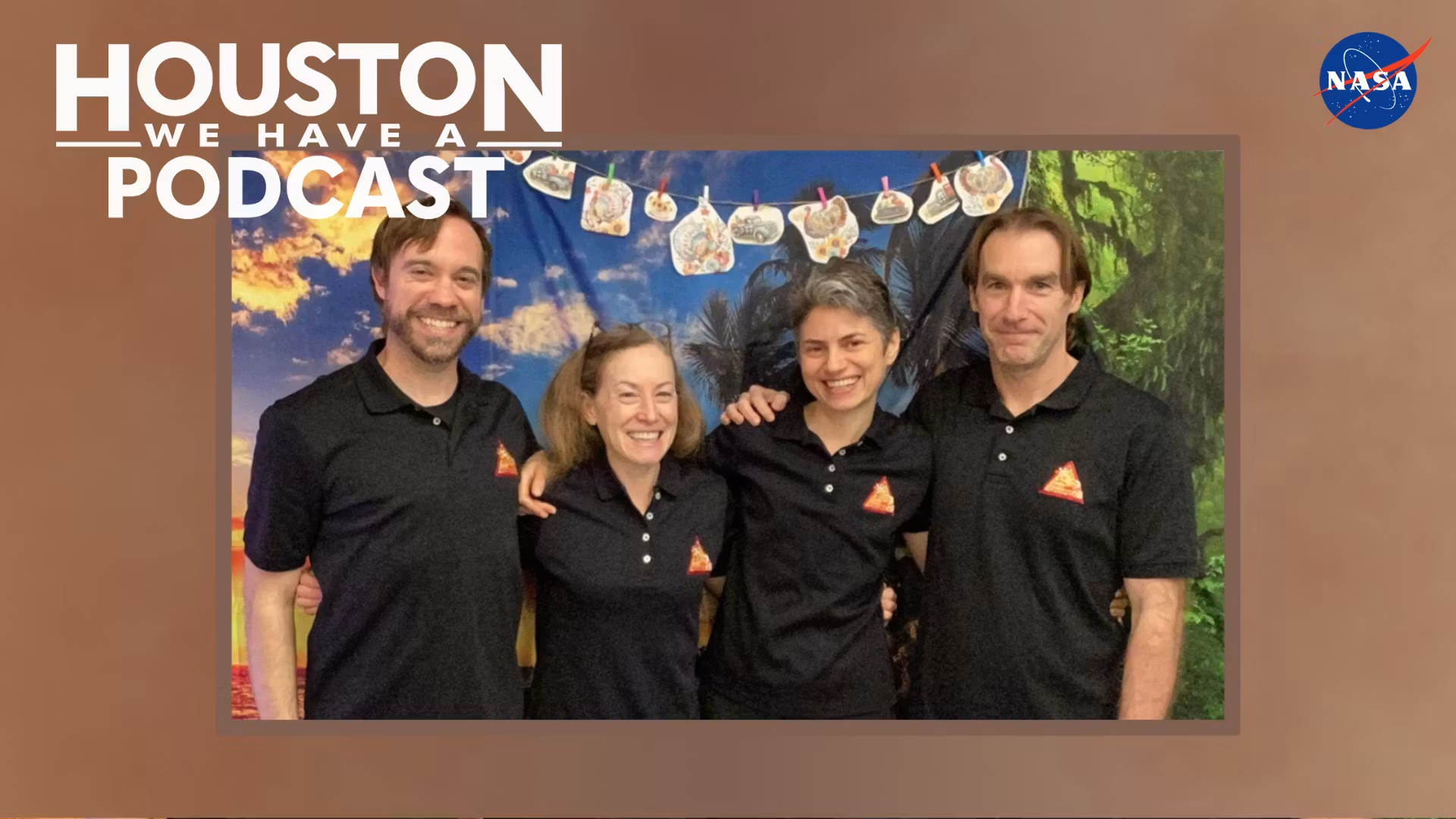
The CHAPEA crew checks in on their seventh month in a Mars simulated habitat and NASA experts discuss the impacts that spaceflight has on astronauts’ health. This is the seventh audio log of a monthly series. HWHAP Episode 324.
The Department of Defense’s proposed budget for 2024 is $842 billion. That is about 3.5% of the U.S.’s GDP. The military buys everything from pens and paper clips to fighter jets and submarines. But the market for military equipment is very different from the commercial market.
On today’s episode, we’re bringing you two stories from The Indicator’s series on defense spending that explore that market. As the U.S. continues to send weapons to Ukraine and Israel, we first look at why defense costs are getting so high. Then, we dive into whether bare-bones manufacturing styles are leaving the U.S. military in a bind.
The original Indicator episodes were produced by Cooper Katz McKim with engineering from Maggie Luthar and James Willetts. It was fact-checked by Sierra Juarez and Angel Carreras. They were edited by Kate Concannon and Paddy Hirsch. Alex Goldmark is Planet Money’s executive producer.
Help support Planet Money and get bonus episodes by subscribing to Planet Money+ in Apple Podcasts or at plus.npr.org/planetmoney.
See pcm.adswizz.com for information about our collection and use of personal data for sponsorship and to manage your podcast sponsorship preferences.
NPR Privacy Policy