Original broadcast date: Friday, March 19, 2021. Our senses can only take us so far in understanding the world. But with the right tools, we can dig deeper. This hour, TED speakers take us through the looking glass, where we explore new frontiers. Guests include astrophysicist Emily Levesque, wildlife filmmaker Ariel Waldman, psychedelic-assisted psychotherapist Rick Doblin and science fiction author Charlie Jane Anders.
TED Radio Hour+ subscribers now get access to bonus episodes, with more ideas from TED speakers and a behind the scenes look with our producers. A Plus subscription also lets you listen to regular episodes (like this one!) without sponsors. Sign-up at: plus.npr.org/ted
See pcm.adswizz.com for information about our collection and use of personal data for sponsorship and to manage your podcast sponsorship preferences.
NPR Privacy Policy
For episode 2 of Planet Money Summer School, we are talking strategy. You have your million dollar business idea, and maybe some money in your pocket to get it up and running. But now you enter into a crowded market. You have to deal with competition.
So, what can you do to make sure your product is a success? That was the conundrum facing the Starbury. It was a basketball shoe with a celebrity endorsement, that had to go up against THE basketball shoe with THE celebrity endorsement: the Air Jordan. Our first story is about the ways in which the Starbury succeeded and failed in taking on a juggernaut.
Then, we will hear a story about trying to avoid the dangers of “perfect” competition. Two companies making almost identical handbells learn that the key to their success lies in convincing customers how different they really are.
Find all episodes of Planet Money Summer School here.
The series is hosted by Robert Smith and produced by Max Freedman. Our project manager is Julia Carney. This episode was edited by Keith Romer and engineered by Robert Rodriguez. The show is fact-checked by Sierra Juarez. Planet Money’s executive producer is Alex Goldmark.
Help support Planet Money and get bonus episodes by subscribing to Planet Money+ in Apple Podcasts or at plus.npr.org/planetmoney.
See pcm.adswizz.com for information about our collection and use of personal data for sponsorship and to manage your podcast sponsorship preferences.
NPR Privacy Policy
When you make an account online or install an app, you are probably entering into a legally enforceable contract. Even if you never signed anything. These days, we enter into these contracts so often, it can feel like no big deal.
But then there are the horror stories like Greg Selden’s. He tried to sue AirBnB for racial discrimination while using their site. But he had basically signed away his ability to sue AirBnB when he made an account. That agreement was tucked away in a little red link, something most people might not even bother to click through.
But, it wasn’t always like this. On today’s show, we go back in time to understand how the law of contracts got rewritten. And why today, you can accept a contract without even noticing it.
This episode was hosted by Emma Peaslee and Jeff Guo, and was produced by James Sneed. It was edited by Jess Jiang and fact-checked by Sierra Juarez. It was engineered by James Willetts. Alex Goldmark is our Executive Producer.
Help support Planet Money and get bonus episodes by subscribing to Planet Money+ in Apple Podcasts or at plus.npr.org/planetmoney. Always free at these links: Apple Podcasts, Spotify, Google Podcasts, NPR One or anywhere you get podcasts.
See pcm.adswizz.com for information about our collection and use of personal data for sponsorship and to manage your podcast sponsorship preferences.
NPR Privacy Policy
Deputy Associate Administrator for the Exploration Systems Development Mission Directorate at NASA joins us this week to discuss future architecture plans for Moon to Mars missions. HWHAP Episode 297.
From the bugs in our backyards to prehistoric reptiles, animal biology and behavior are full of puzzles and conundrums. On this episode, we hear from experts solving the mysteries of the animal kingdom. Guests include paleontologist Dean Lomax, biochemical engineer Saad Bhamla, herpetologist Gowri Shankar and conservation biologist Patrícia Medici.
TED Radio Hour+ subscribers now get access to bonus episodes, with more ideas from TED speakers and a behind the scenes look with our producers. A Plus subscription also lets you listen to regular episodes (like this one!) without sponsors. Sign-up at: plus.npr.org/ted
See pcm.adswizz.com for information about our collection and use of personal data for sponsorship and to manage your podcast sponsorship preferences.
NPR Privacy Policy
Find all episodes of Planet Money Summer School here.
Planet Money Summer School is back! It’s the free economics class you can take from anywhere… for everyone! For Season 4 of Summer School, we are taking you to business school. It’s time to get your MBA, the easy way!
In this first class: Everyone has a million dollar business idea (e.g., “Shazam but for movies”), but not everyone has what it takes to be an entrepreneur. We have two stories about founders who learned the hard way what goes into starting a small business, and getting it up and running.
First, a story about Frederick Hutson, who learned about pain points and unique value propositions when he founded a company to help inmates and their families share photos. Then, we take a trip to Columbia, Maryland with chefs RaeShawn and LaShone Middleton. Their steamed crab delivery service taught them the challenges of “bootstrapping” to grow their business. And throughout the episode, Columbia Business School professor Angela Lee explains why entrepreneurship can be really difficult, but also incredibly rewarding, if you have the stomach for it.
(And, we should say, we are open to investors for “Shazam but for movies.” Just sayin’.)
Help support Planet Money and get bonus episodes by subscribing to Planet Money+ in Apple Podcasts or at plus.npr.org/planetmoney.
See pcm.adswizz.com for information about our collection and use of personal data for sponsorship and to manage your podcast sponsorship preferences.
NPR Privacy Policy
When it comes to big questions about the economy, we’re still kind of in the dark ages. Why do some economies grow so much faster than others? How long is the next recession going to last? How do we stop inflation without wrecking the rest of the economy? These questions are the domain of macroeconomics. But even some macroeconomists themselves admit: While we have many theories about how the economy works, we have very few satisfying answers.
Emi Nakamura wants to change all that. She’s a superstar economist who is a pioneer in the field of “empirical macroeconomics.” She finds clever ways of using data to untangle some of the oldest mysteries in macroeconomics, about the invisible hand, the consequences of government spending, and the inner workings of inflation.
Recently we called her up to ask her why the economy is so difficult to understand in first place, and how she’s trying to find answers anyway. She gets into all of that, and how Jeff Goldblum shaped her career as an economist, in this episode.
This show was hosted by Jeff Guo and Nick Fountain. It was produced by Dave Blanchard with help from Sam Yellowhorse Kesler. It was engineered by Josephine Nyounai and fact checked by Sierra Juarez. Keith Romer edited the show. Alex Goldmark is our executive producer.
Help support Planet Money and get bonus episodes by subscribing to Planet Money+ in Apple Podcasts or at plus.npr.org/planetmoney.
See pcm.adswizz.com for information about our collection and use of personal data for sponsorship and to manage your podcast sponsorship preferences.
NPR Privacy Policy
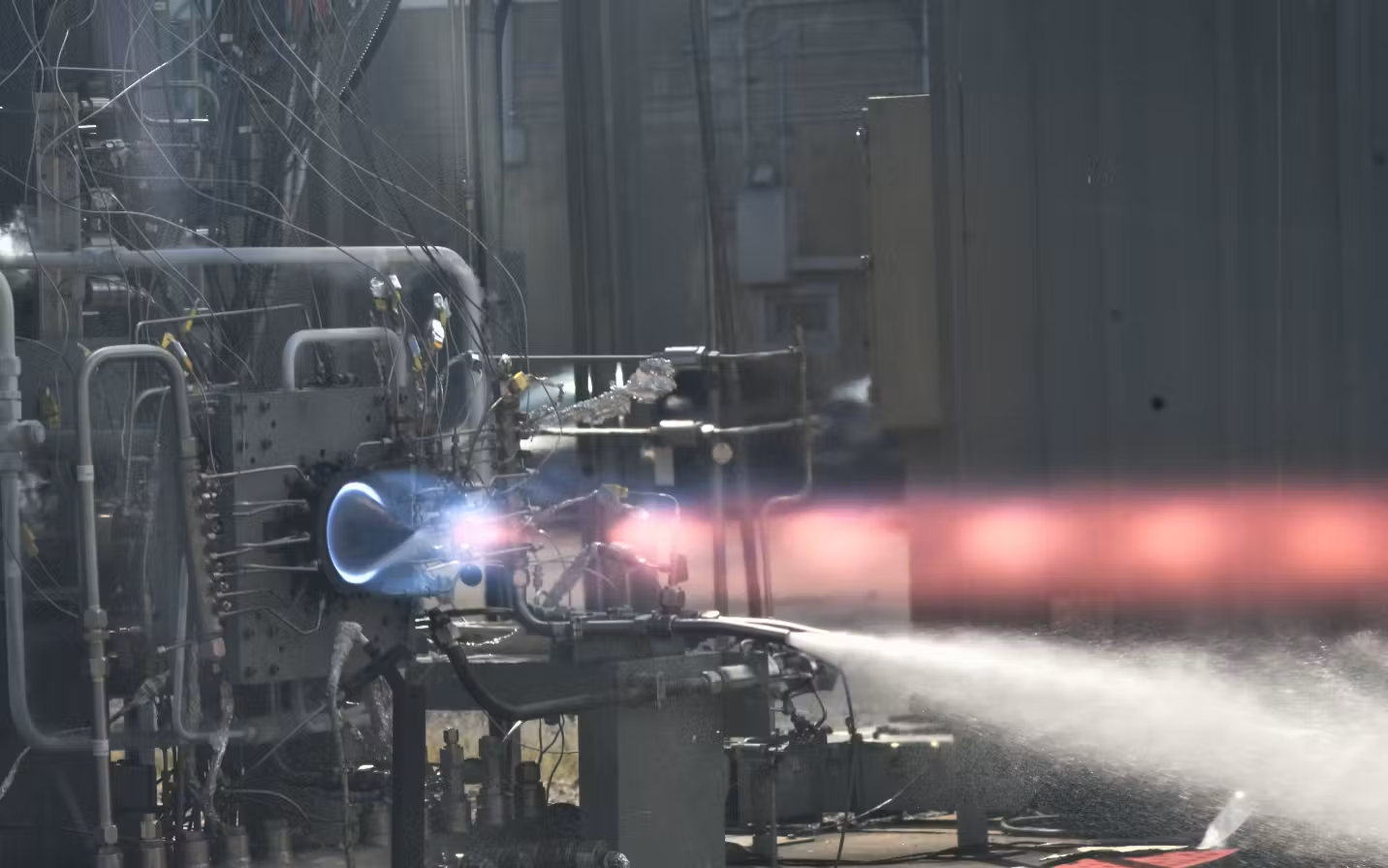
Hear from rocket scientists who discuss a new revolutionary rocket engine design tested at NASA’s Marshall Space Flight Center last year. HWHAP Episode 296.
Original broadcast date: April 30, 2021. Migration is a part of everyone’s history. This hour, TED speakers explore ideas about places we call home — and how these experiences continue to reshape our culture, countries and species. Guests include bioarchaeologist Carolyn Freiwald, journalist Isabel Wilkerson, comedian Maeve Higgins and ecologist Sonia Altizer.
TED Radio Hour+ subscribers now get access to bonus episodes, with more ideas from TED speakers and a behind the scenes look with our producers. A Plus subscription also lets you listen to regular episodes (like this one!) without sponsors. Sign-up at: plus.npr.org/ted
See pcm.adswizz.com for information about our collection and use of personal data for sponsorship and to manage your podcast sponsorship preferences.
NPR Privacy Policy
Two stories today.
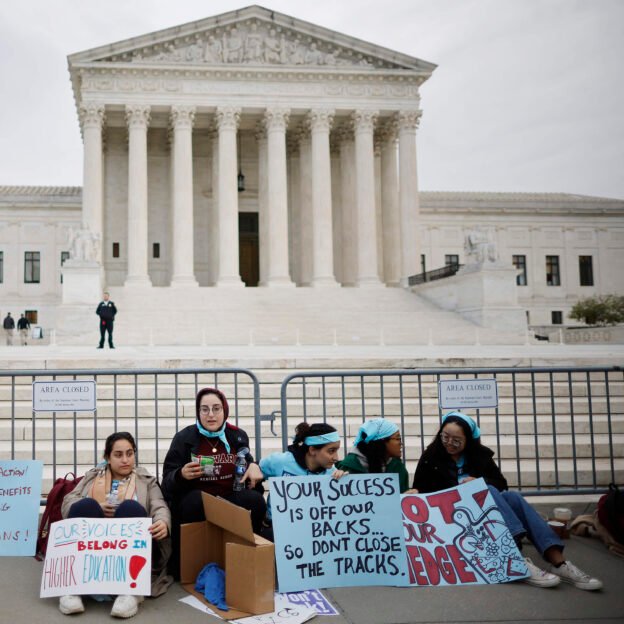
First, as we start to understand post-affirmative action America, we look to a natural experiment 25 years ago, when California ended the practice in public universities. It reshaped the makeup of the universities almost instantly. We find out what happened in the decades that followed.
Then, we ask, why does it cost so much for America to build big things, like subways. Compared to other wealthy nations, the costs of infrastructure projects in the U.S. are astronomical. We take a trip to one of the most expensive subway stations in the world to get to the bottom of why American transit is so expensive to build.
This episode was hosted by Adrian Ma and Darian Woods. It was produced by Corey Bridges, and engineered by Robert Rodriguez and Katherine Silva. It was fact-checked by Sierra Juarez. Viet Le is the Indicator’s senior producer. And Kate Concannon edits the show. Alex Goldmark is our executive producer.
Help support Planet Money and get bonus episodes by subscribing to Planet Money+ in Apple Podcasts or at plus.npr.org/planetmoney.
See pcm.adswizz.com for information about our collection and use of personal data for sponsorship and to manage your podcast sponsorship preferences.
NPR Privacy Policy